
Canary Islands
8,000 arrivals push El Hierro in the Canary Islands into emergency as passengers report a week at sea

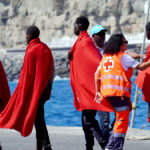
File photo of Red Cross staff assisting people who arrived by sea in the Canary Islands. Photo: canary4stock /Shutterstock.
El Hierro’s 12,000 residents face growing pressure on local services after more than 8,000 arrivals in five weeks. Passengers on boats carrying more than 100 people reported spending up to seven days at sea.
People living on El Hierro, one of Spain’s Canary Islands in the Atlantic off northwest Africa, are facing growing pressure on local services after more than 8,000 migrants reached the island by boat in five weeks. The island council declared a social emergency on November 6, calling for more staff, better first reception facilities and faster transfers.
More than 3,000 people arrived in the five days before the declaration, aboard around 30 cayucos, according to figures reported by Diario de Avisos. El Hierro has just over 12,000 residents. The arrival figure counts people who reached the island, not the number who remained there, as transfers to other islands have also taken place.
Passengers report up to seven days at sea
Four cayucos carrying 377 people reached La Restinga between the night of November 3 and the morning of November 4. The first boat carried 111 people. They told emergency teams they had left Kafountine, Senegal, seven days earlier.
Passengers on a second boat, carrying 125 people, reported leaving M’bour five days earlier. People on the next two boats said they had left Saint Louis five and six days before arriving. The passengers came from several countries, including Guinea Bissau, Gambia, Mali, Senegal and Guinea Conakry. The reported departure points were in Senegal.
The published reports attribute the journey times to passenger accounts given to emergency teams. They do not cite independent tracking records confirming each boat’s route or time at sea.
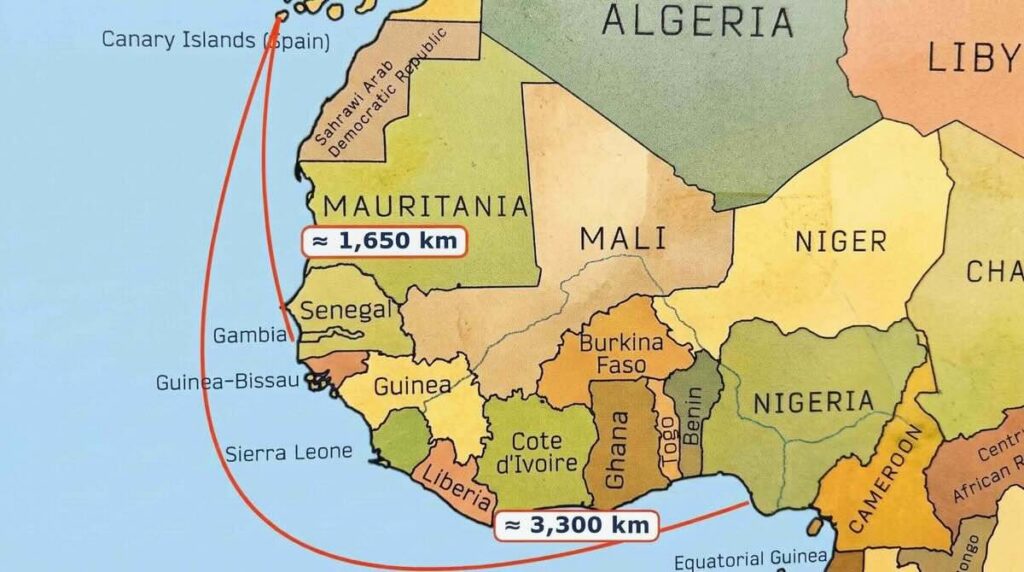
NOAA charts show waves reaching three metres
NOAA’s daily sea state analyses for October 28 to November 4 show significant wave heights reaching about three metres in parts of the charted waters north of 20°N, along the northern approach to the Canary Islands. The charts show the average height of the highest third of waves, not the height of the largest wave. Individual waves can be higher. ocean.weather.gov
For people aboard open cayucos carrying more than 100 passengers, a crossing lasting several days means prolonged exposure to the Atlantic swell and the movement of the boat, with little room to move or shelter from spray. What did passengers face across the full journey, and what evidence can confirm the reported route and duration beyond the accounts given on arrival?
Local rescue and reception services face pressure
The local government emergency declaration cited pressure on the staff and services involved in rescues and reception, including Salvamento Marítimo, the Canary Islands Health Service, police, the Red Cross and other organisations. It called for more staff and shift rotations so teams could rest, as well as better transfer arrangements and stronger first reception facilities.
Diario de Avisos reported that rescue workers had been getting as little as three hours of rest a day during the surge. It also reported that a rescue vessel was temporarily left out of service after running out of fuel. The paper counted at least eight deaths on the Atlantic route during the first six days of November.
The pressure is also being felt in La Restinga, where fishing, tourism, diving and other businesses operate around the port. The Cabildo (Local Government) says the response must provide humanitarian assistance while allowing residents and local businesses to continue their normal activities.
EWN has also reported on a day when more than 300 people needed help during Atlantic rescue operations.
What support has been agreed?
After a meeting with Canary Islands and El Hierro representatives on November 10, the central government committed to adding medical and nursing staff through the Red Cross, increasing police and in person interpreting support, and adding another rescue vessel. Temporary buses are also planned to help with transfers without adding pressure to public, school and tourist transport.
The Government also committed to a compensation fund for businesses affected in La Restinga, including diving clubs, restaurants, fishing and hospitality. New medical support would be added to €15.8 million already approved for the wider response. The announced measures are commitments, and the reports do not give a timetable for every measure to begin.




%
8,000 Arrivals Push El Hierro In The Canary Islands Into Emergency As Passengers Report A Week At Sea

File photo of Red Cross staff assisting people who arrived by sea in the Canary Islands. Photo: canary4stock /Shutterstock.
El Hierro’s 12,000 residents face growing pressure on local services after more than 8,000 arrivals in five weeks. Passengers on boats carrying more than 100 people reported spending up to seven days at sea.
People living on El Hierro, one of Spain’s Canary Islands in the Atlantic off northwest Africa, are facing growing pressure on local services after more than 8,000 migrants reached the island by boat in five weeks. The island council declared a social emergency on November 6, calling for more staff, better first reception facilities and faster transfers.
More than 3,000 people arrived in the five days before the declaration, aboard around 30 cayucos, according to figures reported by Diario de Avisos. El Hierro has just over 12,000 residents. The arrival figure counts people who reached the island, not the number who remained there, as transfers to other islands have also taken place.
Passengers report up to seven days at sea
Four cayucos carrying 377 people reached La Restinga between the night of November 3 and the morning of November 4. The first boat carried 111 people. They told emergency teams they had left Kafountine, Senegal, seven days earlier.
Passengers on a second boat, carrying 125 people, reported leaving M’bour five days earlier. People on the next two boats said they had left Saint Louis five and six days before arriving. The passengers came from several countries, including Guinea Bissau, Gambia, Mali, Senegal and Guinea Conakry. The reported departure points were in Senegal.
The published reports attribute the journey times to passenger accounts given to emergency teams. They do not cite independent tracking records confirming each boat’s route or time at sea.
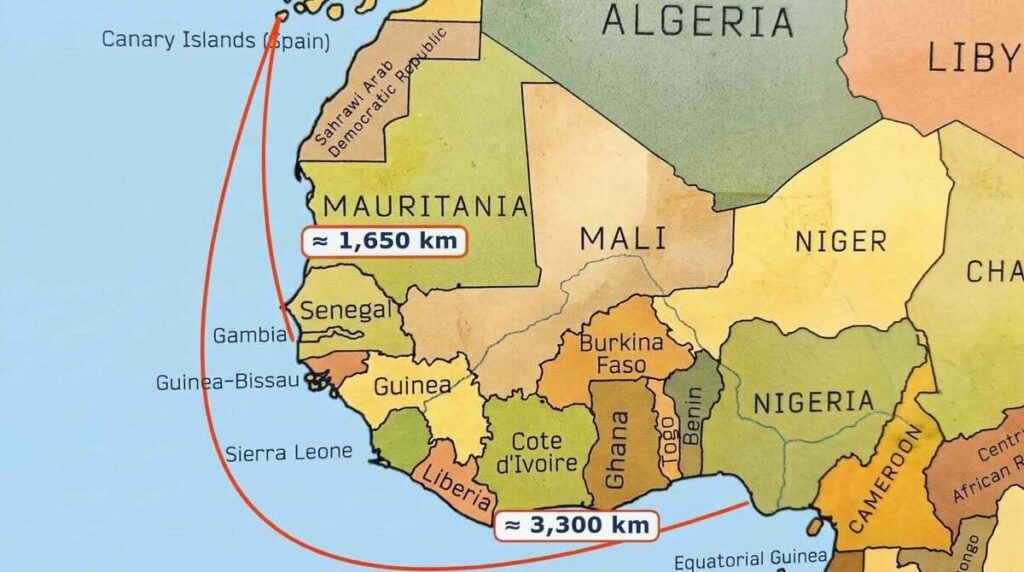
NOAA charts show waves reaching three metres
NOAA’s daily sea state analyses for October 28 to November 4 show significant wave heights reaching about three metres in parts of the charted waters north of 20°N, along the northern approach to the Canary Islands. The charts show the average height of the highest third of waves, not the height of the largest wave. Individual waves can be higher. ocean.weather.gov
For people aboard open cayucos carrying more than 100 passengers, a crossing lasting several days means prolonged exposure to the Atlantic swell and the movement of the boat, with little room to move or shelter from spray. What did passengers face across the full journey, and what evidence can confirm the reported route and duration beyond the accounts given on arrival?
Local rescue and reception services face pressure
The local government emergency declaration cited pressure on the staff and services involved in rescues and reception, including Salvamento Marítimo, the Canary Islands Health Service, police, the Red Cross and other organisations. It called for more staff and shift rotations so teams could rest, as well as better transfer arrangements and stronger first reception facilities.
Diario de Avisos reported that rescue workers had been getting as little as three hours of rest a day during the surge. It also reported that a rescue vessel was temporarily left out of service after running out of fuel. The paper counted at least eight deaths on the Atlantic route during the first six days of November.
The pressure is also being felt in La Restinga, where fishing, tourism, diving and other businesses operate around the port. The Cabildo (Local Government) says the response must provide humanitarian assistance while allowing residents and local businesses to continue their normal activities.
EWN has also reported on a day when more than 300 people needed help during Atlantic rescue operations.
What support has been agreed?
After a meeting with Canary Islands and El Hierro representatives on November 10, the central government committed to adding medical and nursing staff through the Red Cross, increasing police and in person interpreting support, and adding another rescue vessel. Temporary buses are also planned to help with transfers without adding pressure to public, school and tourist transport.
The Government also committed to a compensation fund for businesses affected in La Restinga, including diving clubs, restaurants, fishing and hospitality. New medical support would be added to €15.8 million already approved for the wider response. The announced measures are commitments, and the reports do not give a timetable for every measure to begin.
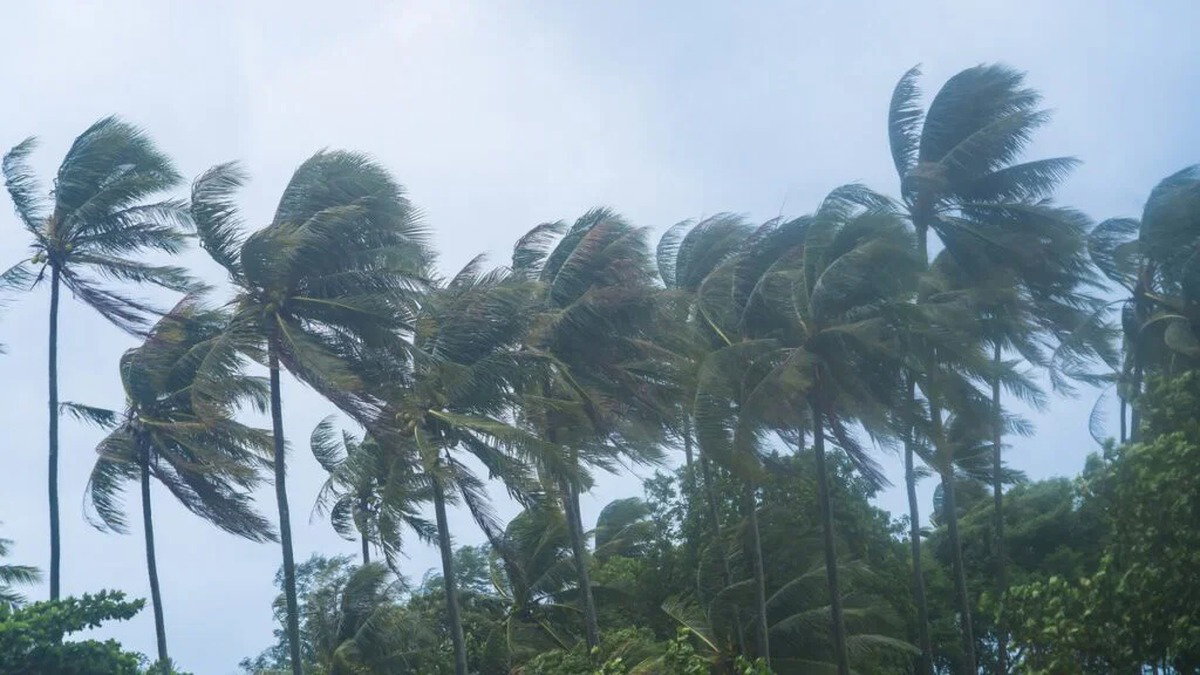
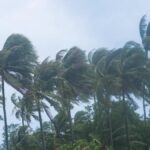
Canary Islands prepare for Storm Bruna. Credit: Bubbers BB / Shutterstock.
Residents and holidaymakers in the Canary Islands face heavy rain, possible flooding and powerful winds as Storm Bruna moves across the archipelago this weekend. Conditions are expected to worsen on Sunday, November 8, with gusts reaching 90km/h in exposed areas and coastal alerts covering all the islands.
The Canary Islands Government has announced alerts for rain and wind across La Palma, El Hierro, La Gomera, Tenerife and Gran Canaria. Lanzarote, Fuerteventura and La Graciosa are under a lower level of prealert for those conditions. Separate prealerts for thunderstorms and flooding cover the whole archipelago.
For the wider outlook, read where rain is heading next across mainland Spain.
Heavy rain spreads overnight
Rain is expected to intensify over La Palma on Saturday night before spreading eastwards through Sunday. In the worst affected areas, rainfall could reach or exceed 30 litres per square metre in an hour and around 100 litres over 12 hours.
Heavy showers are also forecast for the other western islands and Gran Canaria. Lanzarote and Fuerteventura could experience intense rainfall too, although it is expected to be less persistent than on the mountainous islands.
🌀🟠 Tiempo adverso asociado a la borrasca Bruna: avisos naranjas.
⛈️ Lluvias muy fuertes el sábado por la noche en La Palma y el domingo también en el resto de islas montañosas: posibles inundaciones y aumento de caudal en barrancos.
1/3 https://t.co/sgrgr5b3wD
— AEMET (@AEMET_Esp) November 7, 2026
Stronger winds and dangerous seas
Winds are forecast to strengthen on Sunday, with gusts reaching 90 kilometres per hour in exposed mountain areas and parts of La Palma’s eastern coast. The coastal alert applies across the archipelago, with northern and western shores particularly exposed to dangerous seas.
Authorities have also declared a prealert for flooding. The regional government warns that intense or prolonged rainfall could cause surface flooding and sudden rises in water levels in barrancos, including channels that are normally dry.
Residents and visitors are advised to avoid unnecessary road journeys during heavy rain and stay away from piers, breakwaters and exposed seafronts. Follow any closures and never attempt to cross flooded roads or waterways. Official advice is available through the Canary Islands emergency service. Call 112 in an emergency.

Lando Norris shares health update after smashing champagne bottle and walking into firework

Última Hora De La Huelga General Y La Actualidad Política, En Directo | La Jornada De Huelga General Arranca Con Cortes En Algunas Carreteras Y El Transporte En Servicios Mínimos

Spain’s King And Queen Attend Funeral Mass In Honour Of 69 People Killed In Toledo Train Disaster
Viral video in Spain sparks fury over drivers who ‘have no idea how to drive’
Spain’s 24-hour shop with no tills expands to Barcelona Airport
Spain’s pet owners face fines of up to €200,000 for animal welfare offences


-
DGT4 weeks ago
Viral video in Spain sparks fury over drivers who ‘have no idea how to drive’
-
Automated supermarket4 weeks ago
Spain’s 24-hour shop with no tills expands to Barcelona Airport
-
Keeping cats and dogs outside4 weeks ago
Spain’s pet owners face fines of up to €200,000 for animal welfare offences
-
Council tax (IBI)4 weeks ago
Barcelona plans 150% property tax increase on tourist flats ahead of 2028 ban
-
Age Concern Marbella - San Pedro2 weeks ago
Halloween lunch sells out as 51 join Marbella get-together
-
Consumer Rights Spain3 weeks ago
EU offers extra year of warranty on phones, but Spain faces delays
-
airports4 weeks ago
Travelling between Spain and Italy? The extra border checks could soon end
-

 %3 weeks ago
Santa Pola Museo Del Mar