
Bank cards
Warning issued to wrap bank cards in foil to avoid contactless theft in public places

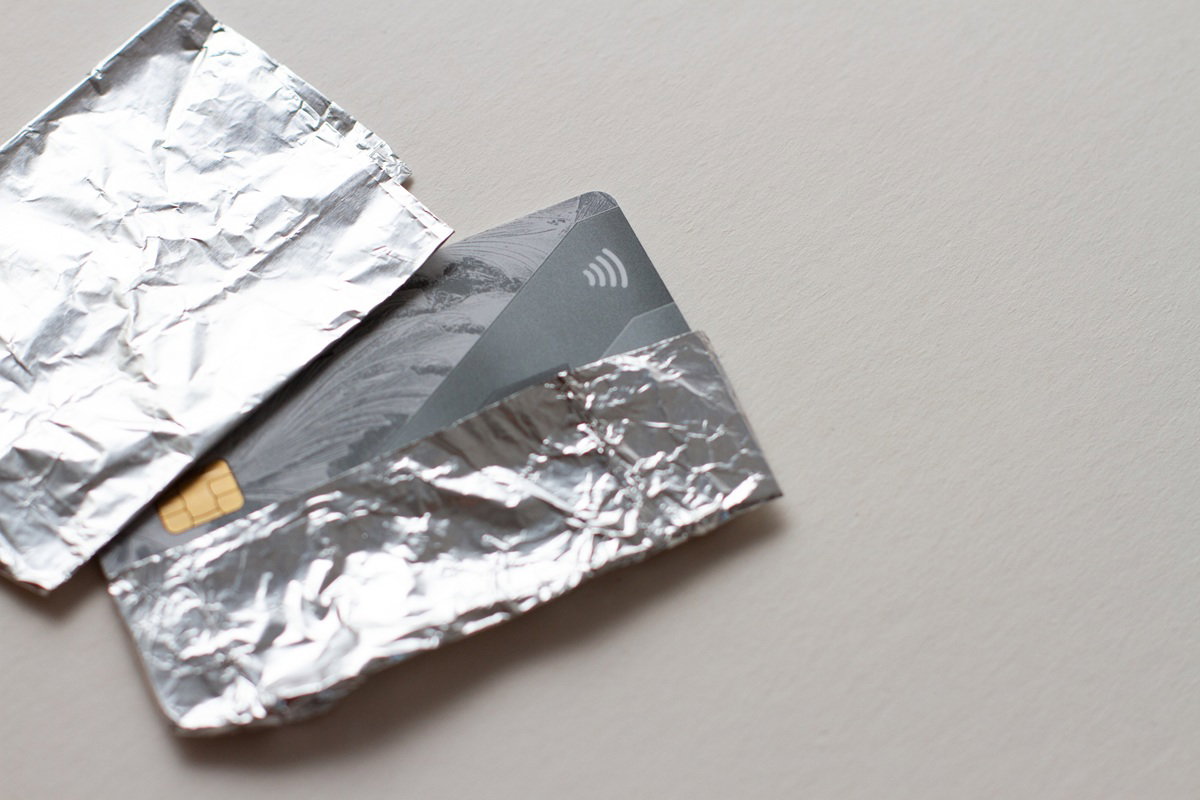
Wrapping bank cards in foil is being suggested as a way to block contactless theft in crowded areas.
Credit : Epov Dmitry, Shutterstock
Wrapping your bank card in aluminium foil to stop contactless theft might sound odd, but it’s a trick more people are trying – and it’s based on real science. The idea is that foil can block the wireless signals used for contactless payments. But while the theory holds up, experts say it’s not quite the simple solution it appears to be.
With contactless payments now part of everyday life in Spain – from cafés to supermarkets – concerns about digital fraud have grown. And with that, so have these kinds of quick, homemade fixes.
Where the idea comes from – and why it’s not as random as it sounds
The foil trick didn’t appear out of nowhere.
It’s based on a concept called a Faraday cage – something scientists have known about for over a century. In simple terms, conductive materials like aluminium can block electromagnetic signals.
That matters because contactless cards use NFC (near-field communication) to work. It’s the same technology that lets you tap your card or phone to pay.
So the thinking is simple: if you wrap your card properly in foil, those signals can’t get through – meaning no one nearby could scan it.
It’s actually the same principle used in RFID-blocking wallets, which are specifically designed to stop this kind of wireless communication.
So yes, the science checks out.
But does it really protect you when you’re out and about?
That’s where things get a bit less clear.
For foil to work properly, it needs to fully cover the card. No gaps, no tears, no loose edges. Even a small opening can let signals through.
And in real life, that’s harder than it sounds.
A loosely wrapped card, or a thin layer of foil, might not block anything at all. It might reduce the signal, but not completely stop it.
There’s also another point worth keeping in mind: this type of contactless theft – where someone scans your card in public without you noticing — isn’t as common as people think.
Banks have built-in limits for contactless payments, and unusual activity is often picked up quickly. In many cases, customers are refunded if something suspicious happens.
So while the foil might offer some level of protection in ideal conditions, it’s not something you can rely on completely.
Why this trick is spreading anyway
It’s easy, it’s cheap, and it feels like you’re doing something to protect yourself.
That’s a big part of why it’s caught on. You don’t need to buy anything. You don’t need to understand the tech. You just wrap your card and carry on.
At a time when people are more aware of scams and fraud, simple ideas like this spread quickly – especially online.
But in day-to-day life, it’s not very practical.
Taking your card in and out of foil every time you want to pay isn’t exactly convenient. The foil can tear, wear out, or just become annoying to deal with.
That’s why many people who want that extra layer of protection end up using RFID-blocking wallets instead – they do the same job, but in a way that actually fits into daily life.
What really puts your money at risk
If you look at how most banking fraud happens today, it’s rarely through someone standing next to you with a scanner.
It’s much more likely to come from phishing messages, fake websites, or data leaks.
That’s where the bigger risks are.
Which means that while the foil trick might help in a very specific situation, it doesn’t protect you from the things people are most likely to encounter.
Simple habits still matter more – checking your transactions regularly, avoiding suspicious links, and being careful about where you enter your details.
So is it worth doing?
If you wrap your card properly, yes – it can block signals. That part is real.
But for most people, it’s not necessary.
Banks already have safeguards in place, and there are more practical ways to protect your cards if you’re concerned.
For residents in Spain, where contactless payments are used almost everywhere, it’s understandable that these worries come up. But it helps to know where the real risks are – and where they’re not.
The foil trick isn’t useless. It’s just not the game-changer it’s sometimes made out to be. And for most people, it’s probably more effort than it’s worth.







El Getafe Apaga La Celebración De La Real En Anoeta Y Se Lleva Los Tres Puntos

El Elche Se Oxigena Y Derrota A Un Atlético De Bolo Veraniego

UK Cigarette Ban Creates Spain Loophole For British Teens

Luxury Villas For Sale, Estepona – ProjectL1

Stylish 3-Bedroom Apartment With Panoramic Sea Views – Benalmádena
Brussels warns Spain that migrants regularised under controversial scheme will be deported back to Spain if they try to move to other EU countries


-
 New Developments3 weeks ago
Luxury Villas For Sale, Estepona – ProjectL1
-
 New Developments3 weeks ago
Stylish 3-Bedroom Apartment With Panoramic Sea Views – Benalmádena
-
eu response to spain migration policy2 weeks ago
Brussels warns Spain that migrants regularised under controversial scheme will be deported back to Spain if they try to move to other EU countries
-

 %3 weeks ago
Poland Disconnects Utilities At Russian Consulate That Moscow Refuses To Hand Over
-

 Uncategorized4 weeks ago
Lewis Hamilton goes from Karate Kid to Samurai Warrior with Kill Bill guru
-
AER Lingus3 weeks ago
High-speed internet at 35,000 feet: Aer Lingus launches Starlink Wi‑Fi
-

 Uncategorized3 weeks ago
How Lewis Hamilton spent break with A-list star
-

 Competiciones4 weeks ago
España Sigue Acelerando Hacia El Mundial