Connect with us

%

Scientists Warn Over Rare Solar Storm Risk

Published

on

scientists-warn-over-rare-solar-storm-risk

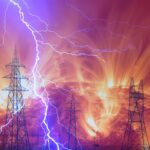
Scientists warn a rare solar storm could threaten power grids, satellites and GPS systems Credit : muratart, Shutterstock

A severe solar storm powerful enough to disrupt electricity grids, satellites, navigation systems and communications could strike again, according to renewed warnings from scientists studying space weather. These major events are rare, but experts say they happen on a roughly century scale and modern society is now far more exposed than ever before.

That is the real concern.

A storm of this kind would not send people back to the nineteenth century overnight, but it could interrupt many of the systems people now depend on every day, from phone networks and banking to flights, deliveries and power supplies.

The more connected daily life becomes, the more vulnerable it can be when space weather turns hostile.

Why scientists are watching the Sun closely

A technical report discussed in the UK in 2026 looked at what a once in a century scale solar event could mean for infrastructure. While the study focused on Britain, similar risks apply to countries at comparable latitudes and to highly connected economies around the world.

Solar activity rises and falls in cycles lasting around eleven years.

During more active periods, dark sunspots appear on the Sun’s surface. These areas are linked to intense magnetic energy that can suddenly release in the form of solar flares or huge clouds of charged plasma known as coronal mass ejections.

When those clouds head towards Earth, problems can begin.

They may take several days to arrive, but once they interact with Earth’s magnetic field, they can trigger geomagnetic storms strong enough to affect technology on the ground and in orbit.

The Sun is around 150 million kilometres away, yet what happens there can still reach straight into modern life.

What could actually be affected

The biggest worry is often the power grid. Strong geomagnetic storms can create electrical currents inside long transmission lines. That extra current can overload equipment and, in serious cases, lead to blackouts across regions.

Electricity is only part of the story.

Satellites are also exposed. Charged particles can damage onboard electronics, interfere with sensors and shorten the lifespan of solar panels. If enough satellites are affected, services many people barely think about could start to fail and that includes GPS.

Navigation tools used by drivers, ships, aircraft, farmers and logistics firms depend heavily on satellite signals. If those signals become unreliable, delays and costly disruption can follow quickly.

Radio communications can also suffer, especially long distance signals used in aviation and maritime sectors.

Even mobile phone services and internet systems may feel indirect knock on effects if networks relying on timing signals or power supplies are hit.

This is why solar storms are taken more seriously than many people realise. They do not need to damage every device in your home to create widespread problems. They only need to disrupt the systems everything else depends on.

We have already seen warning signs

Extreme space weather is not just theory. In May 2024, a major solar event produced strong auroras across parts of Europe and North America. It also caused operational issues in some sectors and renewed attention on how exposed modern systems can be.

Reports at the time highlighted problems linked to satellite based guidance used in parts of US agriculture. That may sound niche, but it shows how specialised technology can suddenly become a weak point.

Many industries now run on precision systems that rely on stable signals, accurate timing and constant connectivity.

When those foundations wobble, losses can appear in unexpected places.

Could it really be that serious

The dramatic phrase often used is that a huge solar storm could send society backwards. That is an exaggeration, but the underlying point is fair.

A prolonged outage affecting electricity, transport systems, payments and communications would feel severe in a world built on instant access.

Imagine cities dealing with power cuts, airports facing delays, card payments failing in some areas, navigation systems under strain and supply chains slowing down.

Modern economies are efficient, but efficiency can come with fragility. The question is not whether civilisation ends. It is how disruptive several days or weeks of technological stress could become.

Can anything be done

The good news is that monitoring has improved sharply. Space agencies and observatories track the Sun constantly using satellites and ground based instruments. NASA’s Solar Dynamics Observatory is one example, providing continuous imagery and data.

Scientists can often detect eruptions and estimate whether material is heading towards Earth.

Warnings may give operators hours or even days to prepare.

That time can be used to protect satellites, adjust flight routes, reduce strain on power networks and activate contingency plans.

Forecasting is still not perfect. Predicting the exact strength and direction of solar material remains difficult. But it is far better than it once was.

Why this matters now

Society has never relied more heavily on technology than it does today. Smartphones, maps, banking apps, deliveries, cloud services and transport systems all sit on layers of infrastructure many people never see.

That means a natural event once viewed mainly as a scientific curiosity now carries real economic and social weight. The Sun is not becoming malicious. It is behaving as stars do.

What has changed is us. We built a world where one storm in space could be felt in homes, businesses and airports here on Earth.

%

Euro Banknotes New Design Plan Features Don Quixote Author Cervantes In Proposal

Published

on

euro-banknotes-new-design-plan-features-don-quixote-author-cervantes-in-proposal

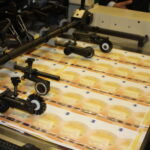
Don Quixote has been proposed as a potential face of the €50 note. Photo credit: European Central Bank

Spanish writer Miguel de Cervantes, best known as the author of Don Quixote, has been linked to discussions around the possible redesign of euro banknotes, according to the European Central Bank his name has been proposed in connection with the €50 note, which is the most widely used denomination across the eurozone in everyday transactions.

The suggestion places one of Spain’s most recognisable literary figures at the centre of debate about how European cultural identity could be reflected on currency used daily in shops, businesses and ATMs. At this stage, the reference to Cervantes remains part of a proposal under consideration rather than a confirmed design choice. No final decisions on specific individuals appearing on euro banknotes have been announced.

Shift in approach to euro banknote imagery

Euro banknotes have historically avoided depicting real people. Since their introduction in 2002, their designs have focused on abstract architectural elements such as windows, bridges and gateways, intended to represent cooperation and openness across the eurozone without highlighting any single country.

The discussion now emerging suggests a potential shift in approach, with cultural figures being considered as part of broader design ideas. In this context, Cervantes has been mentioned alongside other European historical and cultural personalities in media reporting. However, the inclusion of individuals would represent a significant departure from the euro’s original design principles, and any such change would require formal approval within the European Central Bank’s design process.

Why Cervantes is being highlighted

Miguel de Cervantes is widely regarded as one of the most influential figures in Spanish literature, with Don Quijote considered one of the foundational works of Western fiction. His cultural significance has made him a recurring reference point in discussions about Spanish representation in European cultural symbols.

His association with the €50 note in reports reflects both his prominence and the visibility of that denomination, which is the most frequently used euro banknote in circulation. As a result, any potential design featuring him would carry high everyday exposure across the eurozone.

Proposals remain under discussion

Despite media attention around specific names, including Cervantes, no official list of final candidates for euro banknote designs has been confirmed. The European Central Bank has not publicly endorsed any individual figures for inclusion.

The current stage of the process remains focused on exploring themes and collecting ideas, with multiple design directions still being evaluated. Cultural representation is one of several concepts under discussion, alongside other thematic approaches.

Final decisions on the appearance of future euro banknotes are expected to be made through the ECB’s formal selection process, which includes design development and approval stages before any introduction into circulation.

No immediate changes to currency in circulation

Existing euro banknotes remain valid and unaffected by ongoing discussions. Any potential redesign would apply only to future series of notes and would not involve immediate withdrawal or replacement of current currency.

As with previous updates to euro banknotes, any transition would be gradual and coordinated across eurozone member states, ensuring continued usability of existing cash throughout the process.

Conclusion

The emergence of Miguel de Cervantes in discussions around euro banknote redesign highlights a potential shift towards greater cultural representation in European currency. However, his inclusion remains at proposal stage, with no confirmation from the European Central Bank. For now, the debate reflects early-stage ideas rather than final decisions, with the future appearance of euro banknotes still subject to formal selection and approval processes.

Continue Reading

%

Four People Injured As Fairground Ride Snaps Mid-Air Leaving Onlookers Horrified

Published

on

four-people-injured-as-fairground-ride-snaps-mid-air-leaving-onlookers-horrified

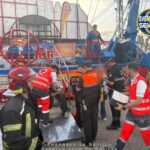
Two people were inside the capsule when the malfunction happened. Photo credit: Emergencias Sevilla

Four people including two minors have been injured after a fairground ride malfunctioned at Sevilla’s Feria de abril, leading to an emergency response and an investigation by police. The incident took place on Friday evening in the amusement zone known as Calle del Infierno, where temporary rides and attractions operate during the annual celebration.

The ride involved has been identified by Spanish media as Steel Max, a slingshot-style attraction that propels a passenger capsule into the air using two side cables. Reports state that one of the cables came loose during operation at around 08.20 pm local time, causing the capsule to swing into part of the structure before stopping above the ground.

Passengers rescued after impact

Two minors were inside the capsule when the malfunction happened. Emergency crews were called to the scene and worked to bring them down safely. Both passengers were later taken to a medical centre for checks after receiving initial assistance at the fairground. Two other people nearby have also been reported injured. Authorities said all four sustained minor injuries. No names, ages or further medical details have been released.

Videos shared online appeared to show the capsule striking one of the support towers after the cable detached. The footage also showed crowds gathering near the attraction as emergency services arrived and the area was cleared.

Emergency services secure the area

Firefighters, Protección Civil and Sevilla’s Policía local attended the scene shortly after the alarm was raised. Their first actions were to secure the ride, assist those involved and prevent access to the surrounding area.

The attraction was later sealed off while officials began examining its condition and checking the documentation required for operation at the fair. Barriers were placed around the site and members of the public were kept at a distance while the response continued. The wider fairground remained open after the incident, with activity continuing in nearby areas once emergency teams had finished their initial work.

🚨🎥 ACCIDENTE EN PLENA FERIA

Una atracción tipo “tirachinas humano”, Steel Max, en la Calle del Infierno, sufre un accidente este jueves sobre las 20:20 h.

🎡 Rotura durante el funcionamiento
🚑 4 heridos leves
🏥 2 trasladados a centro sanitario

Rápida intervención de los… pic.twitter.com/umBX0PRWwj

— SPLS – SINDICATO POLICÍA LOCAL DE SEVILLA (@splsevilla) April 25, 2026

Police inquiry under way

The Policía nacional has opened an investigation into the cause of the malfunction. Officials have not yet confirmed whether the problem was caused by a broken cable, a fault in the release system or another mechanical issue.

Investigators are expected to review the ride itself, inspect maintenance records and examine whether all safety checks had been completed before it opened to the public. No timeline has been given for the conclusion of the inquiry. It is also unlikely that the attraction will reopen during the remainder of the fair. Any decision is likely to depend on the outcome of the technical assessment and the findings of police.

One of Sevilla’s largest annual events

The Feria de Abril is one of Sevilla’s best-known events and attracts large numbers of residents and visitors each year. The celebration is centred on temporary marquees, music, food and horse parades, while Calle del Infierno hosts amusement rides and game stalls for families and younger visitors.

Although the fair continued after the accident, the incident caused concern among people nearby and quickly drew attention on social media after witness videos were posted online. Accidents involving fairground rides are uncommon, but when they occur they often lead to questions about inspection procedures, maintenance standards and the oversight of temporary attractions installed for major public events.

Further scrutiny expected

The focus will now be on determining exactly what happened in the moments before the cable came loose and whether the failure could have been prevented. Investigators will also consider whether the ride had shown any earlier signs of mechanical problems. For visitors, the immediate concern was the safety of those trapped in the capsule. With injuries reported as minor, attention has now shifted to the official inquiry and whether any wider lessons need to be learned before similar attractions are allowed to operate again.

The findings of the investigation are expected to determine not only the future of the Steel Max ride at this year’s fair, but also whether additional checks are introduced for other attractions at large seasonal events across Spain.

Continue Reading

%

Fuengirola International Fair 2026 Welcomes 33 Countries With Global Food And Performances

Published

on

fuengirola-international-fair-2026-welcomes-33-countries-with-global-food-and-performances

Biggest international party of the year. Credit: FIP

Fuengirola is warming up the fairground for the return of its biggest and most loved party in the town this spring. Crowds from every part of the Costa del Sol and even Malaga city will be packing out the trains and buses to discover cultures from 33 nations in one location. Entry is, as always, completely free, and the programme suits all age groups.

Fuengirola international fair 2026 dates and timetable

The schedule of the fair is from Wednesday 29 April to Sunday 3 May with continuous opening from 12 noon to 2am every day. Music in the casetas stops by 1.30am each night to allow residents rest. Children will enjoy half-price attractions on the opening day of 29 April. A parade starts from the town hall square at 11am on Friday, May 1, and follows a route through Plaza de España, Avenida Condes de San Isidro, Avenida Matías Sáenz de Tejada, Calle Alfonso XII, and Paseo Jesús Santos Rein to the fairground. One quiet hour takes place daily between 5pm and 6pm each day to support people with autism spectrum conditions.

Participating countries at Fuengirola international fair 2026

Iceland joins for the first time this edition. Sweden and Thailand return among the 33 participants. Established participants include Germany, Argentina, Australia, Brazil, Chile, Colombia, Cuba, Ecuador, Finland, Great Britain, Greece, Hawaii, Ireland, Italy, Japan, Mexico, Paraguay, Peru, Puerto Rico, Romania, Senegal, Thailand, Turkey, Uruguay and Venezuela. Live performances feature artists such as Laura Elen and Skafeinados in the caseta Australia and Brit Pop Authority and Crush Band in the caseta Great Britain, plus Monkey Tennis and The Killer Rockets return to the caseta Ireland.

Experiences at Fuengirola fair casetas

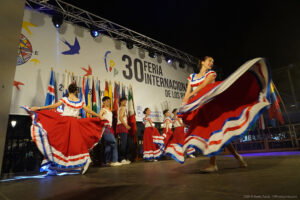
Every caseta functions as a mini cultural embassy. Feria-goers can pop in and taste typical foods from Argentinian steaks to Asian dishes and European desserts. Folk music and traditional shows provide live entertainment throughout the five days.

Transport and parking for Fuengirola international fair 2026

RENFE will be operating special late services from Los Boliches station at 2.30am, 3am and 4.40am. But, be prepared for packed carriages as happens every year. Bus line 1 runs extended hours until 2.30am between Miramar and Carvajal. Extra parking areas open at La Loma in Avenida de Andalucía and appear on Google Maps as “Aparcamiento Feria de Los Países”. A coordination centre operates from the Palacio de la Paz. Local artist D. Darko designed this year’s poster, incorporating flags from all nations to represent diversity and unity.
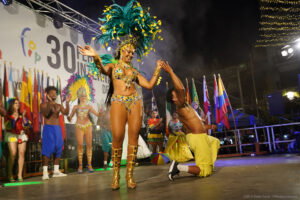

brazil Peru Dominican Republic

Continue Reading
Advertisement
Advertisement

Spanish Real Estate Agents

Tags

Trending

Copyright © 2017 Spanish Property & News