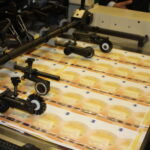
Don Quixote has been proposed as a potential face of the €50 note. Photo credit: European Central Bank
Spanish writer Miguel de Cervantes, best known as the author of Don Quixote, has been linked to discussions around the possible redesign of euro banknotes, according to the European Central Bank his name has been proposed in connection with the €50 note, which is the most widely used denomination across the eurozone in everyday transactions.
The suggestion places one of Spain’s most recognisable literary figures at the centre of debate about how European cultural identity could be reflected on currency used daily in shops, businesses and ATMs. At this stage, the reference to Cervantes remains part of a proposal under consideration rather than a confirmed design choice. No final decisions on specific individuals appearing on euro banknotes have been announced.
Shift in approach to euro banknote imagery
Euro banknotes have historically avoided depicting real people. Since their introduction in 2002, their designs have focused on abstract architectural elements such as windows, bridges and gateways, intended to represent cooperation and openness across the eurozone without highlighting any single country.
The discussion now emerging suggests a potential shift in approach, with cultural figures being considered as part of broader design ideas. In this context, Cervantes has been mentioned alongside other European historical and cultural personalities in media reporting. However, the inclusion of individuals would represent a significant departure from the euro’s original design principles, and any such change would require formal approval within the European Central Bank’s design process.
Why Cervantes is being highlighted
Miguel de Cervantes is widely regarded as one of the most influential figures in Spanish literature, with Don Quijote considered one of the foundational works of Western fiction. His cultural significance has made him a recurring reference point in discussions about Spanish representation in European cultural symbols.
His association with the €50 note in reports reflects both his prominence and the visibility of that denomination, which is the most frequently used euro banknote in circulation. As a result, any potential design featuring him would carry high everyday exposure across the eurozone.
Proposals remain under discussion
Despite media attention around specific names, including Cervantes, no official list of final candidates for euro banknote designs has been confirmed. The European Central Bank has not publicly endorsed any individual figures for inclusion.
The current stage of the process remains focused on exploring themes and collecting ideas, with multiple design directions still being evaluated. Cultural representation is one of several concepts under discussion, alongside other thematic approaches.
Final decisions on the appearance of future euro banknotes are expected to be made through the ECB’s formal selection process, which includes design development and approval stages before any introduction into circulation.
No immediate changes to currency in circulation
Existing euro banknotes remain valid and unaffected by ongoing discussions. Any potential redesign would apply only to future series of notes and would not involve immediate withdrawal or replacement of current currency.
As with previous updates to euro banknotes, any transition would be gradual and coordinated across eurozone member states, ensuring continued usability of existing cash throughout the process.
Conclusion
The emergence of Miguel de Cervantes in discussions around euro banknote redesign highlights a potential shift towards greater cultural representation in European currency. However, his inclusion remains at proposal stage, with no confirmation from the European Central Bank. For now, the debate reflects early-stage ideas rather than final decisions, with the future appearance of euro banknotes still subject to formal selection and approval processes.