Connect with us

%

Marbella Estate Agents Fall In Love With Rescued Animals At ACE Shelter

Published

on

marbella-estate-agents-fall-in-love-with-rescued-animals-at-ace-shelter

Fabienne from ACE and Nadia from Buró, Guadlmina. Credit: EWN

Burò estate agency representatives from Guadalmina made their way to the ACE-SHIN animal shelter in Mijas on Tuesday, April 28 with multiple sacks of dry food for the many dogs and cats housed there.

Fabienne Paques from the rescue charity welcomed the group and introduced all the team members to the adorable animals living at the shelter. It was clear to see that the Burò collaborators soon couldn’t help but fall in love with the many dogs and cats seeking forever homes across Spain, Europe and occasionally further afield.

Nadia from the estate agency took the opportunity to outline plans for a long-term partnership under their “Home for Everyone” initiative during conversations with shelter staff.

The “Home for Everyone” initiative combines professional property services with dedicated support for the animal shelter in the Costa del Sol area. Burò intends to create social media content to raise awareness of ACE-SHIN’s work among its international clients and promote animals ready for adoption.

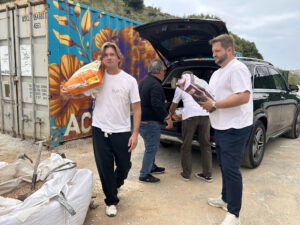
falling in love with dogs lugging bags of food

Regular visits and probable small events will form part of the ongoing collaboration to foster a culture of community involvement. Clients of the estate agency who value social responsibility and animal welfare will find meaningful ways to contribute through this project. The shelter set up by Fabienne and her late husband has been rescuing abandoned and mistreated animals for decades, and with community help now extending to local entrepreneurs, they stand a real chance of turning the tide and finding forever homes for the loving dogs and cats in their care.

ACE Charity Depends on Donations to Care for Hundreds of Animals

ACE charity currently cares for around 500 dogs and 200 cats without any government funding and relies completely on the generosity from supporters.

Dry food donations of this kind make a direct difference to daily operations at the facility and help keep the animals healthy and happy.

Local businesses can play an important role in improving conditions for abandoned animals in the region by getting involved in similar ways.

ACE also seeks donations towards an emergency power generator to maintain essential services during frequent power outages caused by extreme weather conditions. The costs for them just keep on mounting up.

Estimated costs for the equipment and installation are around €42,000, something local corporate friends can get involved with and truly help organisations like ACE achieve.

This type of practical aid brings hope to the dedicated team and all the vulnerable pets depending on their care every single day.


%

Ryanair Warns Over France Passport Delays

Published

on

ryanair-warns-over-france-passport-delays

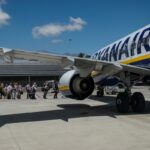
Ryanair raises concerns over summer airport delays linked to new EU passport system Credit : Nicolas Economou, Shutterstock

If you are flying through France this summer, there is a real chance your journey could slow down at passport control. Ryanair has asked the French government to pause the new Entry Exit System until September, warning that the current setup is already causing long queues and could lead to missed flights during the busiest travel period of the year.

The airline says passengers are already waiting up to two hours at some airports. For anyone travelling from Spain via France, or flying into the country from outside the EU, that could quickly become a problem as holiday traffic builds.

At the centre of the issue is a system designed to modernise borders but not yet fully ready to cope with summer demand.

What is the Entry Exit System and who it affects

The Entry Exit System, often shortened to EES, is a new EU border control process for travellers from outside the European Union.

Instead of a simple passport stamp, passengers now need to provide biometric data when entering the Schengen area. That includes a facial photo and fingerprints, which are stored to track entries and exits.

In the long term, the system is meant to replace manual checks and improve border security. But right now, the rollout is still incomplete.

Airports have installed self service kiosks, but many are not fully in use. As a result, most travellers are still being processed at border desks, one by one, which takes longer.

The people most affected are non EU travellers, including those coming from the UK. Even residents with valid permits or long stay visas can get caught in the same queues, because they are not always able to use automated gates.

For families or large groups, the delay can add up quickly.

Why airlines are raising concerns now

Ryanair is not questioning the system itself. The concern is timing.

Summer is the peak travel season in Europe. Airports are at their busiest, flights are full and any slowdown at border control can create a knock on effect across the whole journey.

The airline says the current situation is not ready for that level of pressure.

According to Ryanair, airports do not yet have enough staff or working equipment to handle the extra steps required by the system. The result is long queues, confusion and growing frustration among passengers.

France’s main airport operator has also warned about the rollout, adding that concerns are not limited to airlines.

One of the biggest issues is that the tools designed to speed things up are not fully operational yet. Without them, border checks rely heavily on manual processing.

That is where delays begin.

Passengers already feeling the impact

Reports from travellers suggest the problem is already visible. At airports such as Beauvais, Marseille and Nantes, passengers have experienced waits of one to two hours at passport control. For those with tight connections, that can mean missed flights or stressful last minute runs through the terminal.

There is also confusion around which queue to join. One traveller described being directed to the wrong line despite holding a residency document. She ended up waiting for hours alongside other passengers while biometric checks were carried out.

Situations like this are not unusual when a new system is introduced, but they highlight how small issues can quickly become bigger ones during busy periods.

Why September is being suggested

Ryanair is asking for a delay until after the summer peak for a simple reason.

By September, travel volumes drop and airports have more time to adapt. Staff can be trained properly, systems can be tested under less pressure and any technical issues can be resolved before the next busy period.

The airline has pointed to Greece, where authorities have reportedly chosen to delay the system until after summer, as an example of a more cautious approach.

EU rules allow countries to postpone the rollout temporarily if it risks disrupting border operations. That option is now being pushed as the most practical solution.

For now, France has not confirmed any change in plans.

What travellers should do before flying

With no official pause announced, travellers should prepare for delays.

Arriving at the airport earlier than usual is a sensible step, especially for flights leaving France or entering the Schengen area from outside the EU.

It is also worth checking documents in advance and being ready for biometric checks at the border. Passengers with connecting flights should allow extra time between arrivals and departures where possible.

While not every journey will be affected, the risk of delays is higher than usual.

A system that may improve but needs time

The Entry Exit System is not going away. Once fully operational, it is expected to make border control more efficient and reduce the need for manual checks. But getting there takes time.

Right now, the system is in a transition phase. Some parts are in place, others are not, and airports are still adapting. That is where the tension lies. Introduce it too early, and passengers face delays. Wait too long, and progress slows.

For travellers this summer, the reality sits somewhere in the middle. The system is coming. It just may not be fully ready yet.

Continue Reading

%

Malaga To Madrid High-Speed Rail Returns

Published

on

malaga-to-madrid-high-speed-rail-returns

All high-speed trains from Malaga to Madrid suspended. Credit: Colin M Thompson – Shutterstock

Direct high-speed rail links between Malaga and the Spanish capital finally resumed on Thursday, April 30, ending a frustrating 102-day hiatus for commuters and tourists. Rail travellers gathered at Maria Zambrano station to board the first direct AVE services since a tragic accident in Adamuz and subsequent infrastructure damage halted the line earlier this year. And rather than an atmosphere of excitement, there was a solemnness among those passengers from Malaga Province as they remembered what happened on those tracks just 3 months before.

Restoring a vital economic lifeline

Rail services suffered a total collapse on January 18 following the Adamuz incident. Further complications arose in early February when torrential rain provoked a landslide in Alora, covering tracks and forcing Renfe to implement a cumbersome bus-and-train shuttle via Antequera.

Frequent travellers found the temporary arrangements exhausting, as journey times increased and ticket prices for alternative flights soared. Recovery of the direct route arrives just in time for the busy May Bank Holiday, providing a little boost for the tourism sector on the Costa del Sol. For thousands of Malaga residents who work in Madrid, the train serves as a mobile office, making its return a matter of professional necessity.

Mixed emotions among first passengers

Anxiety is still present among those returning to the tracks despite the general sense of relief. Passengers admitted to feeling a sense of respect and slight trepidation when boarding, with the memories of the January accident still fresh.

Safety remains the main concern for most. While some travellers expressed frustration at the three-month delay, others argued that a slow, thorough repair was preferable to a rushed botch job. With the Andalucia elections round the corner, some wondered whether the completion of the work now had anything to do with teh government’s image. Many have commented that the absence of the direct link has made their routine too expensive, forcing them to limit visits to her family in Madrid due to the high cost of last-minute flights and car rentals.

Initial technical hurdles and speed limits

Normality did not return without teething problems. The first service that departed Madrid’s Atocha station arrived in Malaga ten minutes behind schedule. Renfe officials attributed this to temporary speed restrictions currently in place along specific sections of the refurbished infrastructure.

Commuters reported feeling vibrations and noticing stops near Antequera, suggesting that the line is not yet operating at its maximum 300 km/h capacity. Nevertheless, the consensus at Maria Zambrano station was one of cautious optimism. Restoring this connection allows students, workers, and families to reclaim their schedules and move freely between Andalucia and the capital once more.

Continue Reading

%

Trainee Bus Driver Plunges Into River Seine

Published

on

trainee-bus-driver-plunges-into-river-seine

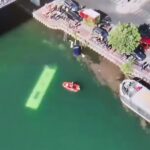
Sunken bus in the River Seine. Credit: François Durovray X

Commuters in Juvisy-sur-Orge witnessed a terrifying scene on Thursday morning, April 30, when a public bus veered off the road and crashed through a fence and into the River Seine. Local police confirmed the vehicle was being operated by a trainee driver completing her practical learning at the time of the incident.

Dramatic rescue operation south of Paris

Emergency responders rushed to the riverbank approximately 20 km south of Paris centre after the vehicle struck a parked car and swerved into the water at 9.30 am local time. Over 90 firefighters, divers, and police officers participated in a complex recovery mission involving helicopters and drones. Four individuals, including the student driver, her instructor, and two passengers, were pulled from the sinking vehicle. Miraculously, everyone on board survived the soggy ordeal and was reported safe and sound by local officials.

Suite à l’accident survenu ce matin à Juvisy-sur-Orge, la situation est désormais revenue à la normale.

Les opérations de vérification menées par les plongeurs ont permis de s’assurer qu’aucune personne ne se trouvait dans l’eau. Aucune victime n’est heureusement à déplorer.… pic.twitter.com/tIXGsVxR2r

— François Durovray (@durovray) April 30, 2026

Investigations launched into training gaff

Lamia Bensara Reda, the Mayor of Juvisy-sur-Orge, described the event as a nightmare, saying that the bus dragged a dark blue car into the water with it as it lost control near a busy station. Witnesses claimed the driver failed to negotiate a right-hand turn, heading straight into the Seine instead. Images from the scene showed the bus partially submerged for several hours before towing teams successfully extracted it during the afternoon with cranes.

Testing for alcohol and narcotics returned negative results for the driver, leaving the exact cause of the crash a mystery for now. The bus company, Île-de-France Mobilités, has ordered an immediate internal inquiry to determine why the vehicle left the road. Local politician Claire Lejeune praised the bravery of bystanders who threw life rings into the water before professional rescue teams arrived. There have been no reports of anyone diving in after the bus to rescue survivors, but the river does have a reputation. Traffic remained heavily congested throughout the day as local police managed the crowds gathered along the riverbanks to watch the recovery.

Continue Reading
Advertisement
Advertisement

Spanish Real Estate Agents

Tags

Trending

Copyright © 2017 Spanish Property & News