Connect with us

%

Ryanair Cabin Crew Arrested Manchester Airport

Published

on

ryanair-cabin-crew-arrested-manchester-airport

Ryanair cabin crew members faced a shocking police greeting at Manchester Airport this past weekend after the aircraft’s captain raised formal alarms regarding their conduct. Officers met the inbound flight at Gate 49 on Saturday afternoon, May 2, following reports that two staff members were potentially unfit for their aviation duties and over the legal alcohol limit for work.

Breathalyser tests conducted at the gate came back positive

Initial breathalyser tests performed at the terminal suggested that both individuals had exceeded the strict alcohol limits required for flight personnel. Under the Railways and Transport Safety Act 2003, aviation workers in the United Kingdom are subject to much tougher restrictions than motorists. British law dictates a limit of just 9 micrograms of alcohol per 100ml of breath for aircrew, a fraction of the 35-microgram limit allowed for drivers in the UK.

Police took the pair into custody immediately after the preliminary readings provoked alarm bells. Passengers disembarking the aircraft all witnessed the embarrassing arrests as they paraded past, with several travellers expressing their surprise at the heavy police presence meeting the plane upon arrival.

Custody results lead to immediate release

Greater Manchester Police later confirmed that more rigorous testing conducted at the station told a different story. These subsequent checks revealed that both crew members were actually within the legal limit for flight duties. Consequently, authorities released both individuals without any criminal charges.

“Police attended Manchester Airport on May 2 after concerns about the fitness of two cabin crew members,” a spokesperson for Greater Manchester Police stated. “Subsequent tests in custody showed they were within the legal limit.”

Airline disciplinary procedures expected

Airlines typically maintain their own internal standards regardless of police outcomes. While the legal investigation has concluded, the carrier involved will likely handle any further internal reviews or disciplinary actions. Replacement staff were sourced to make sure no outbound flights suffered from the disruption, keeping airport operations running smoothly despite the gate-side incident. Ryanair has not made any statement action to be taken with regard to the cabin crew members, nor the pilot who raised the alarm.

%

Spain Airport Queues Ease For Some Travellers

Published

on

spain-airport-queues-ease-for-some-travellers

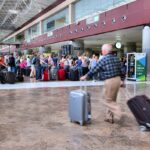
Long airport queues prompt Spain to fast-track some travellers under new EU border system Credit : Tupungato, Shutterstock

If you are flying into Spain this summer, you may not go through the same line as everyone else. Families with young children, passengers with reduced mobility and other vulnerable travellers are now being redirected away from biometric gates, after weeks of long queues linked to the EU’s new Entry Exit System.

The change has already started at major airports and is designed to ease pressure before the busiest travel months. It does not remove border checks, but it changes how some passengers move through them when waiting times get too long.

Who can skip the biometric gates and why it matters

The adjustment is aimed at travellers who may struggle with the new system or who are more affected by long waiting times.

Under internal instructions circulated across Spain’s airport network, border police are now asked to keep a close eye on queues. When waiting times at the automatic kiosks go beyond roughly 25 minutes, certain passengers can be moved to a manual fast track lane.

This applies to families with small children, people with reduced mobility and others considered vulnerable in that context.

The idea is practical. The biometric process takes longer for first time users, and not everyone can move through it at the same pace. Redirecting some travellers helps reduce pressure at the busiest points.

At the same time, airport teams are being told to prioritise passengers who risk missing connecting flights, especially during peak arrival periods.

What caused the queues in the first place

The situation is tied to the rollout of the new European border system.

Since April 10, non EU travellers entering the Schengen area must register biometric data. That includes fingerprints and a facial scan, replacing the traditional passport stamp.

For many travellers, particularly those arriving from the UK and other non EU countries, this is the first time they have had to go through the process.

That initial registration takes longer than a standard check. When several flights arrive close together, queues can build quickly.

In the first weeks after the launch, some passengers reported waiting for hours at Spanish airports. Those scenes quickly raised concerns, especially with the summer season approaching and millions of visitors expected.

Travel companies and airlines warned that long delays at border control could affect the overall travel experience.

What travellers can expect now

The changes being introduced are meant to reduce the impact, but they do not remove the system itself.

If you fall into one of the priority groups, you may be directed to a different line when queues grow. For other travellers, the experience will depend on timing.

At quieter moments, the process may be relatively quick. During peak arrivals, delays are still possible. There is one important detail to keep in mind. The first time you register your biometric data is the slowest step. After that, future entries should be much faster.

That means frequent travellers may notice a clear difference after their initial trip.

In the meantime, being prepared can make things easier. Having your boarding pass ready, along with any supporting documents such as proof of accommodation, can help speed up manual checks if needed. It is also wise to allow extra time, especially if you have a connecting flight.

Why this matters ahead of the summer season

Spain is expecting a high volume of international arrivals in the coming months.

With millions of non EU travellers set to enter the country between May and September, even small delays can quickly turn into longer queues.

The new system is here to stay, but how it is managed is still evolving. Redirecting vulnerable passengers is one way of easing pressure while airports adapt. Mobile registration units may also be deployed during busy periods to increase capacity.

For authorities, the goal is to avoid a repeat of the early weeks, when the system was still settling in and queues grew faster than expected.

For travellers, the change is more subtle but still important.

You may not notice it until you arrive, but the way people are processed at the border is already shifting. And for some passengers, the journey through the airport could now be a little smoother than it was just a few weeks ago.

Continue Reading

%

Immigration Shift In Spain: British Expats Part Of Growing Wave Of New Residents

Published

on

immigration-shift-in-spain:-british-expats-part-of-growing-wave-of-new-residents

Three communities have been consistently among the most numerous over a long period. Photo credit: Alexandros Michailidis/Shutterstock

Around one in four foreign residents in Spain arrived between 2023 and 2024, according to figures from the Instituto Nacional de Estadística (INE). The data is drawn from Spain’s municipal population register, known as the Padrón Continuo, which records the year in which residents were first registered in the country.

The figure does not refer to annual immigration flows but to the proportion of the current foreign resident population whose arrival dates fall within that two-year period. It reflects how recently a significant share of foreign residents have established themselves in Spain.

Morocco, Romania and the United Kingdom remain the largest communities

The INE data shows that the largest foreign resident groups in Spain continue to be nationals of Morocco, Romania and the United Kingdom. These three communities have been consistently among the most numerous over a long period and remain the main nationalities within the foreign population overall.

The Moroccan community is the largest, reflecting both geographic proximity and long-standing labour migration patterns. Romanian nationals form the largest EU group in Spain, with significant numbers working across construction, agriculture and service sectors. The British population remains one of the most established non-EU communities, particularly concentrated in coastal and rural retirement areas.

Other sizeable communities include Italian nationals, who are increasingly present in urban areas and professional sectors, as well as Chinese nationals, who are often concentrated in commerce and retail activity. Colombian and Venezuelan nationals also form large groups, with numbers that have grown steadily over the past decade.

Recent arrivals dominated by Latin America and North Africa

While long-term resident figures remain dominated by European and North African nationalities, the composition of arrivals in 2023 and 2024 shows a different pattern. A large proportion of new registrations in this period come from Latin American countries, particularly Colombia, Venezuela, Peru and Honduras.

Morocco also continues to represent a major share of new arrivals due to its proximity and established migration links with Spain. In addition, Ukraine appears among recent arrivals, reflecting displacement linked to the war that began in 2022 and subsequent relocation within Europe.

These patterns indicate that recent population growth among foreign residents is being driven by a combination of labour migration, family reunification and humanitarian displacement, depending on country of origin.

What the data measures

The figures are based on the Padrón Continuo, Spain’s continuous population register. This system records residents who are officially registered with local authorities, a requirement for access to healthcare and other public services.

The register includes information such as nationality, place of residence and year of registration. However, it does not measure migration flows directly, meaning it cannot fully distinguish between permanent settlement and shorter-term residence.

Because the data is administrative, it captures individuals who are registered in Spain at a given time, rather than tracking movements in and out of the country in real time.

Where foreign residents are concentrated

Foreign residents are unevenly distributed across Spain. Higher concentrations are found in large urban centres such as Madrid and Barcelona, where employment opportunities are more diverse and housing is more accessible for new arrivals.

Coastal areas, particularly along the Mediterranean and parts of the Canary and Balearic Islands, also show high levels of foreign population. These regions attract both long-term residents and seasonal workers, depending on the local economy.

By contrast, rural inland areas generally have lower proportions of foreign residents, although some agricultural regions depend heavily on seasonal labour migration.

Methodological considerations

The INE register is considered the most comprehensive source of population data in Spain, but it has limitations. It does not distinguish clearly between temporary and permanent residence, and it relies on administrative registration rather than survey-based migration data.

As a result, the figures provide a reliable overview of population structure but not a complete picture of migration behaviour or duration of stay.

Interpretation of recent trends

The fact that a significant share of foreign residents arrived in 2023 or 2024 indicates a period of recent demographic change. It suggests that Spain’s foreign population is not only growing but also being renewed through new inflows.

The contrast between established European communities and more recent arrivals from Latin America and North Africa highlights different migration pathways. European migration is largely linked to mobility within the EU, while Latin American and North African flows are more strongly associated with labour demand and, in some cases, humanitarian factors.

Conclusion

The latest data from the INE shows that around one in four foreign residents in Spain have arrived in the past two years. While Morocco, Romania and the United Kingdom remain the largest communities overall, recent arrivals are more heavily concentrated among Latin American and North African nationalities. The figures reflect recent changes in Spain’s foreign population structure as recorded through the national municipal register.

Continue Reading

%

British Family Offers €69,000 Salary To Care For One Dog On Private Estate

Published

on

british-family-offers-e69,000-salary-to-care-for-one-dog-on-private-estate

The person employed would be responsible for Mr Bigglesworth’s daily routine.

A British family has attracted widespread attention after offering a salary of £60,000 per year, equivalent to around €69,000, for a live-in employee to care for their dog at a private estate in Surrey. The position, located south of London, includes accommodation within the grounds and has been managed through the recruitment firm Achieve Hospitality.

The vacancy has been widely reported in the media due to the level of pay attached to a role centred on the care of a single animal. However, information released about the position indicates that the responsibilities extend beyond basic pet care and include a range of tasks linked to the running of a private household.

Duties include supervision, care and coordination

According to details of the role, the person employed would be responsible for the dog’s daily routine, including feeding, walking and grooming. Monitoring the animal’s health and behaviour also forms part of the work, alongside arranging veterinary appointments when required.

The role involves coordination with external professionals such as trainers and groomers. Reports indicate that maintaining continuity of care is a key aspect of the position, particularly as the dog’s owners travel frequently. As a result, the individual is expected to remain on the estate and ensure the animal is not left alone for extended periods.

In addition to caring for the dog, the position includes tasks connected to the wider management of the household. These include receiving deliveries, assisting other staff and overseeing routine matters within the property. Some reports also refer to light administrative duties and occasional outdoor responsibilities.

Residential arrangement and working pattern

The position is based on a residential arrangement, with the employee expected to live on the estate in Surrey. Accommodation is provided in a separate house within the grounds, allowing the person responsible for the dog to remain on site.

The working schedule has been described as running from Sunday to Thursday, generally between 9:00 and 18:00. However, flexibility is required due to the nature of the role, particularly when the family is away from the property. The expectation that the dog should not be left unattended means the arrangement extends beyond fixed working hours.

Experience and conditions linked to the role

Reports indicate that prior experience with dogs is considered important, given the responsibility involved in managing the animal’s daily care. The position is based within a private household, and discretion is therefore regarded as necessary.

Experience in similar environments, such as domestic service or estate work, has also been cited as relevant during the recruitment process. It has been reported that, subject to agreement, the person selected may be able to live on the estate with a partner and, in some cases, their own pets.

High level of interest following publication

The vacancy generated a large number of applications shortly after being made public. The combination of salary and accommodation contributed to the level of attention, particularly as roles of this type are limited in number.

According to reports, the volume of responses led to the application process being closed earlier than planned. Recruitment firms handling comparable positions have noted that roles offering residential arrangements alongside defined responsibilities tend to attract significant interest when advertised.

Context of the offer

Although the salary is higher than many pet sitting roles focused solely on animal care, the position involves a broader set of responsibilities and a requirement to live on site. The need for continuous supervision of the dog is a central element of the arrangement, shaping both the working pattern and the residential requirement.

Such roles are not uncommon within large private estates, where staff may combine specific duties with general household responsibilities. In this case, the combination of salary, accommodation and expectations has drawn attention to the conditions associated with employment in private domestic settings.

A position defined by availability and responsibility

The role shows how roles involving animal care can take on additional scope when linked to a residential arrangement. The requirement to remain on the estate and ensure the dog’s routine is maintained distinguishes the position from standard employment in the same field.

The response to the vacancy shows the level of interest that can be generated by roles that combine accommodation with a good salary, even where the responsibilities extend beyond clearly defined working hours.

Continue Reading
Advertisement
Advertisement

Spanish Real Estate Agents

Tags

Trending

Copyright © 2017 Spanish Property & News