
China
Why Is Electricity Spotty And Fuel So Expensive In Africa’s Largest Oil-Producing Nation?

When the street siren sounded outside Mr. Kofi’s tailoring shop in Ikeja, Lagos, it meant only one thing: the grid was back. His team had been sitting in the dark for most of the day. They had run out of generator fuel. Mr. Kofi joked that NEPA — local shorthand for the long-defunct agency that once ran the national grid — must have known a visitor was coming, and that’s why they “brought back the light.” He has been running his tailoring business for 25 years. His shop sits in Band A, Nigeria’s highest-priority electricity zone, promised 20 hours of power a day under the tariff reform introduced in April 2024. The fuel to bridge the gaps now costs around ₦1,300 per liter — up from a national average of ₦1,034 in January, according to the Nigerian Bureau of Statistics.
The proximate cause of the latest spike is a war being fought thousands of kilometres away. Iran’s closure of the Strait of Hormuz in late February sent global crude prices surging. Between April 27 and April 29 alone, Brent crude rose from $105 to $118 per barrel — prompting the Dangote Petroleum Refinery to adjust its petrol loading price from ₦1,200 to ₦1,275 per liter. Pump prices at filling stations across the country followed swiftly. But for most Nigerians the current crisis is less a new emergency than a fresh layer on top of a very old one.
Nigeria extracts approximately 1.4 million barrels of crude oil per day and is Africa’s largest petroleum producer. Yet for decades it has lacked the refining capacity to meet its own fuel needs, importing refined petrol priced against global markets. “Why is the fuel expensive here if we are the ones supplying oil to other countries?” asked Vanessa Aguda, a cosmetic chemist and personal care brand founder based in Lagos. “Those are the little questions I keep asking. It’s not aligning properly for us.”
We’ve been sitting here working in the heat and without light all day
Kofi, owner of a tailoring shop in Lagos
The explanation lies in decades of refinery neglect. Nigeria’s four state-owned refineries — in Port Harcourt, Warri and Kaduna — have operated far below capacity for years, crippled by underinvestment and mismanagement. For most of the past decade, the country processed virtually none of its own crude, exporting it raw and importing refined petrol at international prices — a cycle that left consumers exposed to every fluctuation in global oil markets. The long-awaited Dangote refinery, which began petrol production in 2024 and has ramped up significantly since, was supposed to break this dependency. But while it has increased domestic supply, its pricing remains anchored to global crude benchmarks. “Nigerian authorities, since the liberalization policy came on board, have adopted global pricing,” explained Paul Alaje, an independent economist based between Lagos and Abuja. “So whatever the global oil trade is, the price Nigerians pay — even in naira — is still set at the global rate.”

The dysfunction isn’t limited to gas pumps. For years, Nigeria had subsidized electricity at a huge cost. The International Monetary Fund estimated in May 2024 that combined fuel and electricity subsidies were on track to consume 3% of the country’s GDP that year, describing them as “costly and mistargeted, with higher-income groups benefiting more than the most vulnerable.” The new system created five customer tiers: Band A customers are entitled to a minimum of 20 hours per day; Band B, a minimum of 16; Band C, 12; Band D, eight; and Band E, just four. Those who pay more receive more.
Band electricity
In practice, the grid has not cooperated. Uzoma Okey-Ibiam, a civil servant in Abuja, was classified as Band B in her previous neighbourhood of Gaduwa and was supposed to receive at least 16 hours a day. In reality, it was about 12 on average. In Ibadan, Kelvin Oritsetimeyin, a freelance software engineer also in Band B, described having had roughly an hour of grid electricity across an entire two-week period in April. “We could be in Band Z for all I know. It’s terrible,” he joked. “Today is an exception where we’ve had six hours of light. We’ve not had this much in three months.”
Nigerian authorities, since the liberalization policy came on board, have adopted global pricing
Paul Alaje, economist
Even those averages obscure the reality of supply, which rarely arrives in continuous blocks. Power often comes in bursts — an hour on, several hours off, sometimes minutes at a time. “The power can go on and off about 20 times in a week,” Oritsetimeyin said. In Lagos, Aguda said that the only electricity she’d gotten that day came at about 3 a.m. and “lasted for no more than 15 minutes.”
These experiences reflect a broader pattern. The average grid-connected Nigerian household receives only 6.6 hours of supply on a typical day and consumes just 144 kilowatt hours of electricity per year — compared to 351 in Ghana and 4,198 in South Africa. The problem, analysts say, is not simply uneven distribution but a system that often fails altogether. “When the national grid collapses, both Band A and Band D are in zero output,” said Alaje. “It really does not matter anymore because power cannot be transmitted.”
The Nigeria that has emerged from decades of this failure is one that has privatized its own power infrastructure, household by household. Aguda runs her home on solar but her cosmetics manufacturing business on a generator costing around ₦150,000 a month in fuel, on top of ₦48,000 to ₦50,000 in grid electricity charges. “Everything comes up to 200 and something thousand naira every month on electricity alone,” she said. “For a small business here, that expense is quite high.”
When costs force price increases, the competitive consequences are immediate. “When we increase the price of our products, our competitors tend to get more clients. People who were our expected customers move over, because it’s cheaper.” She has watched other manufacturers in her sector go to China or South Korea to produce goods and import them back — not because Nigerian craftsmanship is inferior, but because keeping the lights on in a Nigerian factory makes local production cost-prohibitive. Aguda has considered following suit, but for now is committed to producing locally in line with her brand ethos. “We want to make sure that we are aiming for Nigerian-manufactured products for people of color”, she explained.
For smaller businesses, the margin is thinner still. Tailors, hairdressers and other micro-enterprises operate on narrow daily income, with little buffer when costs rise. “We’ve been sitting here working in the heat and without light all day,” said Mr Kofi on the latest power cut. “I have a generator, but it’s empty. At ₦1,300 a liter, I can’t afford to run it right now.” Economists describe this as a shutdown point — the moment when the cost of operating exceeds what a business can earn. “When small businesses cannot cover their average variable costs, they will have to shut down if those costs continue to grow and revenue is not growing with it,” said Alaje. Mr. Kofi, in Band A, is already past that point on some days.
For those with capital, solar power has become the rational exit. In February, Oritsetimeyin bought a ₦400,000 portable solar station that can run his household of three for 10 hours a day. He subsequently ditched his fuel-guzzling generator, which needed 12-20 litres of petrol per week to run for about four hours a day during work hours.
Meanwhile, Okey-Ibiam spent around ₦5 million on a full inverter system and has been living entirely off-grid since moving to Lugbe in September 2025. “Solar is supposed to be an alternative for the grid. But no, the grid is going to be an alternative for my solar,” she said. “Since I installed it, I don’t think about light anymore,” Uzoma said.
But this stability comes at a cost few can afford. “Minimum wage in Nigeria is about 35 pounds a month,” Alaje said. “How do you think people living on one pound a day can afford to buy solar panels?”
Alaje has been urging the government since February to cap domestic prices at pre-war levels. “If this is done, the impact of global shocks, whether now or in the near future, will be very minimal on our economy.” The government has not acted.
For Aguda, the waiting has a limit. “If by next year nothing gets better, we’ll start looking at moving manufacturing to China or Korea. And as a resident of this country, if things do not get better on time, I will really start thinking of relocating.” She paused. “That would mean starting afresh, starting life a new way, doing something I have never done before.”
Sign up for our weekly newsletter to get more English-language news coverage from EL PAÍS USA Edition








Ai Weiwei
Ai Weiwei: ‘The Venice Biennale Should Not Make Value Judgments About Political Positions. Otherwise, It’s Censorship’

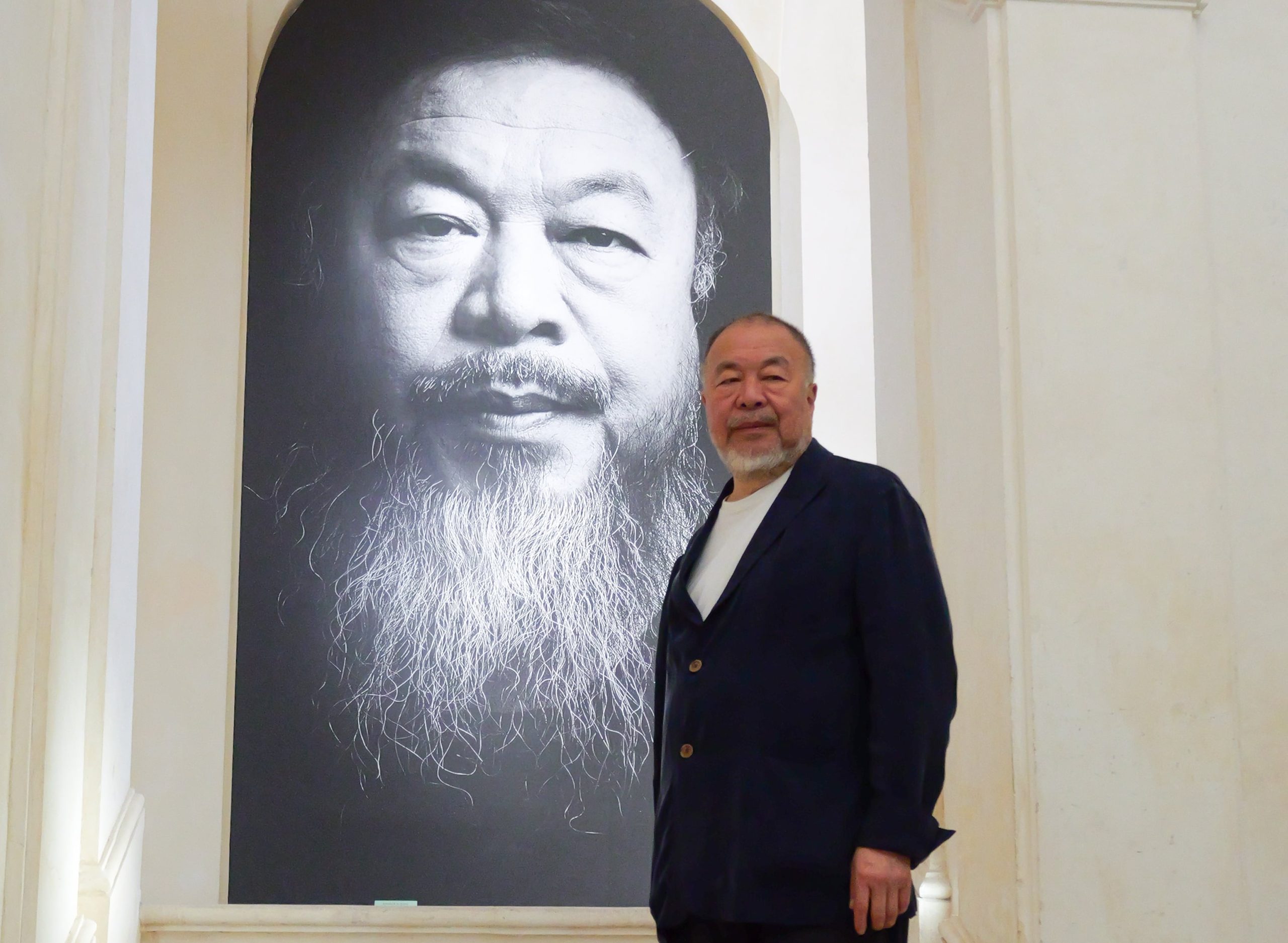
If there is an artist with the credentials to speak about freedom of expression and censorship, it is Ai Weiwei. And his response to any kind of restriction — regardless of who is being targeted by attempts to silence a voice — is a firm no.
This 68-year-old multidisciplinary Chinese creator, who faced persecution and censorship from his government and now lives in exile in Portugal, has also spent time in the United States, Germany, and the United Kingdom. In 2023, he saw his exhibition at Lisson Gallery canceled after making statements on social media criticizing Israel over its attacks on Gaza. That’s why he argues that censorship knows no borders and is part of all political systems, including Western democracies.
Ai — who is also known for using his art to advocate for human rights — not only analyzes the phenomenon of censorship in his recently published book On Censorship, but also addressed the issue last Tuesday during the opening of a retrospective exhibition titled Aftershock, which runs until September 6 at the MAXXI Museum in L’Aquila, Italy.
Speaking to EL PAÍS, he commented on the controversy surrounding the Venice Biennale and the jury’s decision to exclude Russia and Israel from the competition for the exhibition’s awards. The jury that made the decision had not yet resigned when he spoke to EL PAÍS.

According to the artist, “the Biennale shouldn’t make value judgments about who to show or not show. That’s not their job. They should grant equal rights to everyone, regardless of their political or social positions. That’s what we call freedom of speech. Otherwise, it’s censorship. I believe we must protect the value of freedom of speech. Without it, I think we allow society to become dumb and stupid.”
For Ai — for whom art and activism are inseparable — the exhibition in L’Aquila offers a concise but sharp overview of his work, from the photographs he took in New York while studying there on one of the first scholarships available to Chinese citizens, to his ironic and incisive reflections on the war in Ukraine, today’s political polarization, the 21st‑century tension between truth and fiction, and his reinterpretations of art‑historical classics such as Munch’s The Scream and Ed Ruscha’s Hollywood.

In 2011, he spent 81 days detained in China for criticizing the government following the 2008 Sichuan earthquake, in which 90,000 people died. Ai Weiwei worked with hundreds of anonymous volunteers to identify and publish the names of more than 5,000 children who died under the rubble of poorly constructed schools, information that the government sought to censor.
He also collected 150 tons of reinforced steel bars salvaged from those buildings and straightened them to create a memorial installation — a series of steel lakes in various shapes, each bearing the name of one of the children. Titled Straight, the installation evokes the memory of those losses and occupies the first three rooms of the L’Aquila exhibition.
Chosen this year as Italy’s European Capital of Culture, L’Aquila was also devastated by an earthquake in 2009, where structural flaws also played a significant role. Hence, during the exhibition’s opening on April 28, the artist insisted that the organizers open all the windows, from which one can still see the scars of that earthquake on the church of Santa Maria Paganica, a symbol of that seismic event, which is still under reconstruction and located opposite the MAXXI museum.
“Life is like a flowing river, passing through the past and looking toward the future,” says the artist. “We must necessarily speak of and look at our past to understand who we are. Almost two decades have passed since the earthquakes in Sichuan and L’Aquila, and time has passed very fast. But in both incidents, people lost their lives and their possessions. We are in a very fast-changing world. There are still wars in many places. People die every day. So the question should be: do we ever learn anything about humanity? Do we draw lessons from the past?”

Regarding his work, Ai says that when one begins a new piece of art, “a struggle begins because you have to consider the feelings that what you are doing evokes, but also certain historical and aesthetic aspects. The form you give your works must respond to all these demands. In the case of Straight, for me, there was no other possible form; I couldn’t express what I wanted to convey in any other way. When you produce a work, you have to be honest because otherwise, you risk failure.”
The exhibition features numerous creations made with “children’s building blocks, like Lego, but from other brands,” explains curator Tim Marlow, director of the Design Museum in London, reiterating something Ai always makes clear to avoid advertising any particular brand. These include works such as After the Death of Marat (2019), in which the artist is pixelated using building bricks and lies face down by the seashore. The image echoes the death of Aylan Kurdi, a two-year-old Syrian boy who was found drowned on a beach in Lesbos in 2015 during the refugee crisis that followed the outbreak of the war in Syria. The photo of Kurdi became a symbol of Europe’s failure to cope with the refugee exodus.

Ai’s work was controversial, with the artist accused of exploiting a tragedy. This greatly angered him, as he had spent years documenting the refugee crisis in other works such as the documentary Human Flow and Lotus, made from life jackets recovered in Lesbos and also included in the L’Aquila exhibition.
How does Ai view Europe’s current reactionary wave against immigrants, especially considering that he himself was received in Germany in 2015? “The refugee situation is more or less like the ocean, where you have tides,” he says. “Sometimes there is high tide, sometimes there is low tide. It depends on the movement of the Earth and the Moon, right? It’s a natural effect. But we have to ask ourselves where the refugees come from. Who creates these refugees? Instead of saying ‘we won’t let you in,’ we have to assume that we are all refugees because we all come from some generation of refugees. It’s not fair to hold them back and not address the reason why they become refugees.”
The son of Chinese poet Ai Qing, a favorite of the communist regime, though he fell from grace in 1958, Ai grew up alongside his father in concentration camps in Manchuria and Xinjiang and was only able to return to Beijing in 1976, after Mao’s death. “That’s why I’m a refugee too. My father was exiled the year I was born, so I can’t consider any place my home. I’m in Portugal now, but for me, every place is like a hotel. Some are more comfortable than others, some have more sunshine, others only rain,” he says hurriedly, glancing at his assistant who is timing the conversation.
He is referring to the United Kingdom and Germany, where he has also lived for the past decade and where he, too, felt the sting of censorship, always regarding his criticisms on social media of Israel and the genocide in Gaza. “Censorship is censorship; it has the same underlying reasons everywhere. Powerful societies, capitalism, or communism. There is no difference. They are only trying to protect their own interests and survive. China, the United States, or Europe. It’s all the same; there’s no difference,” he insists.
That idea is very well developed in his book, where he also highlights a new danger to freedom: artificial intelligence. “Look, it’s a tool, and as such, there’s nothing inherently wrong with it. But all efficient tools are manipulated by those in power. They are used for surveillance, to control us. I don’t know what we can do to prevent it. I can only say that each individual has the responsibility to protect their dignity. AI can crush our individuality and destroy our privacy, and that’s very dangerous.”
Ai is very protective of his own privacy and doesn’t want to talk anymore, abruptly ending the interview. His works and his powerful reflections in On Censorship speak for themselves.
Sign up for our weekly newsletter to get more English-language news coverage from EL PAÍS USA Edition

Why Is Electricity Spotty And Fuel So Expensive In Africa’s Largest Oil-Producing Nation?

A California Mayor Admits To Having Acted As An Agent Of The Chinese Government

E

How To Get A Tourist Rental Licence In Andalusia (Spain) – Step-By-Step Guide 2025

Max Verstappen Nurburgring LIVE: NLS5 Schedule, start times and free live streams
Spain’s Supreme Court rules EasyJet must reveal cabin crew identities


-
 New Developments3 weeks ago
How To Get A Tourist Rental Licence In Andalusia (Spain) – Step-By-Step Guide 2025
-
 Uncategorized3 weeks ago
Max Verstappen Nurburgring LIVE: NLS5 Schedule, start times and free live streams
-
cabin crew4 weeks ago
Spain’s Supreme Court rules EasyJet must reveal cabin crew identities
-
 Competiciones2 weeks ago
E
-
Asia4 weeks ago
Al Menos Cuatro Muertos, Tres De Ellos Niños, En Un Tiroteo En Un Colegio Del Sur De Turquía
-

 Uncategorized4 weeks ago
Lando Norris unleashes F1 2026 criticism after Nurburgring test
-
Columnists4 weeks ago
HouseSitMatch house-sitters care for homes and pets
-
Costa Blanca South4 weeks ago
Fire forces evacuation of six-storey building in Torrevieja