
Donald Trump
NATO’s Eastern Flank Fears Greater Exposure To Russia As US Pulls Away

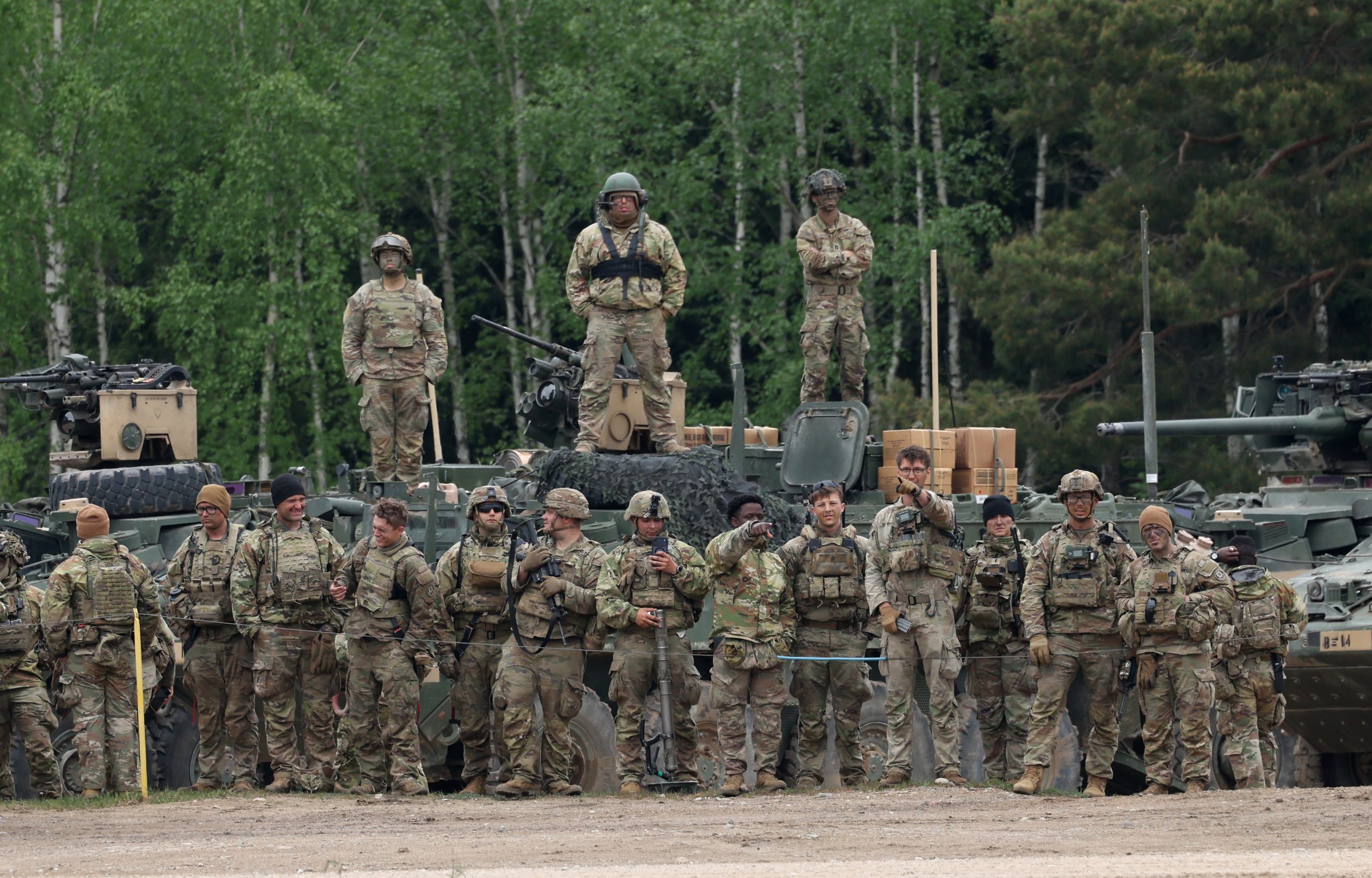
NATO countries most exposed to the Russian threat are watching with concern as the guarantor of Europe’s security pulls away. U.S. President Donald Trump’s disdain for America’s allies — most recently seen by his withdrawal of 5,000 troops from Germany — is setting off alarm bells in the countries along the Alliance’s eastern flank. They fear that the crisis in transatlantic ties could undermine the core principle of mutual defense and send a message of weakness that Moscow will be quick to exploit.
Intelligence agencies and governments across several European countries warn that the Kremlin could attack an EU neighbor in the short or medium term. As Polish foreign minister Radosław Sikorski said at last week’s Defence24 Days conference in Warsaw, “the likelihood of a conventional incursion across NATO’s borders is low. We would detect it — you can’t hide tank brigades.” Yet he added: “The concern is that [Russian President Vladimir] Putin is desperate, so he might do something desperate.”
Poland, the Baltic states, and the Nordic countries are home to some of NATO’s most vulnerable points — places where Putin could test the Alliance’s unity and response. Beyond strategic positions in the Arctic, such as Norway’s Svalbard archipelago, two locations stand out on the EU’s far eastern edge. The first is Narva, Estonia’s third‑largest city, where the European Union meets Russia. With 97% of its population Russian‑speaking, it is exposed to potential destabilization attempts by the Kremlin. The other major headache is Suwałki, on the border between Poland and Lithuania. This 40-mile corridor between Russia’s Kaliningrad exclave and Belarus is the Baltic states’ only land link to the EU.
“For Putin, this Trump presidency is a window of opportunity, and the Baltic states are very worried,” a senior official explained to several Spanish newspapers last Monday during a study visit organized by the Polish government. “Russia believes that the EU and NATO are weak and sees that under Trump, the EU-U.S. relationship has weakened. This perception is reinforced by every comment Trump makes, such as the announcement of the troop withdrawal from Germany,” he added. Moscow also knows that the European rearmament effort is a process that will take years.
“NATO’s eastern flank is under intense pressure from Russia. Strategic depth lies in Germany,” the senior official said regarding Trump’s announced troop pullout. Poland’s ultraconservative, anti‑German, Trump‑aligned Law and Justice party — represented by its president, Karol Nawrocki — has turned the issue into a domestic political weapon and is maneuvering to have the United States relocate those troops to Poland. On Friday, Trump opened the door to that possibility: “I like him [Nawrocki] a lot, so that’s possible,” he said.

Poland wants more US soldiers
The liberal government of Donald Tusk is trying to balance two priorities: avoiding any move that might unsettle cohesion among European allies, while also pushing to increase the U.S. military presence in Poland, which it considers strategic for its defense. “Poland is ready to accept more American soldiers in order to strengthen NATO’s eastern flank and provide even better protection for Europe,” said Defense Minister Wladyslaw Kosiniak-Kamysz, following Trump’s remarks. More than 8,000 U.S. troops are already stationed in the country, but Warsaw has long been working to expand that contingent.
The minister warned on Wednesday at Defence24 Days that “there will be no security in Europe without the presence of U.S. troops.” “Europe must assume more responsibility, but the U.S. has an irreplaceable strategic nuclear deterrent capability,” he added.
Over the two‑day event — the most important security and defense forum in NATO’s northeastern region — politicians, academics, and military officials debated how to strengthen Europe’s deterrence against Russia and bolster military defense. Priorities included expanding air capabilities, developing long‑range precision‑strike systems, reinforcing land forces and drones, improving military mobility, and enhancing cyberdefense.
No alternative to the US
Experts argued that rearmament — strengthening national armies and developing the European pillar — is urgent, but there was also a note of unease about the evident distancing of the United States. “There is a lot of rhetorical noise out there, and naturally that noise is being fueled by statements from U.S. President Donald Trump,” acknowledged Karolis Aleksa, Lithuania’s deputy defense minister. “Our shared conclusion, and also our strategic one, is that there is no alternative to the transatlantic relationship or to collective defense. Because without the United States and without the presence of U.S. forces, we are not able to defend ourselves against our adversaries — against Russia — as we would like.”
Hanno Pevkur, Estonia’s defense minister, still hopes the relationship with the White House can be steered back on track: “Article 5 is not only about defending territory. It is also about values such as freedom — of movement, of expression, economic freedom — which are important for democracy. This helps us understand each other, because they also defend democracy.”
Nikolina Volf, head of Croatia’s Directorate of Defense Policy, echoed this sentiment: “We cannot conceive of European security without the United States. But they haven’t said they’re going to abandon Europe either. They’re still here, they’re still with us.”
However, Kévin Thieron, responsible for transatlantic and NATO relations at the French Ministry of Defense, warned that Europe needs to come to terms with the new reality: “The shift is already happening, and my message is that we must accept it.”
Robert Pszczel, a former Polish diplomat with more than two decades of experience in the Atlantic Alliance, told EL PAÍS that the concern palpable across the region is “fully justified,” describing the moment as “NATO’s most serious crisis in a long time.” To the long‑standing burden‑sharing dispute — a complaint Washington has voiced for decades — one must add the war in Ukraine, the largest conflict on European soil since World War II, and Trump’s approach to NATO.
“There are many things — the verbal attacks on allies, the threats regarding Greenland and Canada — that are already almost incomprehensible. But, in terms of concrete policy, I think the most difficult thing to understand is the United States’ policy toward Russia. It’s almost incomprehensible to us; that’s the only way to describe it,” said Pszczel, who is now an analyst at the Center for Oriental Studies. For him, “it’s a form of unjustifiable leniency.”
On NATO’s eastern flank, officials are keen to maintain a working relationship with Trump despite his unpredictability. European leaders note that the United States also benefits from its military presence in Europe, which projects geopolitical power, while trying to keep Trump appeased. That is why many see statements such as those by German Chancellor Friedrich Merz — who criticized Washington’s lack of strategy in the war against Tehran and said Iran was humiliating the U.S. — as unwise. The same goes for the stance of Spain’s prime minister, Pedro Sánchez, who has positioned himself as the standard-bearer of the opposition to Trump.
There is also concern about Washington’s waning leadership among its allies. “Who, if not the U.S., can exert pressure on Europe as a whole to increase defense spending?” asked Tomasz Szatkowski, former Polish permanent representative to NATO and secretary‑general of the ultraconservative European Conservatives and Reformists group in the European Parliament. Under Trump’s leadership, the Alliance agreed last year to raise military spending to 5% of GDP over the next decade.
On the Alliance’s eastern flank, there is a palpable irritation that the Russian threat is not perceived with the same urgency in western and southern Europe. Poland and the Baltic states, which are already close to the 5% target, struggle to understand the reluctance of countries like Spain to increase defense investment and appeal to the principle of solidarity among allies. “NATO is like a symphony orchestra; we all have to play our part for it to work. France, Italy, Spain… we all need to spend more on defense,” urged Estonia’s defense minister, Hanno Pevkur.
Sign up for our weekly newsletter to get more English-language news coverage from EL PAÍS USA Edition









Barack Obama
A Grammy Winner, A Journalist, A Firefighter: The Democrats’ Biggest Bets To Win The US Midterms

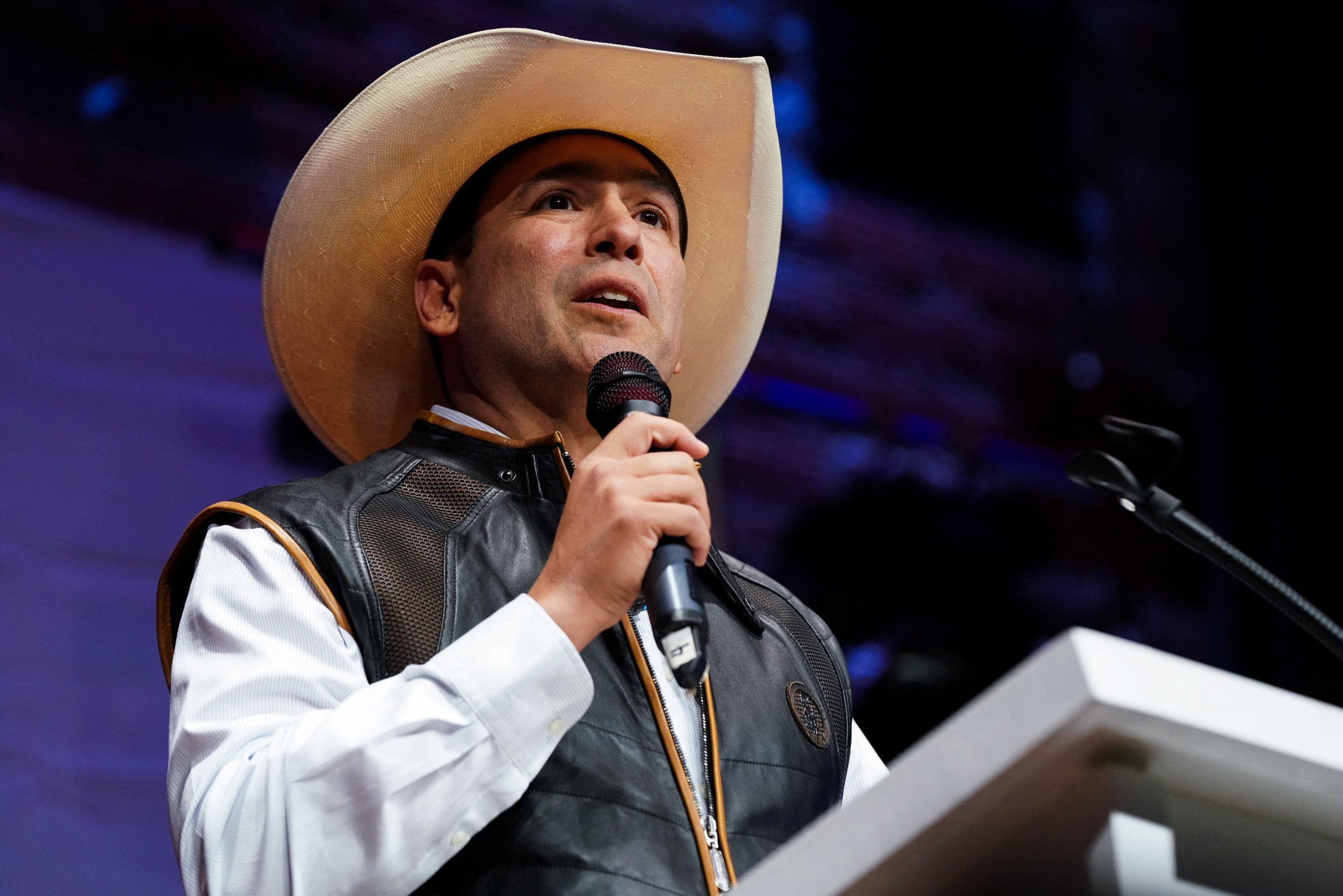
Bobby Pulido, 52, is a Tejano music star and two-time Latin Grammy winner. His songs are a staple at quinceañera celebrations, especially in South Texas. Now he’s entered politics: as a candidate for the U.S. House of Representatives, he’s one of the Democratic Party’s top contenders to win at the November midterm elections and wrest control of at least one chamber of Congress from the Republicans. This would allow them to block President Donald Trump’s policies or even impeach him. And it would serve as a springboard to the ultimate prize: winning the White House in 2028.
His popularity and his place in the local culture are his trump card. His Republican rival, Mónica de la Cruz, attacked him in March: “This isn’t about who’s going to sing at your niece’s quinceañera. It’s about who you’re putting your family’s future in the hands of.” Within days, Pulido announced he would perform at any quinceañera party he was invited to: he claims to have received more than 3,000 requests. And he spends his weekends at these celebrations in his region, the Rio Grande Valley—a predominantly Latino area near the Texas border—an ideal opportunity to cultivate voters. The campaign slogan that emerged from this episode, “Make Quinceañeras Great Again,” is a mockery of Donald Trump’s MAGA slogan, but also a vindication of local culture.
“I think the Democratic Party sometimes tends to be overly intellectual in its rhetoric. But people often don’t want you to use jargon they might not understand. They want you to speak simply. I feel that’s something we have to change so that people can understand exactly what we’re saying,” the musician said during a phone interview. He announced his jump into politics last year, convinced that “democracy is in danger.” The idea had crossed his mind before, but he had put it aside as his music career took off.

He says he wants to solve the problems of ordinary people: soaring prices, access to affordable health insurance. “Being famous helps in the sense that people know who you are. But that doesn’t mean they’re going to vote for you. What does help is that they’re interested in hearing answers to what they want to know, and we’re generating that interest,” he says, noting that he has already visited every county in a district spanning more than 500 kilometers from end to end.
It’s the 15th district, where Democrats were once the dominant party, but where Republican positions have been gaining strength. De la Cruz became the first Republican in over a century to win this district in 2022, and it’s now being contested by Pulido. In 2024, the current president, Donald Trump, won by 17 percentage points.
For the Democrats, the House until recently seemed within reach: they only need to gain three more seats to secure a majority out of the 435 available seats. The Senate is a more difficult task, since only a third of the seats are up for grabs, and most of those are already in the hands of the opposition, which needs to defend them.
But in the last couple of weeks, Democrats have suffered a series of setbacks that make those aspirations a bit more difficult. The Supreme Court issued a ruling last week that, for all intents and purposes, nullifies the 1965 law that protected minority representation in elections. Republican states in the South have rushed to implement—Tennessee being the first—new district boundaries that guarantee their candidates victories in perpetuity. This Friday, the Virginia Supreme Court struck down a local district reform, approved by voters last month, that would have guaranteed Democrats four more seats in Congress.
Despite the setbacks, Democrats are elated by their chances of success. In the Senate, where they need to gain four more seats, Democratic Minority Leader Chuck Schumer is optimistic about achieving this in New Hampshire, Alaska, North Carolina, and Ohio. Almost every primary election held in the last year has either favored the Democrats or improved upon the party’s 2024 results. Polls show a six-percentage-point lead in voter intention for Democrats, with 50% compared to 44% for Republicans. Even the online betting site Polymarket gives Democrats an 83% probability of winning a majority in the House of Representatives, compared to a 17% probability that Republicans will retain it.
Strategists point out that it is common for the ruling party to lose seats in midterm elections: in 2010, Barack Obama’s Democrats lost 63 in the House and six in the Senate; in 2018, Donald Trump gained two in the Senate, but lost 40 in the House.
The president’s unpopularity, stemming from immigration enforcement excesses earlier this year in Minnesota and other states, the war in Iran, and rising fuel prices, represents another favorable factor: a Pew Research Center poll indicates that only 34% of voters approve of the president’s performance, while 62% disapprove. An influential Republican political support and fundraising group, AFP Action, acknowledged last week in a memo, first reported by Politico, that “the Republican majority in the Senate is in danger.”
Democrats believe they’ve found a formula. Their Congressional Democratic Campaign Committee has expanded its “Red to Blue” program to support candidates with a chance of flipping districts currently held by their rivals. The original slate of 12 hopefuls in February has now grown to 18, in 12 different states, from California to Pennsylvania. Pulido is one of them.
The Democratic candidate model
The 18 candidates offer a clue as to the type of candidate the Democratic Party is considering for the upcoming elections, and possibly even beyond. They are a very diverse group. There are men and women, white and from minority groups. There are celebrities like Pulido; familiar faces in their states such as Marleen Galán-Woods, a former television journalist, mother of five and second-generation Cuban-American running for Arizona’s 1st district. There’s also physician and state representative Jasmeet Bains in California, and the firefighter and union leader Bob Brooks in Pennsylvania. What they mostly have in common is that they are relatively new to politics and moderate in their views, people with whom the party hopes voters can connect. The Republican Party, in a statement, describes them as “radical extremists, out of touch with reality, hate-mongers, and elitist.”
“We can’t lose again,” Galán-Woods declared in a phone interview, highlighting her “disciplined and competitive campaign and community support” as key strengths, given her more than 40 years of residence in her district. For the former television journalist, this is her second attempt to reach the Capitol in Washington, following a previous defeat. She still needs to win a primary before becoming the official candidate. Galán-Woods, whose husband is a former Republican mayor of her hometown, boasts of being “with the working people” and promises to collaborate with the opposing party to achieve common goals. “I want to work to lower the cost of gas, food, medicine… I’m interested in working with anyone in Congress, regardless of their ideology, on these issues that matter to all of us.”
“Democrats have the momentum to regain the majority,” said Suzan DelBene, chair of the Democratic Congressional Campaign Committee, in a statement: “These latest additions to our Red to Blue platform represent the strength of our people-first message and the charisma of our candidates.”
A preview of 2028?
Could these be a preview of the party’s strategy for 2028? Perhaps. Although the 2028 strategy “is a whole different ballgame,” a former high-ranking Democratic official joked in a recent conversation. His opinion echoed that of Michelle Obama, wife of former President Barack Obama, in controversial remarks earlier this year, following the defeats of Hillary Clinton in 2016 and Kamala Harris in 2024. The former first lady suggested that the United States is not yet ready for a female president. “As we saw in this past election, sadly, we ain’t ready,” she said. “Don’t even look at me about running ‘cause you all are lying. You’re not ready for a woman.”
The former Democratic official predicts that in the upcoming presidential election, “Democrats will play it safe” when choosing a candidate: “No innovative formulas that could alienate voters.” In his opinion, that means a white, Christian, heterosexual male candidate.
“Would I like to see a woman in the Oval Office? Of course. Would I want to see a Black president again, like Barack Obama, or one from another minority group? You bet I would. But in the upcoming election cycle, it doesn’t seem like that’s the right time,” he noted. “We don’t want to try to make history again. What we want is to win.”
Sign up for our weekly newsletter to get more English-language news coverage from EL PAÍS USA Edition

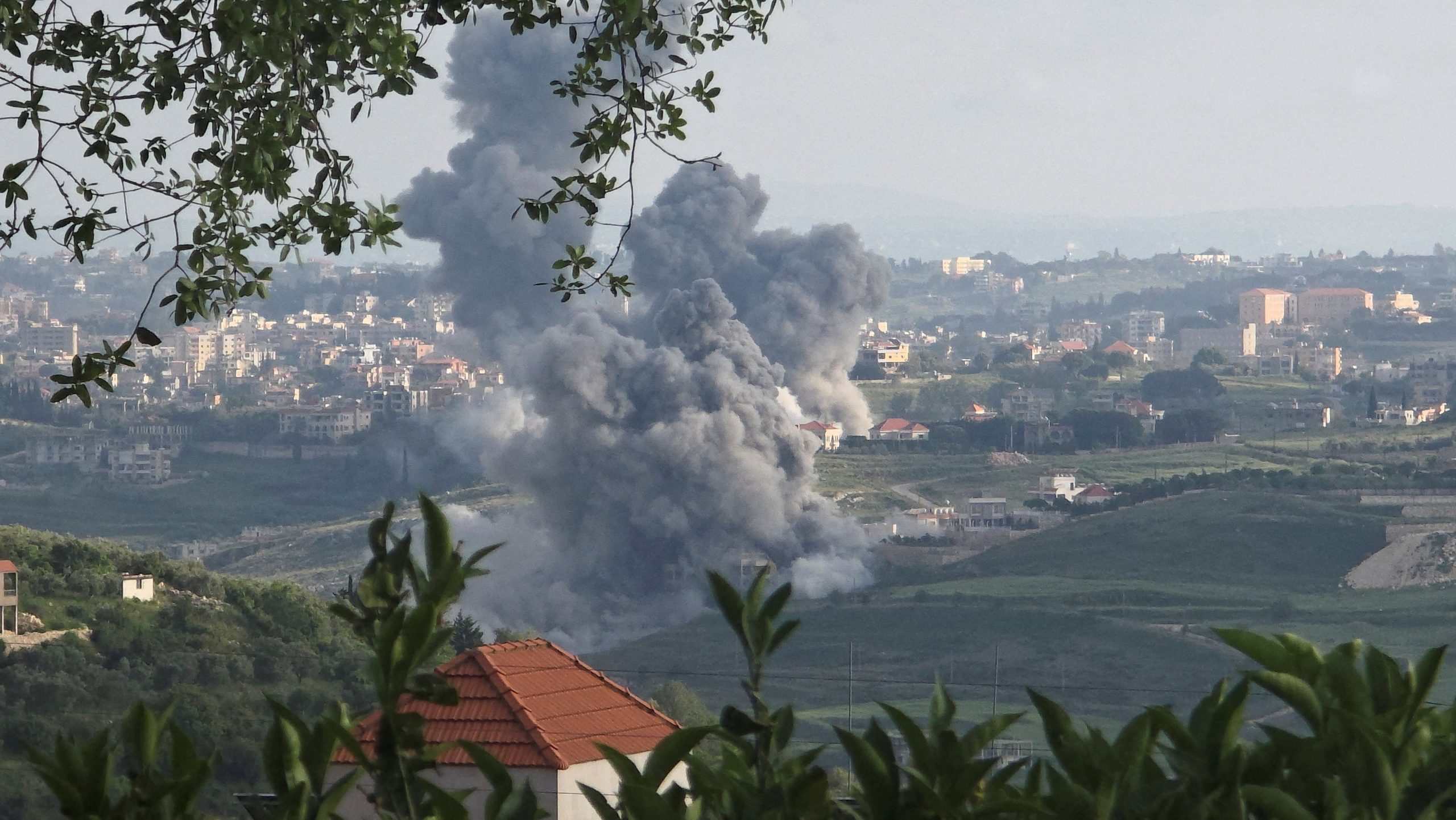
Not so long ago, in the final decades of the 20th century, the United Nations was the arbiter of international law, and its secretary-general was almost a full‑time peacemaker. Today, negotiations to resolve wars and conflicts fall to businesspeople friendly with U.S. President Donald Trump or to third-party countries, often emerging powers (Qatar as mediator in Gaza, or Pakistan in the war against Iran), which have co-opted the organization’s historic role as interlocutor. On the eve of electing its next secretary-general, the U.N.’s peacemaking dimension takes on particular significance after the organization’s paralysis in recent conflicts: Ukraine, Sudan, Gaza, Iran, Lebanon…
Historian Thant Myint-U, a former U.N. official and mediator in the Myanmar peace process, recently asked on social media: “Where is the secretary-general of the United Nations in today’s [Iran] war? An impartial mediator, appointed by the entire world, who’s on good terms with all the big powers (and can easily be scapegoated if things go wrong) is precisely what’s needed to find face-saving pathways to deescalation for all sides. This is what U.N. secretaries-general did — often with remarkable success — for decades, especially between 1955-1990.”
One of those peacemakers was his grandfather, the Burmese diplomat U Thant, who was U.N. secretary-general between 1961 and 1971 and helped resolve the Cuban Missile Crisis in 1962, with a peace plan accepted by both U.S. president John F. Kennedy and Russian president Nikita Khrushchev.
The historian notes that Pakistan is currently doing the work of past U.N. secretaries-general with regard to Iran. “But every now and then, including in cases of potential nuclear escalation, someone called the secretary-general of the United Nations may be indispensable in crafting an exit. Everything else the U.N. did should be theatre that ensures that the prestige of this actor was retained, for when the world needed the person most,” he wrote, as criticism mounts regarding the organization’s apparent irrelevance.
The Security Council’s paralysis and the U.N.’s mounting failures now amount to what looks very much like a reputational — even legitimacy — problem. The organization’s paralysis — for some, outright ineffectiveness — has taken deepest root in the Middle East, where Israel repeatedly disregards Security Council resolutions.
Today, peacemaking in the region seems to have been privatized, as demonstrated by Trump’s so-called Gaza Board of Peace: a corporation where diverse interests intersect, many of them economic, such as those of the U.S. president’s chief negotiators, his son-in-law, Jared Kushner, and his friend, the businessman Steve Witkoff, special envoy for peacekeeping missions (the official title of his position), both of whom have multimillion-dollar investments in the countries with which they are negotiating.
Then there is lobbyist Tony Blair, the former British prime minister, whom many still criticize for his support of the Iraq War in 2003. In his role as an executive member of the Board of Peace — for many, a parallel U.N. that overlaps with its functions — Blair has urged the organization to back Trump’s plan for the Gaza Strip: “Gaza is the test for all of us.”

The four candidates for secretary-general (Michelle Bachelet, Rebeca Grynspan, Rafael Grossi, and Macky Sall) were recently examined before the 193 members of the General Assembly and representatives of civil society. One of the eight sections of the agenda was precisely “peacekeeping and peacebuilding,” because without fulfilling this function, it is difficult to preserve the organization’s core purpose.
“The U.N. has lost a great deal of credibility as a peace institution at a time when wars are on the rise and the Security Council is regularly deadlocked on how to react to major conflicts,” Richard Gowan, director of the Global Affairs and Institutions Program at the International Crisis Group, recently explained to this newspaper. “The secretary-general cannot achieve world peace alone. But a savvy secretary-general could play a more significant role in secondary diplomacy with Beijing, Moscow, and Washington on how to manage future conflicts. [Current Secretary-General António] Guterres has often seemed rather fatalistic about his inability to play a significant role in managing major wars. Diplomats want his successor to take more risks.”
“Lords of peace”
The Trump model seems to indicate that, just as there are infamous warlords, there appear to be mercenary “lords of peace,” starting with Kushner and Witkoff. But the U.N.’s capacity will not be complete if its largest contributor — the U.S. — does not settle its debts (more than $1.5 billion) to ensure the proper functioning of the organization and its costly peacekeeping missions.
“With timely funding, the new secretary-general should emphasize the organization’s traditional role in working for peace and security. A good first objective would be eastern Congo; another, working toward a peaceful Syria amid its internal discord,” explains George A. Lopez, professor emeritus of peace studies at the University of Notre Dame in Indiana. “In each case, it would be useful to have a secretary-general who, in the interest of budgetary constraints and a pragmatic vision, works with the World Bank and other international financial institutions to inject real resources of money and expertise that can further incentivize peace options as a smart choice.”
“Despite the fact that some members of the Security Council are eager to put the secretary-general in a straitjacket, that leader must be a moral voice for the values of the Charter, for peace in the face of unprecedented violence, and a defender of international law and especially international humanitarian law, even when nations that have respected those traditions may now be flouting them,” concludes Lopez.
The candidacy of Grynspan, the former vice president of Costa Rica, is boosted by her significant role as a negotiator of the 2022 Black Sea trade agreement, which allowed for the release of grain blocked in Ukrainian ports by the Russian invasion. At the time, Grynspan was serving as secretary-general of the United Nations Conference on Trade and Development (UNCTAD), an organization from which she has temporarily stepped down to focus on her candidacy.

When asked about this key role, the candidates for secretary-general have not gone into detail or put forward concrete proposals, because their hypothetical success depends on securing the approval of the General Assembly without antagonizing any of the five permanent members of the Security Council (where Grynspan seems well-positioned, given her work in 2022). Bachelet has proposed politically oriented and context-specific peacekeeping operations, rather than heavily militarized models, with an emphasis on gender perspective and regional alliances. Grynspan promises a new vision for peacekeeping operations, with simplified mandates tailored to each specific case.
Grossi, under fire for calling the potential election of the first woman to head the United Nations “symbolic,” has barely addressed the issue of peacekeeping and has called for renewed dialogue on funding. The Senegalese candidate, Macky Sall, has little chance, as he lacks the support of the African Union, a key regional player with a growing role in peacekeeping missions.
Barring any dark horses — the application period is still theoretically open — at the end of the selection process in the fall, the five permanent members of the Security Council (Great Britain, China, France, Russia, and the United States) will largely determine the election of the next U.N. chief for a five-year term, beginning in 2027. This council, paralyzed by the veto power of its five permanent members, is the same one before which U.S. Ambassador to the U.N. Mike Waltz recently requested U.N. assistance in resolving a problem caused precisely by Washington: the blockade of the Strait of Hormuz.
“The United Nations was built for times like this,” said Waltz, without a hint of embarrassment, while Trump remains intent on dismantling the organization.
Sign up for our weekly newsletter to get more English-language news coverage from EL PAÍS USA Edition


Aston Martin announcement to remove Newey as F1 team boss

S

S


-
DGT4 weeks ago
DGT launches week-long speed crackdown on Spanish roads
-

 New Developments3 weeks ago
How To Get A Tourist Rental Licence In Andalusia (Spain) – Step-By-Step Guide 2025
-

 Uncategorized3 weeks ago
Max Verstappen Nurburgring LIVE: NLS5 Schedule, start times and free live streams
-
Andalucia4 weeks ago
Warning for drivers in Spain as week-long clamp down on speeding is underway
-
Asia4 weeks ago
Al Menos Cuatro Muertos, Tres De Ellos Niños, En Un Tiroteo En Un Colegio Del Sur De Turquía
-

 Competiciones1 week ago
E
-
cabin crew4 weeks ago
Spain’s Supreme Court rules EasyJet must reveal cabin crew identities
-

 Uncategorized4 weeks ago
Lando Norris unleashes F1 2026 criticism after Nurburgring test