Connect with us

%

Spain Takes Historic Step With €4 Million Animal Welfare Fund For Shelters And Cat Colonies

Published

on

spain-takes-historic-step-with-e4-million-animal-welfare-fund-for-shelters-and-cat-colonies

Spain has introduced several reforms related to animal welfare in recent years. Photo credit: Evgenii Bakhchev/Shutterstock

Spain’s Ministry of Social Rights, Consumer Affairs and Agenda 2030 has taken historic steps by announcing almost €4 million in funding to support animal protection organisations, shelters and local authority programmes caring for community cat colonies across the country. The ministry confirmed that a total of €3,944,971 will be distributed through grants aimed at strengthening animal welfare services and helping organisations dealing with abandoned and vulnerable animals.

According to the official announcement, €1,994,971 has been allocated to animal protection groups and shelters, while a further €1,950,000 will be reserved for local councils responsible for managing community cat colonies under Spain’s Animal Welfare Law. The funding programme forms part of the government’s wider implementation of national animal welfare legislation, which came into force to improve standards of care, reduce abandonment and regulate the treatment of companion animals.

Support for shelters facing growing pressure

Animal shelters across Spain have reported increasing financial pressure in recent years due to rising veterinary costs, overcrowding and a growing number of abandoned animals entering rescue centres. The ministry said nearly 850 animal shelters applied for financial assistance in 2025, reflecting the demand for additional resources within the sector.

Many rescue organisations operate through donations and volunteer work, with limited public funding available for daily expenses such as food, medication, sterilisation procedures and emergency veterinary treatment. The new grants are expected to help shelters improve facilities, expand animal care programmes and cover operational costs that smaller organisations often struggle to meet.

For volunteers and rescue groups, the funding could also reduce some of the financial burden currently carried privately by individuals involved in animal welfare work.

What the funding means for cat colony volunteers

Part of the funding package has been specifically directed towards municipalities managing community cat colonies, which are recognised under Spain’s animal welfare legislation. Across Spain, thousands of volunteers help care for free-roaming cat colonies by providing food, monitoring health conditions and organising sterilisation programmes aimed at controlling populations humanely.

Many of these caretakers currently rely on personal contributions or small local initiatives to continue their work. In some areas, volunteers also face challenges linked to insufficient veterinary access or limited municipal support.

The ministry’s funding is expected to assist local authorities with programmes linked to trap, neuter and return systems, veterinary treatment and identification measures designed to improve the management of cat colonies. Animal welfare groups have long argued that stable public funding is necessary to prevent uncontrolled breeding, reduce disease and improve coexistence between colonies and local residents.

More than 2,000 projects submitted last year

Government figures show that interest in animal welfare funding has continued to grow. The ministry stated that more than 1,600 local authorities submitted applications for similar support last year, alongside hundreds of animal protection organisations.

In total, more than 2,000 projects valued at approximately €55 million were presented during the previous funding round, representing a 15 per cent increase compared with 2024. The figures underline the scale of demand for animal welfare services across Spain and the increasing role played by municipalities and voluntary organisations in managing abandoned animals and community colonies.

Applications open until June

The ministry confirmed that applications for the latest round of grants are now open. Animal protection organisations and shelters will be able to apply until June 13, while local authorities managing cat colony programmes have until 10 June 2026 to submit requests.

Funding applications will be assessed according to criteria linked to animal welfare objectives, operational needs and the implementation of measures established under national legislation.

Growing focus on animal welfare in Spain

Spain has introduced several reforms related to animal welfare in recent years, including tighter regulation of pet ownership, mandatory identification requirements and greater responsibilities for local administrations overseeing animal care. Supporters of the latest funding package say it reflects increasing institutional recognition of the work carried out by shelters, veterinarians and volunteers who often manage large numbers of abandoned or injured animals with limited resources.

Animal welfare organisations have repeatedly warned that without continued financial support, many shelters and colony management programmes risk becoming overwhelmed. The ministry’s latest allocation is intended to provide direct assistance to those services while helping local authorities comply with national animal welfare obligations already in force across Spain.

%

Road Safety Exhibition Brings Students Together In Mazarron

Published

on

road-safety-exhibition-brings-students-together-in-mazarron

Mazarron students showcase creative road safety projects in public exhibition. Photo Credit: Mazarron Town Hall

Throughout the month of May, the Costa Calida municipality of Mazarron will host the Exhibition of the XXIX Road Safety Education Conference at its Cultural Centre. The conference will unite more than 1,000 schoolchildren from all of Mazarron’s educational centres, to participate in exhibitions of models, collages, and school projects, all related to road safety education.

A fundamental project to unite more than 1,000 students from Mazarron

Officially beginning on May 13 and lasting until May 31, the exhibition will feature 56 projects from preschool students, 90 collages made by first and second year students, and 88 models from students in the fifth and sixth years. Meanwhile, the projects made by the students from the third and fourth years were featured at the Road Safety Education Festival, held in April.

Detailed dioramas made by the students feature roads, small cars, and buildings

Namely, the exhibition features dioramas made by the students to represent city and town roads, including details like painted lines on the roads, different signs, stationed traffic officers overseeing the transport, and structured roundabouts. Surrounding these, the students have created models of homes, hotels, shops, trees, plants, and of course, little cars and buses to traverse the roads of their small towns and cities.

Where to see the students’ exhibitions

This exhibition will be open to the public at Mazarron’s Casa de La Cultura, or Cultural Centre, located at Calle Entierro de la Sardina, 65. It will be free to enter and is available for viewing during the regular opening hours of the building.

This programme forms an essential part of the educational curriculum of the young students of Mazarron. Working on these exhibitions not only educates the students about road safety; it also lets children get creative with their projects and teaches them important values including teamwork, coexistence, and listening to others’ ideas. It is just one of the ways that Mazarron gets creative with its students in order to teach them important life and social skills.

Continue Reading

%

Berlin Pays Tourists To Pick Up Rubbish — Should Spain Follow The Same Model?

Published

on

berlin-pays-tourists-to-pick-up-rubbish-—-should-spain-follow-the-same-model?

BerlinPay is also designed to support what officials describe as a “responsible tourism model” Photo credit: Summit Art Creations/Shutterstock

Berlin has launched a pilot tourism initiative that rewards visitors for environmentally friendly actions such as picking up litter, using public transport and taking part in local sustainability activities.

The scheme, known as BerlinPay, has been introduced by the city’s tourism organisation Visit Berlin together with the Berlin Senate Department for Economic Affairs, Energy and Public Enterprises. It is designed to promote responsible tourism around the city’s waterways and urban green spaces.

The programme is being rolled out as a summer pilot project running from May 14 to  June 14, and is linked to a broader strategy to manage environmental pressure in high-traffic tourist areas, particularly along the River Spree.

How the reward system works

Under the initiative, tourists and residents can take part in selected activities and receive benefits in return. These include vouchers, discounted experiences and free or reduced entry to cultural and leisure attractions.

Actions that may be rewarded include:

  • Collecting litter in public areas
  • Supporting local environmental or social projects
  • Cycling instead of using cars
  • Participating in guided clean-up or nature-based activities

The rewards are provided by around 40 partner organisations, including museums, restaurants, transport operators and tourism providers across Berlin. Participation is coordinated through the official Visit Berlin platform, where users can register and choose from thousands of listed activities linked to sustainability themes.

Focus on waterways and urban impact

City officials have placed particular emphasis on Berlin’s waterways, including the River Spree and surrounding lakes, which attract large numbers of visitors during the summer months.

According to the programme framework, the aim is not only to reduce litter but also to encourage more responsible use of shared public spaces. Authorities say tourism places a measurable strain on these environments, particularly during peak travel periods. BerlinPay is also designed to support what officials describe as a “responsible tourism model”, linking visitor activity with environmental awareness and local economic benefits.

Inspired by Copenhagen model

The scheme is based on CopenPay a similar initiative introduced in Copenhagen, where visitors are rewarded for sustainable behaviour such as travelling by train, cycling or participating in environmental activities. Berlin’s version expands the concept to include direct participation in urban environmental upkeep, with a stronger focus on litter collection and water-related conservation projects.

City organisers say the intention is to test whether incentives can encourage more active engagement from visitors, rather than relying solely on regulation or fines.

Should Spain adopt a similar approach or increase fines for littering tourists?

The Berlin model has prompted wider discussion about how tourist destinations manage environmental damage linked to high visitor numbers.

In Spain, where coastal cities such as Barcelona, Palma and Málaga face seasonal pressure from mass tourism, two approaches are often debated: incentive-based schemes like BerlinPay, or stricter enforcement through fines and penalties.

Incentives versus enforcement

Supporters of incentive-based systems argue that rewarding positive behaviour can be more effective than punishment alone. By offering tangible benefits, authorities may encourage tourists to actively participate in keeping destinations clean, rather than simply avoiding fines.

However, critics note that such schemes depend heavily on participation and funding, and may not deter those who are already indifferent to environmental rules.

The case for tougher fines

On the other hand, Spain already operates a system of fines for littering and environmental offences in many municipalities. Some local authorities have increased penalties in recent years to address issues such as street waste, beach pollution and illegal dumping.

Advocates of stricter enforcement argue that higher fines and more visible policing create a clearer deterrent effect, particularly in high-density tourist areas where behaviour can be harder to regulate through voluntary schemes alone.

Finding a balance

A growing number of European cities are now exploring hybrid approaches that combine both models: offering rewards for responsible behaviour while maintaining or increasing penalties for non-compliance. In Spain’s case, the effectiveness of either approach may depend on location. Urban centres with strong tourism infrastructure could potentially benefit from incentive schemes, while heavily visited coastal areas may continue to rely on fines as the primary deterrent.

For now, Berlin’s pilot will serve as a test case for whether reward-based tourism can meaningfully reduce littering and improve environmental behaviour in practice.

Continue Reading

%

Lightning Bolt Forces EasyJet Flight Emergency Landing

Published

on

lightning-bolt-forces-easyjet-flight-emergency-landing

EasyJet flight getting a nasty shock. Credit: Viral photo on X

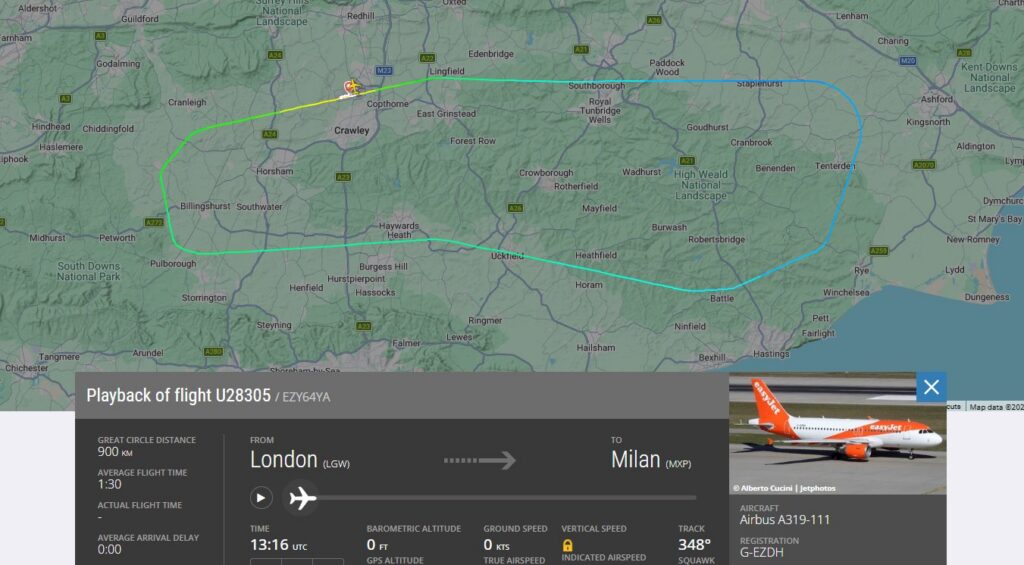
An EasyJet flight bound for Italy returned to London Gatwick this afternoon after a huge lightning bolt struck the aircraft shortly after takeoff.

Flight U28305 using an Airbus A319 registered as G-EZDH departed Gatwick runway 08R at 2.22pm GMT on Thursday, May 14.

Ground witnesses looked on nervously as they saw the stormy conditions around the airport during departure. Lightning then dramatically struck the aircraft as it climbed through the clouds. The pilots then decided to continue the initial climb to around 16,000 feet while checking all systems.

However, it was then that the pilots declared priority status and requested an immediate return to London Gatwick under standard safety procedures.

Air traffic control guided the aircraft back for an immediate approach. A safe and normal landing followed on the same runway just 27 minutes after the initial departure. EasyJet confirmed the diversion in an official statement as a precautionary step.

Crew members then assisted passengers with updates on replacement aircraft or revised schedules while emergency services met the plane on arrival as routine practice.

Lightning strike details on the easyJet flight

Witness reports and flight data confirm the incident occurred during the climb phase in stormy weather. Mandatory post-strike inspections will have followed to verify all avionics and airframe components remained intact.
flight map

What happens when lightning hits an aircraft?

As aircraft climb through clouds, lightning can attach to extremities such as the nose or wingtips. Electricity then flows along the conductive outer skin and exits at another point like the tail. Passengers notice a bright flash or loud bang, while instruments may flicker briefly.

Modern fuselages function as a Faraday cage to direct electric current safely around the exterior and away from the cabin interior. Flight crews are trained in protocols to follow to assess systems before deciding on any diversion.

Can lightning cause serious damage to aircraft?

Design standards require aircraft to be able to survive high-current strikes without loss of control. Surface marks or pitting might appear at entry and exit points, and in many cases damage stays cosmetic.

Engineers conduct detailed checks afterward to rule out any internal effects on wiring or fuel systems. Commercial jets experience such strikes several times yearly with passengers and crew remaining safe throughout, and often none the wiser.

Rare historical incidents led to improved bonding and protection features now standard across fleets. This EasyJet event is in line with routine outcomes where aircraft land safely after precautionary returns. But, it was exciting, nonetheless!

Continue Reading

Trending

Copyright © 2017 Spanish Property & News