Connect with us

Abelardo de la Espriella

Colombia Chooses Its Next President Amid Renewed Violence

Published

on

colombia-chooses-its-next-president-amid-renewed-violence

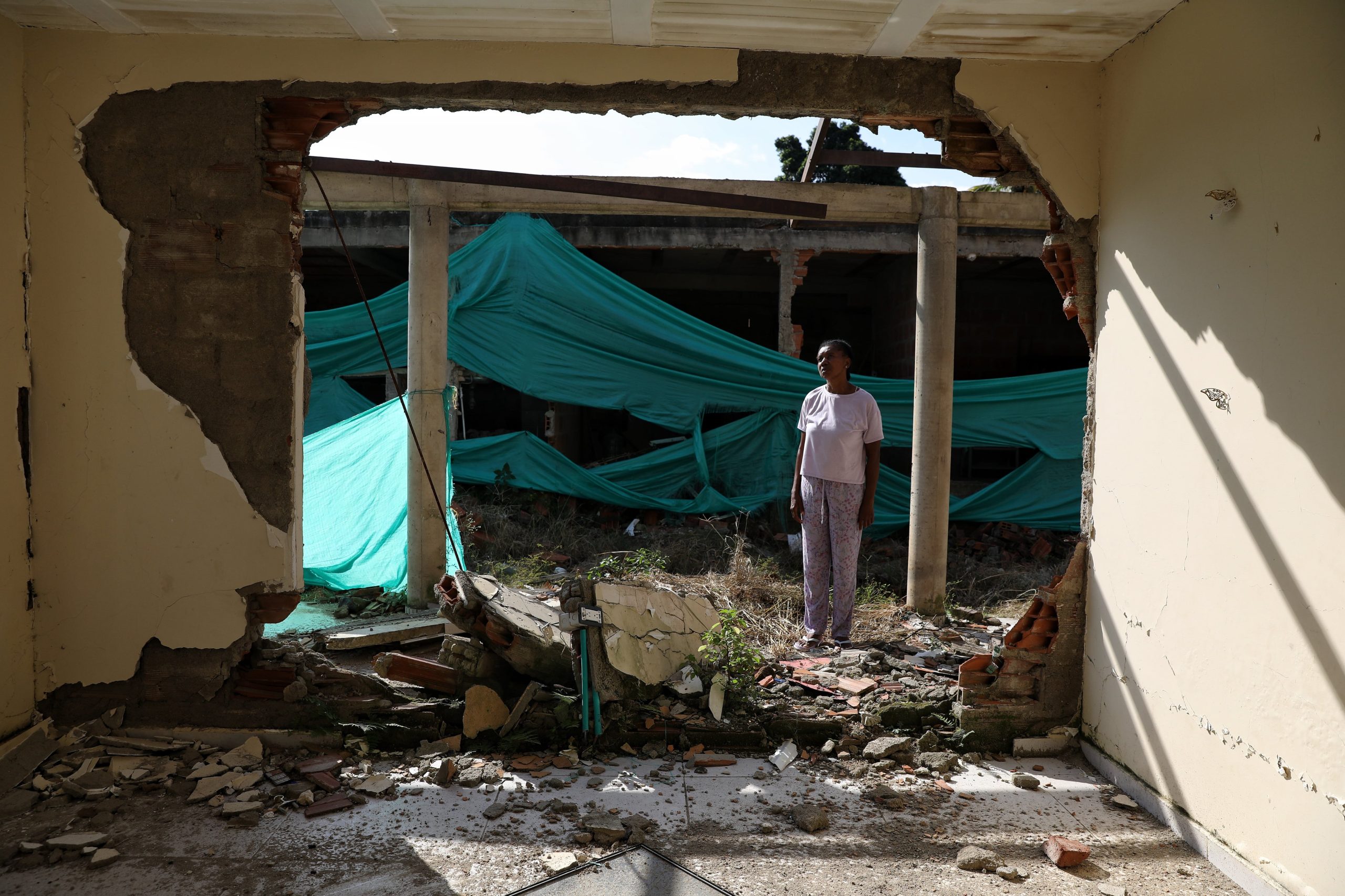
Renewed violence — a kind that has never been fully extinguished in Colombia — marks the presidential campaign to choose Gustavo Petro’s successor. In many places, the first-round vote this Sunday will take place under crossfire. Nearly 10 years after the signing of the historic peace accord with the now-defunct FARC guerrilla organization, other armed actors threaten communities and the war still burns, albeit in a more fragmented phase. The humanitarian consequences of the armed conflict have reached “the most serious level of the last decade,” the International Committee of the Red Cross (ICRC) warned this month. Amid that crisis, public security has become one of the main concerns.

That deterioration includes the killing of all kinds of social leaders. Anxiety is rising among the civilian population, which is suffering homicides, disappearances, threats, and forced recruitment in places such as Catatumbo and Arauca on the turbulent border with Venezuela; Cauca, along the Pacific corridor; Nariño and Putumayo, departments bordering Ecuador; and the forested department of Guaviare in the country’s south. Armed groups have also poisoned the presidential elections.

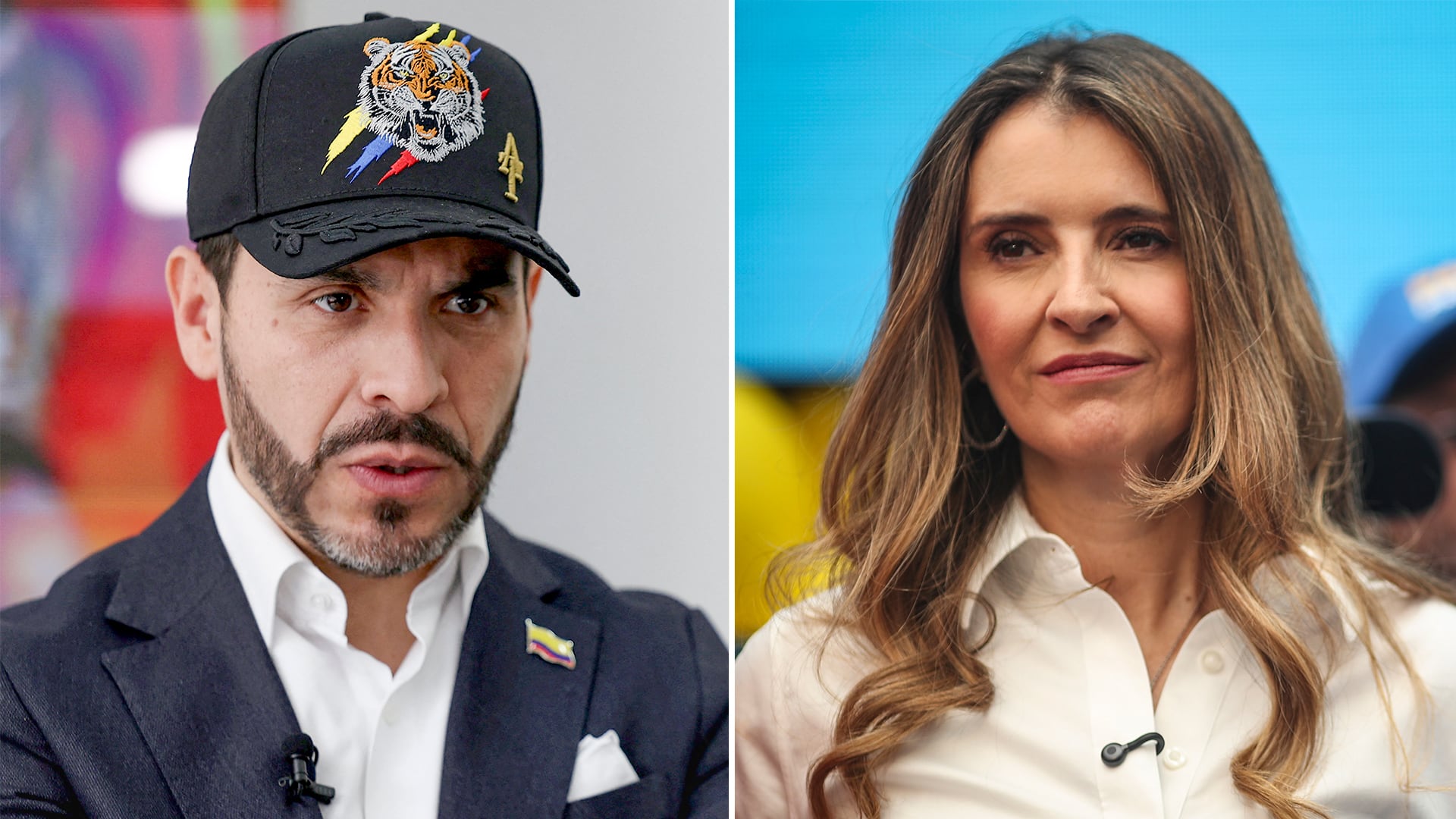
Left-wing Senator Iván Cepeda, Petro’s party colleague and the frontrunner in all polls, takes the stage flanked by bodyguards carrying heavy ballistic shields that never leave his side. His rival, far-right candidate Abelardo de la Espriella, who is fighting to reach the second round alongside Paloma Valencia, the candidate of the more traditional right, often speaks from behind bulletproof glass. All three have reported death threats. In a presidential race that was shaken early on by the assassination of opposition senator and pre-candidate Miguel Uribe Turbay — who died in August last year after a teenage hitman shot him in the head in broad daylight during a rally in Bogotá — violence looms large.

Petro has vigorously defended the claim that “there is no chaos of violence in this government,” arguing mainly that the homicide rate shows a small but sustained decline. But many other indicators show a tangible deterioration, such as extortion, child recruitment, and kidnapping figures. The next president, who will be sworn in on August 7, will inherit a country with more than 27,000 members of organized armed groups and at least 14 active zones of dispute among illegal actors, according to Public Forces estimates cited by the Ideas for Peace Foundation (FIP). Many new recruits are minors.

The map from the Electoral Observation Mission (MOE), another NGO, identifies violence-related risk factors in 339 of the country’s 1,100 municipalities, 126 of which are at extreme risk. Despite the welcome disarmament of the FARC, a disorderly archipelago of armed groups still operates, with more fractured structures in regions where all kinds of illegal economies exist, not just drug trafficking. The exit of the historic guerrilla group left a vacuum that, in the absence of a state response, has been filled by other armed actors more focused on controlling specific territories to exploit illegal economies than on threatening the state. “Colombia today has multiple local-level conflicts,” says Elizabeth Dickinson, deputy director for Latin America at the International Crisis Group. “The dynamics of the violence and the interests of the actors are local, not national.”

A four-year program of total peace — the ambitious but worn policy with which Petro sought to negotiate simultaneously with all groups — has produced few results. Talks with the ELN guerrilla, once the most advanced, remain deadlocked after a violent onslaught more than a year ago in Catatumbo that caused the forced displacement of more than 100,000 people. Even the staunchest supporters of negotiated exits from the conflict say Petro has failed to implement the 2016 agreement with sufficient determination.

The president who promised total peace has been overtaken by another cycle of Colombia’s endless war. To the old specter of political assassinations once thought to be overcome have been added a string of attacks and bombings. Last week, the vehicle of Senator Alexander López, a Petro and Cepeda ally, was shot at while he was returning from a campaign event in Cali to Popayán, the capital of Cauca, in what the president described as an attempted kidnapping by one of the multiple dissident groups. In mid-May, two campaign activists for De la Espriella were killed in the Meta department. In April, a dissident attack using a cylinder bomb on the Pan-American Highway left at least 19 civilians dead in Cauca, where Indigenous Senator Aida Quilcué — who was briefly kidnapped in February and later became Cepeda’s running mate — had previously been abducted. Cali, the country’s third-largest city, has been the target of several waves of attacks by dissidents led by Iván Mordisco, considered public enemy number one.

Cepeda, the Historic Pact candidate, does not rule out launching new peace talks — an idea widely resisted given the wear of the total peace strategy — and pledges full implementation of the 2016 agreement, arguing that security cannot be reduced solely to state coercion and therefore requires a strengthened preventive approach that tackles the lack of opportunities in peripheral regions. The far-right candidate, De la Espriella, calls for a hard line, strengthening the security forces and toughening the penal system; Valencia adds a call for greater institutional strength. “The narrative on the right is that the only option is to increase military force, but today the Public Forces are already operating with all their capabilities, at all times, and you cannot increase it further,” warns Dickinson of the International Crisis Group. “What can be done is to focus it more strategically.”

Sign up for our weekly newsletter to get more English-language news coverage from EL PAÍS USA Edition

Abelardo de la Espriella

In The Final Stretch Of Colombia’s Presidential Campaign, Undecided Voters Are In High Demand

Published

on

Just days remain until the first round of Colombia’s presidential election on May 31, and millions of citizens still haven’t decided which of the 12 candidates to vote for.

This heterogeneous group of undecided voters includes people with no clear political affiliation, those disillusioned with democracy, people who prefer to cast a blank ballot, young people with no interest in politics, as well as potential abstainers. Various campaigns estimate that, in this final stretch, these undecideds could represent a third of the total electorate. An analysis by independent digital news outlet La Silla Vacía (“The Empty Chair”) using microdata from polls suggests that the undecided account for around 28% of Colombian voters. Therefore, the five leading candidates in the polls have developed strategies to attract them… while being careful not to lose their base of loyal supporters.

Several political analysts consulted by EL PAÍS agree that undecided voters will play a decisive role in determining who will join leftist Senator Iván Cepeda in the second round. The battle for this spot is being waged by the right and the far-right, with Senator Paloma Valencia and criminal lawyer Abelardo de la Espriella in the mix.

Political strategist Diego Correales asserts that the latest polls, released Saturday and showing a surge in support for De la Espriella, “will be key in shaping the undecided voters, especially those torn between two similar options.” Correales explains how, four years ago, the results of those polls tipped the scales against the mayor of Medellín, Federico Gutiérrez, and in favor of the former mayor of Bucaramanga, Rodolfo Hernández, who ultimately lost to incumbent President Gustavo Petro in the second round. This time around, a key question in the electoral contest will be who is most likely to defeat Cepeda… a question that all the polling firms are asking when modeling runoff scenarios.

Augusto Reyes, director of the consulting firm Poder y Poder (“Power and Power”), maintains that the principal characteristic of undecided voters is that their vote is volatile; it can change at any moment, even in the hours leading up to the election. “They’re people without party affiliation, without ideological convictions, who are usually far from the extremes.” Reyes agrees that the main competition for their support is on the right, but insists that centrists like Claudia López and Sergio Fajardo — and even Cepeda — are seeking to secure that support with specific messages. “All the campaigns are targeting this large group [of undecideds],” he explains.

For Corrales, it’s no coincidence that, in the final days before the elections, President Petro — who has repeatedly expressed his desire to maintain the left-wing political project — has embarked on a series of interviews with major media outlets, delivering a moderate message and defending his administration’s record. “The president’s [TV appearances] and announcements are aimed at consolidating these undecided voters for Cepeda’s campaign. The goal is to gain two or three percentage points that could be decisive for the final result,” Corrales insists.

Nadia Pérez Guevara, who holds a doctorate in political science from the University of Salamanca, explains that the fact that there’s a two-round system in Colombia produces a greater number of undecided voters, because it gives citizens more time to make their final decision.

This expert mentions another factor: that a shift in political preferences has also increased the number of undecideds. “Electorally, Colombia is changing, as demonstrated by Petro’s election four years ago and the recent legislative elections (which were won by the leftist coalition). [Today], there’s a significant left-wing bloc and a very distinct right-wing bloc.”

In this realignment of forces, Pérez notes, many voters who previously voted for traditional parties or for the political center have been left adrift. “They don’t know what decision to make within the framework of the left-wing and right-wing alternatives, which — [despite being] the majority — don’t represent them.”

It’s within this context that Fajardo and López — trailing in the polls — are insisting on winning back these undecided voters. Fajardo, the former mayor of Medellín, is confident that, in the last 72 hours of the campaign, many doubtful citizens will agree that his proposals are the best option. In fact, he has publicly stated that there are recent precedents for this: “28% of voters are undecided! With just over two weeks to go, one in three Colombians is undecided. They’re unsure about what’s best for them, their families and their country. And that’s good. It’s healthy. Doubting, thinking, reflecting and getting informed, [these are] the best ways to decide how to vote. Everything is still up in the air. Anyone who tells you that the elections are [already] decided, in either the first or second round, is lying. There’s plenty of time and anything is possible!” he wrote a few days ago, on his X account.

However, Yann Basset, a political analyst and university professor, says that a significant percentage of these undecided voters are expected not to vote at all. He also explains that even many of those who already claim to have settled on a candidate won’t actually go to the polls. “Studies show that there’s a segment of the electorate that always decides at the last minute. And that’s why it makes sense for campaigns to target undecided voters… but the key lies with those who abstain.”

Basset insists that, in Colombia, where voting isn’t mandatory and almost half the population doesn’t exercise their right to vote, convincing abstainers can change the election result more than convincing undecided voters. And time is running out.

Sign up for our weekly newsletter to get more English-language news coverage from EL PAÍS USA Edition

Continue Reading

Abelardo de la Espriella

Sexism Looms Over Colombia’s Presidential Race Between Paloma Valencia And Abelardo De La Espriella

Published

on

sexism-looms-over-colombia’s-presidential-race-between-paloma-valencia-and-abelardo-de-la-espriella

The far-right candidate is navigating treacherous ground to reach the second round of the Colombian presidential election. Abelardo de la Espriella, who is vying for second place in the polls with Uribista candidate Paloma Valencia, gave two interviews — one on radio and one on television — that have dominated the debate due to his misogynistic remarks. On the radio program Piso 8, he claimed that he gained many female votes because of the size of his genitals and asked the reporter present to zoom in on a photo that highlighted them. On television, he called a veteran journalist ignorant when she asked him about a comment the criminal lawyer had made years earlier: “Ethics has nothing to do with the law.” Journalists and politicians came out in defense of women and criticized the lawyer, making sexism a central issue in the electoral arena. This presents an opportunity for Valencia to gain ground, but De la Espriella also has a path to maintain his lead in the polls.

The electoral opportunity was first recognized by Juan Daniel Oviedo, Valencia’s vice-presidential running mate, who shared a video of De La Espriella’s radio program appearance on social media. “To say that he won the female vote ‘because of how big he is’ only speaks to his own small-mindedness,” he wrote. The far-right candidate’s misstep resonated particularly with Ovideo, an economist, who had been the target of homophobic comments from De La Espriella just days after the presidential primary in which Oviedo faced Valencia and other right-wing candidates. Rather than damaging his campaign, these comments ended up giving the former Bogotá councilman more visibility: he garnered the second-highest number of votes, second only to Valencia, and thus became her running mate for president.

But Oviedo capitalized at that moment on votes from the political center, which his running mate, Valencia, now faces the difficult challenge of winning over without losing the support of her traditional base on the established right. That’s why, when the senator speaks about gender, she always does so from a conservative perspective: she doesn’t consider abortion a right, she says feminism is left-wing, and she talks about defending children who are adopted by diverse families (like that of her vice-presidential candidate).

This Tuesday, Valencia also saw an electoral opportunity and rejected the comments of her right-wing opponent. But she did so discreetly, without mentioning his name or speaking of sexism. Instead, she suggested an apology. “Women journalists shouldn’t have to put up with sexual jokes, offensive insinuations, or personal attacks for daring to ask questions,” she said on her social media, adding: “Whoever is wrong in their treatment of women should acknowledge it and apologize.” A middle ground in which she points out her opponent’s obvious sexism without calling him a misogynist. A stark contrast to the reaction of the left-wing candidate, Iván Cepeda: “We must defeat the patriarchy in Colombian society.”

However, those surrounding Valencia on the campaign trail were less discreet. “Sexist attitudes cannot continue to be normalized or disguised as humor, nonsense, or vulgarity. That is neither charisma nor authenticity. It is a lack of respect,” said former senator David Luna, who is campaigning for Valencia.

Although the Uribista candidate has much to gain if De la Espriella’s comments backfire, she could also lose a great deal if the far-right campaign portrays her as the “woke” candidate, the one who espouses political correctness. This is demonstrated by the reaction of Senator-elect and influencer Alejandro Bermeo, who is close to De la Espriella’s campaign communications team and a member of the party that endorsed him, National Salvation. “The establishment, with the direct backing of Paloma Valencia, is fabricating a #MeToo movement against Abelardo de la Espriella,” he said on social media. “Like desperate ‘progressives,’ they’re using gender issues as a weapon to eliminate anyone who doesn’t belong to the ‘yes we can’ club of watered-down progressivism,” he added.

Valencia’s campaign has already struggled to attract a segment of the right-wing electorate, who are drawn to De la Espreilla not only for his “outsider” rhetoric but also because they perceive him as “stronger.” “I have the balls to do what Colombia needs done,” the candidate declared at an event in Bogotá last week, in another instance where he elected to allude to his genitals to emphasize his gender. He has also stated that he does fight against violence against women, having represented, as a lawyer, the family of Rosa Elvira Cely, a woman brutally raped and murdered in Bogotá in 2012, and Natalia Ponce de León, a woman attacked with acid by her partner in 2014.

What remains to be seen is whether a sexist incident will deflate a candidacy or simply prove ineffective among right-wing voters. Engineer Rodolfo Hernández, who ran against Petro four years ago as an outsider to the political establishment and a right-wing candidate, was hit hard by a video published by journalist Daniel Coronell two days before the election, in which he appears on a yacht in Miami dancing with several women in swimsuits. The former mayor of Bucaramanga had also previously stated that “ideally, women should dedicate themselves to raising children,” but that comment did not prevent him from advancing to the second round.

Another example of this lack of impact was provided by Donald Trump in 2016, when he was the Republican candidate. A month before the election, an audio recording surfaced in which the businessman spoke about grabbing women’s genitals whenever he felt like it: “When you’re a star, they let you do anything to them.” Despite the scandal the audio generated, he defeated Hillary Clinton, who represented “old politics” for a large part of the electorate. The anti-establishment vote can carry more weight than the rejection of sexism.

That has been precisely De La Espriella’s strategy. His AI-generated videos repeatedly claim that Valencia represents “the usual suspects,” a term that includes not only traditional Uribismo but also the senator’s old political rivals: former president Juan Manuel Santos, presidential candidate Claudia López, and Interior Minister Armando Benedetti. None of the three are even remotely involved in the Uribista campaign, but the far-right candidate’s campaign has sought to establish this narrative. Valencia has defended herself by arguing that she is “one of the usual suspects,” but in the sense that she has always worked for Colombia, while he has lived abroad for many years. This second narrative has not been as successful.

Valencia and De La Espriella know that any misstep between now and May 31 will determine who wins among right-wing voters and advances to a virtually certain runoff against left-wing Senator Cepeda. They also know that sexism played a role in the campaign, but it’s still unclear whether it worked in favor of or against the candidate who boasted about his genitals to a reporter.

Sign up for our weekly newsletter to get more English-language news coverage from EL PAÍS USA Edition
Continue Reading

Trending

Copyright © 2017 Spanish Property & News