
ElPais
How Social Media Platforms Keep Students Hooked: Notifications During School Hours And Paid ‘teen Ambassadors’










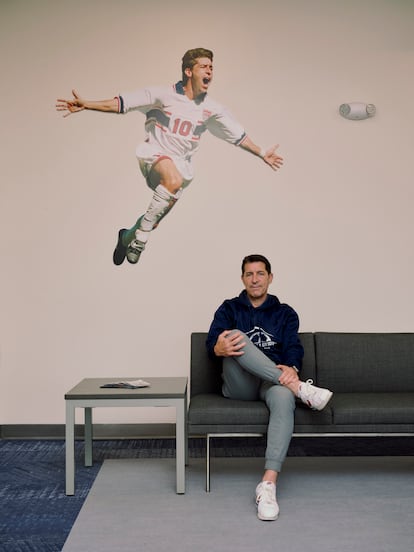
The first time U.S. soccer legend Tab Ramos played on a team in the country he had just moved to from Uruguay, Argentina was the reigning champion of the 1978 World Cup and the boy was thrilled that the jersey he was given, the Harrison Rec kit, was orange “like the Dutch one.” Ten minutes in, the coach took him off the field: he was too good to compete with that group. He was 12 years old.
“I remember the little baseball field and that I could score from the other goal,” Ramos recalled with a laugh one rainy May day at the facilities of the soccer school he is about to open in Hillsborough, New Jersey, after retiring as a coach.
After that failed attempt, the boy joined a team in the neighboring town, where Scottish immigrants had founded, as early as 1895, the Kearny Scots, who still compete in the state league as testimony to a passion rooted in this corner of the United States. There, 10 years earlier, one of the first international matches played in the country took place, in the shadow of a factory that today is the parking lot of a trendy restaurant.
Kearny is a working-class town of 40,000 inhabitants on the New Jersey side of the Hudson River. It sits in the shadow of New York, in the heart of The Sopranos country, and behaves like a close-knit, proud community whose roots are diversifying with waves of Peruvians and Ecuadorians, whose restaurants dot the main street.
If it is known as Soccertown USA — a nickname that also titles a 2019 documentary about Kearny’s love affair with the game — it’s not only because the English and Scots brought it early. It’s also largely thanks to Ramos’s generation. Three players from Kearny (himself, goalkeeper Tony Meola and midfielder John Harkes) played in the 1990 and 1994 World Cups with the U.S. national team.
Those two tournaments are usually credited with reigniting — in this inward-looking country that long dismissed the world’s favorite sport — the spark of interest in soccer that had faded after two earlier bursts. The first was a century ago, when the United States had a strong league and achieved its best result at the inaugural World Cup in 1930: they finished third with a squad that included three other neighbors from the Kearny area.
The second flash came in the 1970s when the New York Cosmos signed Pelé. The fading superstar played three seasons in front of packed stadiums of up to 70,000 fans. “That team invented the idea of the galácticos; that’s how many stars it attracted,” says Andrew Kilpatrick, the Cosmos’ official historian, who recalls that a young Donald Trump from Queens was a fan of the team.
In 1985 both the club and the league, a victim of its own greed, disappeared. That double blow left fans in towns like Kearny alone in their work of keeping the flame alive.
Four years after the collapse, Ramos assisted Paul Cagliari’s goal against Trinidad and Tobago that in 1989 secured the USMNT’s first World Cup qualification in 40 years. As Mark Franek recalls in his newly published book American Soccer Nation, local sportswriters dubbed that play, in tribute to Ralph Waldo Emerson, “the shot heard around the world.”
By then, FIFA had already chosen the United States to host the next tournament on the condition that its federation create a professional league. The hosts fell to Brazil in the round of 16, and Ramos suffered an elbow from Leonardo that caused a skull fracture and sidelined him for six months at the worst moment: after a spell at Figueres, he was playing for Real Betis in Spain, which had just been promoted to La Liga. Because of the injury, he missed almost that entire season.
The United States did its part by creating Major League Soccer (MLS), which, 30 years later, remains the country’s top competition. Ramos was there again: he was the first player signed by MLS under one of those rules that set it apart from its bigger European cousins — the league, not individual clubs, makes the signings. There is no relegation, and part of the early-season roster renewals are decided by a draft that can send the best players to the weakest teams.
“That’s undoubtedly an incentive for fans; bear in mind there hasn’t been a repeat champion two years running in a long time. And the lack of relegation is a blessing for coaches; there’s less pressure,” Domènec Torrent, who was Pep Guardiola’s assistant at Barcelona, Bayern, and Manchester City before moving to the United States to manage New York City FC, explained in a phone interview. On arrival, he found “a league much less technical than it is now, very American, focused on spectacle, based on constant attacking without worrying about defending.” “That has changed,” he added.
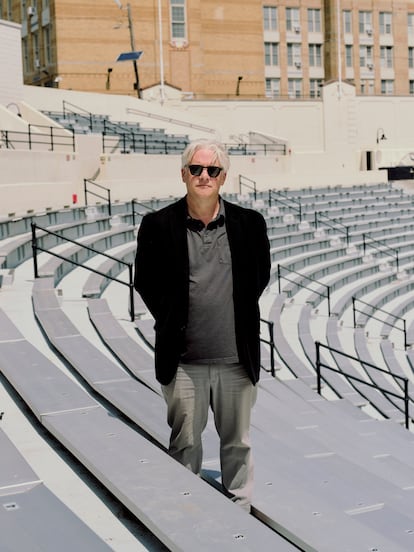
Ramos belongs to an earlier incarnation. He played until 2002 with the New Jersey MetroStars, a team that in 2006 was bought by a German energy drink brand and rebranded as the New York Red Bulls. It is one of MLS’s 30 teams (15 on each coast) and plays in a stadium in Harrison, not far from where as a child he was once taken off the pitch for being too good.
The midfielder, like the rest of the U.S. soccer community — long the victim of what journalist Franklin Foer calls “the anti-soccer mafia” — wondered in the days before the World Cup opening game on June 11, which the country is hosting again alongside Canada and Mexico, whether the tournament will be the definitive boost that has never quite arrived. He also wondered whether milestones such as the cultural reach of the TV series Ted Lasso — about an unsuccessful American coach who finds redemption on the bench of a struggling English club — or the arrivals of high-profile stars like David Beckham, whose commitment to MLS included investing in Inter Miami (the league’s most recent champion), or above all Lionel Messi, have brought them closer to that tipping point.
The Argentine superstar arrived at Inter Miami in 2023 like a sporting and commercial whirlwind and promised to mark a before and after in soccer’s social penetration. With between $70 million and $80 million a season from salary, sponsorships and other income, he is the highest-paid player in a league that limits the number of foreigners and how much can be spent on them.
Jorge Mas, founder and majority owner of Inter, is the man who pursued Messi’s signing for years (and later brought over other big-name former Barça players). In a phone conversation he said his goal “has been achieved tenfold.” “And Leo’s, I believe, too. He has shown that the fanbase exists. I’d like to think bringing him and the others has contributed to the growth of the sport in the United States,” the Cuban-American businessman said.
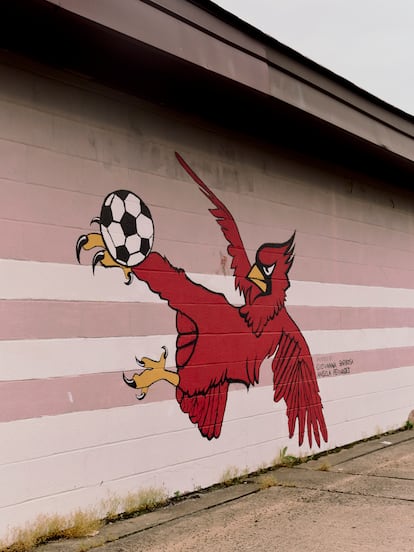
Ramos, not given to hyperbole, admits that “soccer has changed a great deal professionally,” but warns that “its presence in American households remains limited.” “I’d say soccer ranks eighth or ninth among sports in American homes. It’s different for foreigners; we always bring it with us,” he said.
Everything will depend on whether the organization of what may be the strangest World Cup in living memory is a success, with FIFA president Gianni Infantino courting Trump with a peace prize while the latter threatens to sow terror by deploying his immigration police around the matches.
Ticket and transport prices to the New Jersey stadium that will host the final are sky-high, and there are doubts about the condition of some playing surfaces in venues designed for other sports, like baseball and NFL. Meanwhile, New York Mayor Zohran Mamdani, a soccer scholar and shareholder in Spanish club Real Oviedo, plans to raffle off 1,000 tickets at $50 each to city residents, in a metropolis where soccer is gradually gaining ground in the streets, thanks in large part to immigrants and women. The Pier 5 courts at the Brooklyn Bridge Park, overlooking the Manhattan skyline, could compete for the title of best-view pitch in the world.
It will also depend on how the national team performs. If one believes a new HBO mini-documentary entitled U.S. Against the World, it isn’t outlandish to think the hosts have a shot at the title. “We made a pact,” says Christian Pulisic, the AC Milan player and USMNT star, at the start of the film, which opens with the failure to qualify for the 2018 World Cup. “We want to change soccer in this country, and there is no better opportunity than playing a World Cup at home.”
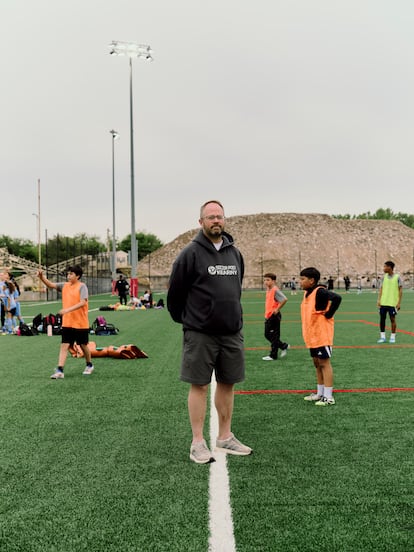
Michael Mara is more skeptical about his country’s chances: recent matches under Mauricio Pochettino left him with a bad feeling, he said at the Thistle training grounds, the youth club of Kearny. A boundless source of stories whom everybody knows and greets, he is its chief executive. “Everything here revolves around community,” Mara explained. “It’s less about competing than feeling you belong, whether you arrived yesterday or decades ago.”
Kearny’s story is “at the intersection of immigration, industry, and sport,” says Tom McCabe, co-writer and co-producer of the documentary Soccertown, which shows how English and Scottish factories in New Jersey had their own teams. He also describes the “three ages of soccer” in the United States. The first, a golden era, is told through the industrial cities where the game thrived and stretches to the 1930 World Cup. “There was a prosperous professional league that poached players from Scotland and England because they were paid more here to work during the week. That ended with the Great Depression when companies stopped spending on sport,” McCabe says.
The second age was that of “ethnic clubs”: German, English, Italian or Portuguese teams that kept the ball rolling. “The third arrives with Pelé and the rise of amateur youth soccer in the suburbs,” the historian adds. That’s when soccer found its place in the U.S. competitive landscape, where the dominant sports stagger their seasons so their leagues don’t overlap.
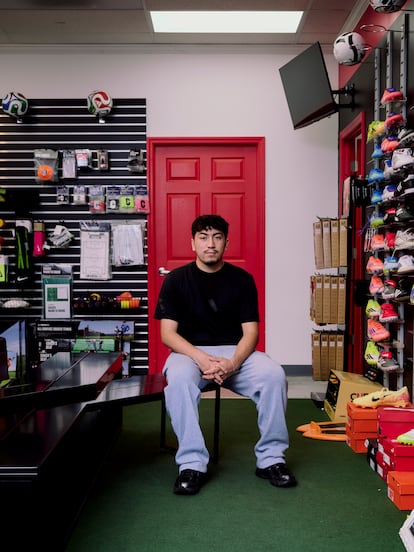
“Will we enter a fourth age with this summer’s World Cup? I’m not sure yet,” McCabe, who lives in London, says; when he returns home he often drops by the shop Mara opened three years ago in downtown Kearny.
The shop is dedicated exclusively to soccer. When we arrived it was rush hour: the World Cup album had been released that day and the flow of kids buying packets of stickers was constant. One of the clerks, Christian Escandón, whose promising career was cut short by a ligament tear, said the best-selling jersey is Ecuador’s, because of the growing community of Ecuadorians but also because Ecuador will play a friendly against Germany at the Red Bulls stadium in early June.
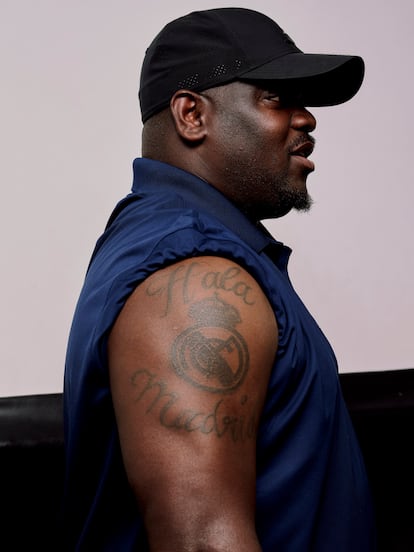
Glendon Cateau was there too; he works as a robotics engineer at Amazon’s huge Staten Island plant, although his “life,” he clarified, is soccer. Specifically, Real Madrid, as he proved by lifting his shirt to reveal a tattoo of the Spanish club’s crest.
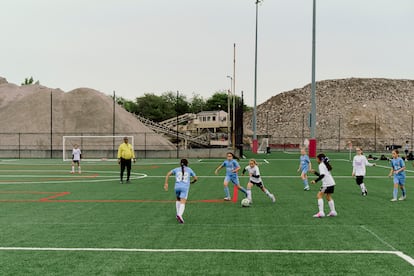
Cateau, from the island of Grenada, coaches the 12-year-olds and was due to train that night. Meanwhile, girls from Paisley, Kearny’s women’s team — named after the Scottish town and the paisley pattern that once supported the New Jersey town’s golden era as a textile production center — were on the adjacent pitch in front of a squad in shinier kits. “We like beating those newer clubs whose parents pay a fortune for their kids to play,” Mara said from the sideline.
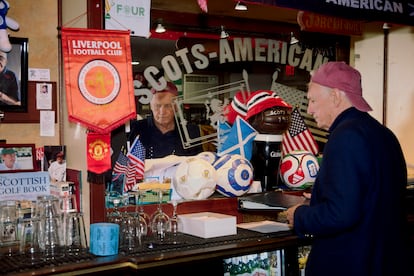
Adults played the third half in the Scots-American Club bar, a true temple with an astonishing collection of scarves, pennants, shirts, trophies, and other soccer memorabilia and a horseshoe pitch in the backyard. It’s a society that only started admitting women “about 10 minutes ago,” quipped Eddy Duffy, its manager, a genuinely funny septuagenarian Scot who wears his cap backwards like a rapper.
He arrived in Kearny 49 years ago with his wife, Alice, who was there that night too. With a thick accent she still retains, she said she has volunteered behind the bar for 25 years. She also said she supports Celtic and that Eddy supports Rangers, the two rival Glasgow clubs. “When we showed the derbies on TV, each fanbase took one corner of the bar,” she recalled. “As the beer bottles piled up in the middle, the space between them narrowed. In the end they’d be hugging.”
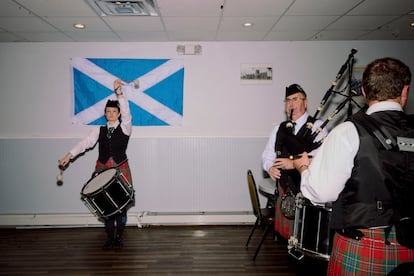
After a while part of the St. Columcille pipe band arrived; it has more than 100 members and rehearses upstairs. Dressed in kilts and matching ties, they had come straight from performing in a Memorial Day parade. Snare drummer Katie McGonigal, great-granddaughter of the founder and daughter of its current director, said that even if she had the money — “a lot of money” — she wouldn’t trade watching World Cup matches at the club for going to one of the 16 stadiums where a record 48 teams will play across three countries. Like the rest of the Scots’ regulars, she was almost more excited about a Scotland friendly against Bolivia at the Red Bulls stadium, for which the club will charter several buses.
Mid-conversation, a guy interrupted and said: “Has Katie already told you she was a very good player?”
“Everyone in this town seems to have been.”
“No, no, but she could have gone a long way.”
In the United States, “a long way” in women’s soccer is really a very long way. While the men’s team struggled through one World Cup cycle after another, the women have won four since 1991, though that didn’t stop their stars from protesting pay inequity. In 2022 they secured a $24 million settlement from the federation.
Aside from big names who come here to retire — like Messi or Luis Suárez — salaries for men are not yet comparable to Europe’s, although money has been flowing lately with genuine American enthusiasm through various competitions as clubs invest in top facilities and stadiums. For many domestic and South American players, the U.S. is a platform, a springboard for a move across the Atlantic.
The path is increasingly traveled the other way around too. Catalan Uri Rosell was a pioneer: he arrived here young, not at the end of his career, and it worked — he became the first Spaniard to win an MLS Cup title in 2013 with Sporting Kansas City. In 2024 he hung up his boots with the Los Angeles Galaxy and has opened a consultancy in the city to connect players with sponsors and brands in a promising market.
“MLS is no longer just a league of former greats. It’s increasingly investing in youth,” Rosell told this newspaper by phone. “Previously players arrived at 23 or 24 after college. Now there are 18- or 19-year-olds jumping up from MLS Next Pro.”
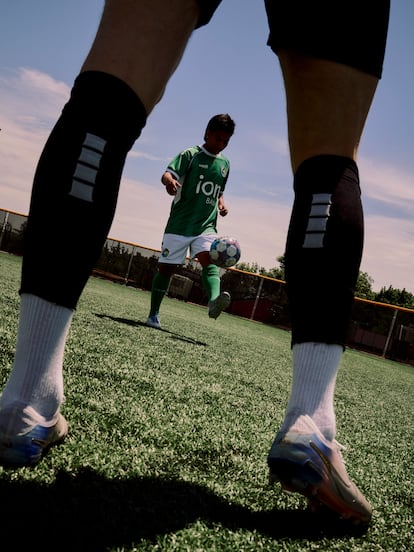
Created in 2022, MLS Next Pro is an unofficial second division for the main league. For the kids who trained on Kearny’s fields under the overcast sky the day EL PAÍS visited, it’s a route — no easy feat in a country of 350 million people — to professionalization. They can also end up in other leagues considered below MLS, though unrelated to it.
And that possibility is closer to becoming reality. The day before, Ramos had revealed at his school his plans with Meola, his former national teammate, to acquire a franchise to found a club in Kearny, absorb the city’s youth categories, build a stadium and make the team of his childhood “professional.”
The idea is to compete in the United Soccer League One (USL), which Ramos likens to “something like a fourth division.” If those plans go ahead, Thistle FC would face the New York Cosmos. Pelé’s old club has been resurrected this season (for the second time) by a man named Eric Stover, who has relocated it to Paterson, a New Jersey town with a brilliant industrial past and literary echo — it inspired poet William Carlos Williams to title his famous epic poem, a modernist masterpiece.
In better times Paterson was the Silk City, but for decades it has been ravaged by drugs and crime. “Part of the project is about revitalizing the community through soccer,” said Kilpatrick, the Cosmos historian, at Hinchliffe Stadium, an art-deco gem that, like so many fields in the country, is primarily a baseball ground — the true American pastime.
The city, Kilpatrick adds, was also where the first U.S. soccer club was founded in 1880, so there, as in Kearny, the past and present of soccer meet — terminology that, the historian clarifies near the end of this trip through its roots, is “despite appearances, the fault of the English.”
In case you were wondering, this is how it happened. When football and rugby were two sports called “association football” and “rugby football,” respectively, but not yet fully defined, Oxford students referred to one as soccer and the other as rugger. The first trace of its use on this side of the Atlantic dates to 1905 during a visit by the Pilgrims, who thrashed a local team. Over the years football won the semantic battle in England, but in the United States the opposite happened.
It’s now highly unlikely that will change. But who knows. Isn’t part of a World Cup’s magic that it creates a pause from daily problems in which you can dream the impossible?
Sign up for our weekly newsletter to get more English-language news coverage from EL PAÍS USA Edition

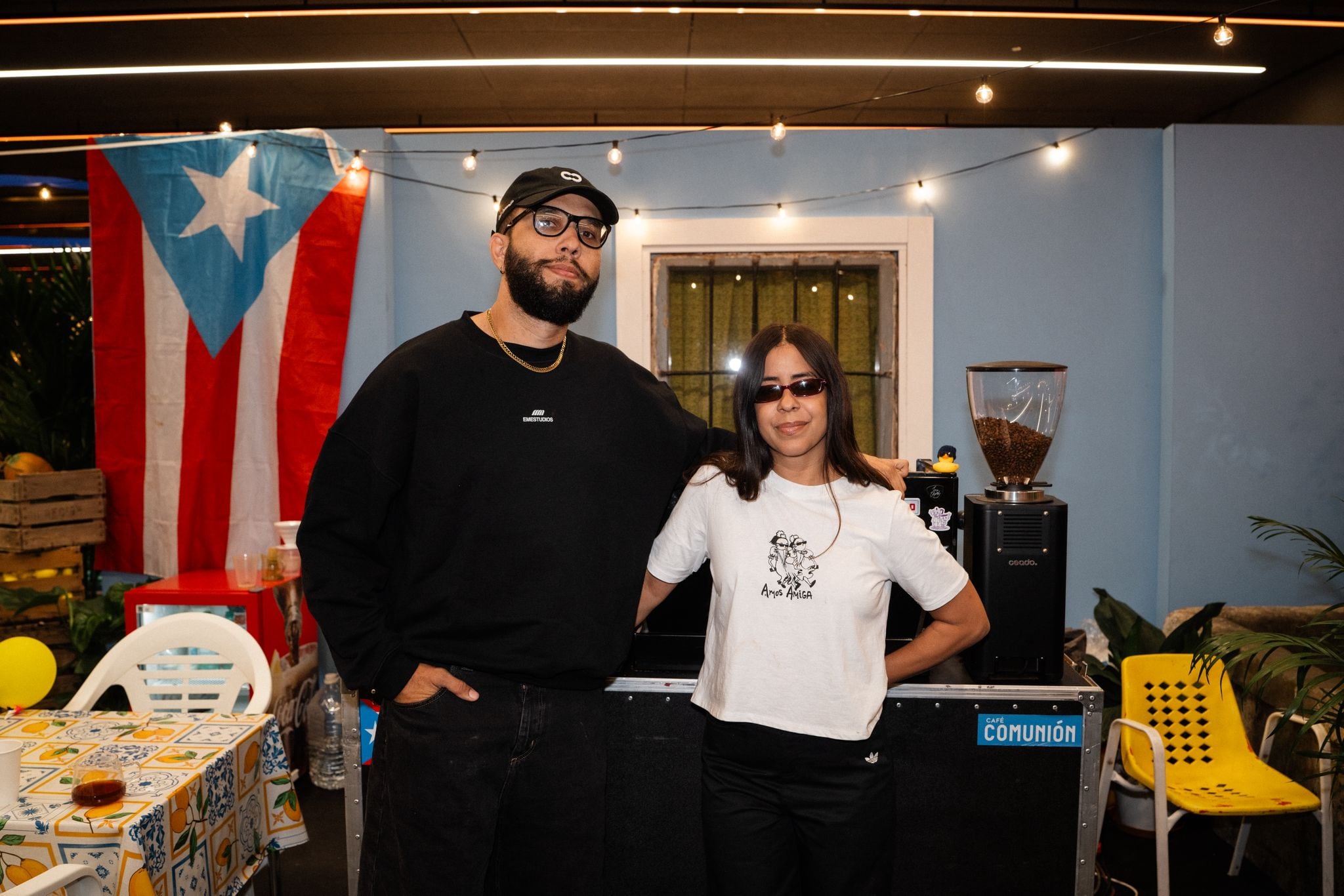
In September 2017, just as Abner Román and Karla Ly Quiñones were about to open the doors of Café Comunión in the Santurce neighborhood of San Juan, Puerto Rico, Hurricane Maria devastated the island.
“It took the entire front of our shop, we had structural damage and there was no electricity,” they remember. Instead of serving coffee from behind a counter, they took to the streets. “I would make it at home in the morning and walk across the street with a thermos, milk and sugar,” Abner recalls. They gave the coffee away for free, and also accepted donations, which they used to rebuild what the devastating storm had destroyed.
Who would have thought that seven years later Bad Bunny would stop in for a coffee at their shop after voting in Puerto Rico’s 2024 gubernatorial election? And that the singer would end up forming such a close relationship with Karla and Abner that he would offer them the chance to join his tour so he could keep drinking his favorite coffee while performing around the world.
“He came with his assistant, sat at the bar and we spent several hours talking about coffee and normal things, like NBA games,” they say. He came back the following week and kept coming back. Abner thinks this is because “they treat him like everyone else. Other customers have caught the vibe and no one asks him for photos. They greet him, yes, but I think that’s part of why he likes coming here.”
The truth is that before Benito Antonio Martínez Ocasio stopped by Café Comunión, several members of his team were already regulars. Through their frequent contact with people working in the music industry, Karla and Abner had toyed with the idea of offering their coffee services at concerts, but they never imagined they would do so on a tour of this scale, catering to all the backstage staff.
First they took part in Bad Bunny’s 30-show residency in Puerto Rico, held between July and September 2025. Then they were invited to join the DeBÍ TiRAR MáS FOToS world tour — and off they went, with their “coffee shop on wheels” and their six‑year‑old son in tow.
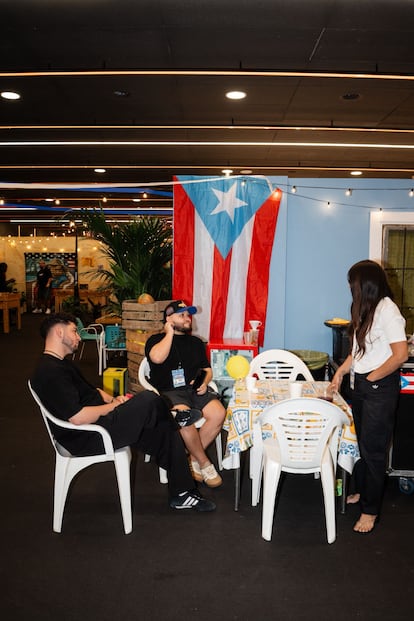
Over the past few months, they have been serving coffee backstage at Bad Bunny’s concerts in the Dominican Republic, Costa Rica, Mexico, Argentina, Brazil, Chile, Peru, Colombia, Australia — and now Spain. Each day, they cater to between 150 and 200 members of the artist’s crew, as well as the show’s guests. Abner admits he himself is still amazed by the situation.
“I had never heard of an artist taking baristas on tour. Concert venues offer catering services that include coffee, but here they wanted an experience — an area where colleagues could come to talk and disconnect,“ he says. ”Like going out for a coffee, but in the backstage area.”
Café Comunión’s distinctive blue cup has even made its way onto the stage on several occasions, with Bad Bunny raising it in front of the crowd.
Despite years of experience running their business, managing a mobile specialty coffee shop comes with its own challenges.
“Before we arrive at each city, we contact local suppliers and try to use that country’s coffee,” they explain. “We speak with roasters and producers, with espresso machine technicians (just in case), with milk distributors and sometimes with baristas in case we need someone to cover a shift.”
While they travel with the tour, their team keeps the two cafés they own in San Juan open (in addition to Santurce, they have another location in Río Piedras) and, in the downtime between shows, they make the most of the opportunity to meet other people in the industry. “We try to build connections in every country we visit.”
On June 4, during their stay in Madrid, they will be at Hola Coffee Roastery (Av. de Pedro Díez, 21Bis) preparing coffee and some of their signature drinks, a collaborative format they previously organized with cafés in Colombia, Mexico and Peru.
“The idea is to bring the Comunión experience to the country we’re in,” they say.
And what does that experience consist of? “We use the word ‘comunión’ in its secular sense. We want people who come to our coffee shop to feel welcomed and be able to disconnect in the company of others, creating a kind of communion between the barista and the rest of the customers.”
Two teachers who fell in love with coffee
Before opening Café Comunión, both Abner, 44, and Karla, 38, were teachers by profession — he taught English and she taught history. Owning a business had always been Abner’s dream, and this drink —which, according to him, “is consumed at all times in Puerto Rico” — had always caught his attention. So in 2008, he asked for a job at one of the cafés he used to frequent.
“Since teachers have the summer off, I asked if they would give me a chance to work those months,” he recalls. “I started washing dishes, then working at the cash register, and I really liked the coffee-shop atmosphere. Little by little, I learned to be a barista, and in 2013, I won a national latte art competition and then went to compete in Australia.”
There was no turning back. That prize confirmed he could make the leap from the classroom to the coffee bar, and he did. Karla joined shortly afterwards, focusing more on importers and the farms that grow the coffee.
“Although really we both do everything, because we’re a small business,” she says.
They gradually built a place for themselves in the coffee industry, and the next logical step was to open their own café. That’s how Comunión was born in 2017. Despite delays caused by Hurricane Maria, they managed to open before the end of the year, in December.
By then, Karla and Abner had been living in Santurce for some time, and he had worked for years in one of the neighborhood’s cafés, so they were already familiar faces in the area — something that helped them build a strong community around the business.
“After the hurricane, when neighbors saw us working hard to get things going, we connected even more. It was a moment when the community really came together, and we formed a very special bond,” Abner recalls.
They continued to take part in neighborhood activities and even opened their café space for community meetings. “We’re always ready to help however we can.”
Recently, Café Comunión was included on the list of the 100 best cafés in North America, Central America and the Caribbean. It ranked 44th, and was the only café from Puerto Rico to make it on the list.
“It made us feel very honoured; it was confirmation that we’re doing things right,” they say.
The couple has earned recognition from their own community in Puerto Rico, from the industry and now Bad Bunny — what will come next?
Sign up for our weekly newsletter to get more English-language news coverage from EL PAÍS USA Edition
Bad Bunny
It’s Been 50 Years Since The ‘most Important Concert Of All Time’… And Everyone Who Saw It Would Fit Inside Bad Bunny’s ‘casita’

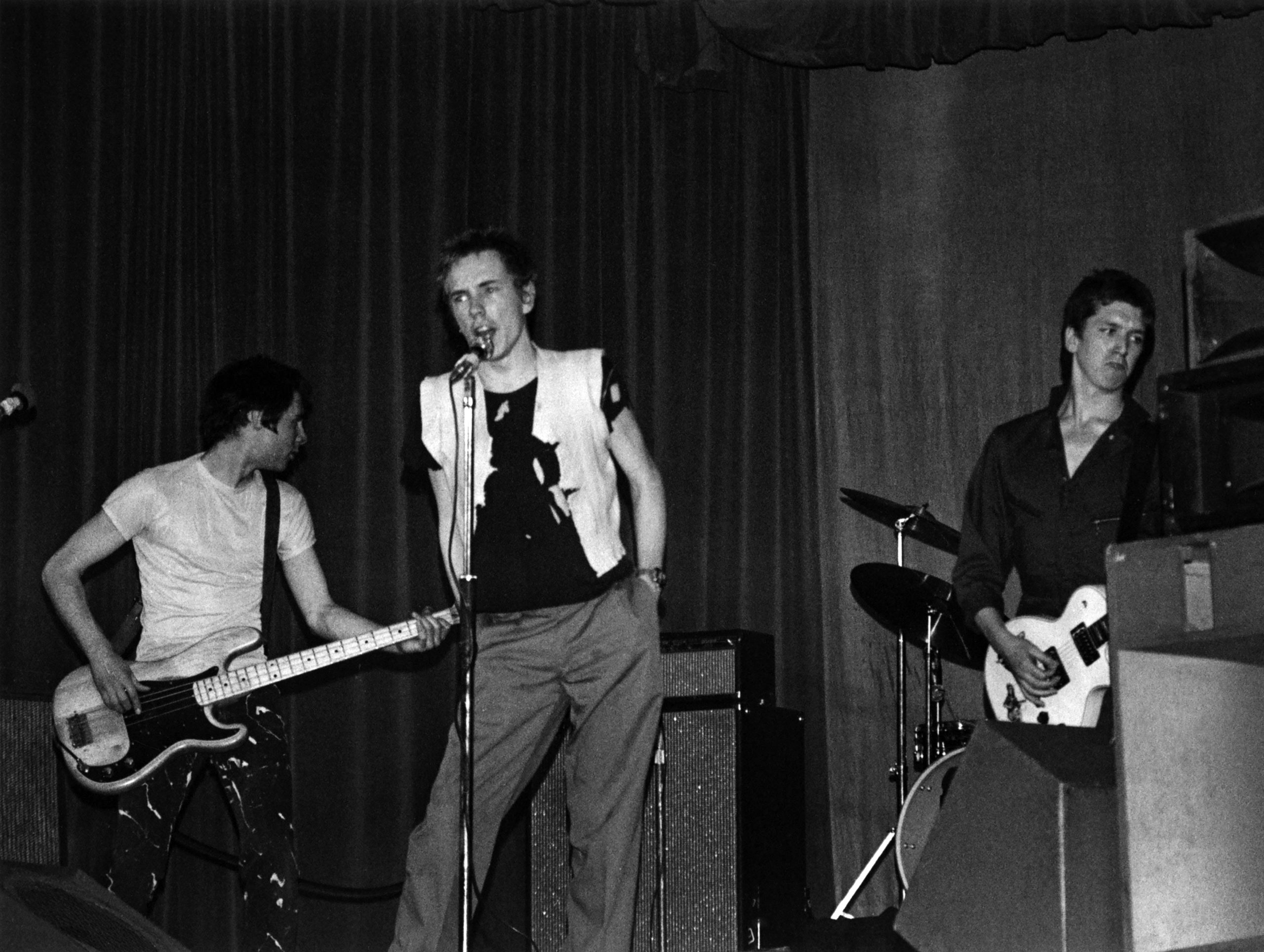
At a time when tens of thousands of people flock each night to see Bad Bunny in Madrid and share millions of videos capturing his every move, it feels strange to think that on this very day, exactly 50 years ago, a concert took place that was likely attended by fewer people than those dancing each night in the Puerto Rican star’s casita — and yet may have changed popular music forever.
A gig recreated in at least two films (24 Hour Party People and Control) and named by NME as “the most important concert of all time.” We are talking about the Sex Pistols’ concert on June 4, 1976, at the Lesser Free Trade Hall in Manchester.
Half the boomer population of that northern English city claims to have attended the seminal punk show. But, as David Nolan notes in I Swear I Was There, the canonical book on the concert, it is relatively easy to clear up one of rock history’s great mysteries: how many people actually went to see a bunch of nearly unknown lads from London that hot Friday night in Manchester?
According to the city’s municipal archives, ticket sales generated a total of £14. At 50 pence a ticket, 28 tickets were sold. The confusion — and the ever-shifting number of supposed attendees — is partly explained by the fact that the Pistols played another show in the city a few weeks later. The select club of spectators that legend has placed in that room — including Bernard Sumner and Peter Hook (Joy Division and New Order), Morrissey (the Smiths), Marc E. Smith (The Fall), and Tony Wilson (Factory Records) — was most likely split between the two dates.
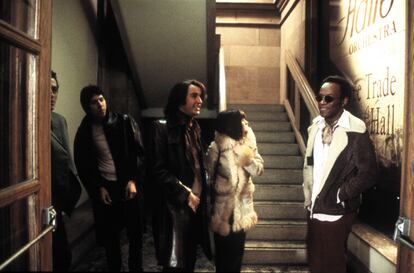
What is known is that the men who brought the Pistols to that venue were Peter McNeish and Howard Trafford, two Manchester lads who were fed up with the glam rock they heard at university. In a northern city like theirs, the way to learn what was happening in London was to read the British music press, which applied Fleet Street’s taste for hyperbole to popular culture.
On February 18, 1976, they read a review in NME, written by Neil Spencer, about a band that had opened for Eddie and the Hot Rods at London’s Marquee club. It said that they had played a cover of The Stooges’ No Fun, and that when someone in the audience complained they couldn’t play, a member of the band replied: “So what?” The article spoke of sex, violence, and anarchy. “We’re not into music, we’re into chaos,” the band said.
That review changed their lives — and their names. They became Pete Shelley and Howard Devoto, and began to sense a path forward for the band they were putting together, The Buzzcocks. They had a friend’s car at their disposal that weekend and drove to London to see the Sex Pistols. They caught them live on February 20 and 21, and, asking around for their manager, were directed to 430 King’s Road, where Vivienne Westwood and Malcolm McLaren ran the boutique Sex, around which the fledgling London punk scene revolved. The rest is history.
On June 4, Johnny Rotten, Steve Jones, Glen Matlock and Paul Cook — the Sex Pistols — played in the small upstairs room of the Lesser Free Trade Hall what may have been the most important of the 124 concerts they performed before imploding on stage on January 14, 1978, at the Winterland Ballroom in San Francisco — an event that symbolized the official death of the original era of punk.
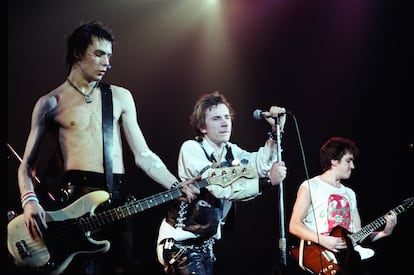
In truth, the epiphany experienced by the members of the four Manchester bands transformed by the Pistols’ shows in the city (The Buzzcocks, Magazine, Joy Division and The Fall) was more aesthetic or philosophical than musical. They did not replicate their sound, but they did adopt their attitude. That night 50 years ago, the Pistols broke the traditional relationship between audience and band. It was no longer about admiring virtuosity or an elaborate stage production. They showed a direct path for anyone who wanted to express their discontent. A new way of understanding rock was born — one that would go on to shape decades of English music and, by extension, music around the world.
But that concert also speaks to how myths are made: layers of truth and fiction that settle over decades. All that remains of the show is a homemade poster, a bit of Super 8 film, a few photographs, and a ticket that, incidentally, mistakenly lists the year as 1076.
Fifty years later — though it feels like 950, as the ticket suggests — pop continues to create myths. From Johnny Rotten to Bad Bunny, from Vivienne Westwood to Marta Ortega. As for journalists, we remain determined to find “the most important concert of all time.” But this time, with far less room for myth, it is witnessed by hundreds of thousands of people live — and tens of millions more through the screens of their phones.
Sign up for our weekly newsletter to get more English-language news coverage from EL PAÍS USA Edition

El Vaticano Sale Al Paso De La Polémica Con Las Víctimas De Pederastia Y Confirma Que El Papa Se Reunirá Con Ellas En España

El Nasdaq Baja Un 4,18% En Una Sesión Marcada Por La Debilidad De Las Tecnológicas

How Social Media Platforms Keep Students Hooked: Notifications During School Hours And Paid ‘teen Ambassadors’
In The Final Stretch Of Colombia’s Presidential Campaign, Undecided Voters Are In High Demand

How To Get A Tourist Rental Licence In Andalusia (Spain) – Step-By-Step Guide 2025
Spain heatwave 2026: When the next extreme temperatures could hit and which areas may suffer most


-
Abelardo de la Espriella2 weeks ago
In The Final Stretch Of Colombia’s Presidential Campaign, Undecided Voters Are In High Demand
-
 New Developments3 weeks ago
How To Get A Tourist Rental Licence In Andalusia (Spain) – Step-By-Step Guide 2025
-
aemet3 weeks ago
Spain heatwave 2026: When the next extreme temperatures could hit and which areas may suffer most
-
 Bad Bunny2 weeks ago
Luis Rafael Sánchez: ‘Republicans Can’t Stand The Idea Of Puerto Rico Becoming A US State’
-
Competiciones4 weeks ago
E
-
Costa Blanca North4 weeks ago
Marina Alta business awards celebrate ALE-HOP success and Alzheimer’s care innovation
-
Foreign demand4 weeks ago
Has foreign demand for Spanish property peaked? Latest figures suggest so
-
 Álvaro Arbeloa4 weeks ago
E