
ElPais
AI-Era Researchers Ask Whether Math Is Obsolete








Alfonso Cuarón
The Creative Director Of Chanel Shuns The ‘Wild West’ Look: ‘We Already Have Too Many Cowboys In This World’

He has the most coveted phone book in Paris. In fact, it might even be one of the most-desired in the world. His contacts include the personal cell numbers of Martin Scorsese, Marion Cotillard, Gisele Bündchen, Luca Guadagnino, Lily-Rose Depp, Margot Robbie and Timothée Chalamet. When Thomas du Pré de Saint Maur, 57, decides to dial a number, you can tell that no one on the other end will be able to resist him. Anyone who sees his name on the screen is practically touched by Lady Luck. Who dares to say “no” to a Chanel ad?
“Almodóvar did, for example.” He reveals the Spanish director’s rejection with a laugh, relaxed on the sofa in his Parisian office. The space is almost as bright as he is. “Tarantino also turned me down. [He was] much more ambitious: he wanted to star in the film. And that was completely impossible,” he explains.
Du Pré, born in the wealthy Paris suburb Neuilly-sur-Seine, is the son of French aristocracy and Venezuelan bourgeoisie. This well-balanced mix manifests itself in his easy laugh, lightheartedness and good sense of humor. However, he claims to have a melancholic temperament and only reads “sad novels” by Stendhal (The Charterhouse of Parma being his favorite), or War and Peace by Tolstoy.
Does he read anything by Dostoevsky? “Never,” he replies emphatically. He answers this newspaper’s questions in fluent Spanish, interspersed with entire sentences in English and French.
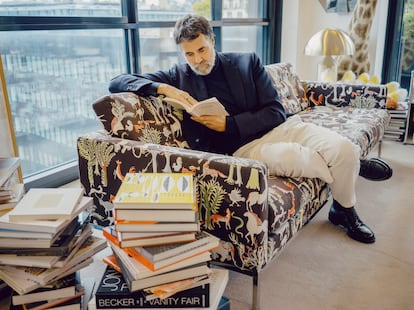
Since 2014, he has held the position with the longest title at the house: head of Global Creative Resources for Chanel Fragrance, Beauty, Watches and Jewellery. Among his responsibilities is keeping a legend alive: Chanel N°5.
Du Pré is the person who decides the face of the fashion house’s fragrances. He sat down with EL PAÍS to discuss the latest star he has signed: Jacob Elordi, the new brand ambassador for Bleu de Chanel L’Exclusif. The Australian actor appears in The Chase, a cinematic advertisement directed by Alfonso Cuarón, the Mexican filmmaker behind masterpieces like Gravity (2013) and Roma (2018).
For the first time, a Chanel advertisement is an action film. Instead of quiet, contemplative scenes, we’re plunged into a chase. “You can’t spend your life just admiring yourself,” the creative director explains. The idea of changing direction came to him in 2024 while filming the N°5 commercial with Margot Robbie and Jacob Elordi, directed by Luca Guadagnino.
“For 15 years, we’ve made existential stories; narratives where the man always re-evaluates his entire life. This time around, I was looking for something deeper and more sensory. And, with Cuarón, we’ve achieved it by using action, without excessive testosterone. That’s why I chose Elordi; he’s like an action hero, but there’s something very gentle about him.”
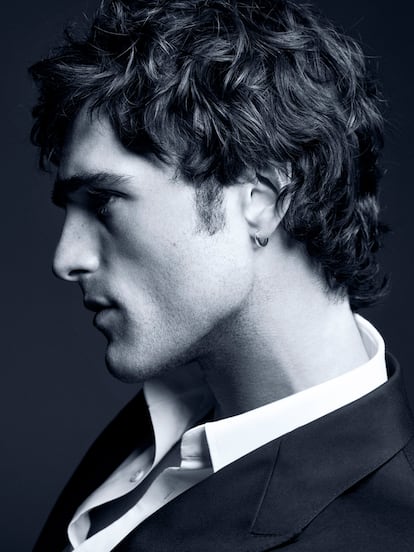
He says that it wasn’t his intention to give a face and texture to contemporary masculinity… but perhaps he’s ended up doing so. “I hate when people pressure me: ‘Express your feminine side!’ Give me a break! No, it’s not that; it’s something more sensitive and fragile that’s neither masculine nor feminine. It’s gentle,” he insists.
He’s a bit fed up: he says that, for 30 years, people have been trying to define the new masculinity. “In such a fragmented world, it’s better to accept that there isn’t just one single expression of masculinity. I’d say it should be more tender. I want to believe that there’s more tenderness than testosterone in the world. Only that will save us.”
Balance has been the great discovery of the shoot. “In the [2024 campaign] for N°5 (titled See You at 5), the characters played by Margot Robbie and Jacob Elordi weren’t at all balanced; he’s impulsive, always on edge, while she — calmer and more experienced — is in control. In the Bleu L’Exclusif story, they’re equals… and I find that to be very modern. There are no cowboys; we already have too many of them in this world. Aggressive, dominant masculinity is making a terrible comeback. I don’t like it at all, which is why this ad revolves around sensuality, not testosterone.”
When asked what it was like working with Alfonso Cuarón, Du Pré answers: “Great. I’m not a masochist by any means. Working with people who treat you like dirt and only want your money? No, that’s unacceptable. And there are many people who are like that, unpleasant and selfish.”
He recounts that Cuarón had two months free in his schedule. “That’s almost a miracle with these talented people who work so much and usually have their schedules booked for three or four years. In my mind, he wasn’t the best director to make an action movie. However, I liked how he had filmed men. So, I said to myself: ‘Let’s give it a try.’”
Du Pré notes that he goes into film shoots “lightheartedly.”
“I try not to get too anxious. If it doesn’t go well, we just do it again and it’ll work out.” He also doesn’t talk much with the actors, only with the director. “We work a lot. And, when we reach an agreement, he takes charge of giving his vision to the actors. [By that point], there’s little I can do, because the conversation is cinematic. They understand each other… and Cuarón is a huge talent.”

Du Pré has held his position as creative director since 2014. One of his predecessors was Jacques Helleu (1938-2007), “the guardian of the maison’s good taste.” The mission was entrusted to him by Pierre Wertheimer when he was just 18. In 1968, Helleu chose Catherine Deneuve as the face of N° 5 and commissioned famous photographers such as Richard Avedon and Helmut Newton to leave their mark on the house.
It was Helleu’s idea to begin collaborations with film giants. In 1978, he involved British director Ridley Scott in La Piscine — the first film featuring Chanel N° 5 — and later recruited Luc Besson and Roman Polanski for his aesthetic ventures. In the early 1990s, he directed advertising campaigns with Jean-Paule Goude, such as the one for the Égoïste perfume.
Helleu’s definitive theatrical breakthrough came when he made The Film with Nicole Kidman, then at the height of her fame for Moulin Rouge, with director Baz Luhrmann. This was the 2004 N° 5 commercial.
It is this very legacy that Du Pré has inherited; he made his debut in 2014 with a spectacular advert for No. 5 that is still remembered today: Gisele Bündchen surfing waves around the world. “For that film, we needed waves. We went to Baiona, then to Fiji, then to Hawaii and, finally, to Tahiti. Two weeks of travel to film one hour. In Tahiti, the waves were like a 40-story building. We had the Brazilian surfing champion with us… and she broke her nose on the first try. In the end, we got the 12-year-old son of the local king: we put a wig on him, he caught a wave and we were able to film. Things never happen the way you imagine them.”

Bleu de Chanel L’Exclusif, the fragrance championed by Elordi, is an eau de parfum created in 2018 by Olivier Polge. He’s the son of Jacques Polge, the former head perfumer at Chanel who, back in 2010, launched the first version — an eau de toilette — with the same name. French actor Gaspard Ulliel was its first and only ambassador until his death in 2022; he was succeeded by Timothée Chalamet in 2023 and by the Australian actor in 2026.
According to Du Pré, each of these stages has signaled changes in contemporary masculinity.
“15 years ago, men wore colognes that gave them headaches, very strong ones; that’s how power was expressed. What’s interesting is that, [over the past] 15 years, they’ve embraced complexity in the world of fragrances. Today, almost no man has a problem wearing an eau de parfum, a more refined and complex scent. What we’ve experienced in this decade is a shift toward complexity in men’s fragrances, while women are going in the opposite direction and seeking monofloral fragrances,” he explains.
The creative director enjoys talking. Non-stop. In fact, he says that he can’t stop. “You can wake me up at eight in the morning and I’ll launch into a speech,” he warns, adding: “I’m not one of those solitary creative types who get their ideas in silence. In French we call it ‘logo moteur’ — in other words, I need to talk in order to think. I can’t come up with anything on my own. In a conversation with someone, yes. If I don’t talk, I get bored.”
Is it possible to believe that Pedro Almodóvar said “no” to Du Pré?
“Well,” the Frenchman clarifies, “he set conditions. He only wanted to work with Penélope Cruz, but she was already committed to Lancôme. It wasn’t possible. It was more of a ‘not right now.’”
Sign up for our weekly newsletter to get more English-language news coverage from EL PAÍS USA Edition


Juneteenth was first recognized as a federal holiday in 2021 when former president Joe Biden signed the Juneteenth National Independence Day Act into law. This historic event marked the first new federal holiday since the adoption of Martin Luther King Jr. Day in 1983. Juneteenth commemorates the emancipation of enslaved African Americans, specifically on June 19, 1865, when Major General Gordon Granger issued an order proclaiming freedom for slaves in Texas. Initially, Juneteenth was recognized only by certain communities, but it has since grown to become one of the most significant dates for Black Americans.
End of slavery
During the American Civil War, on September 22, 1862, President Abraham Lincoln issued the preliminary Emancipation Proclamation, a presidential proclamation and executive order that declared enslaved African Americans in Confederate states had to be freed. The final Proclamation was issued on January 1, 1863. It stated: “I do order and declare that all persons held as slaves within said designated States [in rebellion against the U.S.], and parts of States, are, and henceforward shall be free…” The proclamation affected South Carolina, Mississippi, Florida, Alabama, Georgia, Louisiana, Texas, Virginia, Arkansas, and North Carolina.
The Proclamation declared that the executive branch, including the Army and Navy, “will recognize and maintain the freedom of said persons.” It applied to more than 3.5 million enslaved people in the country. Approximately 25,000 to 75,000 individuals were immediately emancipated in regions of the Confederacy where the U.S. Army was present.
However, the enforcement of the Proclamation was not immediate everywhere. Texas, the most remote state of the former Confederacy, had 250,000 slaves. Many planters and slaveholders had migrated to Texas to avoid the war and had brought their slaves with them. News of the Proclamation reached Texas after its issuance, and while many slaves knew about Lincoln’s order emancipating them, they were not freed since the Union army had not yet reached Texas to enforce the Proclamation.
On April 9, 1865, Confederate General-in-Chief Robert E. Lee surrendered, followed by the surrender of the western Confederate Army of the Trans-Mississippi on June 2. On June 19, 1865, Union Major General Gordon Granger arrived at the island of Galveston to enforce the Emancipation Proclamation with General Order No. 3, which freed all remaining slaves. He also oversaw Reconstruction after the war, nullifying all laws passed within the state during the war by Confederate lawmakers.
While it is widely believed that Granger or his troops proclaimed the ordinance by reading it aloud, historians suggest that copies of the Ordinance were more likely posted in public places, including the church attended by Black Americans. The Order read: “The people of Texas are informed that, in accordance with a proclamation from the Executive of the United States, all slaves are free. This involves an absolute equality of personal rights and rights of property between former masters and slaves, and the connection heretofore existing between them becomes that between employer and hired labor. The freedmen are advised to remain quietly at their present homes and work for wages. They are informed that they will not be allowed to collect at military posts and that they will not be supported in idleness either there or elsewhere.”
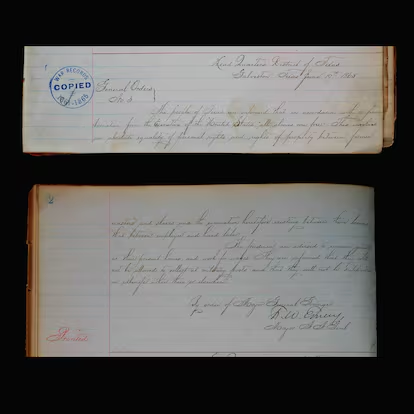
The event has come to be celebrated as the end of slavery. However, emancipation for the remaining enslaved individuals in the Union border states of Delaware and Kentucky did not occur until December 18, 1865, with the ratification of the Thirteenth Amendment, which abolished slavery and involuntary servitude.
Juneteenth as a holiday
In Galveston, Texas, on June 19, 1866, one year after General Granger’s arrival, the first annual commemoration known as “Jubilee Day” was organized. Other observances took place on January 1 (the day the Emancipation Declaration was issued) or January 4. Some of these early celebrations served as political rallies to provide freed African Americans with instructions for voting.
In 1867, Black leaders in Austin, Texas, raised funds to purchase 10 acres of land, now known as Houston’s Emancipation Park, to celebrate the holiday. In subsequent years, the event drew thousands of attendees.
During the early 1890s, the Black community began using the word Juneteenth instead of Jubilee Day. The word derives its name from combining June and nineteenth. One of the earliest records of its use dates back to 1909 when The Current Issue, a Texas periodical, employed the term.

Although most early celebrations occurred in Texas, Black Americans who had left the state continued to commemorate Juneteenth wherever they relocated. By the second half of the 20th century, most states had established Juneteenth celebrations. Texas was the first state to declare Juneteenth a state holiday in 1980. By the end of the century, only three states officially observed the day. Over the next two decades, it gained recognition as an official observance in all states, except South Dakota, until it became a federal holiday under the Biden administration.
Texan Opal Lee and other Black Americans campaigned for decades to establish Juneteenth as a federal holiday. Each year, Lee led 2.5-mile walks, symbolizing the 2.5 years it took for news of the Emancipation Proclamation to reach Texas (although the news had arrived, slaves weren’t freed until the Union took control of the state). During the bill signing ceremony that designated Juneteenth as a federal holiday, she was an honored guest and President Joe Biden knelt down on one knee to greet her.
Thanks to the holiday, federal government employees now have the day off every year on June 19. If the date falls on a Saturday or Sunday, they have the closest Friday or Monday off, respectively.
Juneteenth celebrations in 2026
Americans across the country celebrate Juneteenth over the weekend with festivals, parades, outdoor meals, and gatherings with friends and family. With each passing year, this relatively new holiday has gained greater recognition in diverse communities.
Last year, several cities scaled back or canceled some Juneteenth celebrations due to declining support for diversity, equity, and inclusion (DEI) initiatives under the current administration. Despite cuts in corporate funding and some institutional support, many communities kept their events going thanks to community efforts, and this year celebrations continue across the country, with an emphasis on cultural resilience and unity.
One of the largest and most established events is the Milwaukee parade and festival, which will celebrate its 55th edition in 2026. The Jubilee Parade begins on Friday, June 19, at 9 a.m. and is followed by a party in Rose Park, featuring music, food, and activities; there is also an evening program associated with the Summerfest festival.
In San Marcos, California, the celebration continues to gain momentum with events like The Freedom Table, a culinary and storytelling experience on June 19 organized by a local couple that combines food, music, and art. What began as a pioneering initiative has become an emerging tradition in the area.
Austin, Texas, hosts its vibrant Central Texas Juneteenth Parade on June 19 along East MLK Blvd., followed by an all-day festival at Rosewood Park featuring entertainment, food, and family-friendly activities. Other cities such as Pensacola (Florida), New York, Los Angeles, and Chicago also host special events focused on African American culture and history, along with major festivals in Atlanta, Houston, Las Vegas, and other major cities.
Sign up for our weekly newsletter to get more English-language news coverage from EL PAÍS USA Edition
Amos Oz
Jonny Greenwood, Radiohead Guitarist: ‘Cancelling Music Is The Same As Taking Books Off Shelves’

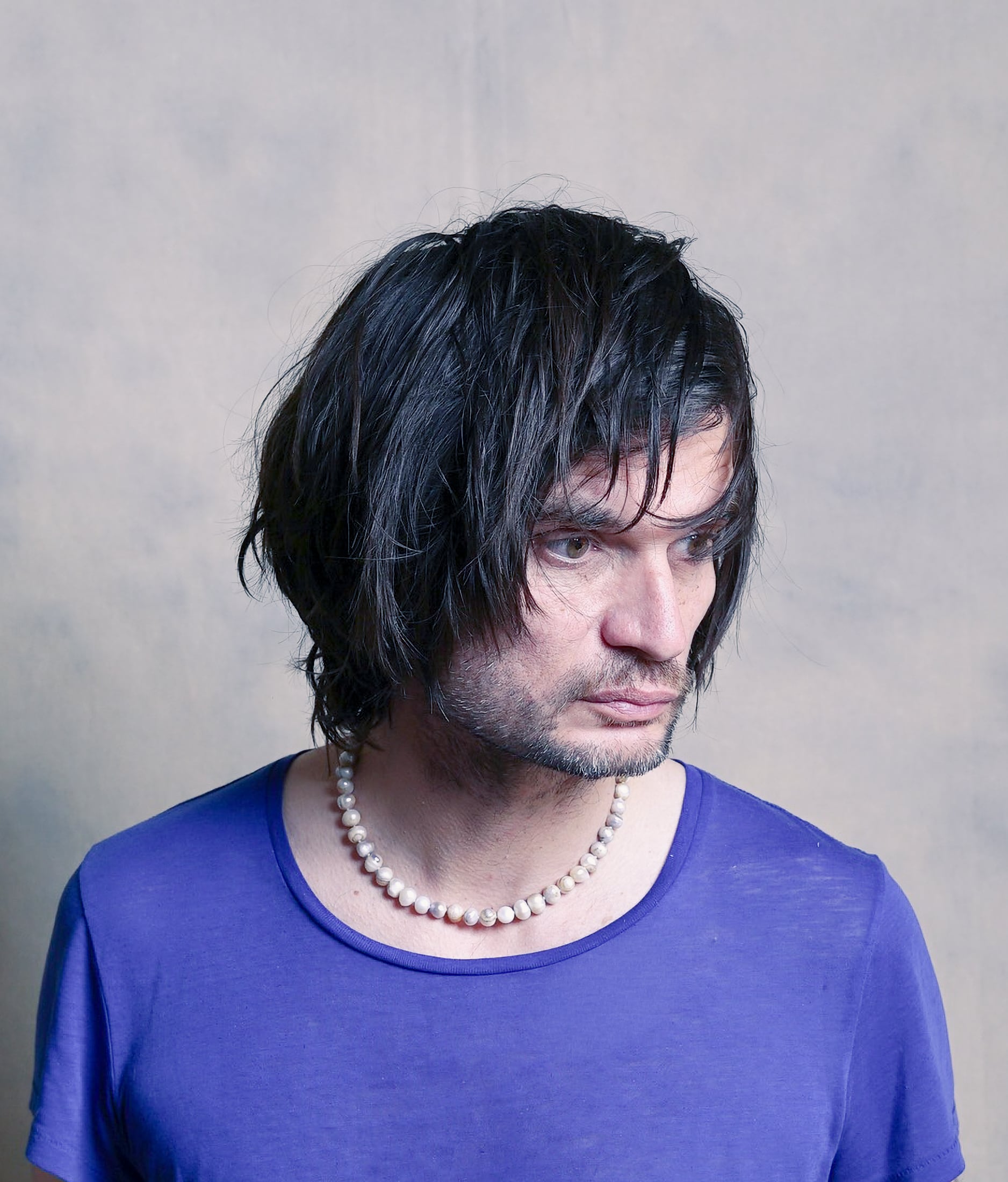
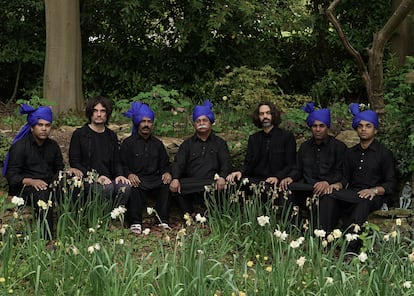
Until not too long ago, Jonny Greenwood (Oxford, United Kingdom, 54 years old) was largely known for being the guitarist of Radiohead. But the repertoire of the classically trained musician goes well beyond that role. He has composed pieces for the London Contemporary and BBC Concert Orchestras and, famously, the soundtrack for every Paul Thomas Anderson film since There Will Be Blood (2007). He has been nominated for three Oscars for best original soundtrack (most recently, this year for One Battle After Another). Plus, he has recorded three albums with The Smile, another group he shares with Radiohead vocalist Thom Yorke, and that is rounded out by drummer Tom Skinner. He’s collaborated on projects with artists from the Middle East, the Israeli singer-songwriter Dudu Tassa — controversially — as well as Shye Ben Tzur and The Rajasthan Express, a group of musicians spread throughout Israel and India, with whom he has made two albums. The first of these, Junun, was released in 2015 to critical success, and was accompanied by a documentary directed by Anderson himself. 11 years later, the same crew of musicians is back with Ranjha. The musician speaks with EL PAÍS on a video call from his home in Oxford.
Question. What is most special to you about this album?
Answer. I just think it’s quite unusual to be doing music that’s so sincerely religious, devotional. These Indians are singing about their sincere belief and faith in the Sufi saints and and the divine, and singing about it with real passion and aggression, and it’s beautiful. There aren’t many bands making music about that subject in my background. Great bands, right? But they either sing about their alienation or fast cars and girls and drinking. I think lots of people visit India as tourists and come away with an impression of its music, but what’s different about Shye, who was born in New York and grew up in Israel, is that he dedicated his life to Indian music. His conviction really impressed me, his dedication and passion for the music, and that he takes it so seriously and understands it so well.
Q. Radiohead took these musicians on tour as the group’s opening act in 2017 and 2018. What was the fans’ reaction?
A. They reacted really well. Their rhythms are so fascinating and the conviction and strength of their singing is very passionate. It’s like seeing a funk band, you’ve got the same sort of repetition, the same passionate frontman, the same kind of bass lines…
Q. You seem to have a very symbiotic relationship with Paul Thomas Anderson.
A. Well he’s a very good friend, and he likes to joke around with me. He’s also a big music fan. I love how he makes fun of me and at the same time, gets so excited about what I do. He’s a very funny man, like his movies.
Q. What is your composition process like for him? Does it follow the same lines, or is it different every time?
A. Each project is different. I think the only similarity his movies share is that they are hilarious, yet take on very serious subjects. That’s why the music has to be sincere, there’s nothing ironic in it, it’s not a joke.
Q. I imagine you receive a lot of offers to make soundtracks. What makes you accept or reject a project?
A. Well, composing music for a movie is a little bit like joining a band. You’re in a band with the director, so it’s about working out if they’re the right person, you know, and if they have a similar sense of humor, and just sharing that passion. I suppose that what convinces me is the story and what you can do with the music, with the orchestras and the instruments. It’s an incredible amount of work — at first you feel as if there are no limits, that’s what makes it so fun.
Q. Your work is so prolific. What is your daily routine like?
A. I wake up thinking about something to try with the guitar or with a computer, I usually can’t wait to start. It’s a wasted day when I haven’t had time to work on something new. Right now, I’m playing the guitar a lot and trying to create a computer program that helps me to compose new music.
Q. Last November, Radiohead went on tour after not having played together for seven years. How did that feel and what was its true meaning?
A. It felt amazing. I just stood there listening to Thom singing, thinking ‘What an amazing sound. What great songs.’ We’re very lucky we can still do it and people want to see it. There were some great shows, in Madrid they were particularly fun. We’re very bad at forward planning as a band, and when we go on tour, we have to decide like a year and a half before the concerts begin, which is crazy. We’re talking about how to do it again, but obviously nothing will happen for ages.
Q. Does that mean that there won’t be a new album any time soon?
A. I have no idea. Thom’s working on recording by himself, so he wants to finish that and then like I said, we don’t plan ahead, so yeah, no one knows yet.
Q. Are you planning to go on tour with Shye and The Rajasthan Express?
A. We would love to, but it’s so expensive getting eight or nine Indians to come to Europe. We have to wait and see if anybody’s interested in the record.
Classical music tends to expose you more. I feel safer in a group. When I play with Radiohead, I feel like I am in the audience, listening to the band
Q. A year ago, the concerts you were going to do with Dudu Tassa in the United Kingdom were canceled after a boycott. The organization that promoted the campaign holds that, for example, the rejection of South African artists was fundamental to ending apartheid. You expressed your disagreement at the time. Has your opinion changed since then?
A. [Long silence] I’m a fan of lots of Israeli films and writers and musicians, and the music I make with Dudu is resurrecting songs that are older than most of the countries that are currently fighting each other. That’s always going to be more important to me. There are bookshops in Madrid that are openly selling Amos Oz’s novels and he’s Israeli. To me, cancelling music is the same as taking books off shelves.
Q. I know you are well aware of the situation there. [Greenwood has been married to Israeli visual artist Sharon Katan since 1995.] What is it like to experience what is happening right now in Palestine and Lebanon, from the perspective of the Israeli people?
A. David, I’m not sure how that connects to me making a record with Indians in Oxford.
At this point, the BMG music label representative asks that the interview focus exclusively on music. The journalist is not allowed to ask the two questions he had prepared regarding Palestine, about how it felt for Greenwood to see British peers detained for having protested in support of the organization Palestine Action and whether Radiohead had internal discussions on the subject.
Last October, the British newspaper Sunday Times published an interview with Radiohead — the last in which the group jointly addressed the conflict — in which Yorke said, “I wouldn’t want to be 5,000 miles anywhere near the Netanyahu regime.” To which Greenwood responded, “I would argue that the government is more likely to use a boycott and say, ‘Everyone hates us — we should do exactly what we want.’ Which is far more dangerous.” In that same interview, the guitarist said he had attended protests in Tel Aviv’s Hostages Square. “I have been to anti-government protests in Israel and you cannot move for all the ‘Fuck [Minister of National Security Itamar] Ben-Gvir’ stickers. I spend a lot of time there with family and cannot just say, ‘I’m not making music with you fuckers because of the [Israeli] government.’ It makes no sense to me. I have no loyalty — or respect, obviously — to their government, but I have both for the artists born there.”
Q. Does it make you more nervous to play in classical music venues or on rock stages at music festivals?
A. Classical music tends to expose you more. I feel safer in a group. When I play with Radiohead, I feel like I am in the audience, listening to the band. But if I’m in an auditorium playing a Steve Reich piece on the guitar, I am the band playing for the public.
Recording is a constant development, an exploration that goes deeper and deeper. Jonny always wants to go somewhere else
Shye Ben Tzur
Q. When you make music, what are you trying to avoid?
A. Boredom, needless repetition. And it’s tough, because you want the next note on the next chord to be a surprise, but it’s also got to be right, satisfying, and not be a cliché. You’ve got to find the middle ground between these three points. Some songs, you hear the first two chords and you know the next four chords, and that I find depressing. But sometimes, you hear music that’s just so random and alarming that it’s exhausting and it makes you tired, because it’s just about the next chord or the next note each time.
Q. Is it harder to compose classical music or a rock song?
A. It’s so different, because classical music is all on paper and you work on it for six months or longer and then it’s all over in one hour, you hear it once and that’s it. You can’t really tell if it’s going to work until you hear it, and by then it’s too late. Someone once told me it’s like a firework display; you spend ages setting it up, days and days, and then it’s all over in five minutes. With rock music, you know what it’s going to sound like from the beginning, but with classical music, you have to hear it in your head and it’s quite different.
Q. Who are your musical heroes?
A. Tom Waits, Olivier Messiaen… who else? I really like jazz trumpet players like Lee Morgan and Freddie Hubbard. And I love Steve Reich. I think that his music is very interesting and he is a true master. It was interesting when I got to work on the recording of one of his pieces, Electric Counterpoint. I had to learn the score really well, and eventually you realize there’s all these little changes he makes so that everything fits these tiny adjustments. It sounds like he’s just put everything on top of each other, but there’s lots and lots of thought gone into it.
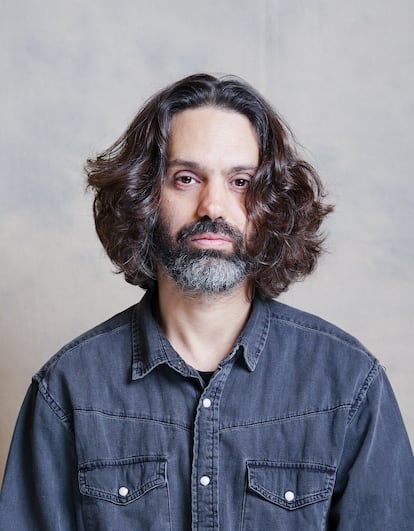
Shye Ben Tzur, the Sufi-inspired Hebraic poet
When Greenwood approached Shye Ben Tzur to make music together, the latter was not familiar with Greenwood’s work. “I knew Creep and a couple other Radiohead songs from high school, but at the end of the 1990s, I dedicated myself to listening to classical music from India and the qawwali genre,” he says, referring to Sufi devotional songs, which is now the style in which the musician works, recording songs in Hebrew. “I have composed music since I was a kid, and I’ve always been looking for something new, something fresh, something different. At the time, I needed new sources of inspiration, and to listen to things that weren’t directly related to my typical style. A friend brought me to a concert in Jerusalem of classical Indian music and it was really special. Incredible. After that, I decided I needed to go to India to better understand that music, that art form. I stayed longer to go deeper into the subject, and then a little longer, and now I’m still trying to understand it better,” says the musician, who connects to the video call with EL PAÍS from somewhere in Israel.
Junun, his first project with the Radiohead guitarist, proved to be a transformative experience, but the nonconformist nature of the Oxford musician was the most surprising aspect. “I felt like we had found something truly special, so when we started this second album, I thought, ‘OK, that was great, let’s do it again!’ But he told me, ‘No, that was incredible, let’s do something else!” The same thing happened during the recording process. We sat down to play and it sounded so beautiful. Suddenly, he decides he wants to swap out the guitar for a synthesizer, and then he decides he wants to try something completely different with the rhythms. It is a constant development, an exploration that goes deeper and deeper. Jonny always wants to go somewhere else,” says the musician.
Sign up for our weekly newsletter to get more English-language news coverage from EL PAÍS USA Edition

Resultados Elecciones Colombia 2026, En Vivo | De La Espriella, Nuevo Presidente De Colombia, Según El Preconteo De Votos

Wife Of Pedro Sanchez Ordered To Surrender Passport And Banned From Leaving Spain Ahead Of Corruption Trial

Torre Del Mar Unites Community In Powerful Stand Against ALS.

Peru’s Roberto Sánchez And Keiko Fujimori Urge Caution As Vote Count Continues In Very Tight Presidential Election
A major EU border system goes live today – What changes for travellers?
El Pentágono, Evacuado Por Una Falsa Alarma Ante La Sospecha De Un “incidente Con Materiales Peligrosos”


-
 Alberto Fujimori2 weeks ago
Peru’s Roberto Sánchez And Keiko Fujimori Urge Caution As Vote Count Continues In Very Tight Presidential Election
-
EU rules1 week ago
A major EU border system goes live today – What changes for travellers?
-
America1 week ago
El Pentágono, Evacuado Por Una Falsa Alarma Ante La Sospecha De Un “incidente Con Materiales Peligrosos”
-
Coastal erosion2 weeks ago
Mallorca launches new plan to save its beaches as coastal erosion threatens popular resorts
-
fira de ses herbes2 weeks ago
Selva herb fair returns: Mallorca’s most magical tradition blooms again
-
european airport delays1 week ago
1,225 delays at major European airports raise summer warning for Spain travellers
-

 Uncategorized2 weeks ago
WATCH: Kim Kardashian steals F1 Monaco GP winner Antonelli
-

 %1 week ago
Barcelona Tests Olive Pit Asphalt That Could Transform How Cities Build Roads