
Abelardo de la Espriella
Colombia’s Right Pushes ‘gunpoint Vote’ Narrative, Data Contradict It



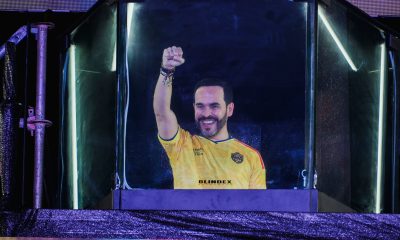





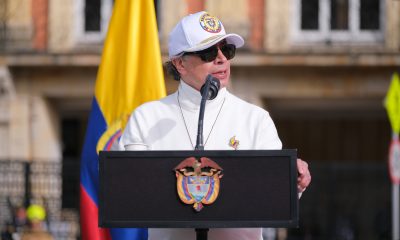

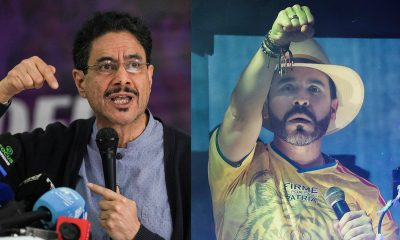


This Wednesday, June 24, Colombia began to breathe easier. In the morning, the ruling party’s presidential candidate, Iván Cepeda, accepted the victory of his rival in last Sunday’s runoff. “Abelardo de la Espriella is the new president,” he stated plainly at a press conference convened for the occasion.
Just a few hours later, the National Electoral Council (CNE) announced the completion of the official count — the process that both Cepeda and outgoing President Gustavo Petro had said they would await before recognizing the result. As expected, the CNE reported only minimal differences from the figures released by the National Registry on Sunday, which, while only provisional, have shaped the country’s political landscape election after election.
With these two developments and the formal certification of De la Espriella as president-elect — scheduled for this Thursday at 9 a.m. — the country takes a breather after weeks of a hard-fought and polarized campaign. This comes just as the men’s national football team, one of the few unifying forces among Colombians, advanced to the second round of the FIFA World Cup — another welcome moment of relief for much of the country’s 52 million residents.
Cepeda’s announcement carried a measure of surprise and an even greater sense of calm. The surprise lies in the fact that he made the statement before the CNE had issued its decision — the moment he had said would be decisive for him. That is precisely where the calm lies: the timing shows he chose not to push his doubts about the vote too far and instead set aside his objections. Indeed, shortly afterward, his party, Historic Pact for Colombia, announced that it was withdrawing its pending challenges. The die was cast. “We will exercise a democratic, vigilant, and constructive opposition,” the senator said.
That does not mean Cepeda has backed down. In the speech he delivered from his party’s headquarters in downtown Bogotá, he reiterated his claim that his rival had carried out a “massive vote-buying operation.” He also laid out a series of red lines that will serve as an initial outline of his opposition: no to U.S. interference — led by Donald Trump’s administration, which backed De la Espriella; no to homophobic or misogynistic policies or rhetoric such as those that marked the winning candidate’s campaign; and no to any erosion of social rights, which were at the core of Cepeda’s platform and of the efforts of modern Colombia’s first left-wing president.
“No fiscal austerity policy can involve dismantling the gains achieved by the Colombian people,” he said.
In general, Cepeda’s speech stayed well clear of the more heated moments of his campaign appearances, such as when he called the traditional right-wing movement — known as Uribismo after former president Álvaro Uribe — “fascist,” or when, between the first and second rounds, he announced on two separate occasions that he would file criminal complaints against De la Espriella.
“We are the calm force of social change,” he stressed on Wednesday, signaling the steady but firm stance he seeks to bring to the political debate ahead.

In much the same way that Cepeda moderated his tone, De la Espriella on Wednesday showed a side consistent with the message he struck in his victory speech last Sunday, when he refrained from calling Cepeda or Petro “criminals” or “drug traffickers” and instead said he would govern for all Colombians. In a brief press release, he responded to Cepeda’s announcement just a few hours after it was made.
“It is positive that former candidate Iván Cepeda acknowledges the defeat of his political project and the sovereign decision adopted by Colombians,” reads a statement from the communications office of the president-elect, who took the opportunity to repeat his message to citizens: “The incoming government’s commitment, as expressed by the president-elect in his victory speech, will be to fully guarantee the right to political opposition and to peaceful protest, within the framework of the Constitution, the law and respect for democratic institutions.”
These messages from two contenders who never shared a stage throughout months of campaigning — who did not agree to a single debate that would have allowed voters to compare their proposals, personalities, or visions, and who at times criminalized each other — have been a balm for a country that, according to many analysts, emerged divided and fragmented from the campaign.
That sense of relief offers the first clues about the two major questions Colombia faced in these elections. The first concerns the endurance of its reformist tendency, which has long competed with a more conservative current. Cepeda has addressed this by proposing a strong opposition aimed at preserving recent social gains.
To that end, one key factor remains uncertain: how power will be distributed in the legislature. Cepeda’s party holds the largest bloc in both chambers, though far from a majority — 26 of the Senate’s 102 seats, if Cepeda takes the seat he is entitled to by law, and 42 of the House’s 182 seats, if his running mate and outgoing Indigenous senator, Aida Quilcué, assumes hers.
By contrast, De la Espriella has only his small party, Salvación Nacional, which has four Senate seats and one in the House. Joining them, as of Tuesday, are all 17 senators and 30 representatives from the Uribista Democratic Center. The remaining blocs in the fragmented Congress have yet to define their alignment, though they often tend to fall in line — at least at the beginning of each administration — with the government’s interests, as a way of securing appointments and other support from the powerful executive branch.
The second question appears to have at least a partial answer. The institutional strength of a country that has avoided hyperinflation, coups, debt defaults, and the suspension or alteration of elections for more than 70 years seems to have been reaffirmed. Although President Gustavo Petro continues to question the vote count on his X account (“There was no proper count when 90% of our challenges were not processed,” he wrote on Wednesday afternoon), he has also begun preparations for the transition to hand over power to De la Espriella.
The National Electoral Council has carried out its work with the backing of the heads of the high courts and oversight bodies, and its results have been recognized by all political parties. Most media outlets, as well as labor and business organizations, have accepted the outcome — whether with satisfaction or resignation.
Colombia exhales and enters a new phase, with the immediate question of how Abelardo de la Espriella will shape his cabinet and deliver on the priorities he has set for his four-year term and for his first hundred days in office.
Sign up for our weekly newsletter to get more English-language news coverage from EL PAÍS USA Edition
Abelardo de la Espriella
El Consejo Nacional Electoral Termina El Escrutinio Y Confirma La Victoria De Abelardo De La Espriella

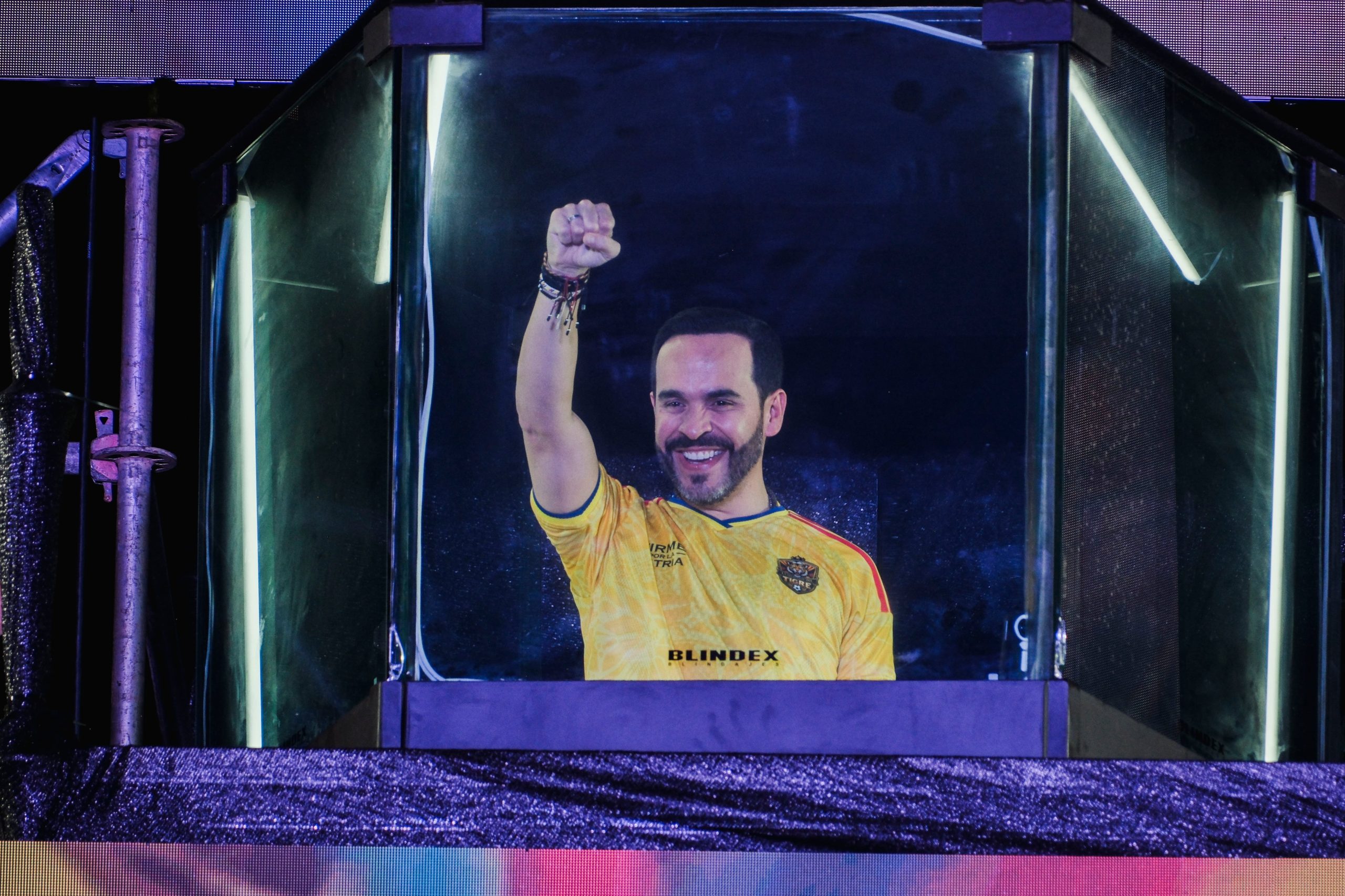
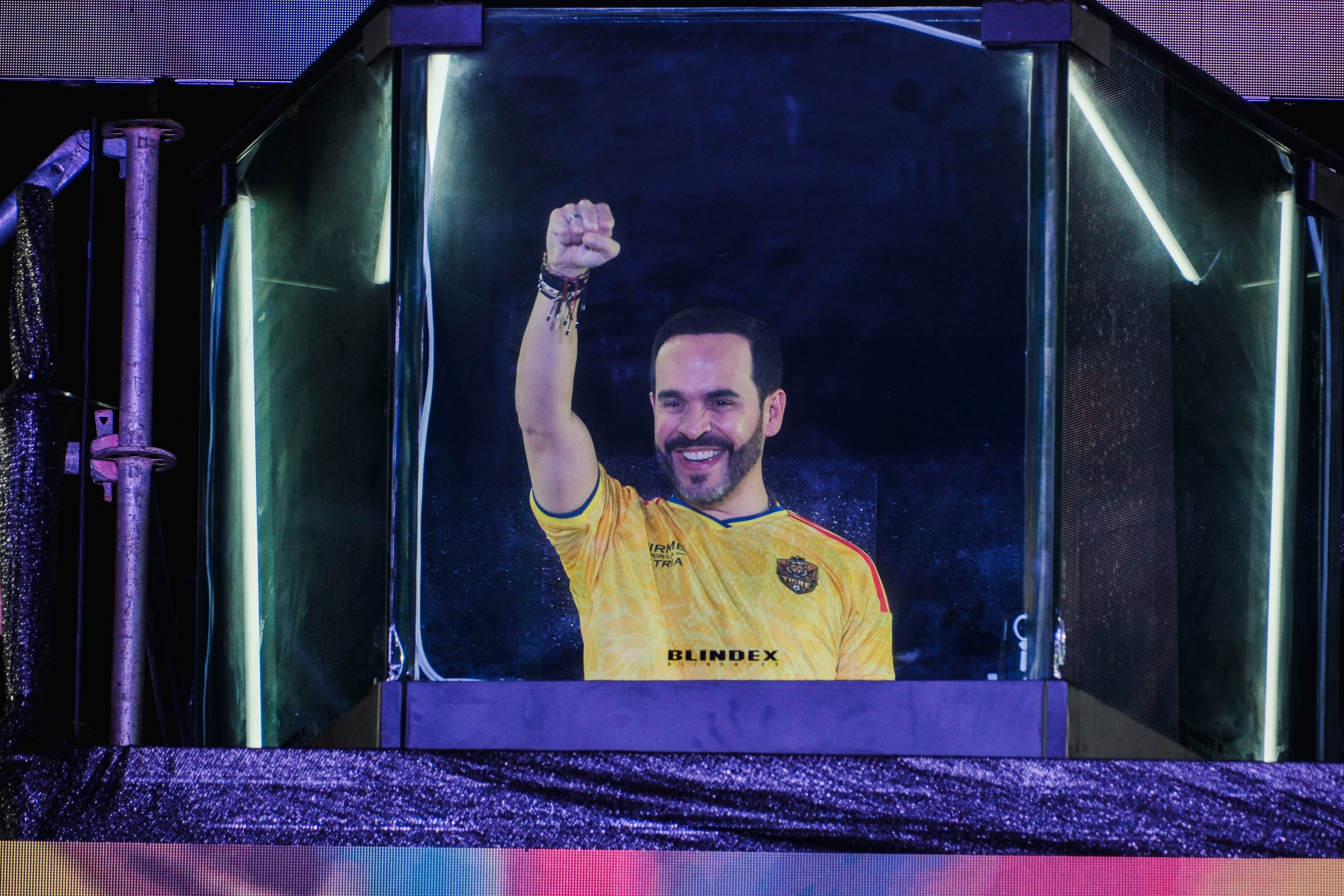
La victoria de Abelardo de la Espriella como nuevo presidente de Colombia ya es oficial. Así lo ha determinado el Consejo Nacional Electoral, la máxima autoridad en las votaciones del país, y que ha estado bajo presión desde el último domingo. Si bien ese día de votaciones la Registraduría ya anunciaba la victoria de De la Espriella con un rápido preconteo, sus cifras no son vinculantes y la victoria solo sería oficial cuando los magistrados del CNE terminaran el proceso de escrutinios. Eso ocurrió este miércoles, cuando el CNE no solo ratificó la victoria de De la Espriella, sino que corrigió pequeños errores en el preconteo: el ganador terminó con unos pocos votos de más.

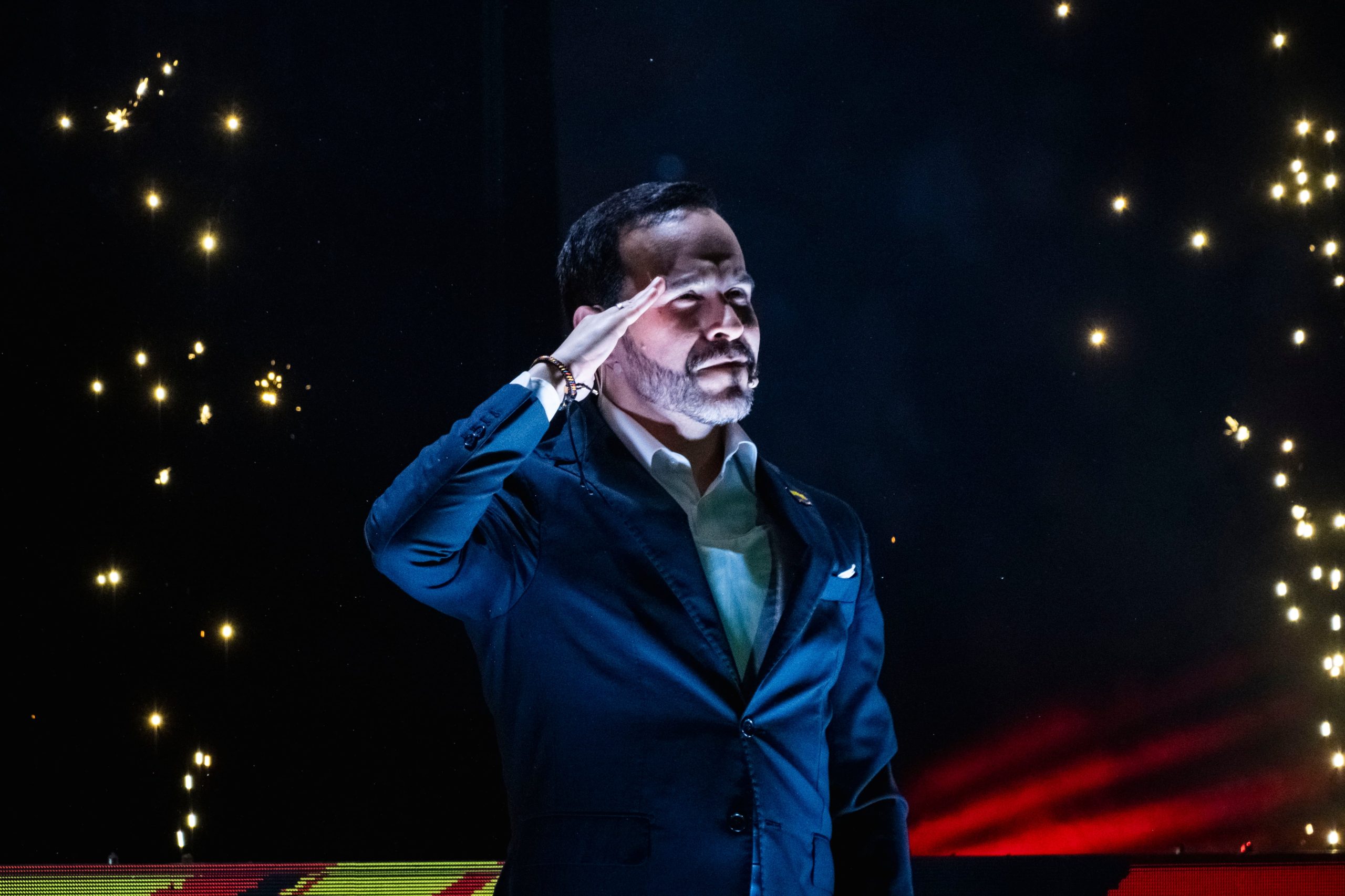
He calls himself El Tigre, places his trust only in “God” and “the People,” and says he is putting “the whole truth on the table.” When he won the first round of Colombia’s presidential elections, to the surprise of many analyses and forecasts, he said his victory represented “the total defeat of the usual politicians, of the usual parties.”
Despite his disruptive rhetoric, Abelardo de la Espriella’s narrow victory on Sunday places Colombia within the trend that has dominated 12 elections in Latin America over the past three years: the advance of the right and the far right in its many forms.
De la Espriella belongs to the most radical, personalist and heterodox strand of the trend — one that has been embodied since 2023 by Javier Milei in Argentina (who identifies himself as a lion) and earlier by Nayib Bukele in El Salvador (who was re-elected in 2024 by amending the Constitution). All three are staunch admirers and allies of U.S. President Donald Trump, in a region that the United States now aggressively considers its hegemonic sphere of influence. It’s a region where — with the exceptions of the heavyweights Mexico and Brazil, as well as Bernardo Arévalo’s Guatemala and Yamandú Orsi’s Uruguay — a shift to the right is consolidating.
“It is a trend, without doubt, and it is a new right-wing movement,” says Steven Levitsky, professor of governance at Harvard University, a Latin America specialist and author of the book How Democracies Die (2018). “It is very different from the right of the early 2000s, with Sebastián Piñera [Chile], Vicente Fox [Mexico], Pedro Pablo Kuczynski [Peru]… which was more liberal, focused on the economy and the free market, respected democracy and did not care about issues like feminism, abortion or LGBT rights.”
He explains: “Now it is a right-wing movement in which security and culture wars are more important, with the exception of Milei, who is very pro-market and prioritizes the economy. It is a less liberal right; it attacks minority rights and generally has a more precarious relationship with democracy.”

Two weeks before Colombia’s election, Peru went to the polls to elect its ninth president in a decade. Amid the political instability of recent years and extreme polarization, the right-wing candidate Keiko Fujimori came close to victory with a razor-thin lead of about 40,000 votes. She is the virtual winner, focused on order and a tough stance on insecurity, one of the main concerns for citizens in Peru and across Latin America. And when this happens, the right often capitalizes electorally on that fear, which directly affects everyday life in a region plagued by violence linked to drug trafficking and new criminal economies.
The use of anachronistic terms such as “communist” to describe an opponent, sexist attitudes — De la Espriella often boasts about the size of his genitals, as he did in front of a journalist who felt harassed — attacks on reproductive rights, homophobia, and a savvy command of social media are all part of the repertoire of a right wing that is well connected across the region and more assertive.
“Before, no one said they were right-wing; everyone spoke of the center, but today they say it without shame, even among young people, who, although highly polarized, are no longer obviously required to be left-wing,” notes Pablo Stefanoni, who holds a PhD in history from the University of Buenos Aires and is an essayist and journalist.
If De la Espriella’s violent political language, alleged ties to paramilitary groups — denounced by his opponent — sexist attitudes and mockery of the LGBTQ community did not prevent him from winning, neither has Keiko Fujimori’s embrace of the legacy marked by corruption and human rights violations of her father, the autocrat Alberto Fujimori, kept her from winning the election — albeit narrowly and on her fourth attempt.
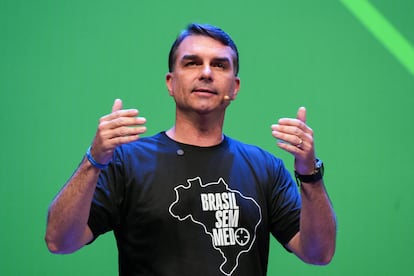
José Antonio Kast’s support for the dictatorship of Augusto Pinochet did not block his path to the presidency in Chile, nor did Milei’s platform of drastic cuts to the state — the famous “chainsaw” — stop him from getting elected. In Brazil, the far-right Flávio Bolsonaro carries on the legacy of his father, an imprisoned coup plotter, and is now vying to challenge leftist Luiz Inácio Lula da Silva for the presidency in October.
That a majority of 12 Latin American countries ―out of the 16 analyzed among those holding elections ― are governed by right-wing forces does not imply, however, “that the large majorities of the region have turned to the right, where perhaps only Bukele has massive support,” says Levitsky. Beneath the numbers and the differences among right-wing movements in each country, as seen in Colombia and Peru, another trend is strongly at play that partly explains their electoral success: “the tremendous level of dissatisfaction with the status quo and with incumbents,” he argues.
This is occurring in a continent where the pandemic left deep scars, including economic ones, and where public debate increasingly plays out on social media, which amplifies and favors more extremist messages. “In a time of anger and frustration among citizens, when there is a sense that everything has already been tried — after alternations between left and right — anti-system discourse gains traction,” Stefanoni explains. “That is where outsiders and radicals thrive, projecting an image of supposed authenticity in contrast to traditional politics.”
Two clear examples of this backlash are Colombia, which has shifted from the left of Gustavo Petro to the far right of De la Espriella, and Chile, which moved from the reformist left of Gabriel Boric to the far right of José Antonio Kast. In just three months as president, Kast has begun implementing his agenda of social spending cuts, tax reductions and measures such as eliminating inclusive language in public services and creating a register of minor offenses to impose penalties — such as withdrawing housing assistance or revoking driver’s licenses — for behaviors like drinking alcohol on the street or dumping debris without municipal authorization.
“There is a learning process within this right wing: it has realized that economic management alone is not enough to halt progressivism. So now it is reviving Cold War rhetoric, anti-communism, the idea that progressivism must be punished, that it is the enemy… that is where the culture war from the right emerges,” says Ariel Goldstein, a sociologist and researcher of right-wing movements in Latin America. “It draws in many young men, exalts entrepreneurship and personal effort. The message is: ‘your personal economic situation hasn’t improved, it has even worsened, but those to blame — the cucas [cockroaches, as Milei refers to Kirchnerists] — will be punished; we’re going to lock up [former president] Cristina Kirchner.’”
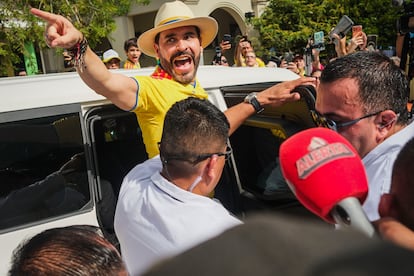
Many of these traits are shared by De la Espriella in Colombia and stand in stark contrast to the austere and measured image projected by leftist Iván Cepeda. While the former travels by private jet, sells campaign T-shirts featuring the tiger and has deployed an overwhelming, highly professional presence on social media, the latter has campaigned in town squares, traveling on commercial flights.
“Voters themselves are captivated by the spectacle of electoral politics that De la Espriella has introduced, and that is something centrists and moderates do not provide,” says Sandra Borda, an international relations scholar at the University of the Andes.
The left’s loss of momentum
All this is also compounded by the left’s own attitude, which shows signs of exhaustion, although in Colombia’s case it lost by a very small margin, as in Peru. “It offers a discourse more rooted in the past than in the future; when it governed, it implemented limited social reforms and it speaks less to young people,” Stefanoni says.
For Levitsky, “right now the only political force that has a project and inspires passion is the far right. They do not have the majority, but they believe in something, unlike the center-right, social democracy or the traditional left.”
The right-wing forces are also able to add other groups “such as evangelicals, for example, or the support of tech oligarchs,” Goldstein notes, and they organize “in networks like the Conservative Political Action Conference [CPAC] or in intercountry forums, like Trump’s Shield of the Americas.” In contrast, he argues, “the left has hardly managed to gather new supporters.”
In fact, for Rafael Rojas, a historian at El Colegio de México, this defeat of the left in Colombia, although very narrow, “confirms that the Bolivarian bloc is disarticulated, and the Colombian left will now have to reinvent itself by distancing from it, something Cepeda had already begun to do, unlike Petro,” he explains.
Law and order, a heavy hand, zero tolerance for crime. These are formulas that evoke the toughness many voters expect in a highly violent region — with a median homicide rate of 17.6 per 100,000 inhabitants, according to Insight Crime — where extortion is more widespread than ever.
Bukele’s model in El Salvador is the most extreme. He imposed a state of exception, deployed the army on the streets and built a mega-prison where gang members serve long sentences, packed together and shackled, wearing white uniforms and with their heads shaved. Since 2022, several organizations have documented human rights violations, torture, disappearances and killings in the country, where crime has been drastically reduced.
That recipe has had significant repercussions in countries such as Ecuador, where violence has surged in a very short period. Daniel Noboa won the election in 2023 against the leftist candidate backed by former leftist president Rafael Correa, and in 2025, swept to power with promises to take a hard line against mafias and the drug trade that have made Ecuador the most violent country in the region. Despite militarizing prisons and repeatedly declaring states of emergency, he has failed to halt the cycle of violence.
In Costa Rica, a country that has seen a sharp decline in security, right-wing candidate Laura Fernández also won the election in February with promises of a hard-line stance on crime. While a Bukele-style mega-prison was being built during the campaign — with the Salvadoran president even visiting the site — since taking office she has rolled out a series of measures that include putting an end to “idleness in prisons” and proposing that inmates have no right to leisure and work to cover their upkeep, an idea similar to one floated by Fujimori during her campaign: that prisoners should work for their own food.
On security, “the right is not necessarily more effective, but the simpler recipe and the marketing of cruelty compensate for the difficulty of solving a complex problem; the promise of a hard-line stance sounds more disruptive,” explains Stefanoni.
Yet containing crime — which is increasingly violent, sophisticated and diversified — is not easy. “There is a temporal asymmetry in the promises of left and right,” says Goldstein. “The progressive promise is that you will be able to live better, with education and health. That takes years, if it can be achieved. But the right promises punishment and immediate measures, like, for example, closing the Ministry of Women [as Milei did in 2024].”
In Colombia’s case, more than promises, De la Espriella sells concepts like the “miracle homeland.” One example is his proposal to end the decades-long armed conflict in 90 days. Although he toned it down as the election approached, the punitive model — bombing armed groups with U.S. support and building Bukele-style mega-prisons — remains, in contrast to his rival Cepeda, who spoke of “human security” and a comprehensive approach based on implementing the peace agreements signed with the FARC in 2016.
De la Espriella will govern surrounded by ideological allies in other countries — he has been congratulated on his victory by all of them, including far-right leaders from other parts of the world such as Benjamin Netanyahu in Israel and Santiago Abascal in Spain — but the most difficult task will be turning miracles into concrete policies, and doing so without relying on “the usual” allies, especially given such a narrow victory.
Sign up for our weekly newsletter to get more English-language news coverage from EL PAÍS USA Edition
At Least 191 Mn Europeans Face 35C On Sunday
El Eterno Triunfo De Alejandro Sanz

Stylish 3-Bedroom Apartment With Panoramic Sea Views – Benalmádena
Dinosaurs are roaring over to Estepona this summer in a massive 5,000m² exhibition

Families Caring For Elderly Parents In Spain Say Brexit Has Left Them With Impossible Choices

Max Verstappen rules out Nurburgring return after 24 hour-heartbreak


-
Costa del Sol1 week ago
Dinosaurs are roaring over to Estepona this summer in a massive 5,000m² exhibition
-
 %1 week ago
Families Caring For Elderly Parents In Spain Say Brexit Has Left Them With Impossible Choices
-
 Uncategorized2 weeks ago
Max Verstappen rules out Nurburgring return after 24 hour-heartbreak
-
Latest1 week ago
KEY POINTS: What Changes About Life In Spain In July 2026
-

 %1 week ago
One Of Spain’s Top Supermarkets Has Just Been Ranked Among Europe’s Most Innovative In A Major New Report
-
 ElPais1 week ago
Primary Elections In New York, Maryland, And Utah: Date And How To Vote
-
Latest2 weeks ago
400,000 More Migrants Than Forecast Apply For Spain’s Residency Amnesty
-

 Uncategorized2 weeks ago
F1 driver replaced by Lewis Hamilton at Ferrari claims