
Uncategorized
F1 driver replaced by Lewis Hamilton at Ferrari claims










It’s rare to find a last lap change of lead in Formula 1 but when it happens its impact is such that it is never forgotten.
On average, these tend to happen around every five years (at least the genuine ones, I’m looking at you Michael Schumacher and Ferrari in 2002), and it just so happens it has now been five years since the last occurrence. You may remember it, Abu Dhabi 2021? Max Verstappen and Lewis Hamilton certainly do.
The night is a bitter memory for Mercedes but for them it’s not the first time they have seen victory evaporate on the last lap, and a main rival come in to taste the glory.
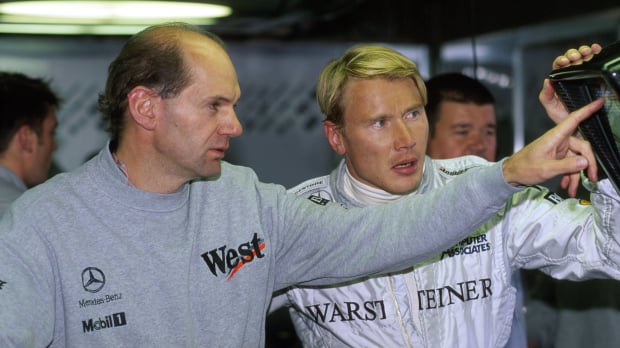
The year 2001 was meant to be season four of the blockbuster Mika Hakkinen vs Michael Schumacher rivalry (if you include Schumacher’s leg break year of 1999). The McLaren driver won the first two years with world championship glory, with the German finally giving Ferrari a title in 2000.
These were all good championship battles so Mika vs Michael was the focus heading into the 2001 season. Four races later though it looked as one sided as ever. Schumacher led the standings on 26 points for Ferrari (along with Hakkinen’s team-mate David Coulthard). Hakkinen was yet to score a podium with just four points.
The title was already getting away from the two-time champion ahead of the Spanish Grand Prix but he showed somewhat of a return to form after qualifying on the front row and less than a tenth of a second behind Schumacher.
From here we’ll fast forward and pick up the race late on, with Hakkinen establishing a lead over Schumacher who had been in front before he was urged to slow down to preserve his car. His Ferrari team were concerned with rear tyre vibration due to movement on the wheel rims.
READ MORE: F1 World Champions: The full list from Farina to new king Lando Norris
Hakkinen’s Spain nightmare
So heading into the final lap, Hakkinen had a more than comfortable 42 second lead. A win was in sight that would take him onto 14 points and leave him 18 behind Schumacher – still trailing by over a race win but back on course.
Having lapped third place man Juan Pablo Montoya heading into the last lap, UK commentator Murray Walker started to sing Hakkinen’s praises, saying: “If he can just do these last two-and-a-half miles or so he is going to have won this race four years [in a row]…”
At this point co-commentator Martin Brundle shouts over him: “He’s slowing down, he’s slowing down, Murray! I thought I heard it rattling as it came past the pits last time. Mika Hakkinen is slowing down, is he out of fuel?”
Brundle was correct in that he was slowing down but he was incorrect with his (admittedly difficult to nail down) diagnosis. Everyone knew exactly what it was seconds later though when smoke started spitting out of the back of his McLaren Mercedes.
“Bang, the engine’s gone,” Walker says with a resigned tone as Hakkinen’s car stops halfway round the final lap on the run up to Campsa and just six corners from the chequered flag.
TV cameras caught it all perfectly, with Schumacher’s car zipping past the still shot of Hakkinen’s parked up McLaren to take victory.
2001 Spanish Grand Prix results
As the dust settled on that tumultuous finish, the final classification looked like this:
| Position | Driver | Team | Laps | Time/Retired |
|---|---|---|---|---|
| 1 | Michael Schumacher | Ferrari | 65 | 1:31:03.305 |
| 2 | Juan Pablo Montoya | Williams BMW | 65 | +40.738s |
| 3 | Jacques Villeneuve | BAR Honda | 65 | +49.626s |
| 4 | Jarno Trulli | Jordan Honda | 65 | +51.253s |
| 5 | David Coulthard | McLaren Mercedes | 65 | +51.616s |
| 6 | Nick Heidfeld | Sauber Petronas | 65 | +61.893s |
| 7 | Olivier Panis | BAR Honda | 65 | +64.977s |
| 8 | Kimi Raikkonen | Sauber Petronas | 65 | +79.808s |
| 9 | Mika Hakkinen | McLaren Mercedes | 64 | DNF |
| 10 | Jean Alesi | Prost Acer | 64 | +1 lap |
| 11 | Luciano Burti | Prost Acer | 64 | +1 lap |
| 12 | Jos Verstappen | Arrows Asiatech | 63 | +2 laps |
| 13 | Fernando Alonso | Minardi European | 63 | +2 laps |
| 14 | Giancarlo Fisichella | Benetton Renault | 63 | +2 laps |
| 15 | Jenson Button | Benetton Renault | 62 | +3 laps |
| 16 | Tarso Marques | Minardi European | 62 | +3 laps |
| NC | Rubens Barrichello | Ferrari | 49 | DNF |
| NC | Eddie Irvine | Jaguar Cosworth | 48 | DNF |
| NC | Ralf Schumacher | Williams BMW | 20 | DNF |
| NC | Enrique Bernoldi | Arrows Asiatech | 8 | DNF |
| NC | Pedro de la Rosa | Jaguar Cosworth | 5 | DNF |
| NC | Heinz-Harald Frentzen | Jordan Honda | 5 | DNF |
Schumacher’s sportsmanship
Hakkinen waved to the crowd as he stepped out his McLaren’s box of bits, and was given a lift back to the pits by his team-mate Coulthard, sitting on the edge of the car. It was a touching moment… and one you are likely not to see anymore given F1 drivers are now fined for performing such a gesture to a stricken driver. That’s sanitised sport for you.
Anyway, while Hakkinen was doing a good job at putting on a brave face, this was a drop kick to his crown jewels of epic proportions. It left him 32 points behind Schumacher (over three race wins) and with Ferrari already seemingly having the dominant car, left his title hopes in bits.
Schumacher to his credit admitted he felt for Hakkinen’s misfortune in the press conference. When asked what he thought as we went past his rival on the final lap, he responded: “I was simply sorry because I think we both have done a very good race, very entertaining until the last pit stop. Then he jumped me at the last pit stop because he did a better last section in his second pit stop and I was a bit in traffic and having a bit of trouble on top of that.
“It reminds me back to old days last year. Then seeing him then retiring on the last lap, with five corners or whatever to go to the end – it’s shocking, because he’s really done everything right and then something like this… I’m sorry for him. I went to see him because it’s not the way you like to win a race honestly, but then sometimes it happens in racing. It’s happened to me and it has now happened to Mika, but that’s the way it goes sometimes.”
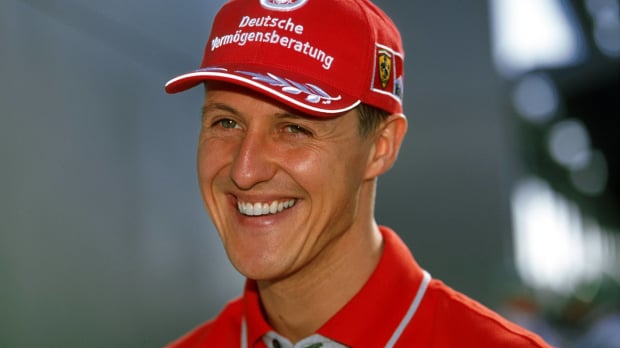
Hakkinen explained his problems post-race , saying: “It looks like there was some problem with the clutch, there was nothing that I could do to try to save the situation. I tried to make some adjustments in the car to try to reduce the problems that I was experiencing. But it didn’t make any difference.”
“I thought ‘Wow, I’m going to win for the fourth time in Barcelona. If that happens it’s incredible’. Then on the last lap I said ‘Ok, now I understand, it can’t be this good to be true.’
“I was changing different adjustments and the gearbox and the whole car was accelerating sometimes extremely aggressively. I nearly spun off once.”
The end of Mika Hakkinen in F1
At the time Hakkinen admitted it was a body blow to his title hopes but that he still had faith he could fight back, saying: “Of course I’m worried about it, it’s absolutely natural, but I’m not losing my belief that I can still win it. I just have to count the points all the time and when I no longer have the possibility to win this season we have to change to different targets for this year. But until that moment I have to push and fight as hard as I can.”
The bitter truth was this was a shattering mental blow that Hakkinen never recovered from as far as his F1 career was concerned. He went on to win only two races in 2001. One at the British Grand Prix at Silverstone and one at the United States Grand Prix at Indianapolis when Schumacher had already won the championship three races before.
Hakkinen only recorded one other podium with a third at the Canadian Grand Prix, finishing fifth in the championship and 86 points behind Schumacher. The Finn took a sabbatical at the end of the season but would never return to the F1 world championship.
READ MORE: FIA announce Antonelli penalty verdict after Barcelona Grand Prix incident
I’ve been a massive F1 fan since the mid 1990s and continue to study the history of the sport long before that. As an experienced motor sport reporter covering F1, MotoGP and the LeMans 24 Hour race, being part of GPFans has allowed me to work with a diverse team with all sorts of different backgrounds in watching the sport and given me a greater appreciation of F1.
Related
More F1 news
Latest F1 news


F1 driver replaced by Lewis Hamilton at Ferrari claims

Ceiling Collapse In Benalmadena Restaurant

200,000 Visitors Expected At Motril’s 20th International Air Festival

Europe Enters The ‘era Of Deportations’

Peru’s Roberto Sánchez And Keiko Fujimori Urge Caution As Vote Count Continues In Very Tight Presidential Election

Spain, A Country Of 50 Million People With Infrastructure For 40 Million: ‘The Cracks Are Starting To Show’


-
 Africa2 weeks ago
Europe Enters The ‘era Of Deportations’
-
 Alberto Fujimori1 week ago
Peru’s Roberto Sánchez And Keiko Fujimori Urge Caution As Vote Count Continues In Very Tight Presidential Election
-
 Barcelona2 weeks ago
Spain, A Country Of 50 Million People With Infrastructure For 40 Million: ‘The Cracks Are Starting To Show’
-
 Uncategorized2 weeks ago
Max Verstappen F1 future hangs in the balance as three teams block 2027 rule changes
-
David Beckham2 weeks ago
A Journey Through The Ages Of Soccer In The United States
-
british holidaymakers2 weeks ago
Why more British tourists are choosing Spain over other holiday destinations in 2026
-
 Claudia Sheinbaum2 weeks ago
Mexican Teachers Expand Protest Camp And Threaten To Shut Down The Capital
-
 Uncategorized2 weeks ago
Oscar Piastri replacement? McLaren hand F1 test run to champion driver