Connect with us

Donald Trump

US Supreme Court Is Set To Rule On Cases That Will Define The Limits Of Presidential Power

Published

on

us-supreme-court-is-set-to-rule-on-cases-that-will-define-the-limits-of-presidential-power

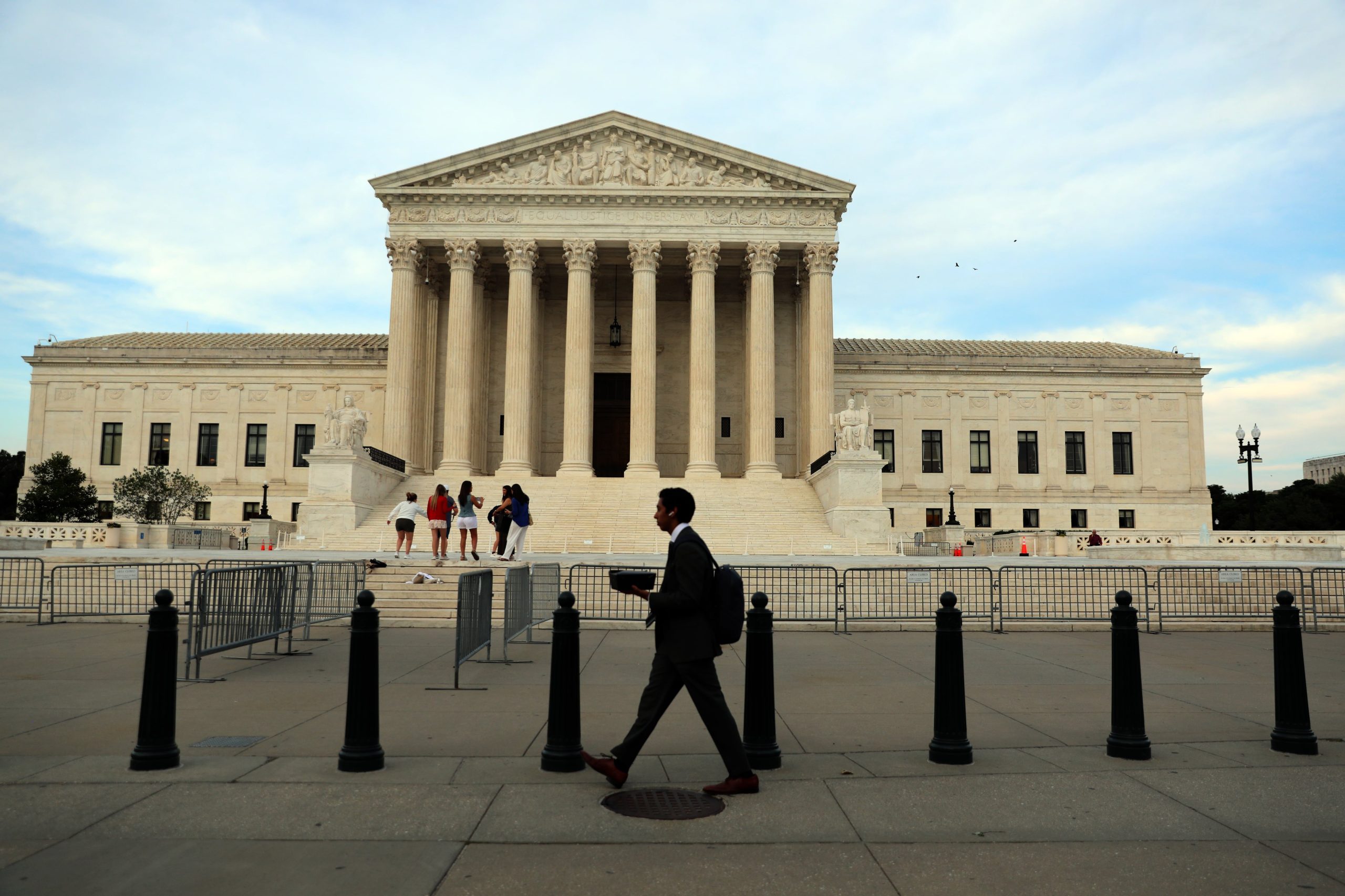
The nine justices who sit on the U.S. Supreme Court, which has a 6-3 conservative majority, are set to issue several consequential rulings this week starting on Monday before they go on a nearly two-month summer recess. Their decisions will shape the future of Donald Trump’s presidency, redraw the boundaries of separation of powers between the executive and the legislative, set a new limit on presidential authority and determine the very nature of the nation.

Birthright citizenship

In recent years the justices have left some of their most consequential cases for the final week of June. This year is no different. The court is expected to rule on Trump v. Barbara, involving the president’s attempt to roll back birthright citizenship, which grants U.S. nationality virtually automatically to anyone born on U.S. soil.

The case was heard on April 1, when a majority of the justices expressed skepticism about Trump’s order to deny citizenship to children of undocumented immigrants. The court’s decision could affect more than 250,000 babies a year—or nearly 3 million children over the next decade—who could be deprived of U.S. citizenship.
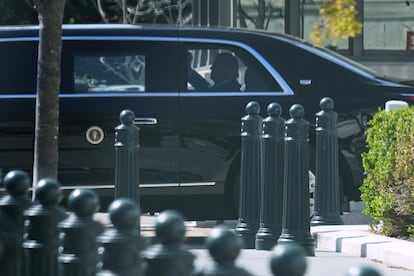
It is one of the most politically charged cases on the docket. In an unprecedented move, Trump showed up in the courtroom to hear the oral arguments in April. No sitting president had ever attended an oral argument before—it was without precedent in U.S. democratic history. Trump’s presence was widely seen as an effort to pressure and influence the justices’ independence, weeks after they had rebuked him by striking down his reciprocal tariffs on the world.

Although the conservative court is often aligned with Trump’s policies, the justices have expressed some skepticism in the birthright case. Chief Justice John Roberts delivered a line likely to shape the opinion: “It’s a new world, but the same Constitution.”

The Fed’s independence

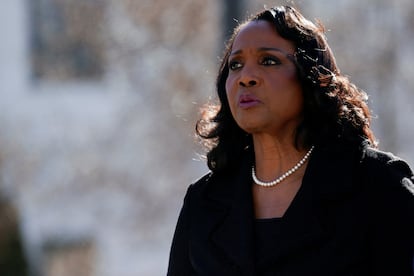
Another controversial case before the nine justices concerns Trump’s attempt to remove Lisa Cook, one of the governors on the Federal Reserve Board whom he has accused—without evidence—of mortgage fraud. The court faces a fraught choice: the Fed is an autonomous, independent agency accountable only to Congress. It was designed that way to prevent government interference in monetary policy. History shows presidents typically pressure the institution to lower interest rates during election seasons. But federal law allows the president to remove a Fed official “for just cause.”

The president posted the termination letter on social media—an unsigned, letterhead-free document alleging irregularities the official strongly denies. About 500 prominent economists signed letters backing Cook, the first Black woman to serve on the Fed’s board. She was appointed by Joe Biden in 2022 and is one of the policy hawks opposed to the broad rate cuts that Trump seeks. At oral argument in January, a majority of the justices seemed reluctant to allow Cook’s removal.

Trump’s maneuver is interpreted as a strategy to undermine the Fed’s independence and would blur the thin line separating executive and legislative power.
The firing of Rebecca Slaughter

The justices must decide whether the occupant of the White House can remove Rebecca Slaughter, one of five members of the Federal Trade Commission (FTC), without sufficient cause. At oral argument the justices appeared inclined to side with the president and allow Slaughter’s dismissal.

The rules governing the FTC prevent the president from removing commissioners except for “inefficiency, neglect of duty or malfeasance in office.” None of those grounds were mentioned in the letter Slaughter received. Instead, the letter said her remaining in office was “incompatible with the Administration’s priorities.” During the oral argument, when the court seemed poised to rule for Trump, judges debated whether a ruling for Slaughter would grant Congress disproportionate power.

Voting by mail

The Supreme Court is expected to rule on two other major decisions that will affect the upcoming midterm elections in November, which will serve as a kind of referendum on Trump’s tenure. In Watson v. Republican National Committee, the justices must review a challenge to a Mississippi law that allows ballots mailed by Election Day to be counted if they are postmarked and received within five days after Election Day. At oral argument, a majority of the justices appeared willing to uphold a lower court’s view that federal law requires all ballots to be received by Election Day.

During argument, most justices sided with Mississippi Republicans and the state Libertarian Party, who brought the challenge. A majority of the justices agreed the state law appears to conflict with federal statutes that designate the Tuesday after the first Monday in November as Election Day and therefore do not permit ballots to be received afterward.

A conservative majority court

Although the justices can rule against the president in some of these cases, the court has repeatedly shown alignment with the Trump administration, which appointed three current justices. Last Thursday, for example, it issued a ruling that allows the president to terminate Temporary Protected Status for 350,000 Haitians and 6,000 Syrians, potentially paving the way for their deportation. The decision could affect nearly 1 million people from other countries who rely on the program to avoid removal from the United States. That same day the conservative majority upheld a Trump-backed federal rule that bars asylum applications at the U.S.–Mexico border. The order allows migrants reaching the border to be expelled without an opportunity to present their claims to officials.

The rulings endorse the tightening of immigration laws by the Trump administration, which has made combating immigration a central plank of its policies. The government has expanded the resources of ICE and the Border Patrol with aggressive campaigns of harassment against undocumented immigrants in order to carry out mass deportations. These policies represent a dramatic shift toward nationalism in a country whose founding DNA is rooted in successive waves of immigrants from around the world: the United States was built on waves of newcomers from every corner of the globe.

Sign up for our weekly newsletter to get more English-language news coverage from EL PAÍS USA Edition


Donald Trump

Trump puts himself on a US passport in unprecedented presidential first

Published

on

By

Trump’s commemorative passport marks the 250th anniversary of American independence.
Credit : X – The White House
@WhiteHouse

For generations, American passports have carried the symbols of the United States rather than the face of the president occupying the White House. Donald Trump has now broken with that tradition.

On Friday, June 26, the US president shared the design of a limited edition passport created for the 250th anniversary of the Declaration of Independence. The commemorative document features Trump’s own portrait, making him the first sitting American president to appear on a US passport while still in office.

The image appeared on Trump’s Truth Social account alongside a short message: ‘The new United States Passport that says ‘Welcome, but behave yourself!’

The announcement was brief, but it immediately prompted questions about the passport itself, why it carries the president’s image and whether it represents another step in Trump’s effort to leave a visible mark on America’s national symbols.

The passport was supposed to celebrate America’s birthday. Instead, everyone is talking about the photo

The design is unmistakably patriotic.

Trump is pictured sitting behind the Resolute Desk, with the text of the Declaration of Independence forming the background. His signature appears beneath the portrait, which closely resembles an official White House photograph taken by presidential photographer Daniel Torok.

Turn the page and the theme continues. An illustration of the signing of the Declaration of Independence in 1776 sits above the words ‘United States of America 250,’ a reference to the country’s semiquincentennial celebrations next year.

The White House later reposted the design, calling it the ‘Patriot Passport.’

What has not been explained is how the passport will actually be used. At the time of writing, the State Department had not provided details on whether it will be issued to travellers, produced in limited numbers or simply form part of the broader America250 commemorations.

That uncertainty has only added to the interest surrounding it.

Why this small design choice has become such a big story

Presidents regularly appear on campaign posters, commemorative coins and official portraits.

Passports are different. They are government documents carried by millions of citizens and are generally designed to stay politically neutral. That is why historians point out that no serving US president has previously appeared on an American passport.

That fact alone explains why the images spread so quickly.

Supporters see the design as a patriotic keepsake produced for one of the biggest anniversaries in American history.

Critics see something else.

Some argue that official state documents should celebrate the country rather than the politician temporarily leading it. Others say the passport fits a wider pattern in which Trump has attached his name or image to high profile government projects.

The debate has grown because this is not the only example. Reports have also indicated that future US banknotes will carry Donald Trump’s signature, something that would also be unprecedented for a serving president.

Taken together, the moves have revived accusations from political opponents that Trump is increasingly placing his personal stamp on national institutions.

His supporters reject that criticism, saying there is nothing unusual about a president taking a leading role in celebrating the country’s 250th anniversary.

The biggest mystery isn’t the portrait. It’s who will actually get one

For all the attention the passport has received, one basic question remains unanswered.

Can ordinary Americans apply for one?

At the moment, nobody outside the administration knows.

Neither the White House nor the State Department has explained how many will be produced, who will receive them or whether they will function like an ordinary passport.

That means the document has become famous before anyone has even seen one in person.

Perhaps that is fitting. Passports are normally discussed because of visa rules, border controls or new security features. This one has entered the headlines for an entirely different reason.

Long before it reaches anyone’s pocket, it has already become part of America’s political conversation.

Continue Reading

%

Trump Unveils Unprecedented US Passport

Published

on

trump-unveils-unprecedented-us-passport

Trump’s commemorative passport marks the 250th anniversary of American independence. Credit : X – The White House @WhiteHouse

For generations, American passports have carried the symbols of the United States rather than the face of the president occupying the White House. Donald Trump has now broken with that tradition.

On Friday, June 26, the US president shared the design of a limited edition passport created for the 250th anniversary of the Declaration of Independence. The commemorative document features Trump’s own portrait, making him the first sitting American president to appear on a US passport while still in office.

The image appeared on Trump’s Truth Social account alongside a short message: ‘The new United States Passport that says ‘Welcome, but behave yourself!’

The announcement was brief, but it immediately prompted questions about the passport itself, why it carries the president’s image and whether it represents another step in Trump’s effort to leave a visible mark on America’s national symbols.

The passport was supposed to celebrate America’s birthday. Instead, everyone is talking about the photo

The design is unmistakably patriotic.

Trump is pictured sitting behind the Resolute Desk, with the text of the Declaration of Independence forming the background. His signature appears beneath the portrait, which closely resembles an official White House photograph taken by presidential photographer Daniel Torok.

Turn the page and the theme continues. An illustration of the signing of the Declaration of Independence in 1776 sits above the words ‘United States of America 250,’ a reference to the country’s semiquincentennial celebrations next year.

The White House later reposted the design, calling it the ‘Patriot Passport.’

What has not been explained is how the passport will actually be used. At the time of writing, the State Department had not provided details on whether it will be issued to travellers, produced in limited numbers or simply form part of the broader America250 commemorations.

That uncertainty has only added to the interest surrounding it.

Why this small design choice has become such a big story

Presidents regularly appear on campaign posters, commemorative coins and official portraits.

Passports are different. They are government documents carried by millions of citizens and are generally designed to stay politically neutral. That is why historians point out that no serving US president has previously appeared on an American passport.

That fact alone explains why the images spread so quickly.

Supporters see the design as a patriotic keepsake produced for one of the biggest anniversaries in American history.

Critics see something else.

Some argue that official state documents should celebrate the country rather than the politician temporarily leading it. Others say the passport fits a wider pattern in which Trump has attached his name or image to high profile government projects.

The debate has grown because this is not the only example. Reports have also indicated that future US banknotes will carry Donald Trump’s signature, something that would also be unprecedented for a serving president.

Taken together, the moves have revived accusations from political opponents that Trump is increasingly placing his personal stamp on national institutions.

His supporters reject that criticism, saying there is nothing unusual about a president taking a leading role in celebrating the country’s 250th anniversary.

The biggest mystery isn’t the portrait. It’s who will actually get one

For all the attention the passport has received, one basic question remains unanswered.

Can ordinary Americans apply for one?

At the moment, nobody outside the administration knows.

Neither the White House nor the State Department has explained how many will be produced, who will receive them or whether they will function like an ordinary passport.

That means the document has become famous before anyone has even seen one in person.

Perhaps that is fitting. Passports are normally discussed because of visa rules, border controls or new security features. This one has entered the headlines for an entirely different reason.

Long before it reaches anyone’s pocket, it has already become part of America’s political conversation.

Continue Reading

Donald Trump

Republican Sheriffs In Maryland Rebel Against Ban On Cooperating With ICE: ‘It Does A Lot Of Damage To Public Safety’

Published

on

republican-sheriffs-in-maryland-rebel-against-ban-on-cooperating-with-ice:-‘it-does-a-lot-of-damage-to-public-safety’

Sheriff Chuck Jenkins has been facilitating the deportation of undocumented immigrants from his jurisdiction, Frederick County, Maryland, for the past 18 years. Thanks to an agreement with Immigration and Customs Enforcement (ICE), under Section 287(g) of the U.S. Immigration and Nationality Act, undocumented immigrants held in his jails were transferred to the immigration agency after serving their sentences.

However, this arrangement no longer applies. A state law, passed in February of this year, prohibited the practice. The legislation made it illegal for local police departments and sheriff’s offices to hand over detainees to immigration authorities. This prompted counties that still had these agreements in place to terminate them immediately. And, last month, the Democratic-led state increased protections for migrants by passing the Community Trust Act, which prohibits local officials from asking people about their immigration status, informing immigration authorities about individuals detained in local jails, or holding them after they’ve served their sentences in order to hand them over to federal agents without a warrant.

Jenkins believes that the new legislation will make it harder for him to maintain order in his county. That’s why he has joined 16 other sheriffs across Maryland in taking the Community Trust Act to court. “[The original legislation] in itself was bad enough; [it] did a lot of damage to law enforcement and public safety. But then, to [follow up] with this Community Trust Act, what that did was basically take away every other means that we had available to us to cooperate and work with ICE, so we felt it was a step too far. We felt that sheriffs were placed in a position where we either had to obey federal law, or obey state law. We felt it was an untenable position,” he explains.

Sheriffs from 17 of Maryland’s 24 counties filed a lawsuit against Democratic Governor Wes Moore and Attorney General Anthony Brown in federal court in Greenbelt, Maryland. They argue that the law violates the U.S. Constitution and places their officers in a difficult legal position, due to the conflict between state and federal law. The plaintiffs are Republicans, a minority in a state with a Democratic majority.

Sarah Staudt is the Policy and Advocacy director at the Prison Policy Initiative, a nonprofit organization that supports the legislation. According to her, before February, there were only eight formal 287(g) agreements in the state: migrant detentions were based on informal collaborations, which are prohibited under the new law.

“Most ICE arrests in jails and other lock-ups occurring in Maryland are occurring not through formal 287(g) agreements, but through informal collaboration by local and state law enforcement with ICE. These collaborations are not targeting ‘dangerous criminals,’ but everyday Maryland residents,” Staudt told Congress this past February.

According to data from the Prison Policy Initiative, approximately one in three ICE arrests (29%) that have taken place in Maryland during the second Trump administration have occurred in jails or other detention facilities. Of these arrests, 81% have been carried out through informal collaboration with ICE, with only 19% occurring through formal 287(g) agreements. “Legislation that only addressed 287(g) agreements, therefore, would not address the bulk of the problem,” Staudt noted.

When Trump returned to the White House with the promise of a historic deportation effort, the focus of migrant detentions shifted. While the previous administration concentrated on carrying out deportations at the border, the Trump administration deployed thousands of ICE agents to inland cities. To facilitate these arrests, 287(g) agreements with immigration authorities were signed.

The ICE website has a section promoting these agreements: “How can I convince my chief or sheriff to participate in 287(g)?” one section asks. At the end of Joe Biden’s presidency, there were 139 such agreements nationwide. Today, there are 1,986 agreements in effect, spread across 39 states.

Trump’s anti-immigration agenda has prompted states to push for legislation concerning ICE. There are three main approaches. Some Republican-led states, like Florida, encourage cooperation; their ICE arrest rates are very high. Democratic-led states like New Jersey have taken a first step toward limiting cooperation with the agency by prohibiting these types of agreements. However, some Democratic-led states have allowed informal collaboration to continue, while some local sheriffs grant ICE access to their detention centers.

The Democratic-led state of Illinois has adopted the most stringent stance against arrests. According to a 2025 directive, local law enforcement agencies cannot transfer individuals to immigration custody; they cannot allow ICE agents access to any person in custody; they cannot authorize immigration agencies to use facilities or equipment, including electronic databases, nor can they provide any additional assistance to federal agents. Illinois is considered a “sanctuary” state, a term used for states that refuse to participate in immigration operations.

Divided opinions

The debate around public safety continues to divide public opinion. Immigrant advocates celebrate Maryland’s new law, arguing that it makes it easier for people to report crimes without fear of arrest. “When community members can interact with local police without fear of being turned over to federal immigration authorities, they are more likely to report crimes, cooperate with investigations and engage with public officials. That makes all our communities safer,” the American Civil Liberties Union (ACLU) said, in a statement released following the law’s publication.

Jeff Gahler, the sheriff for Harford County and one of the plaintiffs in the lawsuit against the state of Maryland, views public safety from a different perspective. “Nearly 25 years ago, our nation saw the devastating results when the 9/11 attacks came to our country. It was very clear that when federal, state and local law enforcement agencies operate in silos, void of communication and partnership, the impact is deadly. It is unconscionable that we not only repeat these mistakes, but [also] that there are Maryland legislators and a governor who [have] created such a public safety divide.” he wrote, in an email response to EL PAÍS.

Maryland Governor Wes Moore, a Democrat, neither signed nor vetoed the Community Trust Act, which went into effect this past May. Moore stated that he agrees with the bill’s objective of keeping local police focused on local crimes and that the state should not “let untrained, unqualified and unaccountable ICE agents deputize our law enforcement officers to do immigration work.” However, he noted that the bill “presents real implementation challenges.”

“Protecting our communities,” he continued, “requires seamless coordination among federal, state and local partners… and the bill creates ambiguities around joint investigations that we are working with the attorney general’s office to clarify.”

The law includes exceptions. For instance, local law enforcement agencies can alert immigration authorities about a person in custody if that person has been convicted of a felony, has been required to register as a sex offender, or has served at least five years in prison in another state.

Gahler and Jenkins argue that the issue has been politicized because criticism of cooperation with ICE has surged following Trump’s return to power. The 287(g) agreements were created in 1996, during the administration of Democratic President Bill Clinton, and have been in effect under both Democratic and Republican administrations. However, they never received the momentum that Trump has given them.

Both sheriffs are Republicans, as are the other signatories of the lawsuit against the Community Trust Act. But their counties had contrasting results in the 2024 presidential election: Harford County voted overwhelmingly for Trump, while Frederick County which is part of the Washington, D.C. metropolitan area, voted for the Democratic candidate, Kamala Harris.

Jenkins believes that, in addition to releasing criminals onto the streets, the new legislation will encourage more ICE raids. “[Right] now, ICE agents are in Frederick… and they’re apprehending people on the street that we would have turned over to them in jail. So, we’re seeing the presence of more ICE officers,” he says.

According to data from the Prison Policy Initiative, only 36% of people arrested by ICE in Maryland — broken down into 44% arrested through informal collaboration with law enforcement and 51% through the 287(g) agreements — had prior criminal convictions, including immigration and traffic violations.

Sign up for our weekly newsletter to get more English-language news coverage from EL PAÍS USA Edition

Continue Reading

Trending

Copyright © 2017 Spanish Property & News