
Donald Trump
Republican Sheriffs In Maryland Rebel Against Ban On Cooperating With ICE: ‘It Does A Lot Of Damage To Public Safety’








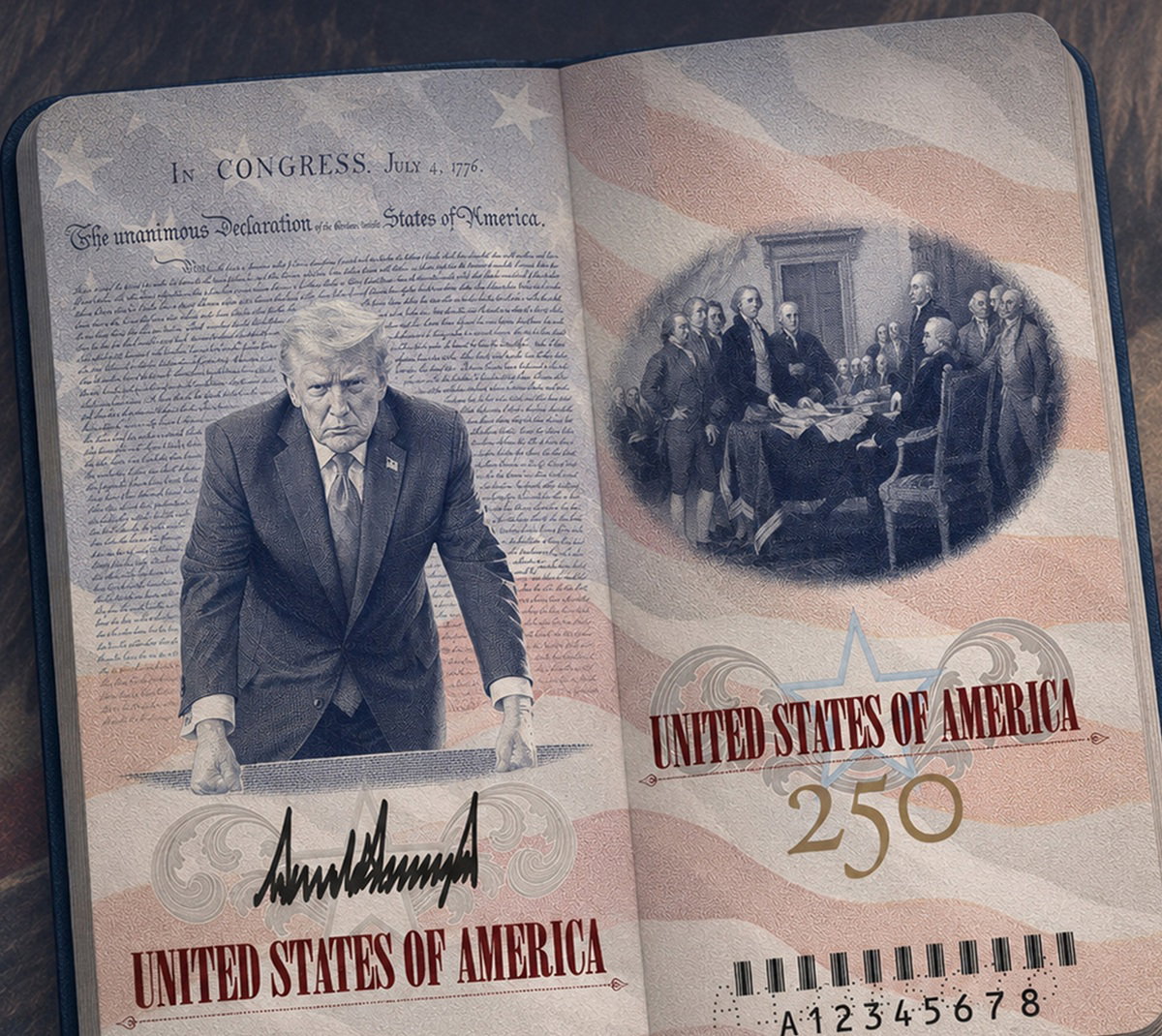
Trump’s commemorative passport marks the 250th anniversary of American independence.
Credit : X – The White House
@WhiteHouse
For generations, American passports have carried the symbols of the United States rather than the face of the president occupying the White House. Donald Trump has now broken with that tradition.
On Friday, June 26, the US president shared the design of a limited edition passport created for the 250th anniversary of the Declaration of Independence. The commemorative document features Trump’s own portrait, making him the first sitting American president to appear on a US passport while still in office.
The image appeared on Trump’s Truth Social account alongside a short message: ‘The new United States Passport that says ‘Welcome, but behave yourself!’
The announcement was brief, but it immediately prompted questions about the passport itself, why it carries the president’s image and whether it represents another step in Trump’s effort to leave a visible mark on America’s national symbols.
The passport was supposed to celebrate America’s birthday. Instead, everyone is talking about the photo
The design is unmistakably patriotic.
Trump is pictured sitting behind the Resolute Desk, with the text of the Declaration of Independence forming the background. His signature appears beneath the portrait, which closely resembles an official White House photograph taken by presidential photographer Daniel Torok.
Turn the page and the theme continues. An illustration of the signing of the Declaration of Independence in 1776 sits above the words ‘United States of America 250,’ a reference to the country’s semiquincentennial celebrations next year.
The White House later reposted the design, calling it the ‘Patriot Passport.’
What has not been explained is how the passport will actually be used. At the time of writing, the State Department had not provided details on whether it will be issued to travellers, produced in limited numbers or simply form part of the broader America250 commemorations.
That uncertainty has only added to the interest surrounding it.
Why this small design choice has become such a big story
Presidents regularly appear on campaign posters, commemorative coins and official portraits.
Passports are different. They are government documents carried by millions of citizens and are generally designed to stay politically neutral. That is why historians point out that no serving US president has previously appeared on an American passport.
That fact alone explains why the images spread so quickly.
Supporters see the design as a patriotic keepsake produced for one of the biggest anniversaries in American history.
Critics see something else.
Some argue that official state documents should celebrate the country rather than the politician temporarily leading it. Others say the passport fits a wider pattern in which Trump has attached his name or image to high profile government projects.
The debate has grown because this is not the only example. Reports have also indicated that future US banknotes will carry Donald Trump’s signature, something that would also be unprecedented for a serving president.
Taken together, the moves have revived accusations from political opponents that Trump is increasingly placing his personal stamp on national institutions.
His supporters reject that criticism, saying there is nothing unusual about a president taking a leading role in celebrating the country’s 250th anniversary.
The biggest mystery isn’t the portrait. It’s who will actually get one
For all the attention the passport has received, one basic question remains unanswered.
Can ordinary Americans apply for one?
At the moment, nobody outside the administration knows.
Neither the White House nor the State Department has explained how many will be produced, who will receive them or whether they will function like an ordinary passport.
That means the document has become famous before anyone has even seen one in person.
Perhaps that is fitting. Passports are normally discussed because of visa rules, border controls or new security features. This one has entered the headlines for an entirely different reason.
Long before it reaches anyone’s pocket, it has already become part of America’s political conversation.
Donald Trump
The Lucrative Business Of The World Cup: How FIFA Secures Millions In Profits, While Host Nations Take All The Risks

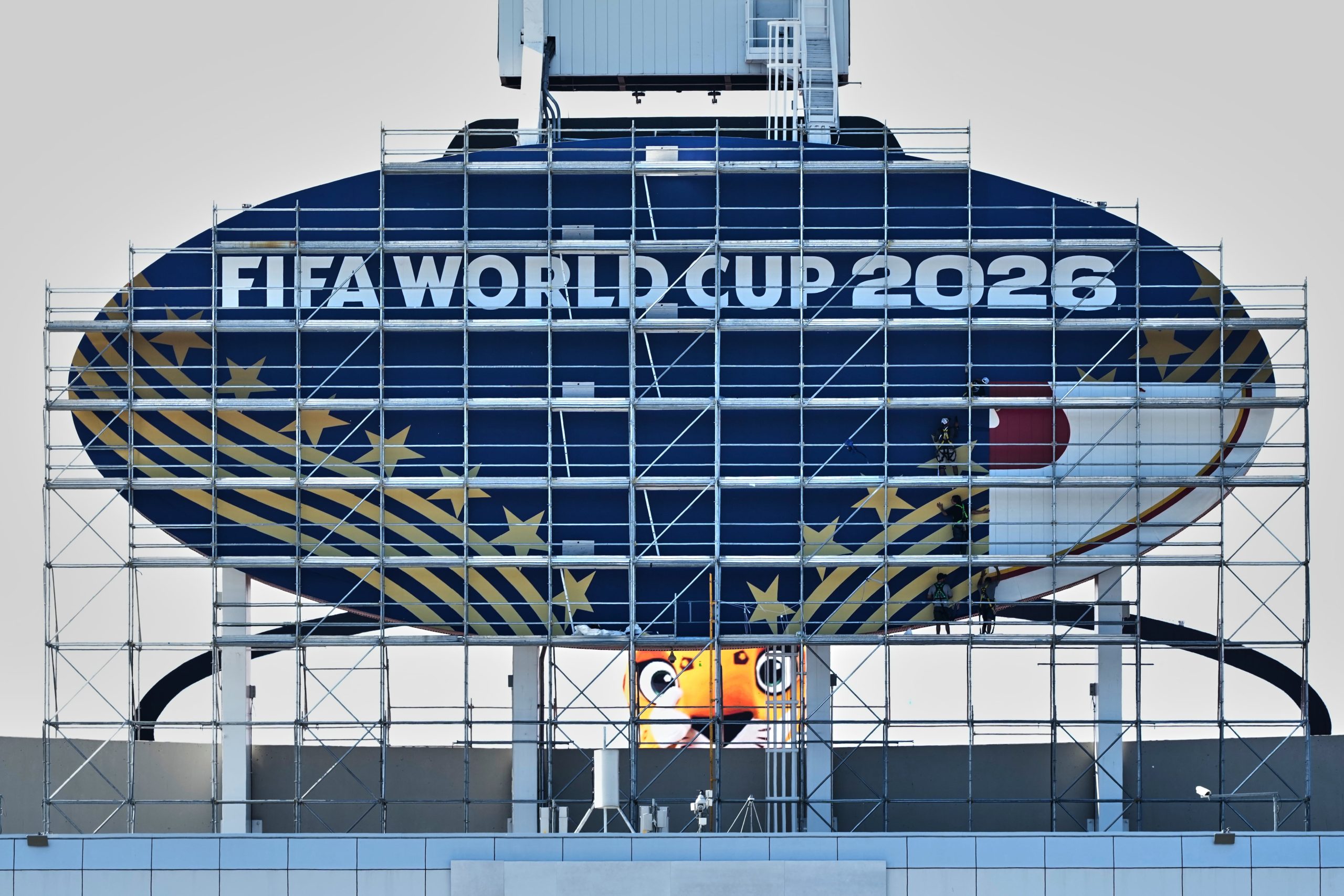
Beyond being a passion, soccer is a business. The 2026 World Cup — currently being held in the United States, Mexico and Canada — is poised to become the biggest sporting event on the planet. And the three host nations hope it will also be a phenomenal economic springboard.
The U.S., Mexico and Canada are staging the most ambitious soccer championship ever held: for 39 days, a total of 48 national teams will play 104 matches in 16 venues across the three host countries. Never before has a tournament of this scale featured so many matches. It’s a lucrative business for the television networks that have acquired the broadcasting rights: they’re expecting an unprecedented audience of millions. A report published by Bank of America estimates that some six billion people — 75% of the world’s population — will enjoy some of the matches via television, streaming platforms, or social media.
FIFA — the governing body of world soccer — is rubbing its hands together at the prospects for the competition. Compared to previous editions, the investment made by the organizers in this World Cup has been significantly lower. The stadiums were already built, so they barely needed to spend on major projects. Nor have the 16 host cities undertaken the kind of large-scale urban redevelopment that often leaves a lasting legacy of historic competitions, as is typically the case with the Olympic Games.
“The U.S. has done it more efficiently than maybe anybody before,” said Andrew Giuliani, the executive director of the White House Task Force on the 2026 FIFA World Cup. “It’s cost us a fraction of what other hosts [have spent] because we have the infrastructure in place to be able to do it, whether it’s [the] rail system, whether it’s stadiums,” he elaborated a few days ago, during an interview at the Atlantic Council.
While Qatar, Russia and Germany spent billions of dollars building new stadiums, improving transportation systems and undertaking other urban development projects in an effort to capitalize on the competition’s momentum to improve infrastructure, the United States has taken advantage of the large, modern American football stadiums to host the matches.
Washington has spent a mere $1.2 billion. Slightly more than half of that went toward reinforcing security — one of the country’s main concerns — across its 11 host cities. Another $500 million was spent on preventing drone attacks. Only about $100 million was allocated to improving transportation in the host cities.
To put this in perspective, Brazil allocated more than $12 billion from its budget to build stadiums, roads and transportation infrastructure for the 2014 World Cup. Russia invested over $14 billion in the 2018 tournament, while Qatar used the 2022 World Cup as an opportunity to launch an ambitious infrastructure plan, including complex urban development projects, transportation systems, as well as some of the most cutting-edge stadiums in the world. While no official figure was ever released for Qatar’s investment in the soccer competition, the sports network ESPN estimates it at $220 billion, making it the largest investment in World Cup history.
The 2026 World Cup has avoided all of that investment. In the United States — where success is often tied to money — substantial profits are expected from the championship. A report prepared by FIFA — led by Swiss soccer manager Gianni Infantino — and the OECD maintains that the World Cup will have a $41 billion impact on global GDP. It estimates that 824,000 jobs will be created and that it will generate more than $9.4 billion in direct and indirect tax revenue for North America’s public coffers.
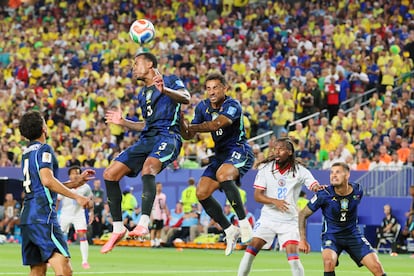
According to the report (which was delivered to U.S. President Donald Trump in the Oval Office by his friend Infantino), in the United States alone, projections indicate that the World Cup will boost domestic GDP by over $17 billion, while creating 185,000 jobs. Fans are also projected to spend more than $11 billion on travel, accommodations and other expenses while attending the matches.
“This figure is probably greatly exaggerated,” notes Victor Matheson, professor of Sports Economics at College of the Holy Cross. “FIFA’s estimates should be interpreted more as press releases than as serious economic studies,” he clarifies via email. This expert maintains that “while we’re seeing large crowds and many foreign visitors, the money that U.S. fans spend on the World Cup is money that’s not [going to be used] for other forms of entertainment.”
Matheson explains that World Cup revenue is redistributed wherever the money is spent. However, he notes, this doesn’t necessarily mean that the event increases the total amount of spending in the economy. Furthermore, he argues that foreign visitors are likely to replace regular tourists in the host cities. And, finally, he believes that much of the money spent in the United States for the event won’t stay in the country, since most of it is being collected by FIFA through ticket sales and partnerships with sponsors and large international corporations. These firms — based thousands of miles away from where the matches are played — add those profits to their bottom lines.
Kevin Daly, an analyst at the investment bank Goldman Sachs, elaborates on the same point. “While the World Cup is undoubtedly the biggest sporting and commercial event on the planet, it won’t necessarily have a major impact on macroeconomic figures,” he argues. He estimates that it will only have an impact equivalent to 0.2% of U.S. GDP.
“Only a portion of the economic benefit will remain in the host cities. Much of the spending by fans will simply come at the expense of other activities, and any increase in spending before and during the final [match] is usually followed by a decrease in the weeks and months that follow,” Daly notes. The expert — along with Mambuna Njie, another analyst at Goldman Sachs — analyzed the economic data and GDP impacts of all the world championships since the one hosted by Spain in 1982.
In another analysis, Saxo Bank, a Danish investment bank, concludes that “the 2026 World Cup is not a meaningful growth driver for the United States.”
The hostility shown by the United States toward immigrants, the president’s outbursts, as well as the much higher prices for tickets, flights and accommodations compared to previous editions of the World Cup have resulted in fewer tourists arriving than expected. FIFA anticipated that 40% of those attending the 104 matches — some five million fans — would be international visitors. However, it seems that those expectations were too high. “The truth is that many travelers have expressed reservations about traveling to the United States,” notes academic Ebenezer Obadare, a fellow at the Council on Foreign Relations (CFR).
A report published by the American Hotel & Lodging Association (AHLA) this past April — two months before the World Cup’s opening match between Mexico and South Africa (2-0) — warned that 80% of hotels in the 11 U.S. cities were reporting fewer reservations than anticipated. The hotel industry association warned that “indicators suggest the anticipated economic lift may fall short of expectations,” while alluding to political tensions and fears over visa problems.
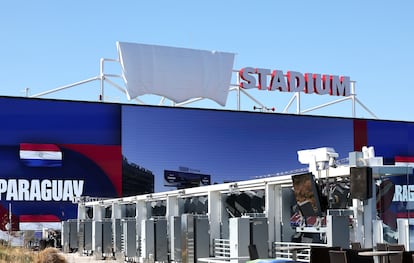
Although the World Cup isn’t expected to have a major economic impact on the cities’ economies, it will generate enormous profits for the host nations. “The net benefit for the United States, and to a lesser extent Mexico and Canada [as they are hosting fewer matches] will be much greater than in previous events,” says Matheson, noting that there are more teams and more matches. “Our stadiums are much larger than in the rest of the world, so the number of fans who can attend is greater. And our host cities are big metropolitan areas that can accommodate a larger number of fans. So, with higher profits and lower costs than in recent World Cups, it’s much more likely that this edition will have a net positive impact for the hosts.”
But that money doesn’t stay in the cities. Rather, it ends up in the hands of FIFA and the large multinational corporations that make a killing with the World Cup, such as soft drink and beer companies, sports brands (Adidas and Nike), as well as hotel and accommodation chains.
Although there are no precise figures for FIFA’s revenue from the 2026 World Cup, the organization expects to generate around $9 billion this year, according to its official budget. Ticket sales alone are projected to bring in $3.017 billion — more than triple the $930 million earned at the previous World Cup in Qatar. This would be supplemented by revenue from broadcasting rights, marketing deals, and licensing.
Richard Sheehan, professor emeritus of finance and author of Keeping Score: The Economics of Big Time Sports, estimates that the increase in ticket revenue could help FIFA surpass $15 billion in total income, according to an analysis published by The Conversation.
The big winner in the World Cup business is FIFA. It has leased the stadiums at a fixed price — with advantageous terms — and manages ticket sales and sponsorship relationships. “FIFA takes all the revenue and shifts much of the cost onto the hosts. FIFA makes a profit no matter what,” concludes Victor Matheson.
Indeed, ticket prices have been one of the main controversies of the 2026 World Cup. A quick search on Ticketmaster shows that the most expensive ticket for the final — to be played on July 19 at MetLife Stadium in New Jersey — costs $71,373. Furthermore, general admission tickets start at $10,000, a cost that’s around ten times higher than those seen in the Qatar final. Even Trump hinted that he found them too expensive. “I would certainly like to be there, but I wouldn’t pay it either, to be honest with you,” the Republican president replied when asked if he would spend $1,000 to attend one of the matches.
FIFA has established a dynamic pricing system. Tickets are becoming more expensive due to increased demand, a strategy that has substantially raised prices.
“We have to look at the market — we are in the market in which entertainment is the most developed in the world. So we have to apply market rates,” Infantino argued a few days later, while speaking at the Milken Institute Global Conference in Los Angeles. “Even though some people are saying that the ticket prices we have are high, they still end up on the resale market at an even higher price, more than double […] our price,” he added.
Sign up for our weekly newsletter to get more English-language news coverage from EL PAÍS USA Edition

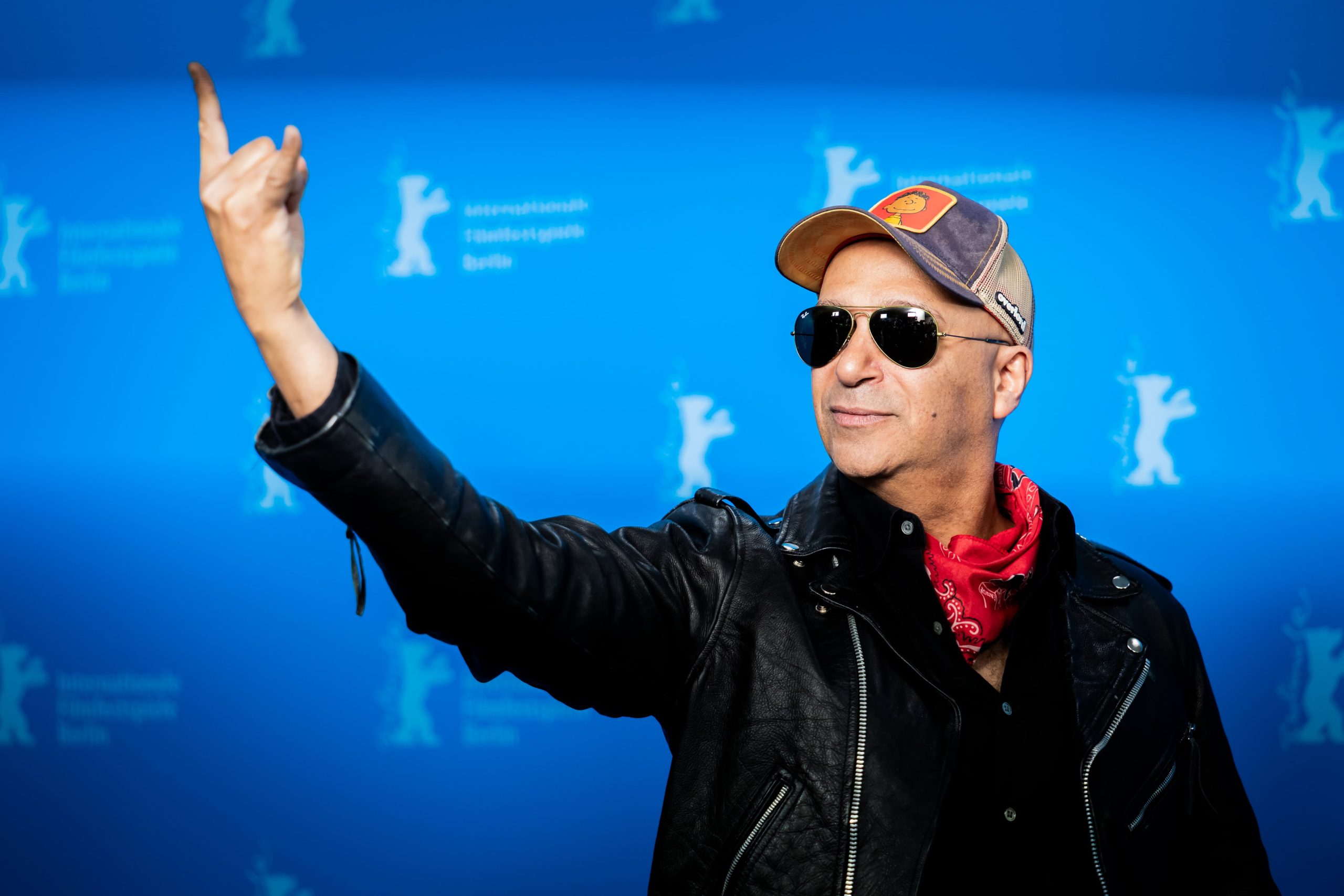
Tom Morello likes to use a word that many musicians stopped uttering long ago: resistance. The 62-year-old singer uses it naturally, the way he would when talking about songs, chords or the road. On June 27, he will perform at the BBK Legends festival in Bilbao, and in a video call interview, he sums up the spirit of the event: “It will be a celebration of the guitar and of resistance.”
More than three decades have passed since Rage Against the Machine, the band with which he rose to fame, made a seismic impact on popular culture, and he still sees no contradiction whatsoever between the two: music and rebellion.
Rock and roll has seemed, since its beginnings, synonymous with fun; while politics is, for many, just the opposite — a drag. The guitarist disagrees: “Rock music has been extremely political from the beginning. The idea of a white artist like Elvis Presley singing with the voice of a Black artist and turning white audiences on to Black music was an incredibly political statement, even if the lyrics were about love. John Coltrane’s music, purely instrumental, challenges the conventions and norms of how you can play an instrument or how you can view jazz, and in the same way, it challenges conventions in society.”
On March 31, Morello joined Bruce Springsteen on a tour of 19 large venues titled Land of Hope and Dreams, driven by that same insurgent instinct. “They were a lot of fun, but also very serious politically, because I believe that as an artist, your responsibility is not to hide who you are in what you do.”
On October 3, he will rejoin Springsteen at the Power to the People concert in Columbia, Maryland, very close to Washington, organized by Morello and also featuring Foo Fighters, Joan Baez, Serj Tankian (System of a Down), Cypress Hill, Dave Matthews, and Jack Black, among others.
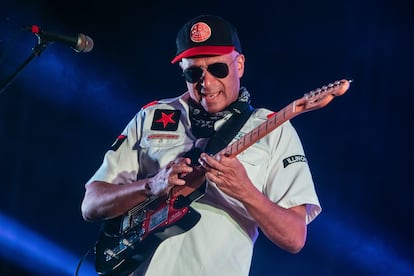
He takes his convictions so far that one starts to wonder whether he sees himself as a musician or as an activist who uses music the way others use a megaphone.
“I didn’t choose to be a guitarist,” he replies. “The guitar chose me. It was a calling, almost religious. But once I had that calling, I had to find a way to bring my convictions into my vocation. I was seized by being a guitarist, but also by having a revolutionary perspective on the world, and I tried to find a way where I could be as effective as possible while playing guitar solos.”
Revolution… Morello gives the solemn word a everyday, almost domestic feel. “It means not accepting things as they are and not allowing unjust human relationships to become normalized. In my view, it’s revolutionary to entertain and to confront an audience with an onslaught of joy and justice.”
He adds: “Most of my biggest influences regarding music and social commitment weren’t musicians but political activists: the Black Panthers, the Weather Underground, anti-colonial movements in the Third World, the Lincoln brigades that fought in Spain against the fascists.”
As for musicians, he cites Woody Guthrie, Public Enemy and System of a Down. “I can’t conceive of music separated from political activism. Life is something you must engage in.”
He’s far from happy with the United States under Trump. “I’m worried about a lot of things; it’s a long list. I think we are facing someone who wants to be the dictator of democracy every day, from his terrible foreign policy to the tactics of pursuing immigrants in their own homes,” he says. “Probably worse than all that is the anti-intellectualism and anti-science stance, which leads to policies that are undoing decades of environmental work and helping push the planet toward destruction. America is a much more dangerous place than it used to be. It’s a very, very dangerous time, and I wish I could retire and sit on a beach, but that’s not going to happen soon. There’s still work to do.”
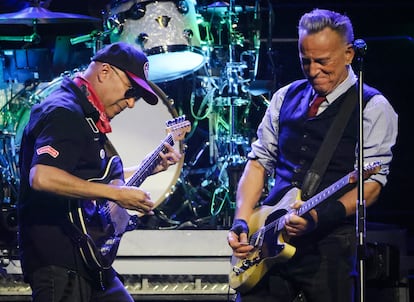
Over three decades in music, he has repeated that idea in many different ways, but rarely as combatively as now. “If there has been a message throughout my career, it is that the world is not going to change itself,” he says. “It is our responsibility to make it change. History is not something that happens; it is something we make. When the world has changed in progressive, radical or even revolutionary ways, it has been because of people no different from those reading this now. The people who have changed the world don’t have more courage, power, money or intelligence than the readers of this interview.”
Behind that conviction is also a personal experience. Born in New York in 1964, the son of a Kenyan diplomat and a teacher with Italian and Irish roots, Morello grew up in Libertyville, Illinois, in a predominantly white community. “I didn’t have to read political philosophers to learn about human relationships and injustice,” he says. “I encountered them on the playground when I was four or five. The idea that there was hate, ignorance and injustice in the world came to me very early.”
His mother, also an activist, was a key figure in his upbringing (his father returned to Kenya when Tom was still a baby. “She never made me feel inferior in any way, even though the world was trying to tell me I was,” he recalls. “I always had a very strong heart thanks to the support and love of my family.”
Long before becoming one of the most recognizable guitarists in contemporary rock, he was a teenager obsessed with the instrument. For years, he tried to follow the same path as the great virtuosos of the 1980s. “At first I was a very fast guitarist, heavily influenced by Randy Rhoads, Eddie Van Halen and people like that,” he says.
His search changed direction when he stopped trying to sound like others. “It wasn’t until the beginning of Rage Against the Machine that I began to find my own voice on the instrument. I began identifying as the band’s DJ. I diverted my attention from traditional guitarists toward animal or mechanical sounds, trying to recreate the sounds of industry and nature.”
It was a decision that ended up defining his entire career: “That, combined with the big heavy riffs of my favorite bands like Black Sabbath and Led Zeppelin, led me to find an authentic voice on the instrument.”
For Morello, what separates a great guitarist from a merely good one is personality. “One of the things that impresses me most about guitarists is when they have their own voice on the instrument,” he says. “Sometimes that can mean playing many notes very quickly, other times playing with feeling, other times producing otherworldly sounds you’ve never heard before.”
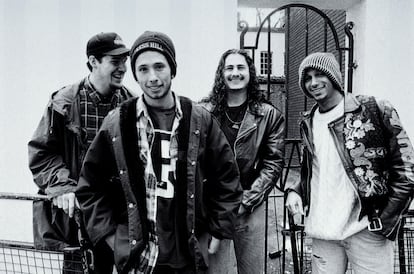
At 62, he continues to seek new challenges. The next will come in the form of a record. “It will be my 22nd album, but the first solo rock album as Tom Morello. I wanted to make an album with all the riffs in the style of Rage Against the Machine and Audioslave [the group he formed after the former’s breakup] and the lyrical depth of Bruce Springsteen, Bob Dylan and Roger Waters. I wanted to take the weight and power of the rock of my whole life and bring it to 2026 to make a modern, heavy album that is as devastating musically as it is politically relevant.” His son Roman, also a guitarist, is part of the project.
When asked to choose a Rage Against the Machine song to explain the present, he doesn’t think twice: “The first that comes to mind is Killing in the Name. Frederick Douglass [a slave and later abolitionist in the mid-19th century] wrote in his autobiography that the day he was freed was not when his chains were removed; it was the day the master said yes and he said no. And that is Killing in the Name: a refusal of illegitimate authority. You don’t need to submit to illegitimate authority. Whether in your home, at your school, your workplace or your country. You can always rise up against it.”
But not everything in Morello’s life has been so serious. In 1986, freshly graduated from Harvard, where he studied social sciences, he worked as a stripper at bachelorette parties in Los Angeles to make some money. “I wanted to sell Iron Maiden T-shirts, and I didn’t even get that job,” he says. “I didn’t pass any audition; I got in through a friend. It’s a job like any other. There’s an old saying: the rent isn’t going to pay itself,” he jokes.
Sign up for our weekly newsletter to get more English-language news coverage from EL PAÍS USA Edition
Spain tourists renting cars this summer warned over deposits, damage and hidden fees
Fuengirola goes ahead with major housing project with 300 new homes in Cerro del Agua
Trump puts himself on a US passport in unprecedented presidential first
Dinosaurs are roaring over to Estepona this summer in a massive 5,000m² exhibition

Families Caring For Elderly Parents In Spain Say Brexit Has Left Them With Impossible Choices

Max Verstappen rules out Nurburgring return after 24 hour-heartbreak


-
Costa del Sol1 week ago
Dinosaurs are roaring over to Estepona this summer in a massive 5,000m² exhibition
-
 %1 week ago
Families Caring For Elderly Parents In Spain Say Brexit Has Left Them With Impossible Choices
-
 Uncategorized2 weeks ago
Max Verstappen rules out Nurburgring return after 24 hour-heartbreak
-

 %1 week ago
One Of Spain’s Top Supermarkets Has Just Been Ranked Among Europe’s Most Innovative In A Major New Report
-
Costa Blanca North1 week ago
Denia launches new La Marineta music festival this summer with Fangoria and Nil Moliner
-
Latest1 week ago
KEY POINTS: What Changes About Life In Spain In July 2026
-
 ElPais1 week ago
Primary Elections In New York, Maryland, And Utah: Date And How To Vote
-
Latest2 weeks ago
400,000 More Migrants Than Forecast Apply For Spain’s Residency Amnesty