Connect with us

%

What To Consider Before Making An ETF Investment

Published

on

what-to-consider-before-making-an-etf-investment

Exchange-Traded Funds (ETFs) are one of the most popular investment options available today.

They give investors easy access to many different assets without the high price tags seen in actively managed funds. But as user-friendly as these products are, finding an ETF investment for you is going to take some time and consideration. Here are a few things you should consider before making an ETF investment.

What is an ETF?

An ETF (exchange-traded fund) is a fund that owns a group of assets such as stocks and other securities. When you buy shares of an ETF, you buy a piece of the portfolio, which can include any asset the ETF holds.

So why do people invest in ETFs? Here are the top three reasons. ETFs can help diversify a portfolio, increase flexibility and provide a level of transparency and liquidity that actively managed funds just cannot provide. You can purchase and sell shares throughout the trading day, which is another bonus.

Define your investment goal first

When considering whether to invest in an ETF, the first step is to define what you’re looking to accomplish. Remember, not all ETFs are created equal, and if you don’t have a goal, the ETF you choose might not meet your expectations.

The investor saving for retirement, for example, will likely focus on broad-market ETFs, which tend to offer long-term growth prospects. Conversely, the income-minded may consider bond- or dividend-focused ETFs. Investors with regular monthly contributions may also look to market ETFs.

Whatever your goal, it should be at the centre, and you should remember it whenever building your ETF portfolio. If you don’t have an investment goal, you’ll never really know if any particular ETF investment is right.

Think carefully about diversification

One of the main reasons to buy an ETF is diversification. But not all ETFs offer the same level of diversification.

Broad-market ETFs spread your investment over hundreds, sometimes thousands, of different companies. This diversification can reduce the impact of one company having a bad year.

Sector and thematic ETFs can pose a higher risk. They concentrate on a single industry or theme, which can give your portfolio extra growth potential. However, funds like these can also be riskier. For most investors, a broad market ETF serves as a better building block for a long-term portfolio.

Know your costs, fees and liquidity

Even small costs can add up over time. Look at underlying expenses when comparing ETFs, including the expense ratio, and any additional management or performance fees.

Liquidity is also something to keep in mind. Highly liquid ETFs usually have tighter ratios in trades, which can make it both easier and less expensive to trade. While ETF investing fees are usually lower compared with most traditional investing methods, a cost comparison remains an essential step in making a choice.

Accumulating vs distributing ETF

You should also know the difference between an “accumulating ETF” and a “distributing” ETF.

An accumulating ETF accumulates any dividends paid into the fund, so they can help you to benefit more through compound interest. This makes them ideal for somebody looking to maximise their long-term growth.

A distributing ETF will pay any dividends out to you. For anybody looking to take a regular stream of income, this will suit you. You’re not going to miss out on more growth by the fund reinvesting your dividends.

Currency & domicile/tax considerations

Some ETF investments are made in other currencies. When there are fluctuations in the forex rate, this can have a big impact on your investment. It’s important to know how much of an ETF’s exposure is made up of other currencies.

Similarly, where an ETF is domiciled can also influence regulatory and tax considerations. Tax treatment can vary between different countries, so you might want to do some further research before investing.

Common mistakes made by ETF investors

One of the most common errors is buying a particular ETF because it’s popular or has experienced a run of good performance. Just because a particular ETF has done well in the past, it is no guarantee that the ETF will be a top performer moving forward.

Another is using multiple funds that own many of the same underlying investments (i.e. owning an S&P 500 fund along with a domestically focused Large Cap Growth fund). This creates unnecessary risk and can actually concentrate exposure to a single market or asset class. Individuals can also underestimate the risk in ETFs because they incorrectly think that owning a large number of stocks will smooth out all volatility in the marketplace.

Taking the time to understand objectives, costs, diversification, and structure can help investors avoid these common blunders…

How to build a smarter ETF portfolio

There is no doubt that ETFs can represent a useful and cost-effective way to generate wealth, achieve retirement goals, and accomplish passive investing with ease. However, this success largely hinges on how investors go about uncovering their risk profile, investment goals, time horizon, and asset allocation requirements. Ultimately, investors should avoid getting caught up in the “blogosphere” hype, as finding the right fund is more of an individual process. Take the time to carefully compare funds, keeping the above features in mind, and jump into your first ETF investment with purpose and a long-term outlook.

%

Nerja Lawyers Jailed For €1,000,000 Inheritance Fraud

Published

on

nerja-lawyers-jailed-for-e1,000,000-inheritance-fraud

Policia Nacional vehicle. Credit: martinpixel – Shutterstock

Guardia Civil officers have detained three lawyers and placed eleven others under investigation over a criminal network that stole inheritances from deceased foreigners in Nerja. Authorities accuse the group of fraud, document forgery, identity theft, property usurpation, misappropriation, money laundering and organised crime membership.

Bank alert called for police probe

A Spanish bank fraud investigation team contacted police after noticing large unauthorised cash withdrawals from an elderly British client’s account at cash machines across the country. Officers discovered a Nerja lawyer listed with full powers on the account. Records showed the documents used to open it had been falsified, with the victim listed as twenty years younger. Further checks revealed the account holder had already died, yet the account continued operating normally. Two lawyers, both running practices that handled property deals and inheritances for foreign residents in the Axarquia area, were identified as the people withdrawing the funds.

Falsified will used to seize Swiss estate

Investigators linked the same group to the estate of a Swiss woman who died in a Nerja residential care home. Neighbours had provided her with food and clothing before social services arranged her admission due to mental health difficulties. The lawyers produced a forged will claiming she had handwritten it herself. They recruited other network members to act as witnesses, falsely confirming her handwriting and inventing a romantic link to a dead British man whose account they already controlled. The genuine heir, her son in Switzerland, received contact from one lawyer offering power of attorney to transfer the inheritance, including a Nerja apartment. He accepted initially but never received any assets and later reported the matter to Swiss authorities.

Extensive laundering operation uncovered

Over several years the three main figures are said to have carried out property transactions repeatedly, fake family donations, vehicle sales between associates, investment fund placements, ATM cash withdrawals and bank transfers designed to give illegal gains a lawful appearance. Total proceeds exceeded €1,000,000. Seven house searches in Nerja and Almuñecar come up with €200,000 in cash, jewellery, electronic devices and documents belonging to the deceased victims. Two of the detained lawyers have been remanded in custody while the third remains under investigation. The case, led by Nerja officers under Torrox court direction, remains open to identify more possible victims and participants.

Protecting foreign residents from exploitation

Foreign residents in Spain must treat inheritance and property matters with extreme caution, especially when elderly relatives live alone or have limited contact with family abroad.

Independent legal verification of any local representative prevents criminals from gaining control through falsified documents or powers of attorney. Regular communication with overseas heirs and prompt reporting of unusual bank activity or unexpected legal approaches reduce exposure to organised groups that target isolated foreigners. Official channels and registered wills provide stronger protection than informal arrangements in popular coastal areas.

Continue Reading

%

Survey Shows 47% Of People In Spain Actively Avoid Mass Tourism Spots

Published

on

survey-shows-47%-of-people-in-spain-actively-avoid-mass-tourism-spots

High visitor numbers have contributed to congestion in public spaces. Photo credit: Wirestock Creators/Shutterstock

A recent survey done by Booking has found that 47% of people in Spain avoid overcrowded holiday destinations when planning travel. The responses relate to travel behaviour and attitudes towards tourism pressure and sustainability.

Spain remains one of the most visited countries in the world. Tourist flows are concentrated in coastal regions, major cities and island destinations, particularly during peak summer months and public holiday periods.

These locations continue to attract both domestic and international visitors at scale. The survey focuses on how Spanish residents describe their own travel choices, particularly in relation to destination selection and perceived crowd levels.

Crowding as a factor in destination choice

Many respondents say crowd levels influence where they go on holiday. This includes avoiding well-known destinations at peak times and selecting alternatives with lower visitor density. Some travellers report shifting travel dates to avoid the busiest periods. Others choose inland or rural areas instead of coastal resorts and major urban centres. Smaller towns and less visited regions appear more frequently in responses where travellers describe quieter environments as a preference.

Traditional decision factors such as cost, climate and accessibility remain important. However, crowding is now present alongside these considerations in a significant share of responses. In some cases, respondents describe avoiding destinations that are widely featured on social media or associated with high seasonal congestion. This includes locations that experience short periods of intense visitor pressure compared with more stable year-round tourism flows.

Concentration of tourism pressure in key regions

Tourism remains a major sector in the Spanish economy, supporting employment across hospitality, transport, retail and related services. The structure of demand, however, remains uneven across the country. Barcelona is among the most frequently cited urban destinations in discussions around visitor pressure. The Balearic Islands, including Mallorca, Menorca and Ibiza, also experience high seasonal concentration. 

In the Canary Islands, tourism demand is spread more evenly across the year but still reaches high levels in peak periods. These areas experience the most visible effects of visitor density, including congestion in public spaces, strain on transport systems and pressure on housing markets in tourist zones.

Local authorities have introduced or considered a range of measures aimed at managing these pressures. These include tighter regulation of short-term rental accommodation, limits on cruise ship arrivals in specific ports, and campaigns designed to distribute tourism more evenly across regions. Some cities have also focused on regulating visitor flows in specific districts during peak times, particularly in historic or high-footfall areas.

Domestic travel behaviour and regional redistribution

Responses from Spanish residents indicate movement away from heavily visited destinations towards less frequented regions within the country. Smaller towns and inland provinces appear more frequently in travel choices described by respondents. These areas typically experience lower visitor numbers compared with coastal and metropolitan destinations, particularly outside major cultural or seasonal events.

Regional tourism bodies have expanded promotion of inland areas, focusing on heritage sites, natural parks and local cultural routes. These initiatives aim to increase visitor distribution beyond traditional coastal hotspots. In some cases, respondents describe choosing destinations based on perceived space, quieter environments and lower seasonal congestion. These preferences appear across both short domestic breaks and longer holiday periods.

Role of lesser-visited destinations

Areas outside Spain’s main tourist corridors continue to develop tourism infrastructure aimed at attracting domestic visitors. Inland regions promote historic towns, wine routes, hiking areas and protected natural landscapes. These destinations typically receive lower visitor volumes than coastal resorts and major cities but have increased visibility in domestic tourism campaigns.

Local economies in these regions often depend on smaller-scale visitor flows spread across the year rather than concentrated seasonal peaks. Responses in the survey suggest that some travellers are more willing to consider these destinations as alternatives to established holiday locations, particularly during peak summer months when congestion is highest in coastal areas.

Tourism structure and regional imbalance

Spain’s tourism sector continues to be one of the largest in Europe, contributing significantly to employment and regional economic activity. However, visitor distribution remains uneven.

High-demand destinations concentrate large volumes of visitors in relatively small geographical areas. This creates periods of intense pressure on infrastructure, housing and local services in specific locations, while other regions receive comparatively low numbers of tourists.

The imbalance has been a recurring issue in discussions about tourism management in Spain. It affects housing availability in central tourist zones, transport capacity during peak periods and the sustainability of certain local economies reliant on seasonal demand.

Policy response and management measures

Local and regional authorities have introduced a range of measures aimed at addressing pressure in high-traffic destinations. These include restrictions on new short-term holiday rental licences in some cities, enforcement actions against unlicensed tourist accommodation, and limits on cruise ship arrivals in certain ports.

Some municipalities have also introduced measures aimed at regulating access to heavily visited areas during peak hours or seasons. These policies are designed to reduce congestion in specific districts rather than limit overall visitor numbers nationally.

At the same time, tourism boards continue to promote regional diversification, encouraging visitors to explore less visited areas of the country.

Interpretation of survey responses

The survey reflects self-reported behaviour among Spanish residents rather than measured travel outcomes. Respondents describe how they approach destination choice and which factors they consider when planning trips. 

Crowding appears alongside price, accessibility and climate as part of that decision-making process. The proportion of respondents who avoid overcrowded destinations indicates that visitor density is a relevant factor for a significant share of those surveyed. The data captures stated preferences at the time of the survey and provides a snapshot of how domestic travellers describe their own behaviour in relation to popular destinations.

What the survey shows

The survey shows that 47% of people in Spain report avoiding overcrowded destinations when planning travel.

Responses describe adjustments in destination choice, timing and location type, including movement towards less visited regions and lower-density areas.

Tourism remains a major part of Spain’s economy, supporting employment across hospitality, transport and related sectors. However, visitor numbers are unevenly distributed across the country.

Continue Reading

%

New Spain Road Sign Could Cost Drivers €200

Published

on

new-spain-road-sign-could-cost-drivers-e200

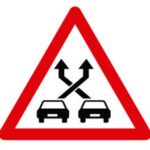
The DGT’s new P-35 sign warns of a weaving lane ahead. Credit : X – DGT

Ask most drivers what a triangular warning sign means and they’ll probably answer without thinking. Sharp bend. Roundabout ahead. Slippery road. But show them the P 35 sign, with its two cars and crossing arrows, and many are left scratching their heads.

That uncertainty is exactly why Spain’s Directorate General of Traffic (DGT) introduced it into the country’s official road sign catalogue. The sign warns drivers that they are about to enter a weaving lane, a stretch of road where vehicles joining a motorway and those preparing to leave it have to share the same space before going their separate ways. It might not sound particularly dramatic, but misunderstand the rules and the consequences can be expensive. Failing to respect priority can lead to a €200 fine and, in some cases, the loss of up to four points from your driving licence.

The layout itself is not new. Drivers have been using weaving lanes for years. What is new is the sign warning people that one is coming, and many motorists are only now discovering what it actually means.

The sign looks simple enough but it catches many drivers out

The first reaction many people have when they spot the P 35 sign is to assume it is another version of the familiar merging traffic warning.

It isn’t.

A weaving lane works differently because two manoeuvres happen at the same time.

One driver is trying to join the motorway while another is trying to leave it. For a short distance, both vehicles use the same lane before their paths separate.

If you’ve ever found yourself accelerating onto a motorway while another car suddenly moves across towards the exit you were aiming for, you’ve already experienced this situation.

The difference is that the P 35 sign tells you it is about to happen before you get there.

The DGT introduced the sign after updating Spain’s official vertical road sign catalogue in 2025. It normally appears between 150 and 500 metres before the weaving lane begins, giving drivers enough time to prepare.

Its design follows the standard warning format used throughout Spain.

It has a red border, a white background and two black cars connected by arrows that cross in the middle. The image is intended to show exactly what will happen ahead. Two streams of traffic will briefly overlap before separating again.

Once you understand the meaning, the sign is fairly straightforward.

The difficulty comes when drivers are unsure who should move first.

Who has priority? The answer is not always what drivers expect

This is where many motorists get caught out.

It is easy to assume that vehicles already travelling on the motorway always have priority. In most situations, that is true.

However, weaving lanes are governed by the normal priority rules set out in Spain’s General Traffic Regulations, and those rules depend on what each driver is doing.

A vehicle joining the motorway must normally give way to traffic already using it.

However, if a driver leaving the motorway has already started moving into the weaving lane, that vehicle takes priority over one that is still entering.

The DGT also offers practical advice rather than simply quoting the regulations.Drivers leaving the motorway are encouraged to ease off the accelerator slightly so they can move in behind the vehicle joining the road.

Meanwhile, motorists entering the motorway should build up speed positively, where conditions allow, so they can merge smoothly ahead instead of remaining alongside another vehicle.

Good timing often matters more than sudden braking.Using indicators correctly is equally important.

The signal should be activated before changing lanes, giving other drivers enough warning to react safely. Waiting until the manoeuvre has already started defeats the purpose.

Motorists travelling on the main carriageway also have a role to play.

Whenever traffic conditions allow, moving into the next lane can create valuable space for vehicles joining the motorway. If changing lanes is not possible, reducing speed slightly can make merging much easier and help avoid sharp braking.

A moment’s hesitation can quickly become an expensive mistake

The P 35 sign may be new, but the penalties for ignoring the rules are well established.

Drivers who fail to respect priority in a weaving lane can face a €200 fine, while more serious infringements may also lead to up to four penalty points being removed from their licence.

For many motorists, the greater risk is not the fine itself but simple confusion.

Road signs become so familiar over time that drivers often react automatically without really looking at them. A new sign breaks that habit.

That is exactly why the DGT believes the P 35 deserves attention.

Motorway traffic is already moving at high speed, leaving little time to make decisions. When several vehicles are trying to change lanes within a short distance, uncertainty can quickly turn into sudden braking, missed exits or near misses.

The sign is not asking drivers to learn a completely new rule.

Instead, it serves as an early reminder that the next section of road demands a little more attention than usual.

Spain’s road network continues to evolve, and the country’s road signs evolve with it. Even experienced motorists who have spent decades behind the wheel occasionally come across a symbol they have never seen before.

The P 35 is one of those signs.Learning what it means now is far easier than trying to work it out while travelling at motorway speed with cars joining from one side and leaving from the other. It could also save drivers from an avoidable fine and make one of the busiest parts of the motorway a little safer for everyone using it.

Continue Reading

Trending

Copyright © 2017 Spanish Property & News