Connect with us

%

Survey Shows 47% Of People In Spain Actively Avoid Mass Tourism Spots

Published

on

survey-shows-47%-of-people-in-spain-actively-avoid-mass-tourism-spots

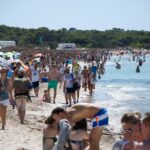
High visitor numbers have contributed to congestion in public spaces. Photo credit: Wirestock Creators/Shutterstock

A recent survey done by Booking has found that 47% of people in Spain avoid overcrowded holiday destinations when planning travel. The responses relate to travel behaviour and attitudes towards tourism pressure and sustainability.

Spain remains one of the most visited countries in the world. Tourist flows are concentrated in coastal regions, major cities and island destinations, particularly during peak summer months and public holiday periods.

These locations continue to attract both domestic and international visitors at scale. The survey focuses on how Spanish residents describe their own travel choices, particularly in relation to destination selection and perceived crowd levels.

Crowding as a factor in destination choice

Many respondents say crowd levels influence where they go on holiday. This includes avoiding well-known destinations at peak times and selecting alternatives with lower visitor density. Some travellers report shifting travel dates to avoid the busiest periods. Others choose inland or rural areas instead of coastal resorts and major urban centres. Smaller towns and less visited regions appear more frequently in responses where travellers describe quieter environments as a preference.

Traditional decision factors such as cost, climate and accessibility remain important. However, crowding is now present alongside these considerations in a significant share of responses. In some cases, respondents describe avoiding destinations that are widely featured on social media or associated with high seasonal congestion. This includes locations that experience short periods of intense visitor pressure compared with more stable year-round tourism flows.

Concentration of tourism pressure in key regions

Tourism remains a major sector in the Spanish economy, supporting employment across hospitality, transport, retail and related services. The structure of demand, however, remains uneven across the country. Barcelona is among the most frequently cited urban destinations in discussions around visitor pressure. The Balearic Islands, including Mallorca, Menorca and Ibiza, also experience high seasonal concentration. 

In the Canary Islands, tourism demand is spread more evenly across the year but still reaches high levels in peak periods. These areas experience the most visible effects of visitor density, including congestion in public spaces, strain on transport systems and pressure on housing markets in tourist zones.

Local authorities have introduced or considered a range of measures aimed at managing these pressures. These include tighter regulation of short-term rental accommodation, limits on cruise ship arrivals in specific ports, and campaigns designed to distribute tourism more evenly across regions. Some cities have also focused on regulating visitor flows in specific districts during peak times, particularly in historic or high-footfall areas.

Domestic travel behaviour and regional redistribution

Responses from Spanish residents indicate movement away from heavily visited destinations towards less frequented regions within the country. Smaller towns and inland provinces appear more frequently in travel choices described by respondents. These areas typically experience lower visitor numbers compared with coastal and metropolitan destinations, particularly outside major cultural or seasonal events.

Regional tourism bodies have expanded promotion of inland areas, focusing on heritage sites, natural parks and local cultural routes. These initiatives aim to increase visitor distribution beyond traditional coastal hotspots. In some cases, respondents describe choosing destinations based on perceived space, quieter environments and lower seasonal congestion. These preferences appear across both short domestic breaks and longer holiday periods.

Role of lesser-visited destinations

Areas outside Spain’s main tourist corridors continue to develop tourism infrastructure aimed at attracting domestic visitors. Inland regions promote historic towns, wine routes, hiking areas and protected natural landscapes. These destinations typically receive lower visitor volumes than coastal resorts and major cities but have increased visibility in domestic tourism campaigns.

Local economies in these regions often depend on smaller-scale visitor flows spread across the year rather than concentrated seasonal peaks. Responses in the survey suggest that some travellers are more willing to consider these destinations as alternatives to established holiday locations, particularly during peak summer months when congestion is highest in coastal areas.

Tourism structure and regional imbalance

Spain’s tourism sector continues to be one of the largest in Europe, contributing significantly to employment and regional economic activity. However, visitor distribution remains uneven.

High-demand destinations concentrate large volumes of visitors in relatively small geographical areas. This creates periods of intense pressure on infrastructure, housing and local services in specific locations, while other regions receive comparatively low numbers of tourists.

The imbalance has been a recurring issue in discussions about tourism management in Spain. It affects housing availability in central tourist zones, transport capacity during peak periods and the sustainability of certain local economies reliant on seasonal demand.

Policy response and management measures

Local and regional authorities have introduced a range of measures aimed at addressing pressure in high-traffic destinations. These include restrictions on new short-term holiday rental licences in some cities, enforcement actions against unlicensed tourist accommodation, and limits on cruise ship arrivals in certain ports.

Some municipalities have also introduced measures aimed at regulating access to heavily visited areas during peak hours or seasons. These policies are designed to reduce congestion in specific districts rather than limit overall visitor numbers nationally.

At the same time, tourism boards continue to promote regional diversification, encouraging visitors to explore less visited areas of the country.

Interpretation of survey responses

The survey reflects self-reported behaviour among Spanish residents rather than measured travel outcomes. Respondents describe how they approach destination choice and which factors they consider when planning trips. 

Crowding appears alongside price, accessibility and climate as part of that decision-making process. The proportion of respondents who avoid overcrowded destinations indicates that visitor density is a relevant factor for a significant share of those surveyed. The data captures stated preferences at the time of the survey and provides a snapshot of how domestic travellers describe their own behaviour in relation to popular destinations.

What the survey shows

The survey shows that 47% of people in Spain report avoiding overcrowded destinations when planning travel.

Responses describe adjustments in destination choice, timing and location type, including movement towards less visited regions and lower-density areas.

Tourism remains a major part of Spain’s economy, supporting employment across hospitality, transport and related sectors. However, visitor numbers are unevenly distributed across the country.

%

Morocco Returns To GMT: Could Europe Finally End Changing Its Clocks?

Published

on

morocco-returns-to-gmt:-could-europe-finally-end-changing-its-clocks?

The European Union’s attempt to end seasonal clock changes highlighted this tension. Photo credit: hydebrink/Shutterstock

Morocco is set to move its clocks back by one hour after the summer of 2026, returning to Greenwich Mean Time (GMT) after around eight years on GMT+1. In practical terms, the country will move away from a near-permanent daylight saving system and reintroduce standard time during winter months.

The adjustment itself is simple: clocks go back one hour after the summer period ends. But the wider significance is less about the mechanics and more about what it signals. Time systems are rarely changed unless governments believe the trade-offs between daylight, productivity and coordination have shifted. Morocco’s decision suggests that balance has been reconsidered.

What is happening is a reversal of Morocco’s GMT+1 policy. How it works is a seasonal return to GMT after summer. Why it matters is that it reopens a wider question Europe has been unable to answer for years: whether seasonal clock changes still make sense, and if not, what should replace them.

Europe’s long-running debate on clock changes remains unresolved

Europe has been discussing the end of changing the clocks forward for years, but no reform has been implemented. In 2019, the European Union backed a proposal to stop changing clocks twice a year. The idea was to allow each member state to adopt a fixed time permanently, removing the seasonal shift between winter and summer.

On paper, the reasoning was straightforward. Clock changes were seen as increasingly outdated in a global economy where digital coordination matters more than local daylight savings. They were also criticised for being disruptive, particularly in the days immediately after the shift. But the proposal stalled, member states could not agree on a single approach. Some preferred permanent summer time, others preferred permanent winter time. Geography complicated the issue further, since daylight patterns vary significantly between northern and southern Europe.

As a result, the reform was left in limbo. No new system was agreed, and the existing cycle of changing clocks in March and October continues. This is the key contrast with Morocco. While Europe debates and delays, Morocco has reversed its approach and returned to a more traditional structure.

Why Morocco is moving away from GMT+1

Morocco adopted GMT+1 in 2018, largely to align more closely with European working hours and improve consistency in business and trade. In practice, it reduced time differences with key trading partners for much of the year. But over time, domestic concerns became more prominent than international alignment.

One of the main issues was the effect on daily routines during winter. Later sunrises meant darker mornings for schoolchildren and workers, which became a recurring public concern. While the system was designed for efficiency, it created friction in everyday life.

The return to GMT is therefore not a sudden shift but a correction. It prioritises natural daylight alignment during winter months, even if it reduces the year-round synchronisation with Europe. It also reflects a broader reality: time systems are not neutral. They shape behaviour, routines and even perceptions of the working day. When that balance feels off, governments eventually revisit the structure.

What Europe could realistically gain from ending clock changes

If Europe were to revisit and implement its stalled proposal, the potential benefits would be practical rather than symbolic. The most immediate advantage would be stability. Removing seasonal clock changes would mean no biannual disruption to sleep patterns, schedules and transport timetables.

It would also reduce avoidable friction in cross-border coordination. Airlines, rail networks, logistics companies and digital platforms currently operate across two time shifts each year, requiring constant adjustment. Other potential benefits include:

  • fewer scheduling errors during transition weeks 
  • more consistent international business coordination 
  • improved clarity for digital communication across time zones 
  • reduced disruption to sleep and productivity immediately after clock changes 

There is also a wellbeing argument. The clock shift has been linked to short-term disruption in sleep patterns and concentration for some people, particularly in the days immediately following the change. While the effects are temporary, they are repeated twice a year across large populations.

However, any reform would still face the same political barrier: agreement on what permanent time should look like. That issue remains unresolved.

Will Europe actually follow this direction?

Despite repeated discussion, there is no confirmed timeline for the end of clock changing in Europe. The European Commission’s proposal remains effectively frozen. Member states still operate under the existing system, changing clocks in spring and autumn as a default.

The core problem has not changed: countries experience the changes very differently. A permanent “summer time” may suit some regions but feel extreme in others, while permanent “winter time” has the opposite effect.

Because of this, the debate has persisted without resolution. The system continues not because it is widely supported, but because no alternative has achieved consensus. Morocco’s decision does not directly force Europe to act, but it does sharpen the contrast. One system is being revised and simplified at national level. The other remains unchanged despite years of discussion.

How Morocco’s change affects its own rhythm

Within Morocco, the return to GMT will be most noticeable in winter. The country will shift back to standard time after summer, resulting in:

  • earlier alignment of sunrise and sunset with daily routines 
  • a clearer separation between summer and winter schedules 
  • seasonal variation in time difference with external partners 

For international coordination, this introduces more fluctuation across the year compared to the previous near-permanent GMT+1 system. Timing will depend more visibly on whether other regions are observing daylight saving time at the same moment. The change is not disruptive in itself, but it removes the sense of a fixed year-round offset.

A small shift that brings a bigger question

On the surface, Morocco’s return to GMT is a straightforward administrative change. But in context, it sits inside a larger unresolved debate about how modern societies organise time. Europe has been discussing simplification for years without implementation. Morocco has now adjusted its system in the opposite direction, prioritising seasonal alignment over permanent offset.

Neither approach is necessarily final. Both reflect attempts to balance local experience with international coordination. What remains uncertain is whether Europe will eventually resolve its debate, or continue adjusting clocks twice a year while others quietly move away from it.

Continue Reading

%

Why A Video Showing How To Make Olive Oil Is Going Viral As Food Prices Rise

Published

on

why-a-video-showing-how-to-make-olive-oil-is-going-viral-as-food-prices-rise

When prices rise people start paying more attention to how things are made. Photo credit: Davide Bonaldo/Shutterstock

In Spain, the weekly food shop has become noticeably more expensive for many households. Not in a sudden way, but slowly enough that people are starting to change how they buy things. A basket that once felt predictable now often comes out higher than expected. Some products are left on the shelf more often. Others are swapped for cheaper versions.

It is not just one item or one category. Bread, eggs, dairy, fruit, vegetables and cooking oils have all played a part in that shift. Most people are not changing what they eat completely. Instead, they are adjusting how they shop. Smaller baskets. More checking of prices. Less impulse buying.

Changing Habits in the Kitchen

That change has also affected how people cook at home. More meals are being made from basic ingredients instead of convenience food. Eating out during the week has dropped for some households. Nothing about it feels like a lifestyle decision. It is just a response to what things cost. Because of that, everyday ingredients are being looked at differently. Things that were once taken for granted now get more attention.

Olive oil is one of them. It is used constantly in Spanish cooking, so it runs out quickly and gets replaced often. When the price rises, it becomes noticeable in a way that occasional purchases do not.

That is part of why a short video posted on YouTube by the channel Chefsale showing olive oil being made by hand has been widely shared online. It shows a young man known as Valentín producing extra virgin olive oil using olives from a family tree, and it has circulated widely because it connects directly with something many people are already thinking about, whether it is possible to make more basic food items at home instead of relying entirely on shops.

Why the Video Has Gone viral

Valentín’s video is getting so many shares is not just because people are suddenly planning to start producing their own oil in large quantities, (although some might). It is because the idea feels less distant than it used to. When food prices rise, more people start paying attention to where things come from and what goes into them. Content that shows food being made from raw ingredients starts to feel more relevant than it once did.

Olive oil fits into that space clearly. It is something people use every day, but rarely think about beyond the bottle. Seeing it linked to a large amount of raw olives makes the cost feel more understandable, even if most people will never attempt it themselves.

It also sits alongside a new online trend of watching basic food production being done at home or on a small scale. Bread, cheese, butter, preserves and oils all appear in these contents. The interest is not just turning people into producers, but also in understanding what everyday products actually require before they reach a supermarket shelf.

What stands out in this case is the contrast between effort and output. A relatively small amount of finished oil comes from a large quantity of olives, which is part of what people react to when they watch it.

For Those That Want to Know: How to Make Olive Oil at Home

Im pretty sure some of our more curious readers are wondering how making your own olive oil is actually done. The process begins with fresh, ripe olives taken from the tree and cleaned so only the fruit remains. In the video, around seven kilos of olives are used, however I’ve actually looked this up and you can use anywhere between 4 to 9kgs for your own homemade ones. The olives are then washed and selected before being crushed, including the stones, into a paste.

Once crushed, the paste is placed into a fine cloth. The liquid is extracted through this cloth, separating the solid material from the liquid. The remaining solid part can be used as compost or fertiliser. The liquid collected at this stage is not yet the final oil. It is left to rest overnight in sealed containers.

After resting, the liquid naturally separates into layers. The top layer is removed carefully using a spoon or a ladle, the process requires patience as the separation happens slowly. Finally, the liquid is filtered again. After this final step, it becomes extra virgin olive oil. From around seven kilos of olives, the result is approximately 200 millilitres of oil.

Changing perspectives 

The appeal of the video is tied to a simple idea: when everyday food becomes more expensive, people start looking at how it is made and whether it can be done at home.

When prices rise across basic items, more people pay attention to the process behind them. Things that once felt distant start to feel more accessible, and content showing food being made from raw ingredients begins to spread more easily because of that.

Olive oil is one example of this shift, but it sits alongside other foods people are now experimenting with at home as a way of responding to rising costs, rather than just consuming them without question.

Continue Reading

%

86-Year-Old Arrested With Nearly 5kg Of Cocaine At Madrid Airport Sparks Warning Over Travel Scams

Published

on

86-year-old-arrested-with-nearly-5kg-of-cocaine-at-madrid-airport-sparks-warning-over-travel-scams

Criminal groups often target people they believe are less likely to arouse suspicion. Photo credit: TaraPatta/Shutterstock

Airport security officers at Madrid-Barajas Airport were surprised to discover nearly five kilograms of cocaine hidden inside the luggage of an 86-year-old passenger travelling through Spain. The Swedish national had arrived on a flight from San José, Costa Rica, and was due to continue his journey to Brussels when customs officers stopped him for inspection. Inside his suitcase, they found nine cylindrical packages containing 4.555 kilograms of cocaine.

The man was arrested on suspicion of drug trafficking and later appeared before a judge, who ordered that he be held in custody while the investigation continues. Although the amount of cocaine was substantial, investigators believe the man’s age may not have been a coincidence.

Why investigators think he may have been exploited

According to the Guardia Civil, officers are examining whether the 86-year-old was recruited because of his financial circumstances and declining health. Criminal organisations often look for people they believe will attract little attention when passing through airports. Older travellers can appear less suspicious than younger passengers, particularly if they are travelling alone and carrying ordinary luggage.

Investigators have not publicly confirmed how much the man knew about the drugs or the role he played in transporting them. However, the case has drawn attention because it fits a pattern that law enforcement agencies have seen before. Not everyone carrying drugs is a hardened criminal. Some are persuaded with promises of easy money, while others are pressured into taking risks they may not fully understand.

Why organised crime recruits older people

Drug trafficking groups are constantly looking for ways to avoid detection. Rather than relying on the same type of mule, they often choose people who appear unlikely to be involved in organised crime. Older adults can fit that profile. Some may be living on modest pensions or facing financial hardship, making an offer of quick cash difficult to ignore. Others may simply trust the wrong people or believe they are transporting something entirely legal.

By using mules with no previous criminal record, traffickers hope to reduce the chances of attracting attention during security checks. Law enforcement agencies across Europe have dealt with similar cases involving pensioners, students and tourists, showing that criminal groups will recruit almost anyone if they believe it improves their chances of moving drugs across borders.

How to spot a potential drug courier scam

Criminal groups do not always approach people openly and ask them to transport drugs. In many cases, they present the arrangement as a legitimate opportunity or favour.

Warning signs of a drug scam can include:

  • Someone offering money in exchange for carrying a suitcase, package or parcel during a trip.
  • A stranger paying for flights, accommodation or travel expenses.
  • Being asked to transport luggage that you have not packed yourself.
  • Receiving vague explanations about what is inside a package.
  • Requests to deliver an item to a person you have never met.
  • Pressure to travel at short notice with little information about the purpose of the journey.

People facing financial difficulties are often targeted because traffickers know they may be more willing to take risks. Older adults can also be approached because criminals assume they are less likely to attract suspicion at airports and border crossings.

Anyone who agrees to carry luggage or packages on behalf of another person can be held legally responsible for the contents, even if they claim not to know what is inside. For that reason, authorities advise travellers never to accept bags, parcels or gifts from people they do not know well.

Airport security looks beyond appearances

While age may influence how traffickers choose couriers, it does not affect how customs officers investigate suspicious luggage. Modern airport security relies on a combination of intelligence, behavioural analysis, baggage screening and routine inspections. Officers are trained to identify unusual travel patterns, inconsistencies in passengers’ accounts and signs that luggage may have been altered.

Hidden compartments, unusual suitcase weights or irregular shapes detected by X-ray scanners can all lead to a closer inspection. In this case, officers discovered nine concealed packages inside the suitcase, bringing the journey to an abrupt end before the passenger could board his connecting flight.

What to do if you are approached

If someone asks you to carry luggage, parcels or packages on their behalf, the safest response is to refuse. Never agree to travel with a suitcase that you have not packed yourself or that has been out of your sight. If the offer includes free flights, accommodation or payment simply for transporting an item, treat it as a warning sign rather than an opportunity.

Anyone who believes they are being recruited as a mule should end the conversation immediately. If the approach happens at an airport, it can be reported to airport security or the police. If you have already agreed to carry an item but later become suspicious, do not travel with it. Contact the airline or local police and explain the situation before your journey. In many countries, including Spain, people caught transporting illegal drugs can face severe criminal penalties even if they claim they did not know what they were carrying.

A reminder that drug trafficking affects people of every age

The arrest at Madrid-Barajas reminds us that organised crime does not rely on one type of courier. Whether someone is young or old, wealthy or struggling financially, traffickers are willing to exploit anyone they believe can help move illegal drugs across international borders.

For investigators, the case is about more than the cocaine itself. It also raises questions about how vulnerable people become involved in organised crime and whether they are acting willingly or under pressure.

The investigation will now focus on identifying the people behind the shipment rather than only the man who was carrying it. Authorities will examine where the drugs originated, who organised the journey and whether others were involved in moving the cocaine through Europe.

As international drug trafficking networks continue to adapt their methods, cases like this show why airport security cannot rely on appearances alone. An elderly passenger may seem like the least likely suspect, but for criminal organisations, that is often exactly the point.

Continue Reading
Advertisement
Advertisement

Spanish Real Estate Agents

Tags

Trending

Copyright © 2017 Spanish Property & News