
Immigration in Spain
Spain wants to make it easier for foreign workers to find legal jobs – What the new migration agency could mean

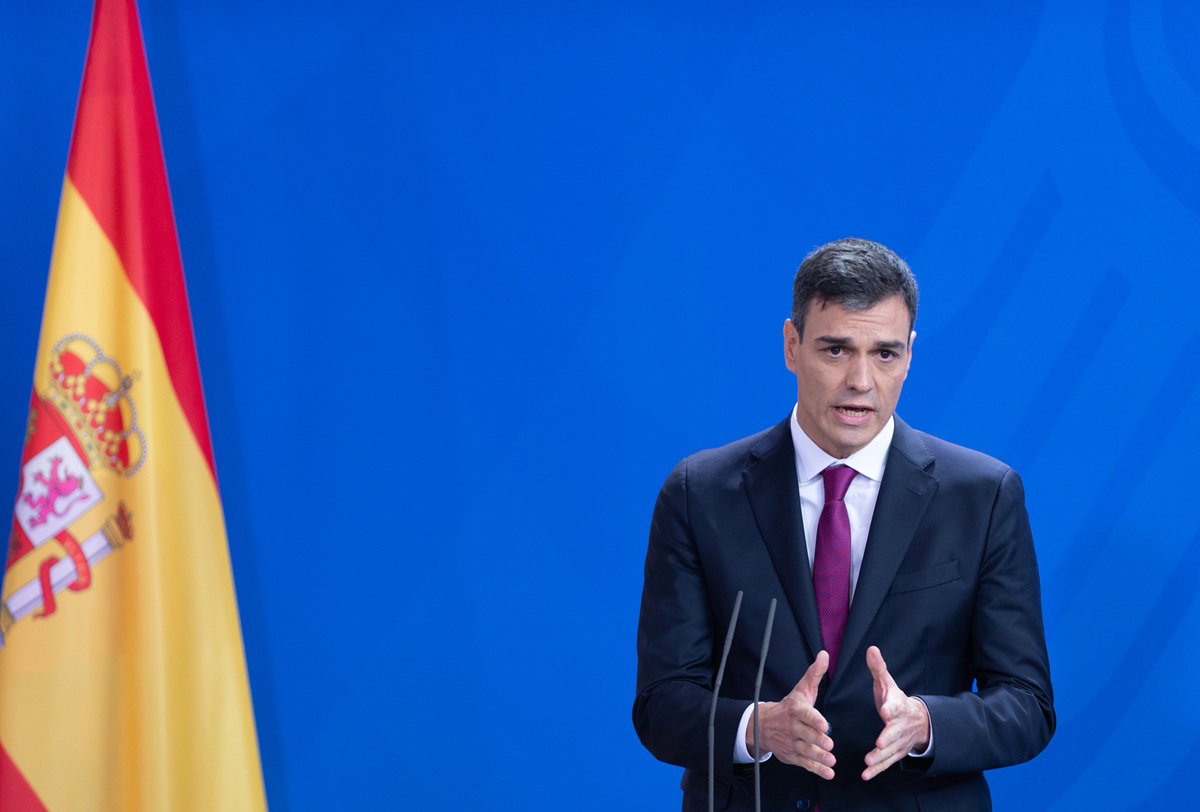
Pedro Sánchez has unveiled plans for a new State Agency for Human Mobility.
Credit : photocosmos1, Shutterstock
Spain’s government has unveiled plans to create a new State Agency for Human Mobility, a move it says will make it easier to recruit foreign workers legally while cutting through the bureaucracy that often slows down the immigration process.
For people hoping to move to Spain for work, and for employers struggling to fill vacancies, the announcement could eventually mean a simpler system. But the proposal is also part of a much bigger plan that aims to reshape how Spain manages immigration, integration and access to the labour market over the coming years.
Backed by €505 million in its first year, the government’s new Integration and Citizenship Plan combines employment, education, public services and language learning under one strategy. While many of the measures can be introduced directly by the government, the new agency itself will still need parliamentary approval before it becomes a reality.
Spain wants to simplify legal migration for workers and employers
If you’ve ever tried to navigate Spain’s immigration system, you’ll know that responsibilities are spread across several different offices. Depending on your situation, you may have dealt with the Immigration Office, asylum services or humanitarian assistance departments, each with its own procedures and paperwork.
The government’s proposal is to bring much of that under one roof.
The planned State Agency for Human Mobility would coordinate areas currently handled by different public bodies, including asylum, reception and residence services, although border security would remain outside its responsibilities.
According to Prime Minister Pedro Sánchez, the aim is to create a system that is easier to understand and more efficient for both migrants and public administrations.
Speaking as he presented the plan, Sánchez argued that successful integration begins before someone even arrives in Spain.
“The best integration starts before crossing the border: with a job contract, legal status and a life project.”
The agency would also support Spain’s strategy of recruiting workers directly from their countries of origin through legal employment channels, helping match overseas workers with sectors where businesses are struggling to recruit staff.
What could change for people hoping to move to Spain?
The proposal is not about opening Spain’s borders without conditions. Instead, the government says it wants to strengthen legal and organised migration routes, making it easier for employers to recruit workers where genuine labour shortages exist.
For future applicants, the long-term goal is a system that is more coordinated and less fragmented than the current one.
The wider Integration and Citizenship Plan also includes €185 million for employment programmes, business creation and training aimed at helping migrants enter sectors where Spain urgently needs workers.
More than 100,000 additional vocational training places will also be created, designed around the needs of the labour market rather than generic courses.
For migrants already living in Spain, the government says integration should go beyond simply obtaining residency. The plan includes funding for language learning, particularly Spain’s co-official languages, alongside programmes designed to improve understanding of Spanish laws, rights and responsibilities.
The government is also allocating more than €260 million to improve access to public services such as healthcare and education, while funding measures intended to tackle school segregation, discrimination and hate speech.
Why the government says immigration matters to Spain’s future
Alongside the practical changes, Sánchez used the presentation to make an economic case for immigration.
Citing government projections, he argued that without migration Spain’s population would shrink significantly over the coming decades, leading to a substantial fall in economic output.
He also referred to figures from FUNCAS showing that immigration accounted for 47 per cent of Spain’s cumulative GDP growth between 2022 and 2025. According to figures from the Bank of Spain, foreign residents contributed between 14 and 24 per cent of growth in GDP per person between 2022 and 2024.
The government says those figures underline why immigration should be viewed not only as a humanitarian issue but also as an economic necessity in a country facing an ageing population and labour shortages in several industries.
The announcement also came on the final day of Spain’s extraordinary migrant regularisation process, which has received more than one million applications. Sánchez described the programme as “a management success”, saying it had brought hundreds of thousands of people out of the shadows.
Still, it’s important to remember that the headline announcement is not yet law.
Unlike many of the other measures included in the Integration and Citizenship Plan, the creation of the State Agency for Human Mobility requires legislation to pass through Congress before it can be established.
For now, that means the agency remains a proposal rather than an operational body. But if Parliament gives it the green light, it could become one of the biggest changes to Spain’s immigration administration in years, with the potential to make legal migration less confusing for workers, employers and public authorities alike.








Inglaterra – RD Congo, En Directo | Los Africanos Se Van Con Ventaja Al Descanso

Los Alcazares Pride Returns With Star-Studded Line-Up And Free Health Services
Pies, pints & pipas. What football fans eat at stadiums around the world
Dinosaurs are roaring over to Estepona this summer in a massive 5,000m² exhibition

Families Caring For Elderly Parents In Spain Say Brexit Has Left Them With Impossible Choices
Denia launches new La Marineta music festival this summer with Fangoria and Nil Moliner


-
Costa del Sol1 week ago
Dinosaurs are roaring over to Estepona this summer in a massive 5,000m² exhibition
-
 %2 weeks ago
Families Caring For Elderly Parents In Spain Say Brexit Has Left Them With Impossible Choices
-
Costa Blanca North2 weeks ago
Denia launches new La Marineta music festival this summer with Fangoria and Nil Moliner
-

 ElPais2 weeks ago
Primary Elections In New York, Maryland, And Utah: Date And How To Vote
-

 %2 weeks ago
One Of Spain’s Top Supermarkets Has Just Been Ranked Among Europe’s Most Innovative In A Major New Report
-
Latest2 weeks ago
KEY POINTS: What Changes About Life In Spain In July 2026
-
Finland2 weeks ago
Finns abroad keep Juhannus traditions alive on Spanish coast in 2026
-

 Foreign demand2 weeks ago
Barcelona Home Sales Rose Just 1pc Last Year As Foreign Buyers Hit A Record High