Connect with us

%

Quirónsalud Torrevieja Hospital Renews Its Joint Commission International Gold Seal, Reinforcing Its Leadership In Healthcare Quality

Published

on

quironsalud-torrevieja-hospital-renews-its-joint-commission-international-gold-seal,-reinforcing-its-leadership-in-healthcare-quality

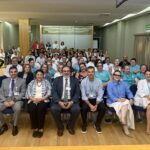
Quirónsalud Torrevieja team. Credit: Quirónsalud

With this renewed accreditation, Quirónsalud Torrevieja Hospital further strengthens its position as a benchmark for excellence in patient care.

Torrevieja, 29 June 2026 – Quirónsalud Torrevieja Hospital has successfully renewed its Joint Commission International (JCI) Gold Seal, the world’s most prestigious and demanding healthcare accreditation, recognising excellence in clinical care, patient safety and the organisation’s ongoing commitment to continuous improvement.

This renewal is particularly significant as it follows the successful completion of the audit based on the 8th Edition of the JCI Accreditation Standards, a considerably broader and more rigorous assessment framework than previous editions. During the survey, JCI auditors evaluated more than 1,500 quality standards covering every aspect of the hospital’s operations, including clinical care, organisational processes, digital transformation and sustainability.

Among the hospital’s greatest strengths, the survey team highlighted the implementation of advanced digital technologies that enhance diagnostic accuracy and patient follow-up, together with the organisation’s energy efficiency initiatives and responsible resource management policies.

With this renewed accreditation, Quirónsalud Torrevieja Hospital consolidates its position as a leading provider of high-quality healthcare. It is also the first Quirónsalud hospital in the Valencian Community to achieve this internationally recognised distinction, having first obtained JCI accreditation in 2023.

An assessment focused on patient safety

Joint Commission International accreditation is regarded as the global benchmark for evaluating healthcare quality. Its rigorous methodology assesses whether every hospital process is designed to deliver safe, efficient and continuously improving patient care.

The survey assessed, among other aspects, compliance with the International Patient Safety Goals (IPSGs) established by the World Health Organization (WHO), including accurate patient identification, effective communication between healthcare professionals, safe medication management, prevention of healthcare-associated infections, and the reduction of risks related to surgical procedures.

The evaluation also confirmed Quirónsalud Torrevieja Hospital’s position as a centre of excellence, recognised for delivering high-quality, comprehensive care across both inpatient and outpatient services. This achievement is supported by the hospital’s sustained growth in clinical activity and the continuous expansion of its portfolio of specialised healthcare services.

A culture of excellence shared across the entire organisation

The reaccreditation recognises the commitment of every professional at Quirónsalud Torrevieja Hospital to embedding a genuine culture of safety throughout the organisation. This strategy involves both clinical and non-clinical teams in the ongoing definition, review and continuous improvement of processes, all with a shared objective: delivering ever safer, higher-quality care.

The survey team particularly praised the hospital’s excellence in medical care, the outstanding expertise of its professionals, and the organisation’s unwavering commitment to innovation, continuous improvement and patient safety.

Joint Commission International accreditation must be renewed every three years through a comprehensive reassessment against internationally recognised standards comparable to those applied by the world’s leading hospitals. This process encourages accredited organisations to maintain an ongoing commitment to excellence and continuous development.

What is Joint Commission International?

Joint Commission International (JCI) is an independent, not-for-profit organisation that has been working in more than 100 countries since the 1990s to improve healthcare quality and patient safety. Its accreditation is widely recognised as the gold standard in international healthcare, reflecting the exceptional rigour of its evaluation process, which comprehensively assesses every aspect of patient care and hospital management.

Nine Quirónsalud hospitals accredited by Joint Commission International

In 2022, the Quirónsalud Group was awarded the Joint Commission International Enterprise Accreditation, which it successfully renewed in 2025 as part of the mandatory three-year reaccreditation cycle. This prestigious international recognition reflects Quirónsalud’s commitment to continuously improving quality across its entire hospital network while providing patients with the safest possible healthcare environment. It also demonstrates a quality management culture focused on risk reduction and on delivering the very best patient experience.

During the original Enterprise Accreditation survey, the JCI survey team identified the robustness of Quirónsalud’s management model, the excellence of its clinical care, the outstanding expertise of its professionals, and the organisation’s strong culture of enthusiasm and continuous improvement as key distinguishing features.

During the most recent reassessment, the auditors highlighted the maturity of the Group’s management system, its effective use of data, strong governance and leadership, strategic alignment, and its ability to successfully implement best practices consistently across all hospitals within the Group.

Nine Quirónsalud hospitals now hold Joint Commission International accreditation:

  • Fundación Jiménez Díaz University Hospital (Madrid)
  • Quirónsalud Pozuelo University Hospital (Madrid)
  • La Luz University Hospital (Madrid)
  • Centro Médico Teknon (Barcelona)
  • Quirónsalud Barcelona Hospital
  • Dexeus University Hospital (Barcelona)
  • Quirónsalud Córdoba Hospital
  • Quirónsalud Torrevieja Hospital
  • Clínica Imbanaco (Cali, Colombia)

This reaccreditation further reinforces Quirónsalud’s commitment to clinical excellence through a continuous improvement management model based on the systematic measurement of quality indicators and the achievement of clearly defined improvement objectives involving every level of the organisation.

At the same time, the Group continues to drive an ambitious digital transformation strategy aimed at improving operational efficiency, reducing administrative burdens for healthcare professionals and enabling them to devote more time to personalised patient care. Sustainability also remains a fundamental pillar of its strategy, promoting responsible practices that contribute to a safer, more efficient and environmentally responsible healthcare system.

Quirónsalud in the Valencian Community and the Region of Murcia

Quirónsalud operates an extensive network of hospitals and healthcare centres across the Valencian Community and the Region of Murcia, forming one of the leading private healthcare groups in the region, where people remain at the heart of everything it does.

The Group is recognised as a leader in private healthcare across both regions, offering state-of-the-art medical technology alongside outstanding facilities and services for both patients and healthcare professionals.

About Quirónsalud

Quirónsalud is Spain’s leading healthcare provider and, together with its parent company Fresenius Helios, also Europe’s largest private hospital group. In addition to its operations in Spain, Quirónsalud has a significant presence throughout Latin America.

The Group employs more than 50,000 professionals across over 180 healthcare facilities, including 57 hospitals with more than 8,000 inpatient beds. It combines cutting-edge medical technology with highly specialised healthcare professionals of internationally recognised expertise.

Its network includes some of Spain’s most prestigious hospitals, such as Fundación Jiménez Díaz University HospitalCentro Médico TeknonRuber Internacional HospitalQuirónsalud Pozuelo University HospitalQuirónsalud Barcelona HospitalDexeus University HospitalPoliclínica GipuzkoaHospital Universitari General de Catalunya, and Quirónsalud Sagrado Corazón Hospital, among many others.

The Group is strongly committed to medical education – eleven of its hospitals are university teaching hospitals – and to biomedical research through institutions such as the Fundación Jiménez Díaz Health Research Institute, accredited by Spain’s Ministry of Science and Innovation.

Its healthcare model is organised around multidisciplinary clinical units and cross-hospital networks, enabling expertise to be shared across the organisation and facilitating the rapid translation of research into clinical practice.

Quirónsalud is currently leading numerous research projects throughout Spain, with many of its hospitals recognised as pioneers in specialties including oncology, cardiology, endocrinology, gynaecology and neurology.

%

Passengers Are Missing Flights As Planes Leave Half Full Across Europe

Published

on

passengers-are-missing-flights-as-planes-leave-half-full-across-europe

Airlines fear that if queues continue to grow, the number of passengers missing flights could increase. Photo credit: Minh K Tran/Shutterstock

As the summer holidays are about to kick off and airports being to fill, you’d expect planes to also be packed. Instead, airlines say some are taking off with rows after rows of empty seats, not because people didn’t book them, but because they never made it to the gate in time. According to the aviation industry  passengers are getting to the airport on time, checking in, dropping off their bags and making it through security, only to find themselves stuck in border control queues while boarding continues without them. By the time they finally reach the departure gate, their flight has already left.

Airlines say passengers are doing everything they’re supposed to do, yet some are still missing flights because they’re getting caught up in delays after they’ve already reached the airport. For airlines, it’s becoming an expensive problem. For travellers, it’s turning the start of a holiday into a stressful race against the clock. And with Europe’s busiest travel weeks still to come, the industry fears the problem could become even more noticeable.

How are planes leaving half full?

At first, it sounds impossible. Flights are selling out, airports are full of holidaymakers and airlines are putting on extra services to cope with demand. So how can an aircraft leave with empty seats? The answer, airlines say, is that the passengers are already inside the airport. They’ve checked in, dropped off their luggage and made it through security, but then become stuck in long border control queues while boarding carries on without them.

Airlines eventually have little choice but to close the aircraft doors and leave on schedule. Holding one flight for too long can trigger delays across the rest of the day’s timetable, affecting other passengers, aircraft and crews waiting for their next departure. The result is something nobody wants to see. Planes take off with seats that have already been sold, while the people who paid for them are still waiting to clear passport control.

For anyone travelling this summer, it’s a reminder that getting to the airport early may not be the only thing that matters. If queues become longer during the busiest weeks of the holidays, the biggest delay could come after you’ve checked in, not before.

When one missed flight turns into a ruined holiday

Missing a flight is frustrating enough. What comes next is often much worse. If you’ve booked a family holiday, a cruise or a trip with a tight connection, one missed departure can quickly throw the whole journey into chaos. A hotel room still needs paying for even if you arrive a day late. Airport transfers don’t wait forever. A connecting flight might disappear, and finding another seat during the height of summer isn’t always easy.

Families can also find themselves in an impossible situation. If one person gets through while another is delayed, nobody wants to leave a partner, parent or child behind. More often than not, the whole family misses the flight together. For passengers travelling to weddings, special celebrations or long-planned holidays, it’s not just an inconvenience. In some cases, it’s an event they can’t simply rearrange.

It’s costing airlines too

While passengers are left trying to rescue their holiday plans, airlines are dealing with the financial impact. Every empty seat represents a ticket that has already been sold but can no longer be used. Once the aircraft leaves, that revenue is effectively lost, even though the passenger was already inside the airport trying to reach the gate.

Airlines then face the additional challenge of dealing with frustrated customers, rearranging travel where possible and absorbing the knock-on disruption that follows missed departures. It’s one of the reasons they’re speaking out now instead of waiting until later in the summer.

Why the new border system is part of the conversation

The growing disruption is also why airlines and airport operators have asked for the EU’s Entry/Exit System (EES) to be temporarily suspended during periods of severe congestion, arguing that border staff should be able to switch back to manual passport stamping until queues return to manageable levels before resuming the digital checks.

The biggest test is still ahead

The industry’s biggest concern is that the busiest part of the summer hasn’t even arrived yet. July and August are when airports across Europe are at their busiest, with millions of families heading away during the school holidays. That’s when even a small delay at border control can quickly snowball as more passengers arrive at the same time.

Airlines believe that’s when the real pressure will be felt. That doesn’t mean every traveller is going to face long queues or miss their flight. Most people will still get through the airport without any problems.

But if you’re flying during the school holidays or through one of Europe’s busiest airports, it’s worth giving yourself a little more time than you normally would. It won’t guarantee a queue-free journey, but it could give you valuable breathing space if border control is taking longer than expected.

For now, airlines are hoping the warning comes early enough to prevent the problem from getting worse. Because while the industry is worried about flights leaving half full, most travellers have a much simpler concern: after paying for a holiday and doing everything right, they just want to make sure they’re actually on the plane when it takes off.

Continue Reading

%

Los Alcazares Pride Returns With Star-Studded Line-Up And Free Health Services

Published

on

los-alcazares-pride-returns-with-star-studded-line-up-and-free-health-services

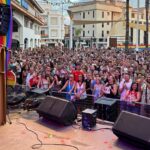
Mar Menor pride festival returns with headliners Nebulossa and parades. Photo Credit: Los Alcazares Town Hall

Los Alcazares is set to celebrate diversity on the shores of the Mar Menor with the return of its annual Pride celebration. Running from Monday, July 6 to Saturday, July 11, this third edition of “El Mar Menor vibra con Orgullo” promises nearly a week of events dedicated to the LGTBIQ+ community, equality, and respect.

Star-studded line-up at Plaza de la Feria

The main stage at Plaza de la Feria will host as many as 30 diverse acts throughout the week. Acclaimed artists Nebulossa and Malena Gracia will top the star-studded bill, alongside popular performers like Satín Greco, Le Cocó, Pitita, Kuve, and Keunam.

The festival’s major highlights begin on Thursday, July 9, with the Gala Míster Orgullo del Mar Menor. This is followed on Friday by the colorful Gala Divas y Reinas. The celebrations reach their peak on Saturday, July 11, starting with a lively parade along the seafront at 19:00, marching from Plaza del Espejo to Plaza de la Feria.

Following the march, Mayor Mario Pérez Cervera and the “Lo tienes claro?” Association will deliver a pride manifesto, setting the stage for an opening speech and a massive closing gala, featuring unforgettable musical performances.

Highlighting health and advocacy on the coast

In addition to the fun aspect of the event, it will also have another main focus: public health. All day on July 10, and in the morning of July 11, organisers will provide quick, confidential, and free HIV tests at the Town Hall, available for anyone who wants to take one.

Local businesses along the Los Alcazares promenade are also actively participating, with many hosting themed events, decorative displays, and special promotions to welcome the influx of international and local visitors.

This vibrant coastal celebration will successfully blend high-energy entertainment with important advocacy, welcoming residents and visitors to honour equality and have fun together. Organisers suggest that anyone interested in attending arrive early to the event, and enjoy one of the most colourful and fun celebrations in the town’s local summer calendar.

Continue Reading

%

Pies, Pints & Pipas.

Published

on

pies,-pints-&-pipas.

Every country has its own way of fuelling matchday. Steak pies in England. Scotch pies in Glasgow, bags of pipas in Spain and sizzling choripan in Argentina, food is as much a part of the experience as are the roars from the stands. Food matchday traditions are part of what make football culture so unique.

England, the home of the pint and the pie

No country is more closely associated with football food than England. For generations, supporters have gathered in local pubs before kick-off, pint in hand, before heading to the ground for a hot pie. It’s a tradition that dates back to the late 19th century, when football clubs grew alongside Britain’s industrial towns and a hearty pie offered an affordable meal on a cold afternoon.

Today, pies are still a fixture at grounds across the country, classic steak and kidney and steak and ale, with Birmingham’s famous Balti Pie earning cult status among supporters.

Modern stadiums may now serve gourmet burgers and loaded fries, but for many supporters nothing beats the simple comfort of a pie and a pint before the first whistle.

As one Reddit fan put it “Football without a pie just doesn’t feel right.”

Scotland, where the Scotch Pie reigns supreme

Right far up north, the Scotch pie, a small, double-crust pastry traditionally filled with seasoned minced meat, has long been Scotland’s signature stadium snack and remains to this day a matchday institution. Macaroni pies, steak pies and sausage rolls are also popular choices

UEFA even notes that England and Scotland both love their pies and locals will happily debate the differences between them for hours, a rivalry almost as fierce as some of the matches themselves.

Spain, the kingdom of Pipas

Spain absolutely owns the sunflower seed. Few football traditions are as recognisable as supporters cracking open bags of roasted sunflower seeds, or pipas. The familiar crunch of shells has become part of the soundtrack at stadiums across Spain, and because fans eat pipas by the handful, stadium floors in Spain are famously left completely white with a literal “snowstorm” of discarded seed shells by the 90th minute. Many fans also arrive carrying a freshly made bocadillo, filled with jamon serrano, tortilla española or chorizo, with a cold cana before the match completing the experience.

Germany, bratwurst before kick-off

German football has arguably one of Europe’s best matchday experiences, and the food is no exception. Outside Bundesliga grounds, the unmistakable aroma of sizzling bratwurst fills the air long before kick-off.

Served in a bread roll with mustard, bratwurst is the classic choice, often accompanied by a giant pretzel and a locally brewed beer. It’s straightforward, satisfying and perfectly suited to watching the game

Argentina, football meets the barbequed meat

In Argentina, some of the best football food isn’t found inside the stadium but on the streets surrounding it. As supporters make their way to the ground, vendors fire up grills serving choripan, a grilled chorizo sausage in crusty bread topped with chimichurri. Empanadas are another matchday favourite, an easy snack to enjoy while soaking up the atmosphere.

North America. A taste of the 2026 World Cup

The 2026 FIFA World Cup has shown that football food is not restricted to pies, burgers and hot dogs. Across the United States, Canada and Mexico, supporters have been able to try the dishes each host city is known for, turning every match into an opportunity to experience local flavours as well as world-class football. Visitors have sampled everything from Texas barbecue and Philadelphia cheesesteaks to Canadian poutine, Miami’s famous Cuban sandwiches and authentic Mexican tacos.

Every stadium has its own flavour

Of course, these are just a few of football’s matchday food traditions. Dutch supporters are known for bitterballen, crispy, deep-fried meat croquettes that pair perfectly with a beer. In Italy, fans often grab pizza al taglio (pizza sold by the slice) or freshly made panini before heading to the stadium, while in Portugal, the bifana, a garlic and white wine-marinated pork sandwich is a matchday favourite. Belgian supporters rarely say no to a cone of crispy frites, traditionally served with mayonnaise, and in Brazil, coxinhas (golden chicken croquettes) and pão de queijo (warm, chewy cheese bread rolls) are popular pre-match snacks.

As football grips countries across the globe during the World Cup 2026 , cuisine will vary, but back home in your home ground, what do you eat at your matches?

Continue Reading

Trending

Copyright © 2017 Spanish Property & News