Connect with us

%

The Hidden Line On Your Spanish Electricity Bill That Could Be Costing You Money

Published

on

the-hidden-line-on-your-spanish-electricity-bill-that-could-be-costing-you-money

The fixed part of a Spanish electricity bill can keep costs high even before summer air-con use rises. Credit: 1 Media / Shutterstock

A new OCU analysis of almost 10,000 electricity bills suggests many households in Spain may be overpaying because their contracted power is higher than needed. The finding is especially timely before peak summer use, when air conditioning can hide smaller fixed charges that keep appearing every month.

How a fixed electricity charge can keep bills high 

Before blaming the new air-condition unit installed during a heatwave, households in Spain preparing for higher summer electricity use may have another cost to check. 

A new analysis by the Organización de Consumidores y Usuarios (OCU), Spain’s main consumer organisation, found that around one in three homes in its sample could reduce their electricity bill by adjusting their contracted power, known in Spanish as potencia contratada. OCU estimated the average saving for those households at €88.11 a year, including taxes, while keeping the same tariff.

That figure is not about using less electricity. It relates to the fixed part of the bill, the amount paid for the level of power a home has available at any one time. A property with too much contracted power may pay more every month, even if its actual consumption is lower.

This is one of the least familiar parts of the Spanish electricity bill. In flats with low use, empty holiday homes, older villas, properties inherited from previous owners, or rental homes where the contract has not been reviewed for years, this can be of higher importance to check and see where the money is going. 

Why one in three homes may have more power than they need

OCU analysed 9,806 electricity bills from households on Spain’s free electricity market, known as the mercado libre. The bills were issued between October 1, 2025 and March 31, 2026, and came from 12 electricity suppliers representing around 90 per cent of free-market household customers, according to the study.

The report found that 34.2 per cent of households analysed could save money by reducing their contracted power during peak hours. For nearly a quarter of the bills studied, the excess contracted power was at least 1 kilowatt.

This doesn’t mean every household should immediately lower its power. Contracted power controls how much electricity can be used at the same time. A home running an oven, induction hob, dishwasher, water heater and air-conditioning together may need more capacity than a small flat used only part of the year. But OCU’s findings suggest many homes may be paying for a safety margin they do not use.

What residents should look for on a Spanish electricity bill

Spanish electricity bills for domestic supplies of up to 15 kilowatts must include the contracted power for each time period and the maximum power demanded during the previous year, according to Spain’s official state bulletin, the Boletín Oficial del Estado (BOE).

That means residents can compare the power they are paying for with the highest power actually recorded by the meter. This information may also be available in the online customer area of the electricity distributor, which is not always the same company as the supplier sending the bill. 

The term to look for is potencia contratada. Some bills may also show potencia máxima demandada, or maximum power demanded. If the contracted figure is consistently much higher than the maximum demanded, there may be room to ask the supplier about reducing it.

OCU recommends caution, especially with the lower-cost off-peak power period, known as valle. Its report says the best approach is to review maximum power peaks, reduce peak contracted power only where there is a clear margin, and avoid unnecessary changes that could cause inconvenience later.

Why switching supplier is not the only way bills can change

The same OCU study also found large differences between companies for similar household consumption profiles. It said a representative average home could pay up to 57 per cent more with one supplier than another, equivalent to around €450 a year for an identical supply.

The consumer group said differences can also appear between customers of the same supplier, especially when contracts have been reviewed or renewed over time. Residents who signed a deal years ago should check whether the terms still match newer offers.

OCU disclosed that the study was financed under a collaboration agreement with Octopus Energy España. The report says this collaboration allowed the study to be expanded and was carried out under transparency requirements for consumer association agreements.

For that reason, the useful takeaway is not which supplier ranked best in the sample. It is that the full bill should be checked, and suppliers should be compared fairly. 

How residents in Spain can compare tariffs safely

Spain’s energy regulator, the Comisión Nacional de los Mercados y la Competencia (CNMC), offers an official energy supply comparison. The regulator says the tool includes around 800 offers from more than 80 suppliers, with characteristics checked by CNMC technicians before inclusion.

CNMC also says consumers have the right to choose their electricity or gas supplier freely, changing suppliers is free, and the maximum period for a supplier switch is 21 days.

The regulator’s own household panel has shown why this remains confusing. In the second quarter of 2025, 52.2 per cent of Spanish households did not know how to distinguish between the free electricity market and the regulated electricity tariff, known as the Precio Voluntario para el Pequeño Consumidor (PVPC). 

Before summer bills arrive, residents can check their contracted power, compare it with the highest recorded demand, look for fixed charges or maintenance extras, and compare the total annual cost of any new offer rather than only the advertised electricity price.

%

Cancer Charity Gala And Golf Tournament

Published

on

cancer-charity-gala-and-golf-tournament

Marbella biggest charity weekend against cancer returns with a golf tournament and a landmark 41st gala dinner. Organised by the Spanish Association Against Cancer (AECC), the double bill will bring together hundreds of residents, businesses and institutions on Friday, July 31 and Saturday, August 1, with every euro raised going towards free support programmes for cancer patients and their families.

Council backs “essential” local charity

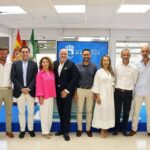
Social rights councillor Isabel Cintado praised AECC’s work as vital to the community. She highlighted the year-round efforts of staff and volunteers who provide emotional support, social assistance and specialist resources all free of charge, urging residents to get involved since every contribution helps.

AECC Marbella president Santiago Gomez-Villares noted that funds raised from the event sustain services benefiting hundreds of families annually. Last year, the local branch supported 462 patients and 135 relatives, delivering 2,318 care sessions, 847 psycho-oncology sessions for 290 patients, and 732 oncological physiotherapy sessions for 171 users, as well as social support for 127 people.

Politician Borja Semper to collect ‘The Fighter’ award

This year will be the 41st gala, and is among Spain’s oldest charity dinners. The goal is to attempt to draw more than 600 guests at Finca de la Concepcion. National PP deputy Borja Semper will receive the association’s ‘The Fighter’ award, recognising his role in normalising conversations around cancer and giving hope through his own testimony. Hosts Eva Ruiz and Poty Castillo return for another year, with performances from Efecto Mariposa and The Vintage Experience, plus a traditional raffle and charity auction. Comedian Federico de Juan joins the event to assist with the auction.

Golf tournament gathers 120 players at Las Brisas

Proceedings kick off a day earlier at Real Club de Golf Las Brisas, where 120 players will compete in a Better Ball Pairs Stableford format on July 31. Entry costs €130 with a shared buggy for non-members, or €30 without one for club members, participants receive a welcome pack and trophies made from recycled plastic via the Ecomarb sustainability project.

If you would like to participate in this incredible event, tickets and tournament entries can be booked by calling 952 776 800, weekdays from 9am to 2pm.

Continue Reading

%

Valuable Sorolla Painting Left On Sevilla Pavement Picked Up After Passerby Liked Frame

Published

on

valuable-sorolla-painting-left-on-sevilla-pavement-picked-up-after-passerby-liked-frame

a family had placed the painting outside their home. Photo credit: Kirk Fisher/Shutterstock

A valuable painting by Spanish artist Joaquín Sorolla has been recovered after it has an unexpected journey from a pavement in Sevilla to a home in Murcia and back again, after a brief moment of confusion during a family trip led to one of Spain’s more unusual art recoveries of the week. It all began on Calle Rafael González Abreu, where a family had placed the painting outside their home while loading a car for a holiday.

It was meant to be a temporary move, something set down for just a moment. But in that short gap, it was forgotten. A passerby walking through the area stopped when he saw it. Later identified as Andrés, a visitor staying in central Sevilla assumed it had been left behind or discarded. What caught his attention first was not the painting itself, but the frame, which he later described as decorative and worth a closer look. He picked it up and took it back to his hotel. By the time the family realised something was wrong, the painting was already gone.

A mistake during a holiday departure

The family had been preparing to leave Sevilla when the incident happened. The painting was placed outside briefly while they loaded luggage into their car. It was not intended to be left unattended, only set down during the final stages of leaving. That short window was enough. Once they reached their destination, they noticed the painting was missing. At first, there was confusion about where it had been left, then concern when it became clear it was not inside the home or the vehicle,

From Sevilla to Murcia

Unaware of the urgency developing in Sevilla, Andrés continued his journey with the painting and later returned to Murcia with it. At that point, he still believed it was most likely a decorative piece that had been left outside by mistake. It was only after spending more time with it that doubts began to form. From his home in Murcia, curiosity led him to search online for similar works. He compared images, styles, and possible artists using digital tools to narrow down what he had found. The name that repeatedly appeared was Joaquín Sorolla.

Realisation after online search

Sorolla is one of Spain’s most recognised painters, known for capturing natural light in coastal and everyday scenes. As Andrés continued his search, the possibility that the painting could be linked to him became harder to ignore. What had started as a casual find on a pavement in Sevilla now looked more significant. Once he saw that the painting might be connected to a missing artwork being discussed in reports, he contacted police to report that he had it in his possession.

Recovery of the Artwork

Police sources confirmed that Andrés called on Monday afternoon to say he had the painting at his home in Murcia after recognising its possible importance. Officers said initial checks suggested it matched the missing Sorolla work, although verification was still required at that stage. A unit travelled from Sevilla to Murcia to inspect the painting directly and confirm its identity. The family in Sevilla were also informed that the artwork had likely been located, bringing the search into its final stage.

Search and posters in Sevilla

Before the painting was traced, the family had launched their own search. Posters were placed around Sevilla in both Spanish and English asking for help locating the missing artwork. They described it as a piece of strong sentimental value and offered a reward for its return. No mention was made at that point of its artistic significance, with the focus kept on recovering a family item rather than identifying its origin.

Who was Sorolla

Joaquín Sorolla (1863–1923) remains one of Spain’s most important painters. His work is known for its ability to capture natural light, particularly in coastal scenes and everyday life across Spain. His paintings are held in major museums and collections across Europe and the United States, and continue to attract strong interest due to his influence on Spanish art history. Even works outside his most famous series are treated as culturally significant because of his reputation and legacy.

A chain of small decisions

A moment during a move in Sevilla quickly became something more complicated, as a painting placed briefly on a pavement was mistaken for something discarded, picked up for its frame, and taken to Murcia before anyone realised what had happened.

From there, a few online searches, a closer look at the painting, and a phone call to the police were enough to bring it back into official hands. It was not theft, nor intention, just a series of small decisions made in passing that carried a Sorolla painting from one city to another and back again, ending where it began, on a family wall in Sevilla.

Continue Reading

%

British And Spanish Rescuers Race Against Time As Venezuela Earthquake Search Enters Its Most Critical Stage

Published

on

british-and-spanish-rescuers-race-against-time-as-venezuela-earthquake-search-enters-its-most-critical-stage

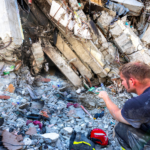
Despite exhaustion, teams continue working because experience has shown that survival remains possible. Photo credit: ttanni/Shutterstock

Nine days after Venezuela’s devastating earthquakes, most disaster responses around the world would already be shifting from rescue to recovery. But not here. Rescue operations have entered what urban search and rescue specialists describe as one of the most difficult and emotionally demanding stages, where every passing hour makes survival less likely, yet rare rescues continue to show why teams refuse to stop searching. 

Just hours earlier, security guard Hernán Alberto Gil Flores was pulled alive from beneath the rubble after spending eight days trapped inside a collapsed shopping centre, reinforcing why British and Spanish rescue teams remain among those working around the clock alongside international colleagues in the search for survivors.

Why day nine matters

The first 72 hours after an earthquake are usually the most critical for survival. After that, dehydration, injuries, extreme heat, limited oxygen and unstable structures all make survival increasingly difficult. But experienced urban search and rescue teams know survival is still possible.

Air pockets formed inside collapsed buildings can preserve life for days if even small amounts of air and water are available. These rare cases are why teams continue working long after optimism fades. Every site is different, and rescuers will not assume there are no survivors until every realistic possibility has been checked.

Britain’s rescue mission

Britain has deployed a 68-strong UK International Search and Rescue team after Venezuela requested assistance. The deployment includes firefighters, structural engineers, medics, veterinarians, search dogs and specialist equipment designed for self-sufficient operations in disaster zones. Firefighters enter unstable structures to carry out rescues, while engineers assess whether buildings are safe to access and identify the most stable entry points.

Medical teams are positioned close to extraction zones to treat survivors immediately, while veterinarians ensure search dogs remain fit to work in extreme conditions. The team also carries cutting tools, lifting equipment, communications systems and specialist detection devices used to locate life beneath rubble. National Fire Chiefs Council Chair Phil Garrigan said the deployment reflects the UK’s commitment to supporting partners “in extremely challenging conditions” and helping save lives wherever possible.

Spain’s rescue effort

Spain has also deployed specialist emergency teams, canine units and technical rescue equipment as part of the international response. Spanish rescuers are working alongside other nations, combining urban search expertise with engineering skills to reach areas where survivors may still be trapped. The mission carries added significance due to long-standing cultural and historical ties with Venezuela, as well as the large Spanish community living there.

Many families maintain close personal connections across both countries, giving Spain’s involvement additional emotional weight. Spanish teams are experienced in earthquake response and structural collapse operations and are working in coordination with international partners to expand search coverage across heavily damaged areas.

The technology searching for life

Modern urban search and rescue relies on a mix of advanced technology and human skill. Rescue dogs are often sent into collapsed areas first because they can detect human scent trapped beneath tonnes of debris. When a dog alerts handlers, teams use sensitive listening devices capable of picking up faint tapping, movement or voices. Thermal imaging cameras can sometimes detect body heat in accessible voids, while fibre-optic cameras are inserted through small gaps to inspect spaces too dangerous for entry.

Importantly, rescue teams do not dig at random, they combine dog alerts, structural assessments, technical readings and eyewitness information to identify the most likely survival zones. A single signal can redirect hours of carefully planned work.

A rescue that renewed hope

The rescue of Hernán Alberto Gil Flores has become a defining moment of the operation. He survived for eight days beneath collapsed concrete inside a partially intact structure that created a small air pocket.

Rescuers established contact with him days before extraction and carefully tunnelled through unstable debris while providing water and support through narrow openings. The operation required more than 100 hours of precise work to avoid further collapse. When he was finally brought out alive, exhausted but conscious, rescue teams reacted with relief after days of continuous effort. His survival has reinforced belief among rescuers: even on day nine, hope cannot be lost.

The human cost

Behind the technical operation is a deeply human reality. Rescue workers operate for long hours in dangerous conditions, often making decisions where every choice carries serious consequences.

Families continue to wait near collapsed buildings, hoping for news and refusing to abandon the possibility that loved ones may still be alive. Meanwhile, rescue coordinators must balance urgency with safety as aftershocks continue to threaten weakened structures.

Giving everything 

Despite exhaustion, teams continue because experience shows survival remains possible in rare but real cases, even after extended periods. Every passing hour reduces the chances of finding survivors, but it does not remove them entirely. That is why British and Spanish rescue teams, alongside international colleagues, continue their work as day nine unfolds in Venezuela. 

The rescue of Hernán Alberto Gil Flores has reinforced that extraordinary survivals can still happen when hope appears to be fading, and until every viable space has been checked, the search continues.

Continue Reading

Trending

Copyright © 2017 Spanish Property & News