
electricity bill
The hidden line on your Spanish electricity bill that could be costing you money

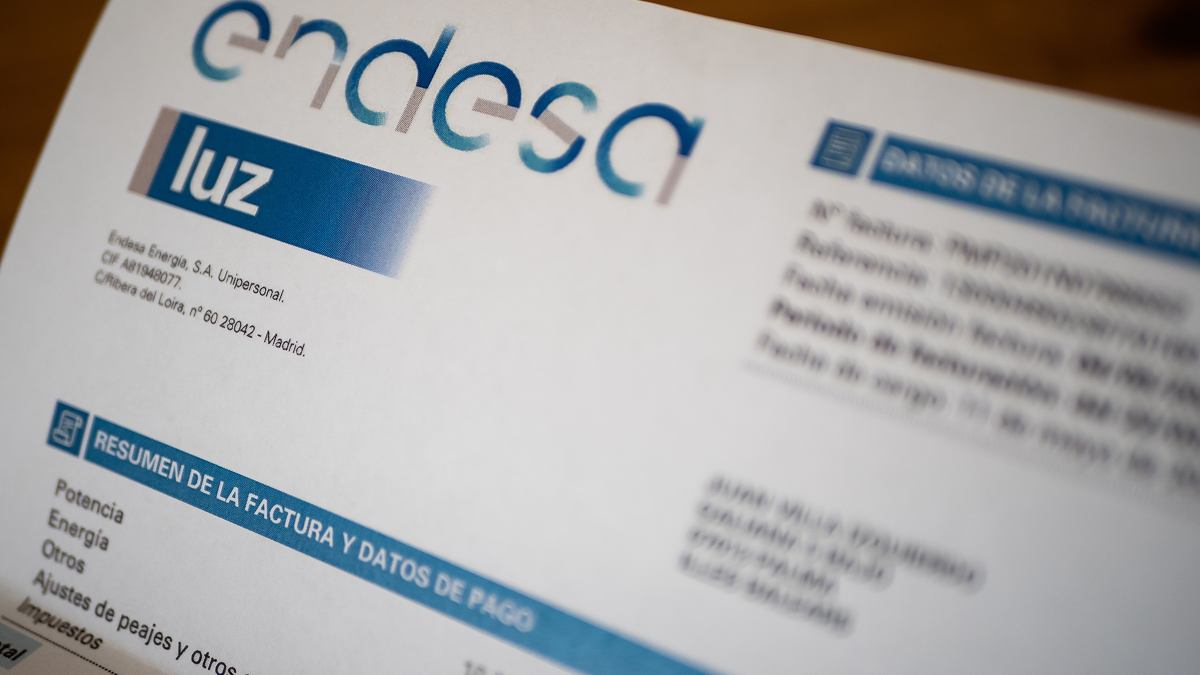
The fixed part of a Spanish electricity bill can keep costs high even before summer air-con use rises. Credit: 1 Media / Shutterstock
A new OCU analysis of almost 10,000 electricity bills suggests many households in Spain may be overpaying because their contracted power is higher than needed. The finding is especially timely before peak summer use, when air conditioning can hide smaller fixed charges that keep appearing every month.
How a fixed electricity charge can keep bills high
Before blaming the new air-condition unit installed during a heatwave, households in Spain preparing for higher summer electricity use may have another cost to check.
A new analysis by the Organización de Consumidores y Usuarios (OCU), Spain’s main consumer organisation, found that around one in three homes in its sample could reduce their electricity bill by adjusting their contracted power, known in Spanish as potencia contratada. OCU estimated the average saving for those households at €88.11 a year, including taxes, while keeping the same tariff.
That figure is not about using less electricity. It relates to the fixed part of the bill, the amount paid for the level of power a home has available at any one time. A property with too much contracted power may pay more every month, even if its actual consumption is lower.
This is one of the least familiar parts of the Spanish electricity bill. In flats with low use, empty holiday homes, older villas, properties inherited from previous owners, or rental homes where the contract has not been reviewed for years, this can be of higher importance to check and see where the money is going.
Why one in three homes may have more power than they need
OCU analysed 9,806 electricity bills from households on Spain’s free electricity market, known as the mercado libre. The bills were issued between October 1, 2025 and March 31, 2026, and came from 12 electricity suppliers representing around 90 per cent of free-market household customers, according to the study.
The report found that 34.2 per cent of households analysed could save money by reducing their contracted power during peak hours. For nearly a quarter of the bills studied, the excess contracted power was at least 1 kilowatt.
This doesn’t mean every household should immediately lower its power. Contracted power controls how much electricity can be used at the same time. A home running an oven, induction hob, dishwasher, water heater and air-conditioning together may need more capacity than a small flat used only part of the year. But OCU’s findings suggest many homes may be paying for a safety margin they do not use.
What residents should look for on a Spanish electricity bill
Spanish electricity bills for domestic supplies of up to 15 kilowatts must include the contracted power for each time period and the maximum power demanded during the previous year, according to Spain’s official state bulletin, the Boletín Oficial del Estado (BOE).
That means residents can compare the power they are paying for with the highest power actually recorded by the meter. This information may also be available in the online customer area of the electricity distributor, which is not always the same company as the supplier sending the bill.
The term to look for is potencia contratada. Some bills may also show potencia máxima demandada, or maximum power demanded. If the contracted figure is consistently much higher than the maximum demanded, there may be room to ask the supplier about reducing it.
OCU recommends caution, especially with the lower-cost off-peak power period, known as valle. Its report says the best approach is to review maximum power peaks, reduce peak contracted power only where there is a clear margin, and avoid unnecessary changes that could cause inconvenience later.
Why switching supplier is not the only way bills can change
The same OCU study also found large differences between companies for similar household consumption profiles. It said a representative average home could pay up to 57 per cent more with one supplier than another, equivalent to around €450 a year for an identical supply.
The consumer group said differences can also appear between customers of the same supplier, especially when contracts have been reviewed or renewed over time. Residents who signed a deal years ago should check whether the terms still match newer offers.
OCU disclosed that the study was financed under a collaboration agreement with Octopus Energy España. The report says this collaboration allowed the study to be expanded and was carried out under transparency requirements for consumer association agreements.
For that reason, the useful takeaway is not which supplier ranked best in the sample. It is that the full bill should be checked, and suppliers should be compared fairly.
How residents in Spain can compare tariffs safely
Spain’s energy regulator, the Comisión Nacional de los Mercados y la Competencia (CNMC), offers an official energy supply comparison. The regulator says the tool includes around 800 offers from more than 80 suppliers, with characteristics checked by CNMC technicians before inclusion.
CNMC also says consumers have the right to choose their electricity or gas supplier freely, changing suppliers is free, and the maximum period for a supplier switch is 21 days.
The regulator’s own household panel has shown why this remains confusing. In the second quarter of 2025, 52.2 per cent of Spanish households did not know how to distinguish between the free electricity market and the regulated electricity tariff, known as the Precio Voluntario para el Pequeño Consumidor (PVPC).
Before summer bills arrive, residents can check their contracted power, compare it with the highest recorded demand, look for fixed charges or maintenance extras, and compare the total annual cost of any new offer rather than only the advertised electricity price.








How a local charity is helping struggling mothers in Cartagena
Google loses €4.1bn EU fight over the apps Android users see first
Ibiza residents strike back as illegal 1,000-guest villa party raided by police
Dinosaurs are roaring over to Estepona this summer in a massive 5,000m² exhibition

Families Caring For Elderly Parents In Spain Say Brexit Has Left Them With Impossible Choices
Denia launches new La Marineta music festival this summer with Fangoria and Nil Moliner


-
Costa del Sol2 weeks ago
Dinosaurs are roaring over to Estepona this summer in a massive 5,000m² exhibition
-
 %2 weeks ago
Families Caring For Elderly Parents In Spain Say Brexit Has Left Them With Impossible Choices
-
Costa Blanca North2 weeks ago
Denia launches new La Marineta music festival this summer with Fangoria and Nil Moliner
-

 ElPais2 weeks ago
Primary Elections In New York, Maryland, And Utah: Date And How To Vote
-

 %2 weeks ago
One Of Spain’s Top Supermarkets Has Just Been Ranked Among Europe’s Most Innovative In A Major New Report
-
Finland2 weeks ago
Finns abroad keep Juhannus traditions alive on Spanish coast in 2026
-
car crash2 weeks ago
Driver flees AP-7 crash before police find him hiding in trees
-
Costa del Sol2 weeks ago
Local community gets ready for its annual Calahonda Day celebration on June 27