Connect with us

%

Torrox Offers Over 4,000 Free Parking Spaces

Published

on

torrox-offers-over-4,000-free-parking-spaces

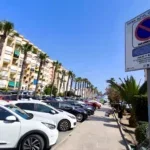
Blue zone parking made free in Torrox. Credit: Ayuntamiento de Torrox

Torrox has launched an extensive free parking scheme for the peak tourist season to welcome the thousands of beachgoers it expects will flood the town. Council authorities have rolled out more than 4,000 free parking spaces across the most important and popular coastal areas, including El Morche, Torrox Costa, El Penoncillo and Calaceite. The council has also activated a free blue zone on the coast from July 1 to August 31 to manage the high vehicle influx.

Free parking plan targets busy beachfront zones

Mayor Oscar Medina presented the measures at the free car park on Calle A Babor, where he stressed that residents and those visiting for holidays can get easier access to seafront promenades, beaches and frontline coastal spots during July and August. The scheme combines additional free bays with the cost-free blue zone to improve vehicle turnover in high-demand areas.

Torrox enjoys nine kilometres of coastline packed with beaches, promenades, hospitality venues and accommodation. This setup increases parking pressure in the heart of the summer season. Local government continues to expand public free parking options, while planners work on fresh sites near U1, Las Dunas de La Carraca and the Iberostar hotel area to add further capacity for drivers.

Blue zone rules promote quick vehicle rotation

The summer blue zone operates Monday to Friday from 10am to 10pm and on Saturdays from 10am to 2pm, excluding public holidays (free parking after 2pm on Saturdays and on Sundays all day.) Drivers may park for a maximum of two hours. Users must display a free parking clock on the dashboard for local police to verify when they arrived and, therefore, how long they have stayed.

Exceeding the limit, tampering with the clock or moving a vehicle to reset the timer attracts a €50 fine. Authorities may also tow vehicles in serious cases. Residents can collect the clocks at no charge from the town hall, El Morche deputy office, multi-use building, tourist offices and partner outlets.

Medina described the parking and security efforts as essential for orderly mobility, support for local businesses and protection against unauthorised charges for public spaces (yes, there are some scallywags around). The combined measures hope to deliver smooth summer experiences for everyone enjoying Torrox facilities.

%

Italian Homes Are Getting Free Solar Power From Spain. Could It Happen Here?

Published

on

italian-homes-are-getting-free-solar-power-from-spain.-could-it-happen-here?

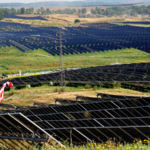
For years, solar energy has largely been associated with rooftop panels. Photo Credit: Jacopo Landi/Shutterstock

Imagine cutting your electricity bill without installing a single solar panel on your roof. No building work, no expensive equipment and no need to own your home. It might sound too good to be true, but that’s exactly what thousands of households in Italy are already doing using solar energy generated in Spain. The question now is whether the same idea could eventually benefit more homes across Europe, including those in Spain.

Instead of fitting solar panels to their own properties, families are signing up to a scheme that links them to a solar farm in southern Spain. When the energy produced by their allocated panel matches what they use at home, they receive that electricity free of charge, although they still pay network costs and other fixed charges that appear on a normal electricity bill.

How does it work?

The idea is surprisingly simple. Rather than asking every household to install rooftop solar panels, customers are assigned a virtual solar panel at a large photovoltaic plant in Cerrillares, Spain. The electricity generated by that panel is tracked and matched with the customer’s energy use back in Italy using digital software developed by Australian company Enosi.

If the panel produces the same amount of electricity that the household consumes during that period, the energy itself is credited to their bill. Customers continue to pay standard network charges and fixed costs, but the electricity generated by their virtual panel is effectively free. For people who live in apartments, rent their home or simply cannot install rooftop panels, it offers a completely different way to benefit from solar energy.

Thousands of families have already signed up

The idea is no longer a small pilot project. More than 110,000 customers have already joined the programme in Italy, showing there is strong demand for alternatives that help reduce household energy bills without requiring major home improvements.

The scheme is operated through Italian energy company Plenitude, while the technology behind it is provided by Enosi’s Powertracer platform, which matches electricity production with individual household consumption. For many participants, the attraction is obvious. They can benefit from renewable energy generated hundreds of kilometres away without having to own the equipment themselves.

Could something similar work in Spain?

For people living in Spain, the concept naturally raises another question. If solar farms in Spain can help power homes in Italy, could a similar system eventually allow more households in Spain to benefit from shared solar energy, particularly those living in apartment blocks or properties where rooftop panels are not practical?

Many urban residents simply do not have access to their own roof space. Others face restrictions because of where they live or the type of property they own. A shared system could offer an alternative by allowing households to benefit from electricity generated elsewhere rather than relying solely on panels installed at home.

Spain has no shortage of sunshine

Spain is already one of Europe’s biggest producers of solar energy, with large photovoltaic plants operating across several regions thanks to the country’s high number of sunshine hours. As more solar farms are built, interest is growing in new ways of connecting that renewable electricity with consumers.

Projects like the one linking Spain and Italy demonstrate that the technology now exists to match electricity generation with individual households, even when they are hundreds of kilometres apart. For consumers, that opens up possibilities that would have seemed unlikely only a few years ago.

Why it could appeal to so many people

Installing rooftop solar panels is not always an option. Many people rent their home, live in flats or simply cannot afford the upfront cost of buying and fitting a complete solar system.

A virtual panel removes many of those barriers. Instead of maintaining equipment or worrying about installation, customers simply receive the benefit of electricity generated on their behalf at a large solar farm. For households looking for ways to reduce rising energy bills, it is easy to see why the idea is attracting attention.

A different way of thinking about solar power

For years, solar energy has largely been associated with rooftop panels. This new model suggests that may not always be necessary. Instead of asking every household to generate its own electricity, larger solar farms could allow many more people to benefit from renewable energy, regardless of where they live.

While the Italian scheme is still specific to one energy provider and operates under its own conditions, it offers a glimpse of how electricity could be supplied differently in the future. For now, households in Italy are already proving that benefiting from Spain’s sunshine no longer means living under it. It can simply mean being connected to it in an entirely new way.

Continue Reading

%

Planning A Holiday In Andalucía? New Figures Reveal What Travellers Are Paying

Published

on

planning-a-holiday-in-andalucia?-new-figures-reveal-what-travellers-are-paying

Higher prices do not appear to be putting people off. Photo credit: Old Town Tourist/Shutterstock

If you’ve booked a holiday in Andalucía this summer and found yourself paying more for hotels, restaurants or attractions than you expected, you’re certainly not imagining it. Foreign visitors spent a record €7.8 billion across Andalucía between January and May this year, but that doesn’t necessarily mean they’re splashing out more than ever. With the cost of holidays rising, many travellers are simply paying more for the same experience.

Record spending reflects another busy year

Visitor spending reached its highest ever level for the first five months of a year, rising 7.72 per cent compared with the same period in 2025. It is another sign that Andalucía remains one of Europe’s favourite holiday destinations, even as travel costs continue to climb.

Whether it is the beaches of the Costa del Sol, the historic streets of Sevilla, the Alhambra in Granada or the white villages scattered across the region, Andalucía continues to attract millions of overseas visitors every year. The latest figures show those visitors spent €7.8 billion between January and May, in Andalucía alone, setting a new record for the region during that period.

For businesses preparing for the busiest months of the year, it is welcome news. Hotels, restaurants, cafés, shops and tourist attractions all rely heavily on the summer season, and strong visitor spending helps support thousands of jobs across the region.

Are holidays becoming more expensive?

While the figures point to record spending, they do not necessarily mean holidaymakers are buying more. Accommodation prices have risen in many popular destinations, eating out often costs more than it did just a few years ago, and everything from drinks on the beach to family attractions can add noticeably more to the final holiday bill.

That means many visitors may simply be spending more because prices have increased, rather than because they are treating themselves to extra luxuries. For anyone who has returned to Andalucía after a few years away, the difference in costs is something they are likely to notice.

Visitors are still choosing Andalucía

Higher prices do not appear to be putting people off. Andalucía continues to offer the mix of sunshine, beaches, culture, gastronomy and relaxed lifestyle that has made it one of Europe’s most popular holiday destinations.

Many visitors return year after year, while first-time travellers continue to discover everything from the Costa del Sol and Costa Tropical to the cities of Málaga, Córdoba and Cádiz. For many families, Andalucía still offers excellent value compared with long-haul destinations, even if holiday budgets are under a little more pressure than they once were.

Good news for local businesses

A busy tourist season brings obvious benefits to businesses across the region. Hotels fill more rooms, restaurants welcome more diners and local shops see more customers walking through their doors. Tour companies, museums, beach bars and leisure attractions also benefit when visitors stay longer and spend more during their trip.

After several years of rising travel demand, another strong summer could provide an important boost for businesses that depend on tourism. For many, the summer months remain the most important trading period of the entire year.

What holidaymakers should expect

For anyone travelling to Andalucía over the coming weeks, the latest figures suggest another busy summer lies ahead. Popular resorts are likely to remain lively throughout July and August, while beaches, restaurants and major attractions may be busier than usual during peak holiday periods.

Booking accommodation, restaurants and popular attractions in advance could help avoid disappointment, particularly in the region’s busiest destinations. Visitors should also be prepared for prices that may be higher than they remember from previous holidays, especially in the most sought-after coastal areas.

Spending smarter, not necessarily more

Many holidaymakers are becoming far more careful about how they spend their money. Instead of booking luxury hotels, some are choosing self-catering apartments. Others are travelling for fewer days, comparing prices more carefully or looking for free attractions and local experiences that offer better value.

That does not mean people are enjoying their holidays any less. It simply means many travellers are making every euro count. With holiday costs continuing to rise across much of Europe, careful budgeting has become part of planning a trip.

Andalucía remains as popular as ever

The latest figures confirm that Andalucía continues to attract visitors from around the world, with international tourism showing little sign of slowing down. For local businesses, record visitor spending is a positive sign as the peak summer season gets underway.

For holidaymakers, the message is slightly different. Andalucía remains one of Europe’s most popular destinations, but enjoying everything it has to offer is likely to cost a little more than it once did. Planning ahead, comparing prices and setting a realistic budget could make all the difference between an expensive surprise and a holiday that is remembered for all the right reasons.

Continue Reading

%

British Expat’s Heart Failure Nightmare In Spain

Published

on

british-expat’s-heart-failure-nightmare-in-spain

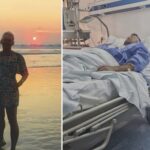
Gareth and Katrina now and what was. Credit: GR

Just three years ago, Gareth and Katrina Robinson’s lives took an unexpected and terrifying turn.

Residents in Andalucia, what they initially put down to work stress turned out to be something far more serious. Gareth had been feeling unusually tired for a couple of days. He was getting sudden nosebleeds, dizzy spells, headaches, palpitations and severe leg cramps in the middle of the night. He looked grey-faced, and all he wanted to do was sleep it off.

Gareth had always been fit and healthy. He drank very little, slept well, kept active and had no reason to suspect anything serious was going on with his body. Had he decided to simply sleep it off, but Katrina sensed something wasn’t quite right and insisted they go to their local hospital, and from that moment onwards, the family’s life would look very different, as, without realising it, Gareth was in severe heart failure and moments away from a stroke.

Heart failure symptoms nearly killed healthy British expat in Andalucia

Euro Weekly News sat down with Gareth and Katrina to hear how this life-changing diagnosis took place and why they now feel compelled to support others facing the same journey.

EWN: One thing many people assume when heart issues enter their lives is that they will have to give up almost everything. How different did your lives actually become?

Gareth: My life changed overnight, but it has also shown me that there is hope, recovery and a new purpose after heart failure. My life has actually changed for the better as I listened to what my body was trying to tell me, and I have made those healthier choices and become stronger and fitter for it.

EWN: When you first heard the words “heart failure”, what went through your mind? Were there warning signs you had been ignoring, or did it feel completely out of the blue?

“I was drowning in my own blood”: Gareth’s shocking diagnosis at 15% ejection fraction

Gareth: It felt completely out of the blue. I had been putting all the symptoms down to stress — the tiredness, the nosebleeds, the palpitations, the cramps. I had no idea my heart was in such a bad way. The doctor later told us I was probably about 20 minutes away from having a stroke when we got to hospital. My ejection fraction (this is how the measurement is used to measure how strong the heart is pumping) was down to 15 per cent. That number still shocks me when I think about it. I was basically drowning in my own blood. If Katrina hadn’t insisted we go to the hospital, I don’t think I would be here today.

graph demonstrating ejection fraction

EWN: Being suddenly thrust into the role of caregiver can happen overnight. What was the most unexpected or challenging part of stepping into that role, and how did you look after your own wellbeing at the same time?

Caregiver’s panic: How Katrina became researcher, advocate and lifeline overnight

Katrina: The most unexpected part was how quickly I had to become the researcher and the advocate. While Gareth was in hospital, I was sat at his bedside on my phone, reading medical journals, looking up ejection fraction rates and trying to understand the medication he had been put on and just what was heart failure – the doctors said the words, but I didn’t know what that meant.

I had never done anything like that before, but there was no way I was just accepting the diagnosis, and this set me on the challenge of finding what we could do to beat the odds!

But I remember clearly that the hardest part was the fear. Early searches online were terrifying; information suggested people with heart failure only had a few years of life to live. I had to learn very quickly how to filter what was useful and what was outdated. At the same time I was trying to stay strong for Gareth and for our family. I made sure I still went for walks and spoke to friends, as you cannot pour from an empty cup, but it was a lonely journey.

From fear to strength – How heart failure transformed their marriage

EWN: This journey clearly tested and strengthened your relationship. Can you each share a moment when you saw the other’s strength or vulnerability in a new way?

Gareth: I saw how strong Katrina really is. She never panicked in front of me, even when things looked very serious. She just got on with finding out what we needed to do next.

Katrina: I saw Gareth’s vulnerability when he had to accept he could no longer push through everything. He had always been the one who kept going. Watching him have to slow down and ask for help was hard, but seeing this bravery also brought us closer. We talk about everything now. We are much better at saying how we really feel instead of just getting on with things.

EWN: Many people assume heart failure means the end of an active life. What has surprised you most about recovery and daily living since your diagnosis?

Beating heart failure: Diet, exercise and the power of saying “No”

Gareth: What has surprised me most is how much control I actually have. I thought my life was over, but the changes we made have made a real difference. We completely removed salt from our diet and started reading every label, even on bottled water. We cut out processed food, canned drinks and alcohol. I walk every day, and we built our own cardiac rehabilitation programme because the hospital never offered us one. This has been fundamental to my recovery.

The biggest mental shift was learning to say “no”. I used to take on too much. Now I protect my energy and my health first. That has probably helped my recovery as much as the diet and exercise.

Helping other heart failure patients: Low-sodium recipes and real support for expats

EWN: You have both become a source of practical support for others in the heart failure community through recipes, advice and sharing your story. What motivated you to start helping others?

Katrina: We realised how little clear, up-to-date information there was when we needed it most. We also noticed how common some of the risk factors are in expat life — late nights, salty food, regular drinking. We wanted to show that small, practical changes really can make a difference. We started sharing low-sodium recipes and straightforward advice because we wished someone had done that for us.

The responses we get from people who have just been diagnosed are what keep us going. Many say they felt completely alone until they found our content. That makes it all worthwhile. Through our membership programme we support patients and caregivers equally, because getting well again is never a solo journey.

One honest, heartfelt message for anyone facing heart failure

EWN: If you could sit down with someone who has just been diagnosed with heart failure, or with their partner, what one piece of honest, hopeful advice would you give them?

Gareth and Katrina: Don’t, whatever you do, Google your life expectancy! Focus on what you can control today. Get moving when you are able, eat well, and build a support network — even if that is just one person who understands. Recovery is possible, but it looks different for everyone. A fulfilling life with heart failure is still very much possible. It is about finding a new normal that works for you and the people you love. A diagnosis is not the end of the book; it’s the start of a new chapter!

5-Day challenge: Practical steps after a heart failure diagnosis

The couple are now channelling their experience into practical support for others. They are launching a free five-day challenge aimed at people who have recently been diagnosed with heart failure, with the aim of giving them clear, manageable steps in those first difficult weeks.

For Gareth and Katrina, the goal is simple: to make sure no one else has to face the same fear and confusion they did when heart failure entered their lives.

Contact Gareth and Katrina via their Facebook page Heart Failure to Health, from Diagnosis to Strength.

Continue Reading

Trending

Copyright © 2017 Spanish Property & News