Connect with us

%

Italian Homes Are Getting Free Solar Power From Spain. Could It Happen Here?

Published

on

italian-homes-are-getting-free-solar-power-from-spain.-could-it-happen-here?

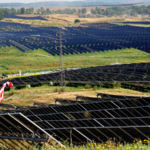
For years, solar energy has largely been associated with rooftop panels. Photo Credit: Jacopo Landi/Shutterstock

Imagine cutting your electricity bill without installing a single solar panel on your roof. No building work, no expensive equipment and no need to own your home. It might sound too good to be true, but that’s exactly what thousands of households in Italy are already doing using solar energy generated in Spain. The question now is whether the same idea could eventually benefit more homes across Europe, including those in Spain.

Instead of fitting solar panels to their own properties, families are signing up to a scheme that links them to a solar farm in southern Spain. When the energy produced by their allocated panel matches what they use at home, they receive that electricity free of charge, although they still pay network costs and other fixed charges that appear on a normal electricity bill.

How does it work?

The idea is surprisingly simple. Rather than asking every household to install rooftop solar panels, customers are assigned a virtual solar panel at a large photovoltaic plant in Cerrillares, Spain. The electricity generated by that panel is tracked and matched with the customer’s energy use back in Italy using digital software developed by Australian company Enosi.

If the panel produces the same amount of electricity that the household consumes during that period, the energy itself is credited to their bill. Customers continue to pay standard network charges and fixed costs, but the electricity generated by their virtual panel is effectively free. For people who live in apartments, rent their home or simply cannot install rooftop panels, it offers a completely different way to benefit from solar energy.

Thousands of families have already signed up

The idea is no longer a small pilot project. More than 110,000 customers have already joined the programme in Italy, showing there is strong demand for alternatives that help reduce household energy bills without requiring major home improvements.

The scheme is operated through Italian energy company Plenitude, while the technology behind it is provided by Enosi’s Powertracer platform, which matches electricity production with individual household consumption. For many participants, the attraction is obvious. They can benefit from renewable energy generated hundreds of kilometres away without having to own the equipment themselves.

Could something similar work in Spain?

For people living in Spain, the concept naturally raises another question. If solar farms in Spain can help power homes in Italy, could a similar system eventually allow more households in Spain to benefit from shared solar energy, particularly those living in apartment blocks or properties where rooftop panels are not practical?

Many urban residents simply do not have access to their own roof space. Others face restrictions because of where they live or the type of property they own. A shared system could offer an alternative by allowing households to benefit from electricity generated elsewhere rather than relying solely on panels installed at home.

Spain has no shortage of sunshine

Spain is already one of Europe’s biggest producers of solar energy, with large photovoltaic plants operating across several regions thanks to the country’s high number of sunshine hours. As more solar farms are built, interest is growing in new ways of connecting that renewable electricity with consumers.

Projects like the one linking Spain and Italy demonstrate that the technology now exists to match electricity generation with individual households, even when they are hundreds of kilometres apart. For consumers, that opens up possibilities that would have seemed unlikely only a few years ago.

Why it could appeal to so many people

Installing rooftop solar panels is not always an option. Many people rent their home, live in flats or simply cannot afford the upfront cost of buying and fitting a complete solar system.

A virtual panel removes many of those barriers. Instead of maintaining equipment or worrying about installation, customers simply receive the benefit of electricity generated on their behalf at a large solar farm. For households looking for ways to reduce rising energy bills, it is easy to see why the idea is attracting attention.

A different way of thinking about solar power

For years, solar energy has largely been associated with rooftop panels. This new model suggests that may not always be necessary. Instead of asking every household to generate its own electricity, larger solar farms could allow many more people to benefit from renewable energy, regardless of where they live.

While the Italian scheme is still specific to one energy provider and operates under its own conditions, it offers a glimpse of how electricity could be supplied differently in the future. For now, households in Italy are already proving that benefiting from Spain’s sunshine no longer means living under it. It can simply mean being connected to it in an entirely new way.

%

Council Listens To Residents In Torre Del Mar

Published

on

council-listens-to-residents-in-torre-del-mar

Mobile Antennas in Torre del Mar. Credit: Ernest Rose – Shutterstock

Residents across Torre del Mar have received welcome news after their council backed a series of practical measures during the June plenary session. Cross-party support delivered clear responses to community feedback on health, services, safety and daily connections. Leaders showed they take resident concerns seriously by acting together on several fronts.

Responding to health worries over mobile phone tower

Neighbours have been voicing worries for several years about the telecom installation in Calle Medico Ros Alferez. Council members voted unanimously to remove the eyesore after long-standing complaints linked it to local health issues. Past work already prevented three new mobile phone masts during the current term, with one taken down after legal action. Officials now seek extra powers from central government to manage licences and require health safety checks on existing sites. A study will explore moving similar equipment out of populated areas while protecting service quality.

Advancing safety and community information

Further unanimous votes backed permanent information campaigns on council rules to help people understand local expectations and encourage good relations, especially among younger residents, tourists and motorhome users. Another measure supports video surveillance systems in schools, care homes, day centres and other public support sites to protect those most at risk.

Addressing calls for safer neighbourhood ties

Residents from Ensanche Oeste, working through the local pressure group AVEOtorre, talked of the need for better pedestrian access to the promenade after the original route was removed. Their demonstration renewed requests for paving, progress on the roundabout and completion of Vial-7. Council leaders had already pledged to prioritise accessibility improvements, and current projects continue to deliver safer connections for the growing community of over 1,300 homes.

These unanimous outcomes demonstrate a council ready to engage with feedback and deliver results on health, services and quality of life in Torre del Mar and the wider area. Either that, or they wanted the proposals out of the way so they could quickly go on their summer holidays. In any case, progress has unanimously been made. Further work will build on this advancement for the benefit of local people.

Continue Reading

%

Mijas Gymnastics Club End Of Season Gala

Published

on

mijas-gymnastics-club-end-of-season-gala

Club Polideportivo Mijas Gymnastics club brought its season to a close with stunning performances in an emotional gala at the Polideportivo de Osunillas, Mijas Pueblo, an afternoon of flowers, tears, warm applause from start to finish.

A full colourful season of talent and progress on display

Gymnasts from every category performed their individual and collective routines, with families and supporters cheering from the stands. These snippets of music and choreography gave loved ones a chance to appreciate how far each athlete had come over the course of the year. From the youngest girls in their little tutus representing Mijas, La Cala de Mijas, and Las Cañadas, to the competitive and pre-competitive gymnasts, wowing with their creativity and talent, every routine was met with enthusiastic appreciation from a packed (very hot) venue. Diplomas and gifts were presented to all participants, with organisers and coaches also receiving recognition for their contributions throughout the season.
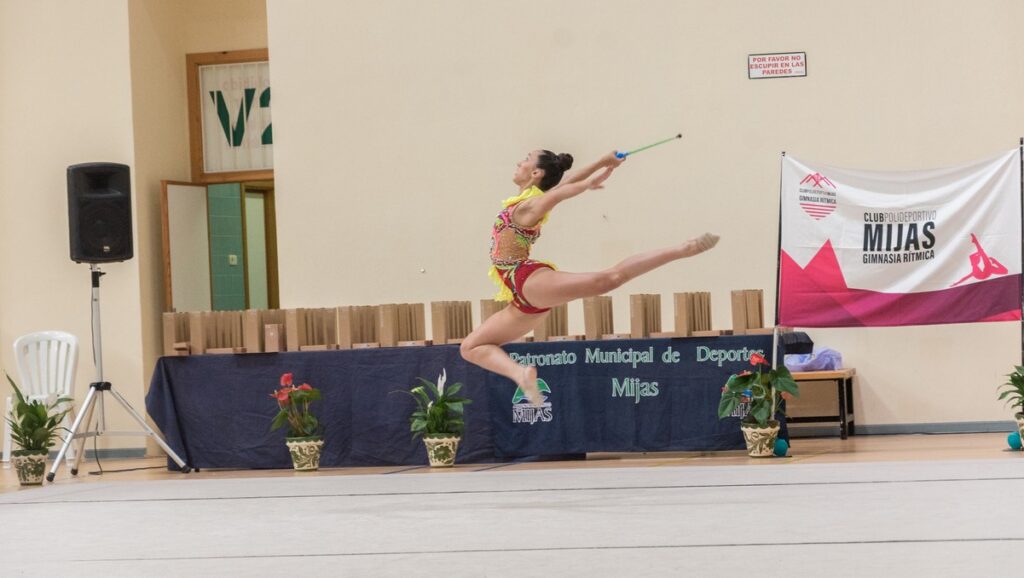
Mijas gymnastics show
Stunning performances on display
Credit: CP Mijas Gimnasia Ritmica

Heartfelt farewells for Carla and Tania

Moving moments came with the formal send-offs for Carla Zaragoza and Tania Sanchez, both stepping back from competition. One due to head off for university studies, and the other for personal reasons. A specially produced video montage traced their journeys from young girls taking their first steps in rhythmic gymnastics to accomplished club members, drawing tears from teammates, coaches, and families across the room.

Mijas Rhythmic Gymnastics Club

The popular local club hold classes for a wide variety of ages across Mijas, La Cala de Mijas, and Las Cañadas. With a new generation of young gymnasts progressing through the ranks, the club enters next competition season with genuine optimism for further wins and successes in the sport.

For more information on the club, their competitions and galas, you can visit the Mijas Town Hall website or CP Mijas Gimnasia Ritmica social media channels.

Continue Reading

%

Costa Del Sol Brings In New Restrictions On Short-Term Rentals

Published

on

costa-del-sol-brings-in-new-restrictions-on-short-term-rentals

Off looking for the AirBnB. Credit: Sacha Woodward

Council leaders have just approved changes to the Malaga City plan that stop automatic approval for new hotels, hostels, tourist apartments and short-term rentals on residential land. Any new project in these zones now needs a full planning modification, which must prove broad public benefit in general and ask specifically to that neighbourhood. Requests submitted after the rule appears in legal text face suspension for up to three years.

However, earlier applications keep moving forward unaffected. This latest step builds on earlier limits introduced since 2024. Officials hope to return more homes to local residents while trying to balance tourism as the area’s main economic driver.

Current scale of tourist rentals in Malaga

Official regional records show over twelve thousand registered short-term tourist properties in Malaga’s capital alone. These offer around sixty-four thousand beds. Separate estimates from national statistics place the figure lower, around eight thousand properties with capacity for thirty-four thousand places. There is no shortage of interest in the Costa del Sol for holidaying, but balance is called for, especially with a housing crisis on the horizon.

The city centre and areas near Plaza de la Merced show the highest concentration. Some streets have turned over 80 per cent of homes to tourist use. Pressure has also grown in neighbourhoods such as Pedregalejo, El Palo, La Malagueta and Huelin.

Step-by-step tightening of rules

Restrictions arrived gradually at first. First came rules requiring independent access and services for new tourist homes inside apartment blocks.

In August 2025 a three-year pause stopped new registrations in forty-three saturated neighbourhoods where tourist homes already exceeded eight per cent of housing stock. Exceptions allowed some projects that were already under way and full tourist apartment buildings to continue.

The new plan closes those gaps by treating all forms of tourist accommodation the same on residential land, even hotels.

Shop units face tighter conversion rules

The same reforms limit changes from shops into flats to rent on main streets and squares. Remaining conversions must meet stricter standards for light, ventilation and size when being considered for tourist rental.

Council members say these steps will help keep local businesses active and protect the housing supply for residents. Opposition groups and neighbourhood associations argue even more limits and more affordable housing construction are still needed. But, for now, the council has remained conservative.

Licence rules across the Costa del Sol

Elsewhere on the coast, Marbella and most other towns continue to accept new short-term rental applications. Two areas, Malaga capital and Manilva, operate three-year pauses on new licences. Mijas has applied extra conditions.

Licences remain tied to the property rather than the owner. Buyers of registered homes can usually continue rental operations after a simple ownership update with the regional tourism register.

National changes simplify compliance

A nationwide registration system for short-term rentals ended in May 2026 after a Supreme Court ruling. Regional VFT licences in Andalucia now serve as the main requirement.

Operators must provide information such as emergency procedures, maintain proper insurance and follow guest registration duties. Fines for unlicensed activity can reach high levels in serious cases.

Marbella is maintaining oversight without a blanket cap on licences, and so seemingly more relaxed than some of its neighbouring towns. New applications are still possible provided neighbourhood association and council conditions are met.

Continue Reading

Trending

Copyright © 2017 Spanish Property & News