
Benjamin Netanyahu
Iran And Oman Negotiate A Pay Model For The Strait Of Hormuz

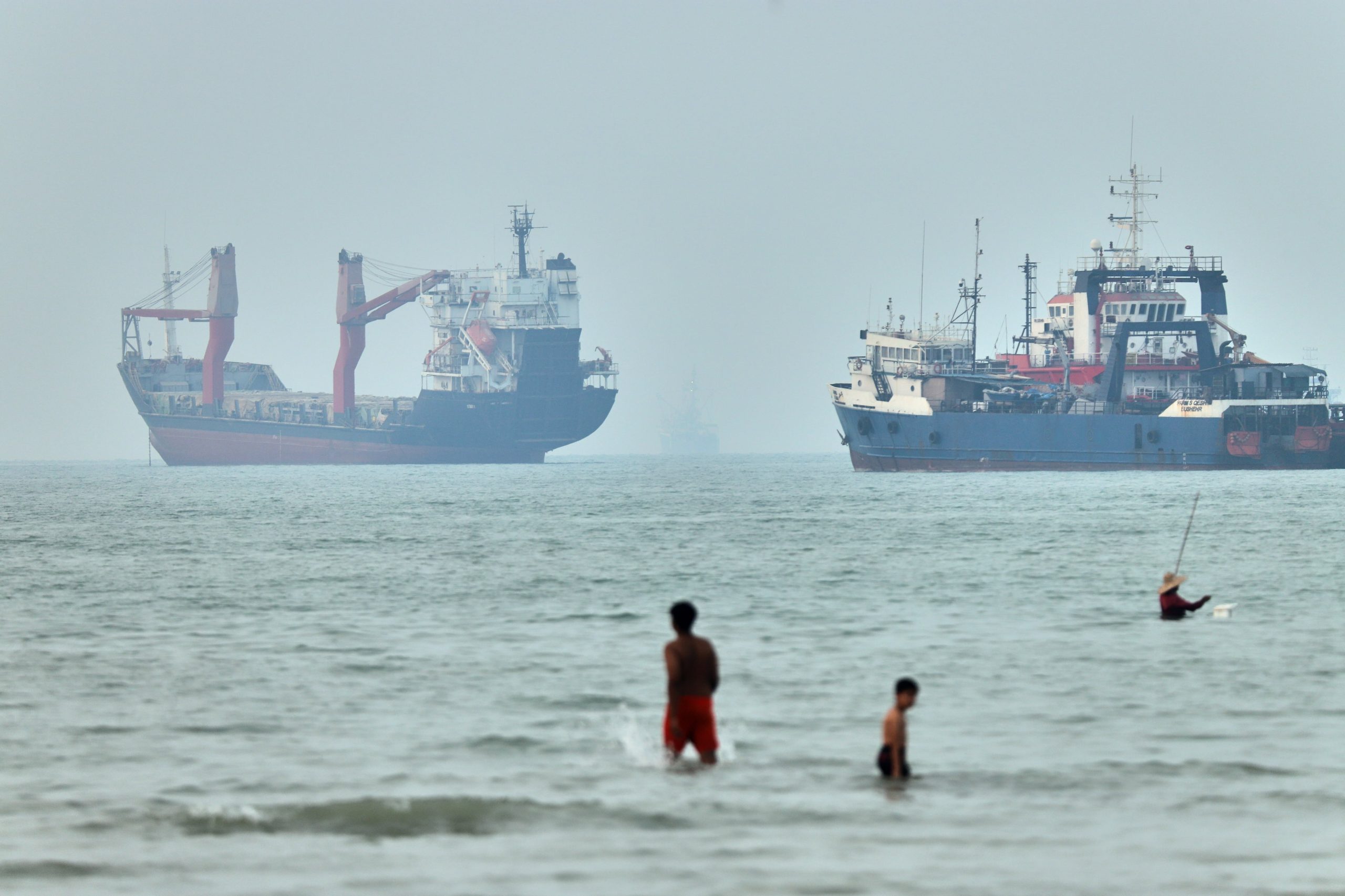
There has not been a single victory for the United States in Iran. The war launched in late February by Donald Trump and Benjamin Netanyahu appears set to alter — for the worse — the situation in the Strait of Hormuz, one of the world’s most critical arteries for the transport of hydrocarbons and fertilizers. Before the conflict, vessels travelled the strait freely, but that looks set to change significantly in the coming months, with an unprecedented system of tolls, fees for maritime services and other shifts.
For years, the possibility of the Strait of Hormuz’s closure or blockade by Iran has been one of the scenarios discussed in any prospective analysis of potential conflict with the nation. It was a theoretical possibility but — it was believed — one with little chance of materializing into real and tangible events. Recent history has proved that assessment wrong: the Islamic Republic has demonstrated its ability to control the strait, and that it is not willing to give up the ace up its sleeve. Hormuz is, in the words of Iranian Parliament Speaker Bagher Ghalibaf, “a divine gift” and Iran’s “greatest instrument of power.”
“Hormuz is defined under Iran’s command, not [U.S. armed forces] […] The region’s security will be ensured through the end of interventions and the U.S. withdrawal from the area, respect for countries’ sovereignty, and acceptance of new geopolitical realities — not under the military umbrella of America,” warned Iran’s deputy foreign minister for legal and international affairs and negotiator Kazem Gharibabadi on X. The words were a response to the announcement that Admiral Brad Cooper, commander of U.S. Central Command, had held a meeting with military officials from several Arab countries to discuss the situation in the strait.
Iran has made it clear that things will not be returning to the pre-war status quo. The fifth point of the brief and somewhat ambiguous memorandum of understanding signed on June 17 makes it clear that free passage through the Strait of Hormuz will only be granted for the 60 days following the agreement.
Furthermore, Tehran holds that its port and military authorities are responsible for managing maritime traffic during that period. Iranian authorities will also “conduct dialogue with the Sultanate of Oman, to define the future administration and maritime services in the Strait of Hormuz, in discussions with other Persian Gulf Littoral States, in line with applicable international law and the sovereign rights of coastal states of the Strait of Hormuz,” according to the memorandum.
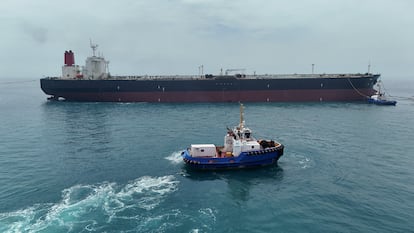
Negotiations between Iran and Oman have already begun, and a lot would have to change for them not to ultimately result in a payment — however it is labelled — for oil and methane tankers that pass through the strait on their way to the Arabian Sea. Last Monday, delegations from both countries met in the Omani capital of Muscat for the first meeting of the Joint Committee on the Strait of Hormuz to discuss its future administration.
The United Nations Convention on the Law of the Sea, which serves as the foundation of global regulations in this key area — worldwide, the bulk of goods are moved by boat — prohibits the application of “tolls” in exchange for the passage of merchant ships through natural straits. Canals like the Panama or Suez are a different matter, as their construction involved considerable costs. The treaty has been signed by Oman, but not Iran.
Billions at stake
Whatever the terminology, Iran is demanding that a fee be paid to pass through the Strait of Hormuz, and in a new development from recent weeks, Oman has not ruled out the option. In a recent interview with Radio Monte Carlo International, Omani Foreign Minister Badr al Busaidi said that his country opposes the imposition of “transit fees,” but did not rule out the possibility of charging for “maritime services,” such as maritime security or pollution control.
U.S. negotiators have already received an Omani proposal that mentions “voluntary contributions,” according to The New York Times. Al Busaidi himself explained that the model could be similar to those of the Malacca and Singapore Straits. There, a Japanese foundation has collected voluntary donations since 2008 for the maintenance of buoys and lighthouses, in addition to environmental conservation.
However, it has only received around $23 million in its first 15 years of operation. That figure is nothing compared to speculations surrounding the Strait of Hormuz. Iranian authorities expect to raise hundreds of millions or even billions of dollars — to be redistributed, of course, among the countries involved in the plan.
Ideas about a toll for extracting crude oil, natural gas or derivatives (diesel, gasoline, kerosene, fertilizers) have been floating around the Middle East for some time. In March, during one of the most intense phases of the war, an Iranian lawmaker confirmed the collection of $2 million per ship at a time of extreme global fuel shortages.
Tehran insists that payments will be mandatory, as is already the case in the Turkish straits of the Dardanelles and the Bosporus, where a fee of $6.70 per net metric ton of the vessel (without cargo) is charged to cover the costs of health inspections, lighthouses and rescue services, in addition to an extra fee if pilotage is required. Turkey collects approximately $229 million annually from such fees.
However, as Richard Meade, editor-in-chief of shipping news publication Lloyd’s List, notes that the key difference lies in the navigational hazards of the Turkish Straits, where the Bosporus narrows to a minimum width of 700 meters, compared with the Strait of Hormuz, which is just under 19 miles wide at its narrowest point. Moreover, the Turkish Straits are governed by the 1936 Montreux Convention, which predates UNCLOS.
“A transit fee through the Strait of Hormuz would, in practice, act as a new tax on one of the world’s most critical energy corridors,” Clair Jungman, director of maritime risk and intelligence at British consulting firm Vortexa, explains to EL PAÍS. “It would raise the costs of crude oil, liquefied natural gas, liquefied petroleum gas and motor fuels, while adding uncertainty to the planning of freight rates and shipping routes.”
Even if the Gulf’s exporting countries (the United Arab Emirates, Saudi Arabia, Kuwait and Bahrain, which are refusing to pay the fee) were to cover the cost initially, it would ultimately fall on importers in Asia and Europe, where the bulk of the region’s shipments end up.
“For exporters, the greatest risk is reputational and commercial: if the Strait of Hormuz comes to be perceived as less reliable or less neutral, freight rates, insurance costs and risk premiums would likely rise,” notes Jungman.
Dangerous precedent
“In the worst case, if it were one or two dollars per barrel, in the purely economic sense, the equation barely changes. The impact would be minimal, especially when taking into account that the barrel extracted by these countries is the cheapest on the market by far,” says Jorge León, vice president and head of geopolitical analysis at the Norwegian consulting firm Rystad Energy. “And in any case, if this is the price to pay so that the war ends and it is possible to cross Hormuz, it’s not very high.” The problem, he says, is the implication of the fee: “that Iran continues to have nearly absolute control of the strait and that it can close it again when it benefits them.”
For the market as a whole, ultimately, the impact would probably have less to do with the amount of the fee than with the precedent it would set. “Even if it were presented as a payment for maritime services or as a green surcharge, the market would likely interpret it as a transit toll,” Jungman warns. “That would increase volatility and reinforce interest in alternative export routes where they exist.”
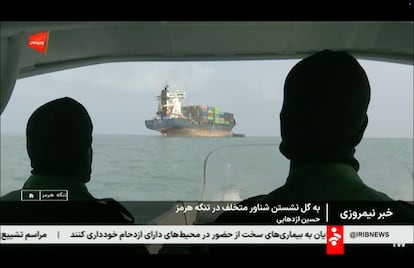
“Money isn’t the problem for the [shipping] industry. The price would be passed on to charterers and customers, and ultimately absorbed into the [transportation] cost — assuming it isn’t an exorbitant rate,” explains Meade.
He points out, for example, that during the war shipping companies paid Iran between $1 million and $2 million to get their tankers through the Strait of Hormuz. However, after about six weeks of conflict, “prices fell rapidly” to between $120,000 and $160,000 per vessel.
“It’s still a high cost, but not one that would hinder trade, especially when you consider supertankers that can carry one or two million barrels of crude oil. In that sense, the shipping industry could withstand this type of negotiation,” he adds.
Like Jungman, the director of Lloyd’s List warns of the “dangerous precedent” set by the fee. “What happens in Hormuz will not stay in Hormuz: Malacca, the South China Sea, the Taiwan Strait… any of the many potential strategic points at sea could become the subject of geopolitical negotiations. That’s why the United States, its Western allies, the International Maritime Organization, and much of the industry are opposed to it,” Mead says. He warns that “global free trade is at stake,” given that more than 80% of goods are transported by sea.
It is no surprise, therefore, that aside from the technical negotiations on the various aspects of the ceasefire agreement with Iran — the immediate end to hostilities on several fronts, the nuclear issue, frozen funds — the Strait of Hormuz is one of the main focal points of the political talks. Nor is it surprising that Trump dispatched his negotiators Jared Kushner and Steve Witkoff to Qatar last week to negotiate — albeit indirectly — with the Iranians.
Aware that it would be a failure for the White House if the war were to end without any clear objectives achieved and with tolls imposed on passage through Hormuz, U.S. envoys have urged their Iranian counterparts not to take an inflexible stance on this issue and to think in the long term, according to the news outlet Axios. If the U.S. lifts all sanctions on Iranian oil, they reason, the revenue the Islamic Republic could generate “would be 100 times greater than what it would receive by using the gangster-like tactic of imposing tolls,” stated a U.S. source quoted by the outlet.
After being completely closed for much of the war, transit volumes have recovered “significantly” since the signing of the memorandum of understanding — and in the immediately preceding days, when both sides had already begun easing the pressure of the strait’s dual blockade — according to the latest analysis by Vortexa. From virtually zero, flows have risen to nearly half of their pre-war levels.
“The reopening is real, but partial, and consistent with ongoing mine-clearing operations and intermittent security incidents in the strait,” Jungman concludes, referring to the reciprocal attacks that took place at the end of June.
Sign up for our weekly newsletter to get more English-language news coverage from EL PAÍS USA Edition










A simple example of asymmetric warfare: an Iranian drone flies to strike gas facilities in Qatar. The cost of the projectile, depending on the model and year, ranges between about $18,000 and $46,000. A U.S.-made Patriot air-defense interceptor is then launched to destroy it. Each missile of this type costs around $3.5 million. Moreover, to ensure a hit, two interceptors are usually fired. The cost‑benefit ratio of the interception can reach as much as 1 to 10 in favor of the unmanned attacking aircraft. In other words, it is more expensive to shoot down a drone (using kinetic means rather than electronic warfare) than to launch it. This example partly explains what has happened in the war between the United States — alongside Israel — and Iran.
It is a conflict between unequal forces in which the weaker side, the Iranian regime, has managed to stay in the fight through a mix of military capabilities refined over decades, combining both high- and low-cost systems, and a strategy of horizontal escalation (extending the conflict beyond the battlefield — in this case, into the international energy sector through control of maritime traffic in the Strait of Hormuz) that has upended the coffers of the U.S. Department of Defense and the global economy.
The drone example in Qatar may describe a thwarted attack, but a great deal of ordnance reached its targets during the 39 days of fighting and in the more recent breaches of the ceasefire reached on April 8. Evidence of this is that Iranian bombardment disrupted 17% of Qatar’s liquefied natural gas shipments — around $16.2 billion in revenue.
“Iran was facing a titanic challenge against a much larger and more advanced military,” Steven Feldstein, of the Carnegie Endowment for International Peace, explained in an email exchange. “It quickly realized that fighting on the terms of the United States or Israel would lead to a catastrophic defeat.”
Tehran then activated a decentralized military decision‑making strategy, designed some 20 years ago by General Mohammad Jafari, to compensate for the loss of senior commanders and carry out a multi‑pronged offensive: precision ballistic missiles, low‑cost attack drones, and terror tactics in Gulf waters conducted by the naval arm of Iran’s Revolutionary Guard. It is effectively a playbook for confronting the world’s leading military power — one that other conflicts may look to as a model.
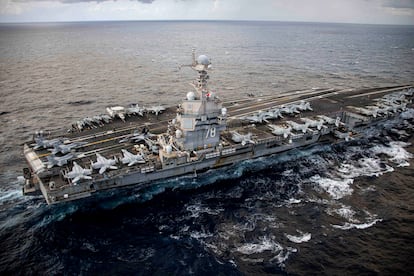
Iran’s armed forces have put significant strain on the offensive and defensive capabilities deployed by the United States in the region. It marked the first time that U.S. air‑defense systems stationed in allied Gulf countries came under swarm attacks — that is, coordinated offensives combining unmanned explosive drones and missiles, whether ballistic or cruise, aimed at overwhelming the protective shields of Kuwait, Bahrain, Qatar, the United Arab Emirates, and Saudi Arabia.
According to estimates by Mark F. Cancian and Chris H. Park for the Center for Strategic and International Studies (CSIS), the United States used between 3,710 (at the low end) and 4,510 units of seven of the most valuable missiles in its arsenal — alongside munitions such as LUCAS drones and guided bombs. For four of these missile types, the Pentagon is believed to have depleted half its stockpile (including Patriot and THAAD interceptors, highly valued by partners such as Ukraine).
Cancian and Park estimate that replenishing missile inventories to prewar levels could take between one and four years. The resulting strain within the Pentagon had been building from the very first weeks of operations, the most demanding phase for U.S. defense systems deployed in the Gulf. For this reason, the Donald Trump administration, which is pushing for a 40% increase in military spending — up to about $1.4 trillion — has urged U.S. arms manufacturers to produce faster and at lower cost.
Asymmetric warfare is not new. As Feldstein notes, military history offers several examples: Ukraine’s counteroffensive after Russia’s full-scale invasion in 2022; phases of the Israeli‑Palestinian conflict; the wars in Afghanistan against both the Soviet and U.S. armies; and the strategy adopted by Algeria’s National Liberation Front in its struggle against France in the 1950s. The difference now is the context. The current confrontation in the Middle East is unfolding amid a boom in low-cost lethal weaponry — led by drones — and within a highly interconnected global economy that is therefore more vulnerable. All this makes the horizontal escalation pursued by Mojtaba Khamenei’s regime and the Revolutionary Guard even more damaging for their adversary.
The U.S. deployment has been massive — the largest since the invasion of Iraq more than two decades ago. Washington sent close to 40% of its operational ships to the Middle East, a force that, with elite troops and amphibious assault vessels, would have been sufficient to put boots on Iranian soil. But that was not the plan.
“[U.S. President Donald] Trump never convinced his supporters, let alone the country, of the need for war, which made the risk of a ground invasion that could stall and lead to significant U.S. casualties politically unacceptable,” said Feldstein.
And without setting foot on enemy territory, it is difficult to secure military gains and declare a clear-cut victory.
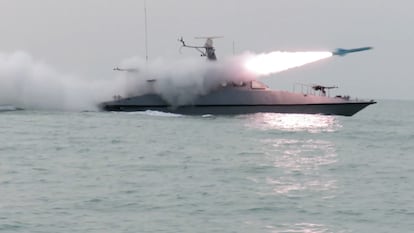
This led to a war of attrition. The United States says it struck 13,000 targets with its missiles, drones and guided bombs. Iran, for its part, launched around 1,300 missiles and 4,400 attack drones against Israel, neighboring countries and vessels in Gulf waters. Needless to say, the smaller contender has suffered the greatest losses on the battlefield. Tehran estimates the offensive caused at least $248 billion in losses — 57% of its GDP. The U.S. Central Command in the region has repeatedly claimed it has destroyed a large part of Iran’s missile apparatus, a cornerstone of the country’s defense. The damage has been significant, but there is no evidence that it was decisive.
In early May, The New York Times reported, citing U.S. intelligence sources, that the regime has restored operational access to 30 of the 33 missile bases it maintains along the Strait of Hormuz, as well as 90% of its underground storage and launch facilities. As Matthew Savill of the Royal United Services Institute noted in a brief analysis on Thursday, the peace memorandum reached between Washington and Tehran makes no mention whatsoever of Iran’s ballistic missile program — one of the key war aims for the United States and Israel. It remains, and will continue to be, non-negotiable for the Iranian regime.
Part of the military might Iran has demonstrated stems from the lack of information about its arsenals, launch sites, and production facilities — very different from the enemy’s easily identifiable targets, whether U.S. bases or energy facilities in neighboring countries. Military experts have also questioned the extent of U.S. successes. While U.S. Central Command (CENTCOM) has released videos of strikes on launchers, weapons factories and military positions, it remains unclear whether each recorded strike fully destroyed the enemy’s capabilities. Without boots on the ground, the assessment is open to speculation.
Horizontal escalation
Iran’s defense forces are estimated to have taken a heavy hit to their inventories, in addition to the loss of at least a dozen senior military commanders. The regime, however, is believed to still hold a stockpile of between 2,500 and 4,400 missiles — enough to sustain its strike capability. A different matter is the element gaining prominence in modern conflict: drones. Iran’s production operates on a large scale—still capable of supplying its Russian ally — and before this war it had around 80,000 of these attack systems in storage.
Despite everything, and on paper, the United States — the world’s leading military power — had the capacity to sustain its operations in the region, including a blockade of the Strait of Hormuz, for which it had deployed some 15,000 personnel. But Iran hit the psychological panic button through horizontal escalation on two fronts.
First, the threat of attacks in Gulf waters. As Mike Plunkett, an analyst at the intelligence firm Janes, recently noted, finding a single mine has the same effect as finding many. Maritime traffic was effectively paralyzed by the risk of striking one of these devices — Iran’s stockpiles include between 5,000 and 6,000 naval mines — or being hit by an Iranian drone.
Second, Tehran pushed the limits of the rules of war — largely shaped in the aftermath of World War II — by targeting civilian infrastructure such as energy facilities, airports and even desalination plants. It struck effectively, spreading fear among U.S. allies in the region, who felt exposed.
Feldstein sums up the result of this dual strategy of horizontal escalation succinctly: “Iran vigorously and successfully exploited the psychological cost of the war. The strategy was effective; it established a narrative among U.S. and global audiences that the United States was not achieving its objectives and opened a path for Iran to wait out the United States and settle for a better deal rather than concede in the first weeks and give up significant concessions.” That is what happened.
Sign up for our weekly newsletter to get more English-language news coverage from EL PAÍS USA Edition

Investigado Por Un Correo Crítico Con El ICE: Un Hombre De Nueva York Demanda A La Agencia Migratoria Por Vulnerar La Libertad De Expresión

Nerja Council Allocates €145,000 For Grants To Do Up Homes
One cigarette could cost you €500 and six licence points

Real Estate Agents In Barcelona Are Using AI To ‘pimp Up’ Dilapidated Homes – And It’s Not Illegal

More Than One Home Is Squatted Every Day In Malaga Province As PP Calls For 24-Hour Evictions And Bill Cut Offs

Red Bull set for radical new design in desperate bid to keep Max Verstappen


-
 ai generated property listings2 weeks ago
Real Estate Agents In Barcelona Are Using AI To ‘pimp Up’ Dilapidated Homes – And It’s Not Illegal
-
 Andalucia2 weeks ago
More Than One Home Is Squatted Every Day In Malaga Province As PP Calls For 24-Hour Evictions And Bill Cut Offs
-
 Uncategorized2 weeks ago
Red Bull set for radical new design in desperate bid to keep Max Verstappen
-

 Uncategorized1 week ago
F1 Qualifying Results: 2026 Austrian Grand Prix times and grid positions
-

 Andalucia2 weeks ago
Historic June Heatwave Forces Mass Cancellations Of Beach Bonfires On Usually Raucous San Juan Celebrations Over Forest Fire Fears
-
75 year old man2 weeks ago
Two men steal Aston Martin from 75‑year‑old in Benalmadena
-
best places to view the solar eclipse in mallorca2 weeks ago
Mallorca solar eclipse 2026: Best viewing areas and what to know
-
DGT2 weeks ago
Spain’s traffic warning for summer 2026: These are the weekends the DGT says you should avoid