The European Union demanded Thursday that Google share data with other search engines and open up its Android system to rival AI services, but the US giant said the measures would put privacy at risk.
The move is the latest by Brussels against the behemoth as it seeks to flex its muscles over Big Tech.
The order was made under the EU’s flagship Digital Markets Act (DMA), which forces the world’s biggest tech firms to open to competition in a bid to give users more choice.
The DMA is the bete noire of US President Donald Trump’s administration, which accuses Brussels of unfairly targeting American companies.
Brussels said Google must start sharing search data from January 2027 and users would start benefitting from the changes to Android from July 2027.
“Thanks to these measures we hope to see emerging alternatives to Google Search and Google’s AI services, such as Gemini, and that users in the EU can enjoy greater choice of services,” EU tech chief Henna Virkkunen said.
For example, the EU said Android phone users should be able to use their preferred AI chatbot via voice commands, similar to the “Hey Google” command.
Privacy question
The EU said sharing search data would “rebalance the playing field” but Google pushed back, saying the measures “introduce unprecedented risks to user privacy, device security, and national security”.
But Google’s head of global affairs Kent Walker said the EU moves risked “undermining vital privacy and security guardrails for millions of Europeans”.
He said AI assistants already could access Android and by sharing search data, “Europeans’ private searches would be exposed to unfamiliar companies, without adequate anonymisation of the data and without user knowledge or consent”.
A senior European official insisted the EU “took integrity, security and privacy into utmost account”, and Brussels said the decision would ensure anonymisation of search data.
The demand is legally binding as part of a procedure launched in January, but it is not a formal probe that could lead to fines.
The scrutiny of Google does not end there, however.
The EU could hit Google with a fine next week in a separate investigation under the DMA law, sources close to the matter told AFP, confirming a report in the Financial Times newspaper on Wednesday.
The EU has the right to slap fines of up to 10 percent of a company’s total global turnover for violating the DMA.
Fines are nothing new for Google.
The EU hit the company with fines worth a total of 8.2 billion euros between 2017 and 2019 under different competition rules. And in September last year, Brussels imposed a 2.95 billion euro fine in a separate antitrust case.
La Lotería Nacional es uno de los sorteos más reconocidos y tradicionales de España. Se celebra todos los jueves y sábados y sus orígenes se remontan a 1811, cuando fue creado con el objetivo de recaudar fondos durante la Guerra de la Independencia.
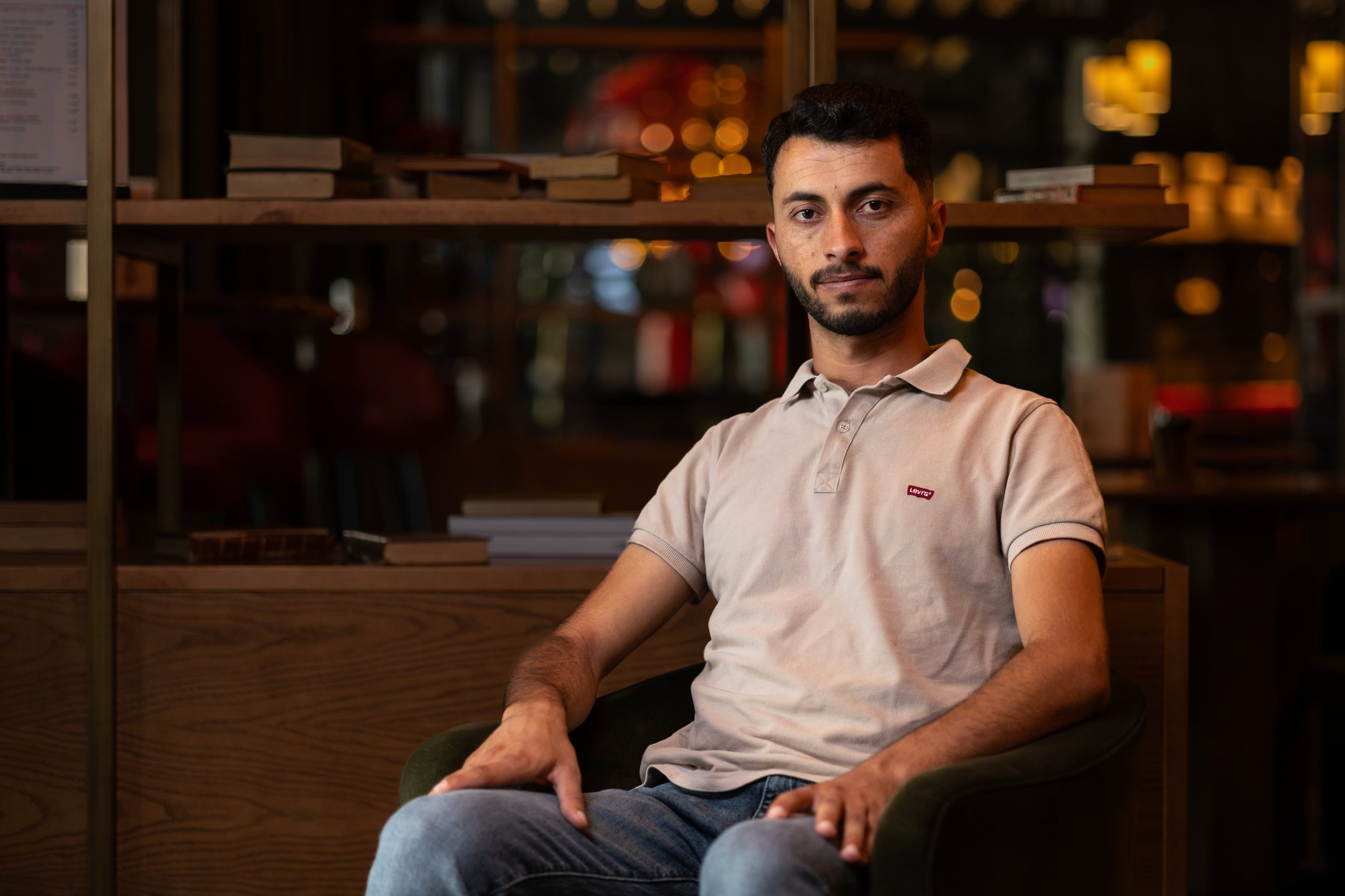
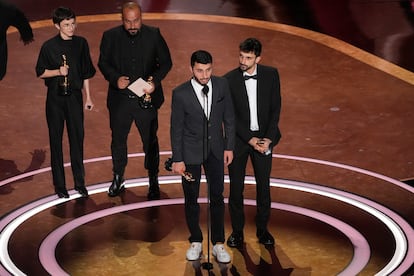
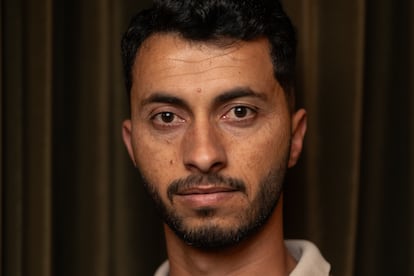
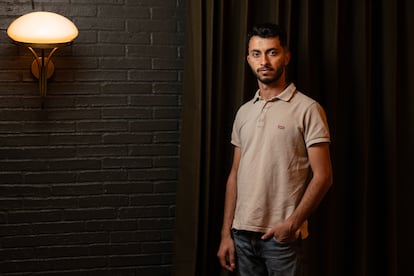
Wednesday morning at a Madrid hotel. Palestinian filmmaker Basel Adra, an Oscar winner for the documentary No Other Land, turned 30 on Monday after waiting hours in queues at border crossings and passing through checkpoints (“It’s inhuman, it’s another tool against Palestinians,” he says) in order to take part in the Ministerial Conference, co-organized by the ministries of culture of Spain and Palestine, which opened at the Museo del Prado on the afternoon of July 15 and where more than 30 international delegations will sign a declaration for the reconstruction of Palestinian culture. Thanks to his statuette and the trajectory of his film, Adra is one of the most visible faces among artists inside and outside his country, and he still lives in the village where he was born, Al Tuwani, a hamlet in Masafer Yatta, a harsh area of the southern West Bank depicted in his film. “They recognize me at every Israeli checkpoint, that scares me,” he explains. Serious — although he will smile when soccer or his 18-month-old daughter is mentioned — and accompanied by his wife, Adra sits down to talk. He makes only one request: that the chosen table be in the quietest area because he speaks softly and in a low voice.
Question. How is your family?
Answer. Physically fine. I have a one-and-a-half-year-old daughter, and she’s fine.
Q. What is your day-to-day life like?
A. It’s not easy to live in our communities. You can plan something for the next day, and suddenly Israeli forces arrive with bulldozers or settlers, and then your day changes. For example, I might plan to go to the city with my family, but we get up in the morning, something happens and the whole day is lost. So our daily life really depends on what is happening each day, on what they do to us.
Q. What do you expect from the Ministerial Conference?
A. I hope more attention is paid to Palestinian culture. That Palestinian artists and culture receive genuine support and backing from the international community; not just pity, but real assistance. That could help more filmmakers and artists show their work to the world. So we hope Palestinian artists find solid backing at that meeting.
Q. Do you feel Spain supports the Palestinian cause?
A. Absolutely. Both the government and ordinary people. For example, I remember a footballer did something small with a flag and caused a huge stir [he is referring to Lamine Yamal, who waved a Palestinian flag in May during FC Barcelona’s victory parade after winning La Liga]. Israeli ministers and officials had to comment on it, which drew even more attention.
Q. Europe is more hesitant…
A. We hope Spain doesn’t change because, you know, in Europe and other countries it’s easy to get support at first, but after a while the government changes or people within the government itself — as has happened in Sweden — change their minds and stop supporting the cause or even turn against it. The Israeli lobby always finds a way to influence official policies.
Q. Your father already had a camera with which he filmed both your childhood and attacks by settlers and Israeli forces. Is the documentary No Other Land — which portrays the daily struggle of Masafer Yatta families facing demolitions and forced displacement — the result of a legacy?
A. Not exactly. In my community, the camera arrived at the start of this century. It wasn’t common, it was unique, unlike today.
Q. Did you use it as a defensive tool?
A. Yes. My father and other people recorded those images. It wasn’t just him. There were others in the community who were learning and filming, as well as international activists. So we have a very large archive because many people have been filming in the West Bank for two decades.
02:00
Trailer for ‘No Other Land’
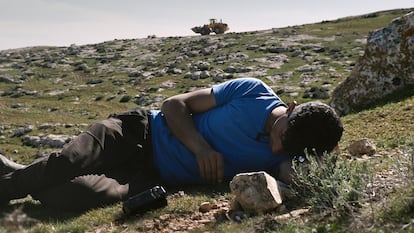
Basel Adra, in a still from the documentary ‘No Other Land,’ lying on a hill in a village in Masafer Yatta to prevent the demolition of a house, while an Israeli bulldozer looms behind him.
Q. Do you feel a responsibility?
A. I feel a constant responsibility. Not only to bring my community’s story to film, but also to speak about it and try to help, you know? Filming and publishing is no longer enough; I have an even greater responsibility than before No Other Land.
Q. Are you shooting another documentary?
A. No, it’s a short animated film about movement restrictions in the West Bank. I’m making it with an Argentine animation production company. I found the company through friends in the U.S. I do it from my village and they do it from there. And the topic is a bit too complicated and dangerous for a documentary: if I wanted to shoot that film passing through checkpoints and filming with cameras, I would be in great danger… because of the Israeli soldiers and all that.
A. That’s not an easy question because I work with filmmakers. For me it’s quite simple: those who publicly support, endorse and back the regime, the apartheid and all the atrocities committed by Israel, should be boycotted. You can’t accept people who support what their regime did in Gaza, the West Bank, Lebanon, or Syria. It’s not normal, you know? But I think those who raise their voices and defend humanity and international law should not be boycotted.
Q. Very few Hollywood stars, such as Javier Bardem or Mark Ruffalo, have dared to support Palestine. Do you understand that fear?
A. I don’t think this happens only in Hollywood. It happens in many other places around the world. People fear for their jobs, for their income, for their positions. They’re afraid of losing their work and, in other places, of course they fear for their safety. The Israeli regime has the backing of powerful regimes around the world; governments with great wealth and power that, in my view, lack moral standing. That’s why it’s understandable that people fear for their safety and salaries. We greatly value those who speak out against what is happening, and we always encourage others to overcome that fear and join the cause. However, it’s striking how fear takes hold of people who work in the film industry. They control your voice; they condition what you’re allowed to say and which topics you can make films about. Or even which films you can watch. For example, our film still hasn’t secured distribution in the United States.
Q. What do you remember about holding the Oscar in your hands?
A. I knew that even if I won the statuette, I would return to my reality, because since we won the award for best documentary at the Berlinale in 2024 there had been a lot of uproar around the world. And things did not change; on the contrary, they got worse. On the other hand, there was what was happening in Gaza: people saw on their phones what was happening, but the genocide did not stop. I was firmly convinced while working on the film that when it premiered people would do something. I believed people simply did not know what we were going through. And I had a very unpleasant feeling when I discovered that this is not true, that people do know and see what we are suffering, and simply let it happen.
Q. Do you think a documentary can change the world?
A. No, I think it changes people. I’ve been to movie theaters and screening rooms many times, and I see how No Other Land affects the audience sitting there. I inform people about what’s happening. That’s why I also know it’s an educational film for people who don’t have a firm stance or who are unaware of what’s happening to the Palestinians: they’ll learn from it.
Q. With Donald Trump and Benjamin Netanyahu in charge, can one still be optimistic about the future of Palestinians?
A. No, and regarding Israelis, it’s not only Netanyahu, the national security minister, Itamar Ben-Gvir, the finance minister, Bezalel Smotrich, or the settlers. Netanyahu, Smotrich and Ben-Gvir were elected by the people, and I believe they represent the majority of Israelis. For me, the problem is Israeli society. Even before [the Hamas-led attacks on] October 7 we lived under occupation, but Israelis in Tel Aviv lived their normal lives; the money from their taxes went to the settlers, to the settlements, and to the army, which killed Palestinians, although in smaller numbers than after October 7. But they do not see us as human beings. That’s why they accept the occupation and cannot claim ignorance; we live in the same territory and they cannot say they didn’t know what was happening. And now I think they have reached their worst moment in terms of racism and tolerance of the crimes committed against us Palestinians. So I don’t think change will come through elections in Israel or the United States. Europe must assume its responsibilities; to this day Europe, including Spain, allows products from the settlements to enter. Stopping that would be a small step toward change, although they aren’t even willing to do it. So what’s the point of speaking publicly about morality, international law, democracy, etc., if your actions say otherwise?
Q. As you said earlier, after the Oscar, Israeli attacks on your village increased. When was the last one?
A. This very morning they attacked the village of Susia in Masafer Yatta. I saw many people wounded, with bleeding injuries to the head and chest. Members of that family had already suffered attacks last March. Settlers came to their fields with their livestock; they called the police and the army to evict them, but no one came. The family decided to drive the animals away from near their homes; then two settlers, one of them in uniform, got out of their SUV, began shooting at the family and killed a man and wounded his brother, who has been left partially paralyzed. It was a nightmare and it still is. The killed man was 28 and had a wife and two daughters. And demolitions have increased with total impunity.
Q. You yourself suffered a raid at your home a month ago, didn’t you?
A. Yes, they entered at night and searched it. They even looked through my wife’s phone. And two months ago, settlers came to the house at four in the morning and smashed the cars of some activists parked in front of my building. I feel fear. But, to be honest, it’s a feeling all Palestinians share today.
Sign up for our weekly newsletter to get more English-language news coverage from EL PAÍS USA Edition
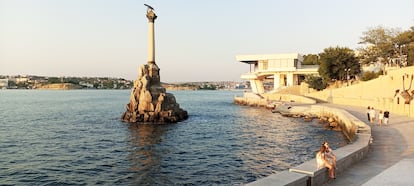
Something is changing in Crimea, the territory that represents the most valuable prize of the imperial plan launched by Vladimir Putin in 2014. The Russian president has long regarded the peninsula he seized from Ukraineas an impregnable fortress. The apparent normality, however, is a trompe-l’œil behind which Moscow is trying to mask significant blows, like those suffered in recent months by its fleet docked in Sevastopol and by its air-defense systems in that occupied stronghold.
Amid the offensive Kyiv has launched — in an attempt to choke the Russian-occupied territory logistically by bombing bridges, rail lines, roads, and infrastructure — reality calls Putin’s propaganda into question. “Ukraine has not renounced Crimea,” stresses Ukrainian historian and analyst Oleksii Otkydach, who was born on the peninsula.
Recovering Crimea, 12 years after losing it, is today less of a daydream for Kyiv than it was a few months ago, although authorities that hold power there alongside tens of thousands of Russians pushed there by the Kremlin have put down roots during the past decade.
That is why Volodymyr Zelenskiy’s government is sending, with this unprecedented offensive, a threefold message: to Russians, to the Ukrainian population, and to the more than two million people living in Crimea —both to those who support Moscow’s positions and to supporters of Kyiv. It reminds them that Ukraine has not forgotten Crimea, that it will try by all means to recover it and that, if it cannot, it will make life unbearable for the occupying forces.
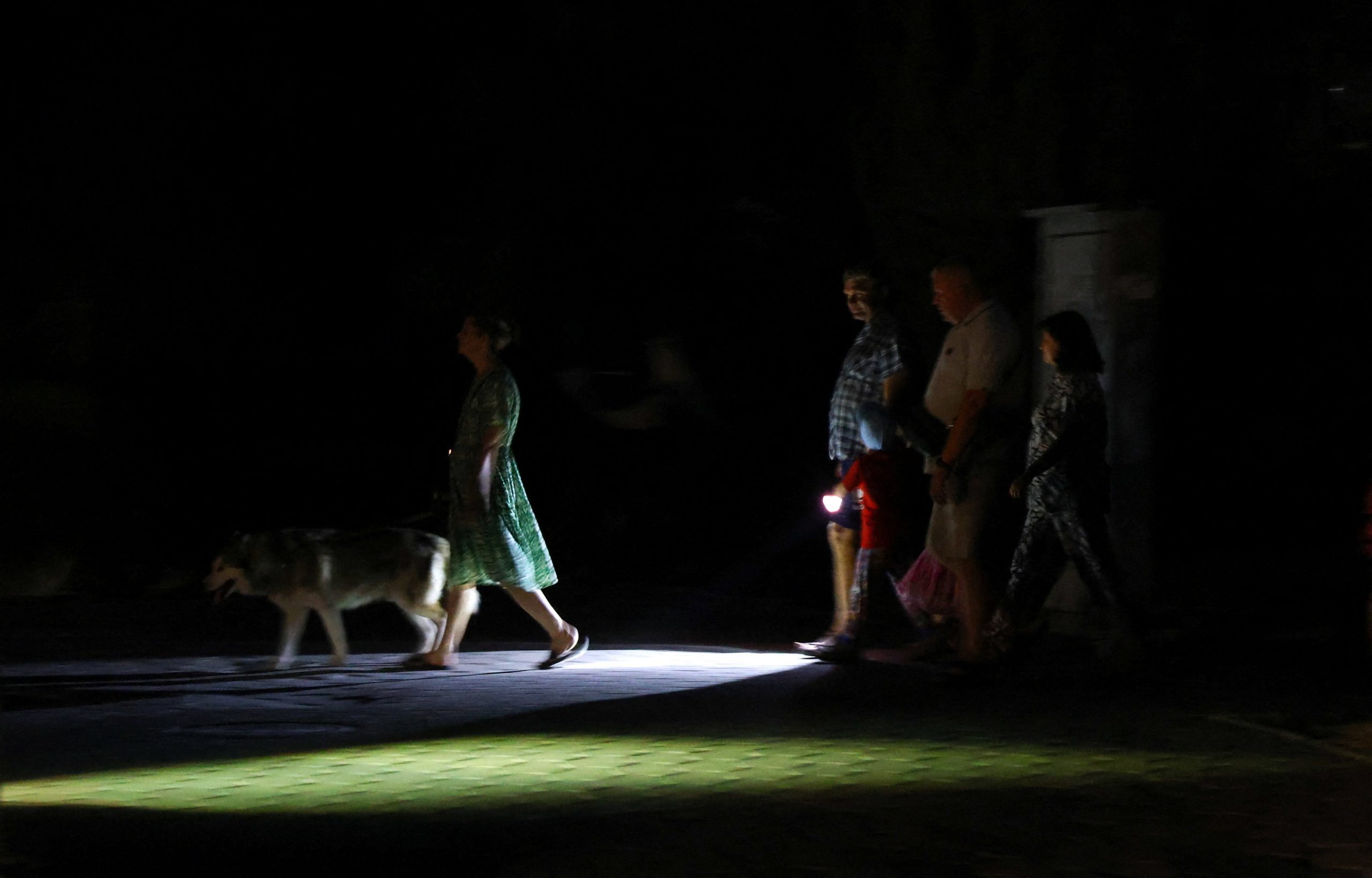
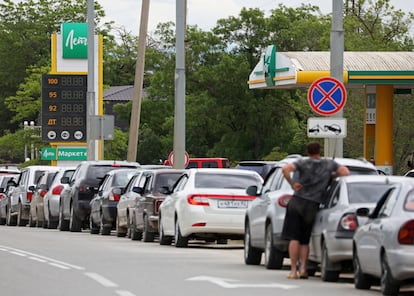
Sevastopol, the peninsula’s most populous city, cannot even guarantee power and must ration fuel against a background of explosions, as EL PAÍS’s special correspondent found at the end of June. Residents endure shortages and a sense of insecurity they had not experienced since 2014.
Most Ukrainians on the street have not shown optimism in recent years about the possibility of recovering the territory occupied by Russia — about 20% of the country, including Crimea. Pessimism spread especially after Russia’s full-scale invasion in February 2022. But now, with drone strikes against the enemy, public opinion is beginning to see a possible turning point, and the issue is aired daily by authorities and the media.
A calculated strategy
“For a long time, Crimea was a fetish, the crown jewel of Putin’s imperial myth. Now that fantasy is collapsing before our eyes,” says Alim Aliev, a human rights activist from the Tatar minority, an ethnic group whose persecution has intensified since 2014. “What we have witnessed in recent weeks is not simply a series of random attacks but a meticulously calculated military and diplomatic strategy,” he says. Ukraine’s goal: to turn the peninsula into an island cut off from supplies and without defenses.
After besieging the lines of communication — roads, bridges, and railways that move supplies — the next step will be to render unusable once and for all the famous and crucial Kerch Bridge that links Crimea with Russia, the Tatar activist predicts. According to Aliev, the aim is to deliver a blow that is not only logistical and military but also psychological, demonstrating the “dismantling of the Russian myth.”
Defending and maintaining the peninsula under occupation is proving increasingly costly for Moscow. Its geography and location, surrounded by the Black Sea, force it to pay a high — and rising — economic, logistical, military, and human price. At the same time, Russia must maintain military pressure elsewhere, such as in the Ukrainian Donbas region, in the Russian capital itself, and across a range of energy facilities in different regions of the country that Kyiv is targeting militarily.
The question posed by Ukraine’s recent weeks-long offensive against occupied Crimea — which it is trying to recover — and, simultaneously, against Moscow — which it is trying to weaken — is whether Russia can withstand pressure on all fronts and whether it will make significant changes to its deployments under the current circumstances, which could leave some areas more vulnerable.
“There is no way Russia can defend Moscow and Crimea without losing strength on other fronts,” says Oleh Rybachuk of the Centre of United Actions and a former Ukrainian deputy prime minister.
“The attacks on Crimea create a complex dilemma. If it does not reinforce its defense, the situation on the peninsula will continue to deteriorate,” agrees historian Otkydach. “If, on the contrary, Russia decides to bolster Crimea’s protection, it must allocate huge amounts of air-defense systems, fuel, vehicles and logistical resources. That means those resources will no longer be available elsewhere, creating opportunities for attacks on strategic targets in other regions, such as refineries in Moscow, Yaroslavl, or Ryazan,” he adds.
The deployment of modern drones built by Ukraine aims to complicate the already difficult supply effort the Kremlin must carry out in Crimea. “That territory is totally dependent on Ukraine: its water supply, its roads, its logistics… Everything depends on Ukraine. And now we are cutting the logistical routes,” explains Rybachuk.
The prelude to the current strikes on communication lines and energy infrastructure was months of weakening the Russian fleet docked in Sevastopol and its air-defense systems, this analyst recalls; for that reason, “now they [the Russians] are half blind.” Despite the high arms expenditure Kyiv is incurring, he estimates that, for now, they have a sufficient arsenal.
“Crimea could never exist without its connection to Ukraine, to the rest of the mainland,” Otkydach, who supports his country’s current strategy mainly through the use of drones, says. “Faced with a shortage of classic long-range attack means, such as ballistic missiles, cruise missiles or aerial bombs, the use of drones has become an effective alternative,” he adds. “They are significantly cheaper and, as recent events have shown, can inflict major damage on military and strategic targets.”
The peninsula “has enormous symbolic and political value for the Kremlin,” Otkydach stresses. “It is one of the main pillars of Vladimir Putin’s narrative, so any vulnerability there poses a significant political problem,” he continues. “The historic advantage of being an enormous country — the largest in Europe — has now become a weakness for Russia, since its military doctrine relied on the fact that it is a nuclear power and that no one would ever dare to attack its military infrastructure,” says Rybachuk. To try to hold Crimea, “the Kremlin is moving defenses from other parts of Russia, leaving those areas even less protected,” the former deputy prime minister adds.
The current situation, Otkydach notes, is seen differently by Crimea’s residents who support Kyiv and those who back Moscow. For the former, “these attacks represent hope.” For the latter, especially “many Russian citizens who moved illegally to the peninsula after the occupation, the situation generates fear and uncertainty.” The demographic picture has changed with the arrival of some 800,000 Russians since 2014, estimates Aliev.
They see their investments, properties, and new lives driven by the invasion at risk, the Tatar activist adds. Moreover, Otkydach adds, they face “having to answer for their illegal presence on Ukrainian territory” before the courts. This legal dimension is another of the strategies Kyiv seeks to advance in its attempt to recover the peninsula.
Rybachuk, optimistic, believes there is no doubt that sooner or later there will be an “exodus” of Russian officials and their families fleeing the peninsula. As a preliminary step, he predicts another push this coming autumn in Kyiv’s arms revolution, which will allow it to strike targets even farther inside Russia with ballistic missiles.
None of that appears likely, in principle, to happen in the short term. Meanwhile, according to the information Otkydach receives from inside Crimea, “the occupation authorities are trying to convey the image that everything is under control, following a Soviet-style communication model.” The historian admits it is increasingly difficult to communicate securely because of “restrictions on internet access and messaging services.” Meanwhile, those awaiting liberation rely on one message, says Aliev: “Ukraine has not forgotten us.”
Sign up for our weekly newsletter to get more English-language news coverage from EL PAÍS USA Edition