
Housing politics
Barcelona Rent Controls: Rents Rise While Rental Opportunities Remain Scarce

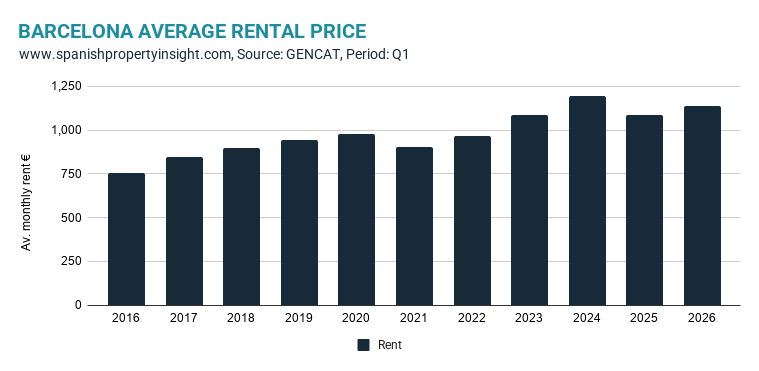
Barcelona’s latest rental figures deliver an awkward result for supporters of rent controls: rents are rising again, while the number of people managing to secure a new rental home remains far below normal.
The Catalan government has now published INCASÒL data for Q1 2026, giving us the latest reading on Barcelona’s rental market two years after rent controls were introduced. The figures are based on registered rental contracts and deposits, and show 8,156 new contracts signed in the city during the quarter, with an average rent of €1,137.35 and an average price of €16.89/sqm.
Rents are rising again
Compared with Q1 2025, the average monthly rent increased by 4.6%, from €1,087 to €1,137, while the price per square metre rose 4.3%, from €16.2 to €16.9.
That is hardly the result rent controls were supposed to deliver. The whole point of the policy was to suppress rental inflation, yet two years after controls were introduced, registered rents are once again moving upwards.
The Generalitat’s own monitoring series confirms that Barcelona’s average contractual rent in Q1 2026 was still about 4.7% below the Q1 2024 level immediately before the controls took effect. But that comparison conceals the rebound over the last year.
Meanwhile, asking prices moved in the opposite direction. Idealista data averaged around €20/sqm in Q1 2026, down 2.1% year-on-year, narrowing somewhat the unusually large gap that had opened between advertised and registered rents. Idealista recorded €20.1/sqm in January, €20.0 in February and €19.9 in March.
More contracts, but still nowhere near normal
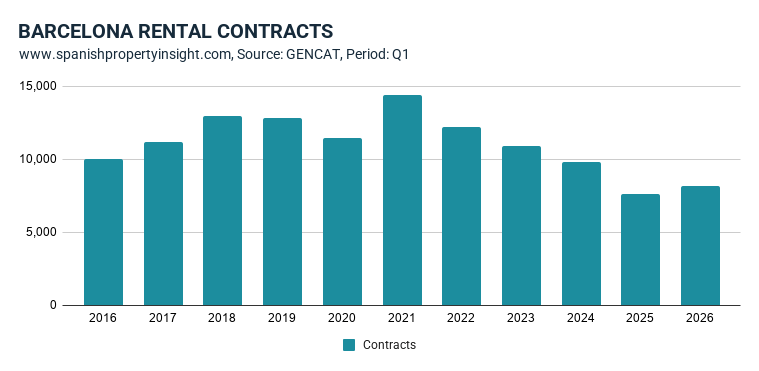
There was one superficially encouraging number: new contracts increased by 7.1% year-on-year to 8,156. However, the average number of Q1 contracts over the previous ten years was roughly 11,338, meaning activity in Q1 2026 remained 28% below normal. Even after this year’s modest recovery, around 3,200 fewer households found a new rental home than would have done in an average first quarter.
And that is the part of the market rent-control enthusiasts tend to overlook.
People who want to rent but cannot find a property do not appear in the rental-price statistics. Neither do people prepared and able to pay a higher rent who nevertheless cannot secure a home because landlords have withdrawn properties, switched use, or become extraordinarily selective about tenants.
They show up only indirectly—in the collapse in new contracts.
Price controls cannot manufacture homes
Rent controls can dictate what appears on a registered contract. They cannot create additional housing.
The result is a rationed market. Sitting tenants with protected rents can do very well, while the dwindling number of applicants with impeccable financial profiles compete for whatever becomes available. Those with less attractive profiles—young people, the self-employed, lower-income households or families perceived as higher risk—are pushed towards the back of the queue.
The latest figures therefore offer little evidence that Barcelona’s fundamental rental problem has been solved. Quite the opposite: despite extensive government intervention, rents are rising again and access remains dramatically below historical norms.
Rent controls may control the price printed on a contract. They cannot help the thousands of people who never manage to sign one.













Author:  Mark Stücklin
Posted on

Politicians are targeting demand when they should be boosting supply, according to a new report that argues the country’s housing shortage is fundamentally self-inflicted.
Funcas, One of Spain’s leading economic think tanks has delivered a stinging criticism of the country’s housing policies, arguing that politicians are misdiagnosing the housing crisis and making it worse as a result.
In a new report, Funcas argues that Spain’s housing problem is fundamentally one of inadequate supply, not excessive demand. For more than a decade, the country has built fewer homes than needed to accommodate new households, creating a structural shortage that is now estimated at around 750,000 homes.
A shortage of homes, not too much demand
According to the report, this persistent gap between supply and demand explains why house prices and rents have continued to rise despite repeated government intervention. The authors warn that many politically popular measures, such as rent controls, buyer subsidies and tax incentives, may provide short-term relief for some groups but ultimately reduce supply and make housing even less affordable over time.
The report also takes aim at the search for political scapegoats. Blaming foreign buyers, institutional investors, second-home owners, developers or short-term rental platforms may be politically attractive, it argues, but does little to address the underlying problem. When housing supply cannot respond, strong demand simply translates into higher prices.
Funcas also rejects comparisons with the 2008 property crash. The risks facing Spain today are very different. Rather than a credit-fuelled construction bubble, the country faces a long-term shortage of homes that threatens labour mobility, productivity, household formation and affordability. The report argues that the greatest danger is allowing this shortage to become the new normal.
The think tank also notes that Spain’s banking sector is in a much stronger position than it was before the financial crisis, with far less exposure to risky property lending, making a repeat of the banking collapse far less likely.
None of these conclusions will surprise regular readers of Spanish Property Insight. Time and again, evidence from Spain and abroad has shown that restricting housing supply while attacking demand leads to fewer homes, higher prices and worsening affordability. The latest Funcas report is another reminder that if policymakers want more affordable housing, they first need to make it much easier to build it.
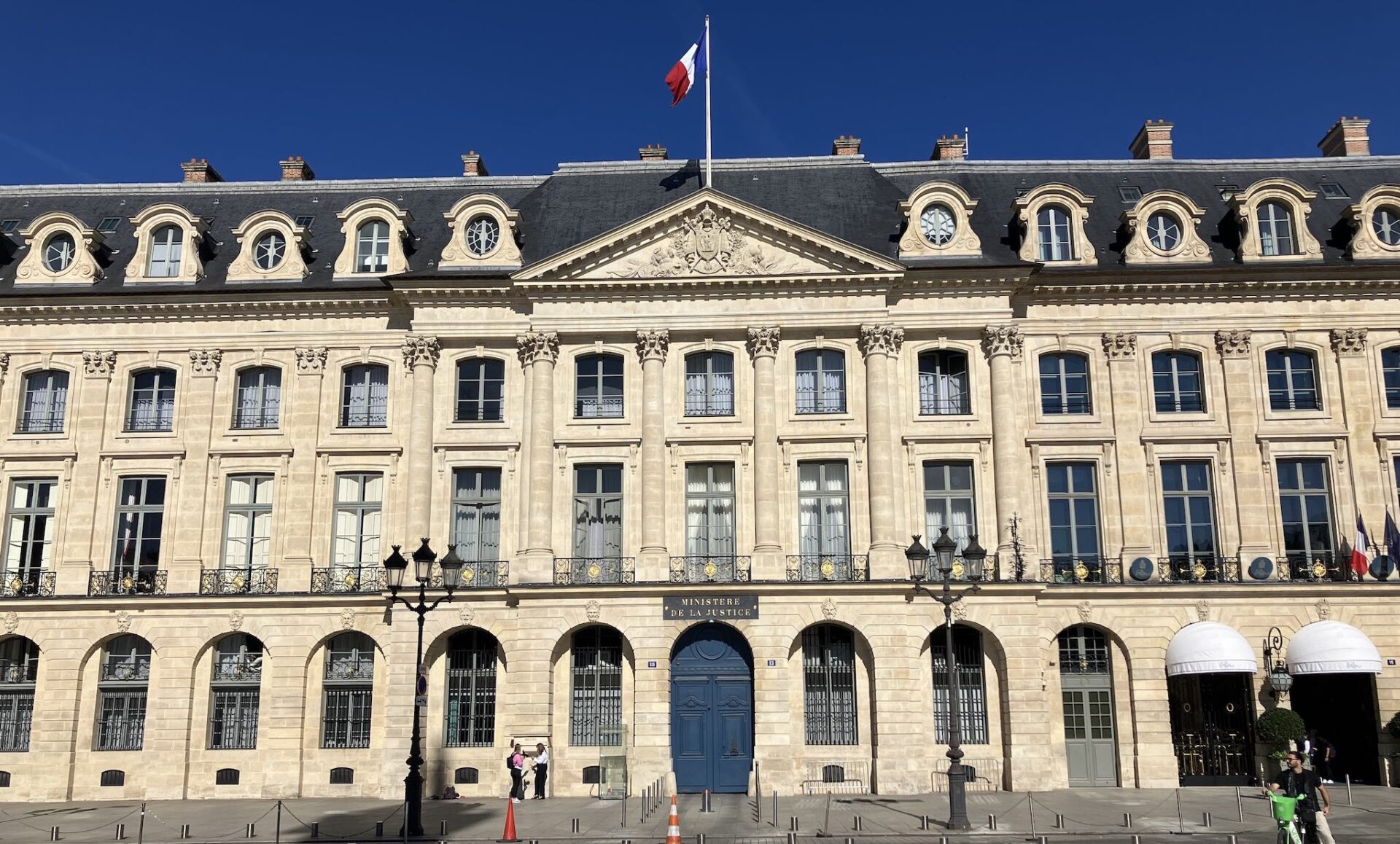
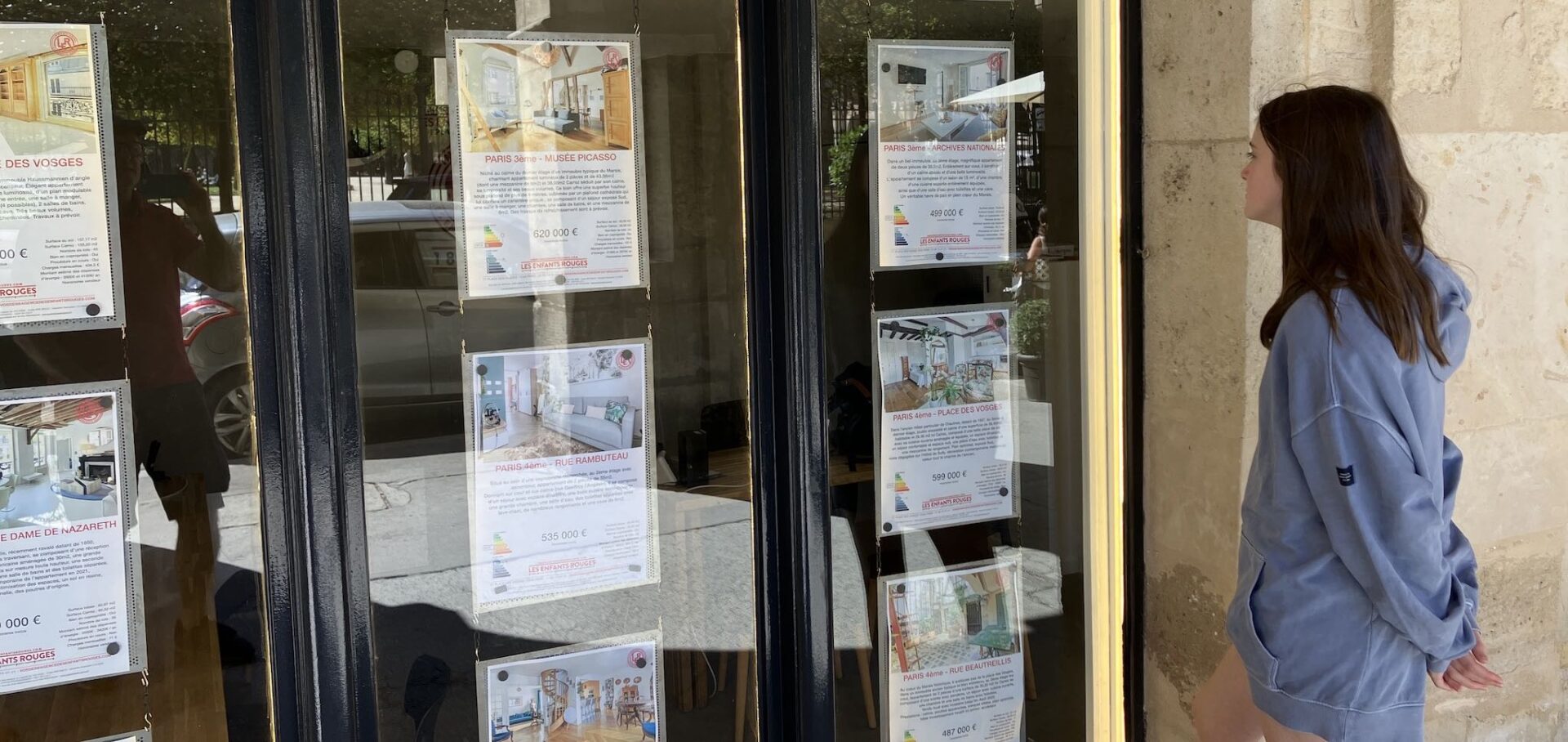
Paris is once again pushing the boundaries of housing market intervention, this time with a plan to reduce house prices. It’s worth paying attention because the French capital has often been a testing ground for housing policies that later find their way to Spain, particularly Barcelona.
According to the French daily Le Figaro, Paris City Hall wants residential property prices to continue falling after already declining since 2023.
The driving force behind the proposal is Jacques Baudrier, the city’s Communist deputy mayor for housing, who argues that lower house prices are now the key to improving affordability in the French capital.
With rents already capped by rent controls, Baudrier believes the next step is to make homes themselves cheaper. The city also hopes that lower purchase prices will encourage institutional investors back into the long-term rental market after many have withdrawn from the sector.
Among the measures being pursued are a doubling of the tax on vacant homes from 2027, alongside an expansion of non-speculative housing schemes where homes are sold well below market value but cannot later be resold for a capital gain.
Why this matters in Spain
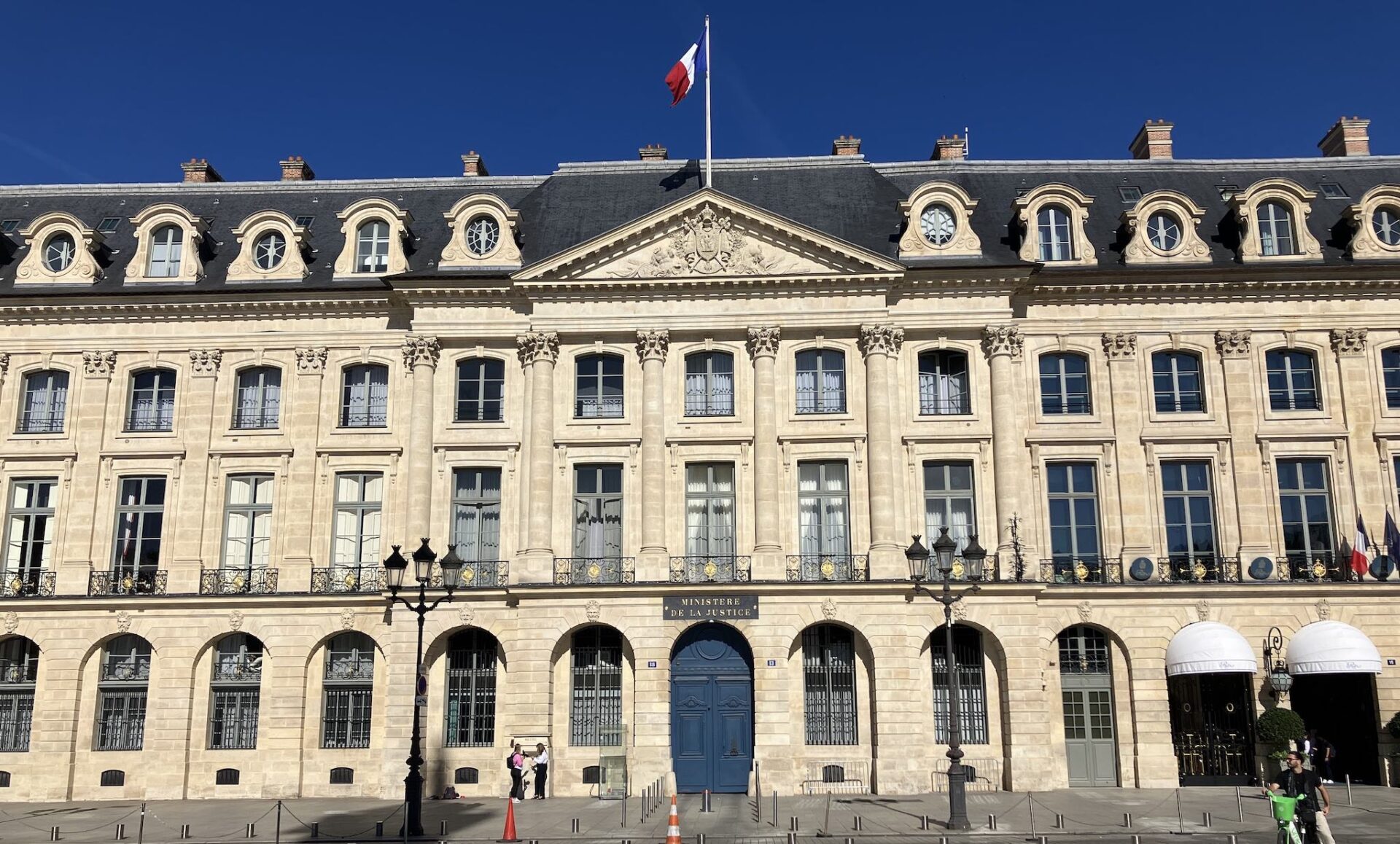
The reason is that Paris has become something of a laboratory for left-wing housing policies that frequently influence Spain, especially Barcelona. Rent controls, restrictions on tourist accommodation, higher taxes on property owners and other interventions have all travelled across the Pyrenees in recent years.
Watching Paris can therefore offer an early indication of the direction housing policy may take in parts of Spain.
An interesting contradiction
The most striking aspect of the proposal is its internal contradiction.
Baudrier says Paris needs institutional investors to return because the city needs more long-term rental housing.
But why did those investors leave?
It wasn’t simply because Paris property became expensive.
Many investors concluded that residential property had become an unattractive investment after years of rent controls, higher taxation, growing regulation and increasing political risk. Investors are interested in long-term returns, not simply lower purchase prices.
Simply reducing house prices does little to improve the investment case if rents remain controlled and regulatory burdens continue to increase.
The economics of price controls
There is another problem.
Price controls can certainly suppress prices, whether they apply to rents or to other goods. But they do not eliminate scarcity. Instead, they suppress the price signals that encourage producers and investors to increase supply.
History shows that when governments keep prices artificially below market levels, the usual consequence is shortages. In housing, that means fewer rental properties, less investment and less construction. Lower rents for some tenants may come at the cost of making housing even harder to find for everyone else.
That is the risk facing Paris. By trying to make housing more affordable through ever greater intervention, the city may end up worsening the very housing shortage it is trying to solve.
For property owners and investors in Spain, it is a situation worth following closely. Paris may not provide all the answers, but it often provides an early glimpse of the questions that Spanish policymakers will soon be asking.

Barcelona Rent Controls: Rents Rise While Rental Opportunities Remain Scarce
Why Are So Many Earthquakes Taking Place In Spain’s Granada?

Liberia Acepta Recibir 1.200 Deportados De Terceros Países Desde Estados Unidos


-

 Uncategorized2 weeks ago
Lewis Hamilton hits gold with $10bn jackpot but British star snubs Monaco move: F1 News Recap
-

 Uncategorized2 weeks ago
Racing star was destined for F1, now he
-
Latest2 weeks ago
EU Tells Meta, TikTok To Boost Monitoring, Fact-Checking
-
Altea1 week ago
Fireworks disaster at Costa Blanca spectacular leaves 27 injured in Altea
-
Mallorca2 weeks ago
Palma mayor fights to keep TUI water bus project afloat
-
F12 weeks ago
The Grand Prix is back: Madrid prepares for its first F1 race in 45 years
-
airport threat2 weeks ago
Explosive device on drone sparks major German airport investigation
-
News from Italy2 weeks ago
Woman accidentally throws away €1 million lottery ticket. Bin men help her get it back.