
Ceuta immigration crisis
Ceuta tension explodes as off-duty Guardia Civil officer attacked by migrants

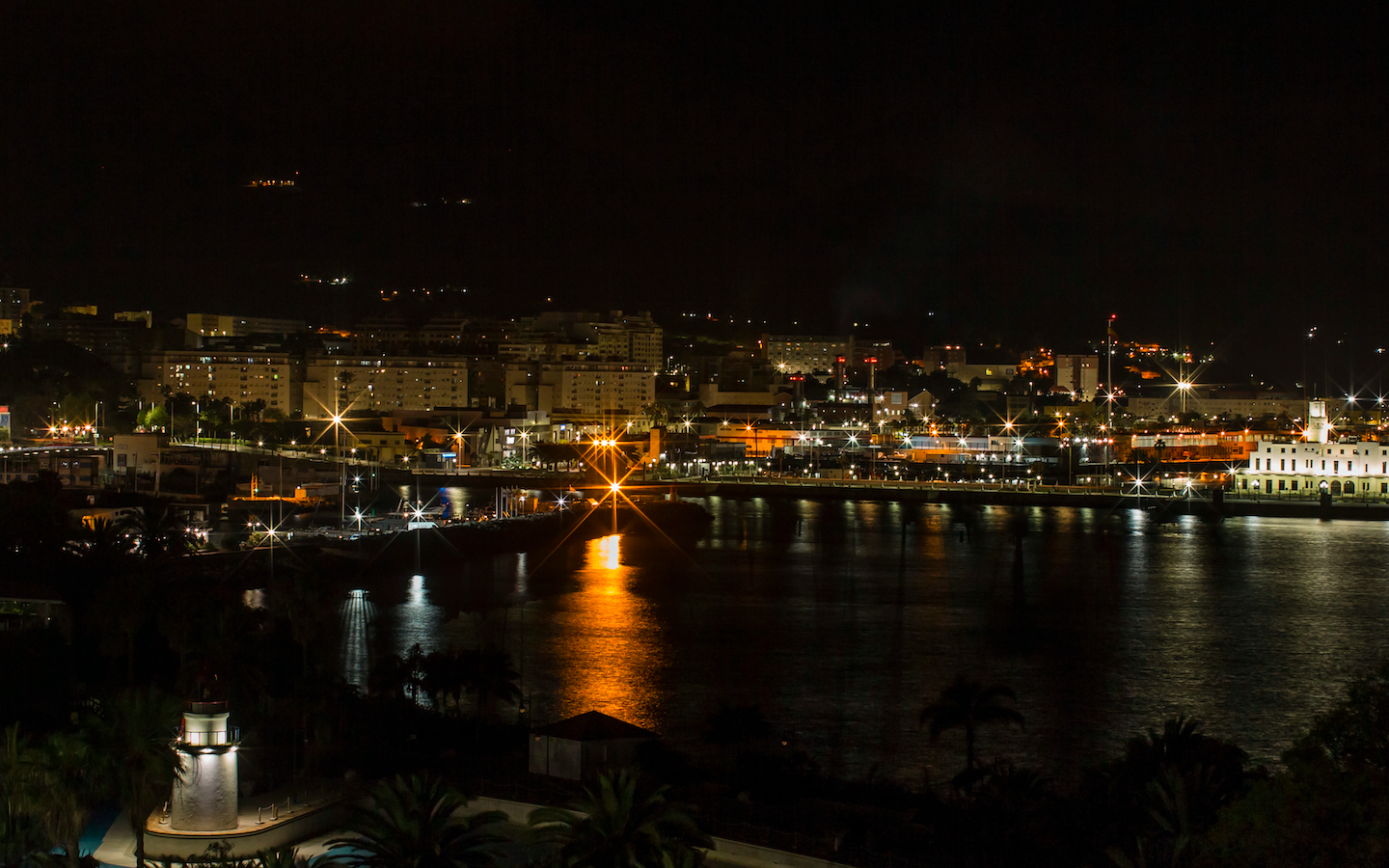
The city has been dealing with the consequences of the mass arrival for weeks. Photo credit kdtravolta/shutterstock
For anyone heading home through Ceuta in the early hours, being confronted by a group demanding money is the kind of encounter that can turn a quiet night into a frightening one within seconds. An off-duty Guardia Civil officer was allegedly punched and kicked after refusing to hand over money during an attack involving at least five people, with three migrants later arrested in connection with the incident.
The incident happened at around 04.30am on Sunday, near Avenida Cañonero Dato and the Carranza petrol station. According to the police report, the group approached the officer and demanded money. When he refused, several of the attackers allegedly began hitting him in the face and kicking him before fleeing towards the port.
Police launch overnight search
The response was rapid, with police patrols arriving and a search operation being launched across the surrounding area. The officer was able to assist investigators by providing information that helped identify the alleged attackers. The search subsequently moved towards the port area, where officers located several suspects attempting to hide around the stairs connecting the Avenida de España roundabout with the Junta de Obras del Puerto neighbourhood.
When police approached, the suspects allegedly tried to escape on foot and ignored orders to stop. Three were eventually caught. According to the reports, they physically resisted during their arrests and were taken into custody.
The three suspects face serious allegations
The investigation now centres on three young migrants who are accused of taking part in the attempted robbery and assault. The victim reportedly identified each of the three as having played a different role during the confrontation. One, wearing a blue jacket, was identified as the person who pushed and threatened him while demanding money. A second suspect, described as wearing a black jacket and light-blue shirt, was identified as having struck the officer in the face and head.
The third, wearing a white shirt, was reportedly identified as the person who allegedly kicked him and made threats during the incident. All the arrests followed the police search rather than an immediate detention at the scene, with officers locating the suspects in separate areas around the port and nearby streets. All three remain in police custody while investigators examine the allegations.
They arrived in Ceuta less than a month ago
The arrests have raised alarm bells because all three suspects reportedly entered Ceuta on July 30, during the mass arrival of migrants from Morocco that created an unprecedented crisis in the Spanish city. Their arrival came during an extraordinary influx that saw tens of thousands of people reach Ceuta over a very short period. Estimates reported this weekend put the number of arrivals at around 80,000, although many subsequently returned to Morocco.
The latest arrests therefore come at a particularly sensitive moment for the city, where questions over security, accommodation and the management of people who remain in Ceuta have dominated the local debate. The timing does not establish any wider connection between the migration crisis and the alleged robbery, and the three suspects remain under investigation rather than convicted of any offence.
Ceuta already under intense pressure
The city has been dealing with the consequences of the mass arrival for weeks. Temporary accommodation has been established for migrants who remain in Ceuta, while local authorities have struggled with the number of people requiring shelter and basic services. Conditions at some temporary sites have also become a growing concern, particularly after rain affected tents, mattresses and clothing used by migrants.
The pressure extends beyond accommodation. The General Council of the Judiciary has requested additional judicial resources for Ceuta, including two extra judges or magistrates and more experienced personnel, citing the increase in legal proceedings during the crisis. That includes cases involving deaths, arrests and numerous sexual offences to minors recorded during the weeks following the mass arrival. The latest robbery investigation is therefore unfolding alongside the other emergencies that are placing considerable pressure on the city’s police, courts and public services.
What happens next?
The three detainees are being investigated for attempted robbery with violence with intimidation and serious disobedience of authority, according to reports citing the police investigation. The allegations will now be dealt with through the Spanish justice system, and the suspects are entitled to the presumption of innocence while the investigation continues.
For the local residents, the incident adds another disturbing episode to an already tense period in Ceuta. The assault took place in the early hours, away from the immediate drama of the mass arrivals that dominated the city at the end of July. But it has now become part of the latest security concerns facing a city still dealing with the consequences of that extraordinary influx.
The investigation will now determine what happened during those early-morning minutes on Avenida Cañonero Dato, while the three arrested men remain in custody awaiting the next stage of proceedings.








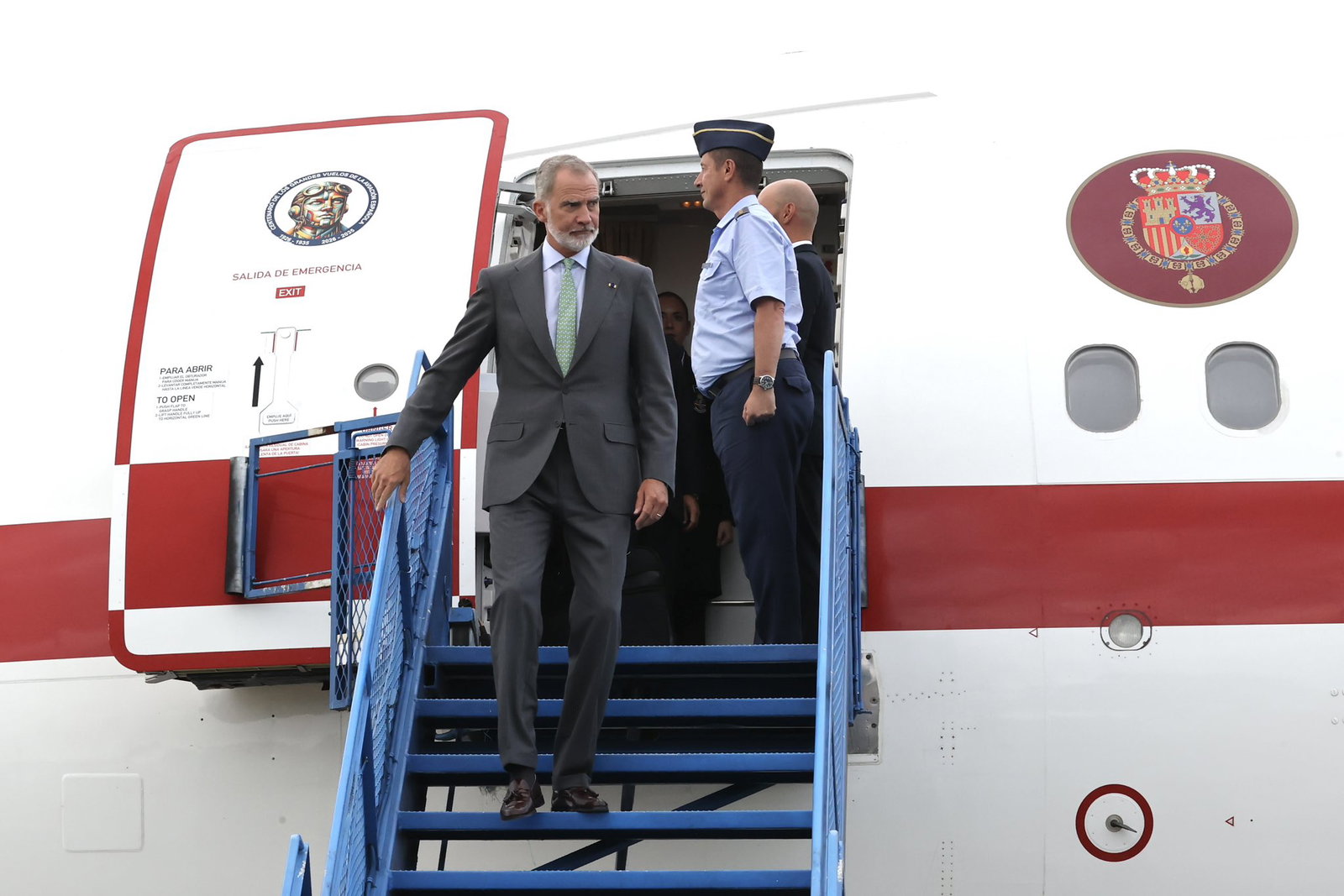
A visit by Felipe VI would carry significance beyond a symbolic appearance. Photo credit: Casa de S.M el Rey on X
The people of Ceuta are still dealing with the aftermath of one of Spain’s worst border crises in decades, and now the King could visit the city, if the Government agrees to let him go. More than 70,000 migrants attempted to enter the Spanish territory from Morocco at the end of July, with dozens of people dying during the mass crossings. The crisis has left Ceuta facing pressure on accommodation, public services and security, while the first unidentified victims have now begun to be buried in the city.
Against that backdrop, PP leader Alberto Núñez Feijóo says King Felipe VI wants to travel to Ceuta and believes the Government should authorise the visit. The claim has raised a bigger question: why has the King not already gone to a Spanish territory facing such an extraordinary crisis?
Feijóo says the King should be there
Feijóo said he is convinced Felipe VI wants to visit Ceuta because it is appropriate for the head of state to be there during what he described as a humanitarian, public health and public order crisis. He said the King should be present because his constitutional role includes guaranteeing Spain’s sovereignty and territorial integrity. The PP leader stopped short of giving a date for the proposed trip.
He acknowledged that, as opposition leader, he does not have access to all the information available to the Government and said he would need more details before deciding when such a visit should take place. But he argued that the Government should make clear that Felipe VI will go to Ceuta. Feijóo said that if he were Prime Minister, he would announce the King’s visit himself.
Ceuta is still dealing with the aftermath
The scale of the July crisis has left the city facing consequences that have continued weeks after the mass crossings. Around 72,000 people attempted to enter Ceuta from Morocco on July 30 and 31, according to European and UK parliamentary reporting. The incident triggered concerns about the security of the EU’s external border and the integrity of the Schengen area. The human cost has also become clearer, Spain has reported at least 82 deaths on its side of the border, with another 14 deaths reported by Morocco.
Many of those who died have remained unidentified, leaving families waiting for information about missing relatives. Burials began in Ceuta this week for some of those who died during the crossing attempt. Only a small number of the dead had been identified when the burials began, with authorities using fingerprints and DNA to establish identities. Difficulties obtaining DNA samples from relatives in Morocco have slowed that process.
Why the King’s presence matters
A visit by Felipe VI would carry significance beyond a symbolic appearance, Ceuta is Spanish territory but sits on the North African coast, directly beside Morocco. The city has long been politically sensitive because Morocco disputes Spanish sovereignty over Ceuta and Melilla. The King’s presence would therefore send a clear message about Spain’s territorial integrity at a moment when border security has become an international issue, also it would send a message of support to the locals who according to them feel ”abandoned and forgotten” by the Spanish Government
Feijóo has also accused Morocco of either tolerating or encouraging the mass arrival, claims that form part of his wider criticism of Sánchez’s handling of the crisis. The Spanish Government has rejected the opposition’s accusations and defended its handling of the emergency.
Government and Palace remain key to any visit
Feijóo’s comments do not amount to confirmation from the Royal Household that Felipe VI has formally requested permission to visit Ceuta. According to Feijóo, the King would travel when the Government authorised the journey. He pointed to a meeting earlier this month between Felipe VI and Ceuta’s president, Juan Jesús Vivas, at the Marivent Palace in Palma. Vivas had indicated that the monarch wanted to visit but would do so when the Government considered the timing appropriate.
The distinction matters: the reported desire for a visit is being stated by Feijóo and interpreted from comments by Vivas, rather than announced by the Palace as a confirmed royal trip. Meanwhile, the Government is preparing its own response to the continuing crisis. First Vice-President and Economy Minister Carlos Cuerpo is due to travel to Ceuta next week to meet local authorities, businesses and social organisations and assess measures covering the humanitarian, security and economic consequences of the crisis.
A decision with political and diplomatic weight
For Ceuta’s residents, a royal visit could offer a highly visible show of support after weeks of disruption and uncertainty.For Madrid, however, the decision involves more than arranging a royal engagement. Felipe VI’s arrival would place Spain’s head of state at the centre of an extremely sensitive border crisis involving Morocco, migration, deaths and questions over Spanish sovereignty.
That is why Feijóo’s demand has turned a possible visit into another political confrontation between the PP and Sánchez’s Government. For now, there is no confirmed date for Felipe VI to travel to Ceuta, But with the city still dealing with the consequences of the July crossings, pressure is growing for Spain’s head of state to be there in person.


Unwind on the sand with morning beach yoga on Javea’s Playa de L’Arenal
Istan is swapping streetlight for candlelight, it’s the return of La Vela
Fuente Alamo fiestas to end on high note with concerts and soapbox races

Última Hora Del Terremoto En Colombia, En Directo | Al Menos 132 Muertos Y 570 Heridos Por El Seísmo De Magnitud 7,4

Attaoui Saca Un Bronce En 800m De La Casi Nada
Flames force Spanish troops to evacuate 1,000-year-old kings’ bones from burning monastery


-
 Bogotá2 weeks ago
Última Hora Del Terremoto En Colombia, En Directo | Al Menos 132 Muertos Y 570 Heridos Por El Seísmo De Magnitud 7,4
-
 800 metros lisos1 week ago
Attaoui Saca Un Bronce En 800m De La Casi Nada
-
aragon wildfire1 week ago
Flames force Spanish troops to evacuate 1,000-year-old kings’ bones from burning monastery
-
Latest2 weeks ago
EU Curbs On ‘forever Chemicals’ In Food Packaging Kick In
-
Latest2 weeks ago
Ceuta Leader Wants Detention Centre As Spain’s Migrant Crisis Deepens
-
Mallorca2 weeks ago
Qatar Royal Family’s £300m ‘Palace in the Sky’ lands in Mallorca ahead of historic eclipse
-

 %2 weeks ago
Latin America In Rincon De La Victoria
-
Latest2 weeks ago
Record-Breaking Flamingo Colony Sees 600 Chicks Ringed At Spain’s Fuente De Piedra Lagoon