Connect with us

Ceuta crisis

King Felipe VI ‘wants to visit’ Ceuta as Feijóo pressures Sánchez to approve it

Published

on

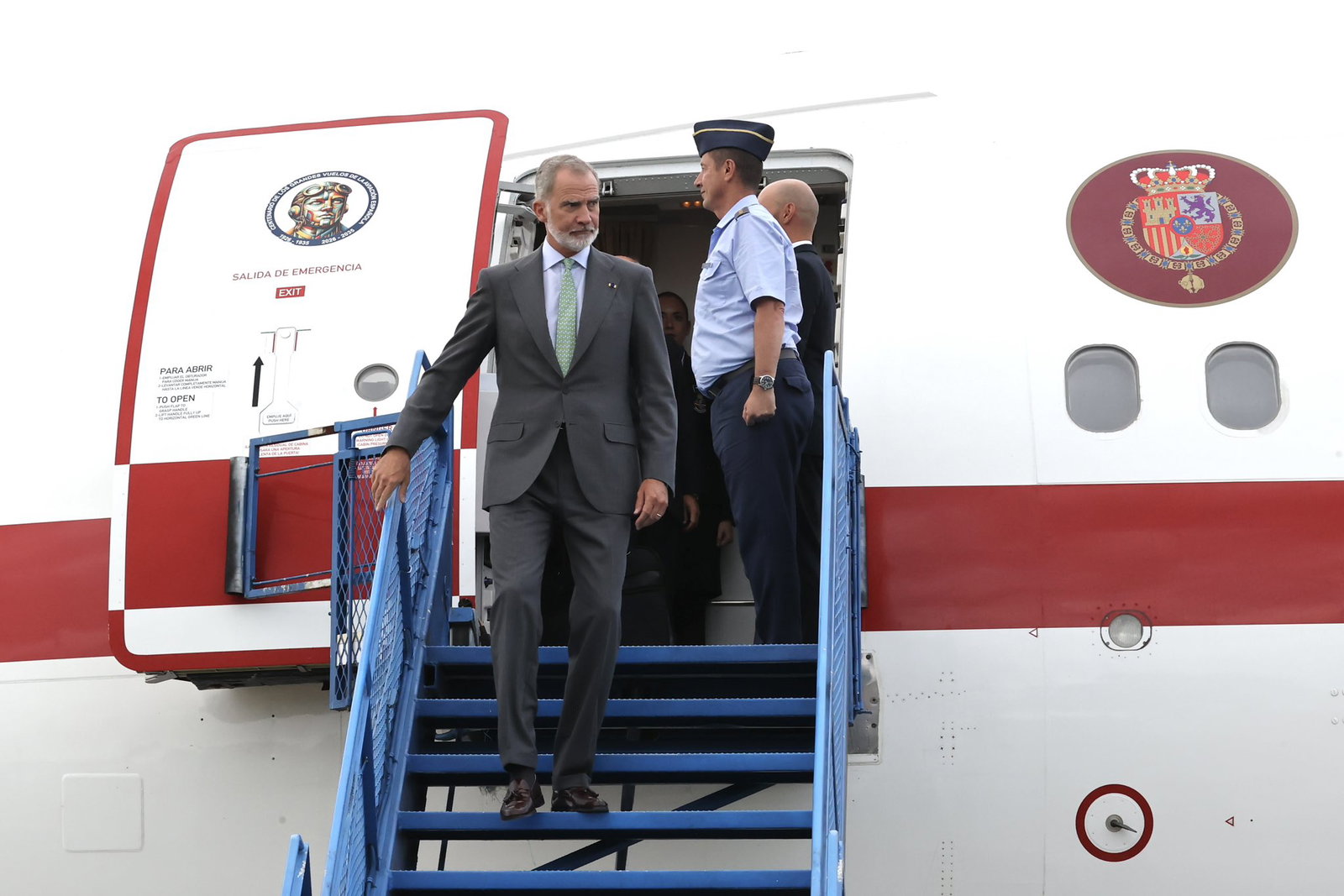
A visit by Felipe VI would carry significance beyond a symbolic appearance. Photo credit: Casa de S.M el Rey on X

The people of Ceuta are still dealing with the aftermath of one of Spain’s worst border crises in decades, and now the King could visit the city, if the Government agrees to let him go. More than 70,000 migrants attempted to enter the Spanish territory from Morocco at the end of July, with dozens of people dying during the mass crossings. The crisis has left Ceuta facing pressure on accommodation, public services and security, while the first unidentified victims have now begun to be buried in the city. 

Against that backdrop, PP leader Alberto Núñez Feijóo says King Felipe VI wants to travel to Ceuta and believes the Government should authorise the visit. The claim has raised a bigger question: why has the King not already gone to a Spanish territory facing such an extraordinary crisis?

Feijóo says the King should be there

Feijóo said he is convinced Felipe VI wants to visit Ceuta because it is appropriate for the head of state to be there during what he described as a humanitarian, public health and public order crisis. He said the King should be present because his constitutional role includes guaranteeing Spain’s sovereignty and territorial integrity.  The PP leader stopped short of giving a date for the proposed trip.

He acknowledged that, as opposition leader, he does not have access to all the information available to the Government and said he would need more details before deciding when such a visit should take place. But he argued that the Government should make clear that Felipe VI will go to Ceuta. Feijóo said that if he were Prime Minister, he would announce the King’s visit himself. 

Ceuta is still dealing with the aftermath

The scale of the July crisis has left the city facing consequences that have continued weeks after the mass crossings. Around 72,000 people attempted to enter Ceuta from Morocco on July 30 and 31, according to European and UK parliamentary reporting. The incident triggered concerns about the security of the EU’s external border and the integrity of the Schengen area.  The human cost has also become clearer, Spain has reported at least 82 deaths on its side of the border, with another 14 deaths reported by Morocco.

Many of those who died have remained unidentified, leaving families waiting for information about missing relatives.  Burials began in Ceuta this week for some of those who died during the crossing attempt. Only a small number of the dead had been identified when the burials began, with authorities using fingerprints and DNA to establish identities. Difficulties obtaining DNA samples from relatives in Morocco have slowed that process. 

Why the King’s presence matters

A visit by Felipe VI would carry significance beyond a symbolic appearance, Ceuta is Spanish territory but sits on the North African coast, directly beside Morocco. The city has long been politically sensitive because Morocco disputes Spanish sovereignty over Ceuta and Melilla. The King’s presence would therefore send a clear message about Spain’s territorial integrity at a moment when border security has become an international issue, also it would send a message of support to the locals who according to them feel ”abandoned and forgotten” by the Spanish Government

Feijóo has also accused Morocco of either tolerating or encouraging the mass arrival, claims that form part of his wider criticism of Sánchez’s handling of the crisis.  The Spanish Government has rejected the opposition’s accusations and defended its handling of the emergency.

Government and Palace remain key to any visit

Feijóo’s comments do not amount to confirmation from the Royal Household that Felipe VI has formally requested permission to visit Ceuta. According to Feijóo, the King would travel when the Government authorised the journey. He pointed to a meeting earlier this month between Felipe VI and Ceuta’s president, Juan Jesús Vivas, at the Marivent Palace in Palma. Vivas had indicated that the monarch wanted to visit but would do so when the Government considered the timing appropriate. 

The distinction matters: the reported desire for a visit is being stated by Feijóo and interpreted from comments by Vivas, rather than announced by the Palace as a confirmed royal trip. Meanwhile, the Government is preparing its own response to the continuing crisis. First Vice-President and Economy Minister Carlos Cuerpo is due to travel to Ceuta next week to meet local authorities, businesses and social organisations and assess measures covering the humanitarian, security and economic consequences of the crisis. 

A decision with political and diplomatic weight

For Ceuta’s residents, a royal visit could offer a highly visible show of support after weeks of disruption and uncertainty.For Madrid, however, the decision involves more than arranging a royal engagement. Felipe VI’s arrival would place Spain’s head of state at the centre of an extremely sensitive border crisis involving Morocco, migration, deaths and questions over Spanish sovereignty.

That is why Feijóo’s demand has turned a possible visit into another political confrontation between the PP and Sánchez’s Government. For now, there is no confirmed date for Felipe VI to travel to Ceuta, But with the city still dealing with the consequences of the July crossings, pressure is growing for Spain’s head of state to be there in person.


%

Madrid Faces 30-Day Ultimatum As Ceuta Warns It Will Take Migration Crisis To Court

Published

on

madrid-faces-30-day-ultimatum-as-ceuta-warns-it-will-take-migration-crisis-to-court

The scale of the arrivals has placed pressure on accommodation and local services. Photo credit:@Anonymous_TA on X

Thousands of people remain in Ceuta after a mass influx from Morocco put unprecedented pressure on the small Spanish territory, and the city is now giving Madrid just 30 days to find a solution. If the situation is not brought under control, Ceuta’s president Juan Jesús Vivas says he will take the fight to Spain’s highest courts, a dramatic escalation in the growing dispute over what should happen to the people who remain in the city.

More than 8,000 migrants are still in Ceuta, according to figures from the autonomous city’s government, after more than 70,000 people entered irregularly from Morocco during the mass arrivals of July 30 and 31. The scale of the arrivals has placed pressure on accommodation and local services, with Ceuta arguing that its limited space and resources cannot sustain the situation indefinitely.

Vivas gives Madrid 30 days

Vivas has warned that the Spanish Government has 30 days to take effective action. His demands include greater resources for return and expulsion procedures, faster processing of immigration cases and measures to return people to Morocco where this is legally possible. The Ceuta president says Madrid has the resources and legal mechanisms needed to reduce the number of migrants remaining in the territory. If he believes the Government has failed to act, Vivas intends to escalate the dispute.

He has said he wants to meet the presidents of Spain’s Supreme Court and Constitutional Court to explain Ceuta’s position and explore the judicial avenues available to the autonomous city. The 30-day period is a political deadline set by Vivas, rather than a court order. No judicial proceedings automatically begin when it expires.

Public services facing pressure

The dispute is not limited to accommodation, healthcare has also become a point of tension, with the Spanish Government rejecting claims that Ceuta’s health system has collapsed. Health Minister Mónica García said the system remains operational, although services are under additional pressure. Hospital emergency attendances have reportedly increased by 50 per cent.

For a territory with limited space and a population of around 85,000, the arrival and continued presence of thousands of additional people creates challenges that extend across accommodation, healthcare and other public services. Ceuta’s government has argued that responsibility for managing the situation cannot fall primarily on the territory itself.

Madrid says it is responding

The central government has continued its response to the influx, rejecting accusations that it has simply stood by while Ceuta struggles. Inclusion Minister Elma Saiz travelled to Ceuta to meet local authorities and assess the humanitarian response, while Prime Minister Pedro Sánchez has held meetings with ministers over the situation.

Madrid’s approach has included providing additional resources and looking for suitable accommodation and spaces for those who arrived. The Government has also stressed the humanitarian dimension of the crisis. That differs from the position taken by Vivas, who has placed much greater emphasis on returns and reducing the number of migrants remaining in Ceuta.

The dispute over returns

One of the biggest disagreements concerns what happens to those who entered the territory. Vivas wants Madrid to make greater use of the legal mechanisms available for returns and expulsions, arguing that the current situation cannot continue. The Government, meanwhile, has to operate within immigration and international law while providing immediate assistance to people who have arrived.

That makes the situation more complicated than simply deciding how many people can remain in Ceuta. Any returns must follow the appropriate legal procedures, and the Government cannot simply remove people without meeting those requirements.

A battle that could reach Spain’s highest courts

Vivas’s threat to involve the judiciary represents a significant escalation. He has accused the central government of failing to respond adequately to the scale of the crisis and has made clear that he is prepared to move beyond political criticism. His proposed meetings with the presidents of the Supreme Court and Constitutional Court would be aimed at explaining Ceuta’s situation and determining what legal options may be available.

It remains unclear whether any eventual judicial action would result in the measures Vivas is demanding. for now, the immediate pressure remains on the city itself. More than 8,000 people are still in Ceuta, according to the local government’s figures, while the two sides continue to disagree over how the situation should be managed.

The clock is now running

The next 30 days could determine whether the confrontation between Ceuta and Madrid intensifies further. Vivas wants to see faster returns, more resources and a reduction in the number of migrants remaining in the territory. Madrid is continuing its humanitarian response while rejecting claims that local services have collapsed.

For people living in Ceuta, however, the argument between the two administrations has a very practical consequence: thousands of people remain in a territory with limited space and resources, while the authorities disagree over how to resolve the situation. Vivas has now set his deadline, if Madrid fails to satisfy his demands within 30 days, he says the next stage of the battle will be Spain’s judicial system.

Continue Reading

%

Morocco Stops Hundreds Of Migrants Near Ceuta Border

Published

on

morocco-stops-hundreds-of-migrants-near-ceuta-border

Hoards of people run towards border fence August 15, 2026. Credit: Viral X videos

Spanish and Moroccan security forces kept a tight grip on the frontiers around Ceuta and Melilla this Saturday, August 15, after social media calls urged another mass attempt to cross into the Spanish enclaves. Calm held on the Spanish side while Moroccan police broke up a large group of would-be crossers outside Castillejos, detaining nearly 300 people, most of them reportedly of sub-Saharan African origin.

Heavy police presence on both sides of the border prevented any repeat of the late-July chaos when tens of thousands entered Ceuta in a matter of hours. Guardia Civil, Policía Nacional units stayed on high readiness in Ceuta. Similar reinforcements, around 150 officers plus a patrol boat, helicopter and specialist teams, operated in Melilla.

Government officials there described the day as normal and free of incidents. A floating barrier and extra fencing on the Melilla breakwater added extra layers of control following a Supreme Court ruling that limited certain push-backs by sea.

La situación en Ceuta va cada cada vez peor, más de 10.000 invasores ya están creando campamentos en la playa, la situación de insalubridad es total, la playa está llena de mierda literalmente, la basura se acumula, cada vez aparecen más chabolas, ya van más de 8 violaciones a… pic.twitter.com/k8JtYuBiQH

— Javier Negre (@javiernegre10) August 14, 2026

Moroccan forces break up mountain gathering near Castillejos

Moroccan security sources said hundreds of migrants, largely sub-Saharan, had hidden in the hills southwest of Ceuta near Castillejos. Agents used tear gas and a helicopter to scatter the group before making the arrests for encouraging illegal migration. Road checks remained in place on the main routes from Tetuan and Tangier. The urban centre of Castillejos itself stayed quiet under a large police presence.

Ceuta under Islamist attack from two sides. pic.twitter.com/AhwORyrRMC

— RadioGenoa (@RadioGenoa) August 15, 2026

This came two weeks after the biggest recent influx, when estimates put arrivals into Ceuta somewhere between 50,000 and 80,000 people, many swimming or walking around coastal barriers. Most returned within days, yet several thousand, mainly sub-Saharan men and some minors, were still in the city. Officials counted at least 90 deaths across both sides of the border during that earlier rush, the majority by drowning.

Spanish reporters told to leave Castillejos at once

A local representative of Morocco’s Interior Ministry, identified as Youssef Hajji, ordered journalists from the most respected Spanish news agencies, EFE and TVE, to leave Castillejos while they were covering the police operation against the migrants. He gave no reason beyond saying he was following instructions and warned that press credentials and equipment could be seized if they stayed. Hotels later told the teams the same message from local authorities.

La policía marroquí abre fuego contra los asaltantes de Ceuta mientras la Guardia Civil mira. pic.twitter.com/XynvCEhsaQ

— Muy.Mona/🇪🇸💚 (@Capitana_espana) August 15, 2026

Why keep the cameras away right now?

Questions quickly arose about Morocco’s decision to push Spanish media out of the area. Controlling the images and narrative around these events matters for Rabat. Past episodes have shown how migration flows at Ceuta and Melilla can become a pressure point in relations with Spain. In May 2021, after Spain allowed Polisario Front leader Brahim Ghali medical treatment, Moroccan forces eased controls, and roughly 8,000 to 10,000 people crossed into Ceuta, many of them Moroccan, including minors. Controls tightened again once diplomatic talks advanced.

Analysts have long described the ability to open or close the tap on migrant movements as a recurring tool linked to wider disputes, including Western Sahara.

Morocco routinely cooperates with Spain and the EU on returns and interdictions, and has used force against attempts, as seen in the deadly 2022 Melilla events. Yet selective non-enforcement has appeared during periods of tension. Illegal emigration itself carries serious penalties under Moroccan law, which helps explain why many who reach Ceuta fear being sent back.

Unconfirmed reports have circulated of Moroccan police opening fire during some past crossing attempts, adding to the climate of risk for those involved.

Spanish side stays locked down

Miguel Angel Perez Triano, the government delegate in Ceuta, spent the early hours checking the Tarajal crossing in person. Extra barriers on the Spanish side, including the floating one at Melilla, reflect lessons from July. Social media calls for another August 15 push had circulated widely, so both capitals prepared in advance. EU migration experts were already on the ground in Ceuta assessing needs after the earlier crisis.

Residents in both enclaves continue to feel the strain and have been crying out for more security from central government. Ceuta’s reception centres remain under pressure from remaining arrivals and unaccompanied minors. Local leaders have called for more mainland support while insisting the situation is under control for now.

Looking back at the pattern

Migration pressure at these two Spanish cities on the North African coast has flared repeatedly for two decades. Scale varies, yet the geography stays constant: short sea or land distances, economic gaps, and political undercurrents. Morocco does not recognise Spanish sovereignty over Ceuta or Melilla and has used the frontier as leverage before. Spain maintains both are integral parts of its territory and the only land borders between the EU and Africa.

For the moment the fences held, and the planned mass attempt failed. Whether the calm lasts depends on continued coordination between Madrid and Rabat, plus the ability of authorities on both sides to keep social media-driven crowds from gathering again. Spanish media exclusion from Castillejos leaves fewer independent eyes on the Moroccan side of the story just when tensions are still high.

Continue Reading

%

Could The Rock Become A New Gateway Into Schengen?

Published

on

could-the-rock-become-a-new-gateway-into-schengen?

Spain has spent the past few weeks dealing with intense pressure on its borders, while just across the water, a very different border has been dramatically opened up.

Gibraltar’s land frontier with Spain disappeared on July 15 under the new UK-EU agreement, moving Schengen immigration controls to the Rock’s airport and port. For British expats living on the Costa del Sol, that should mean easier journeys into Gibraltar. Yet Spanish security officers are warning that quicker crossings must not come at the cost of proper border controls.

The timing is particularly interesting. Spain has recently faced a major migration crisis in Ceuta, where tens of thousands of people crossed from Morocco, putting enormous pressure on Spanish authorities, and the events in Ceuta have put border security firmly back in the spotlight. That makes one question increasingly relevant: could Gibraltar’s new system create opportunities for people trying to reach the Schengen area illegally?

Guardia Civil warns that security cannot be sacrificed

Olaya Salardon, communications secretary of the Asociación Unificada de la Guardia Civil, has warned that officers need much greater clarity about how the new Gibraltar arrangements will work. “Our concern is not the fence itself, but that security does not become a bargaining chip,” she said. Spanish officers want (and still don’t have) clear information about responsibilities, protocols and which authorities will take charge of particular border and security operations.

That matters because the old physical frontier has not simply disappeared without replacement. Schengen controls have moved to Gibraltar’s airport and port, where Spanish officials and Frontex are involved under the new arrangements.

Salardon has warned that any gaps in security could benefit organised criminal groups rather than ordinary citizens. For British expats who regularly travel between Spain and Gibraltar, that concern is not just theoretical. A border that is quicker to cross is only an improvement if travellers can also have confidence in the system protecting it.

Gibraltar says it must not become a back door into Schengen

Gibraltar’s Chief Minister Fabian Picardo has also addressed the issue directly. He has argued that the Rock should not be regarded simply as a convenient gateway into the Schengen area. “There has to be an economic relationship with Gibraltar, you have to contribute to Gibraltar loyally,” Picardo said, while also stressing that Gibraltar should not be seen “simply as a door to enter the Schengen area more easily”.

His comments take on added relevance after the recent events in Ceuta. Spanish authorities were faced with a huge influx of people arriving from Morocco, leading to a major security operation and agreements on returning migrants. The episode demonstrated just how quickly pressure can build around Spain’s external borders.

Gibraltar is a completely different situation, and there is no suggestion that the Ceuta events are linked to the Rock. However, both cases underline why control of Europe’s external borders remains such a sensitive issue.

What does this mean for British expats?

For British residents in Spain, the most visible change is likely to be much easier movement by road. Cars travelling between La Linea and Gibraltar no longer face the old routine land-border checks, removing one of the biggest frustrations for commuters, shoppers and visitors. Brexit rules have not, however, disappeared.

British citizens are still subject to the relevant Schengen entry requirements when entering the Schengen area unless they benefit from specific residence or other rights. The new Gibraltar arrangement does not turn a British passport into an EU passport or restore general freedom of movement. That distinction could become increasingly important as people get used to the new border.

Security is not the only issue British expats will notice. Gibraltar has introduced a new Transaction Tax as part of the customs arrangements linked to the treaty. The standard rate started at 15 per cent, with more changes due under the agreed timetable. Gibraltar’s government has also had to correct claims that the new tax automatically means shop prices will rise by 15 per cent.

Officials say the tax is based on the value of goods when imported or produced rather than simply being added to the final price paid by customers. Tobacco, alcohol and fuel are also covered by new arrangements intended to reduce tax differences with Spain and tackle smuggling. For expats who regularly cross the border to shop or fill the car, those changes could eventually be just as noticeable as the disappearance of the old frontier.

The fence has gone: Now the system faces its first real test

Gibraltar’s new border is supposed to make life easier for thousands of people who cross between the Rock and Spain every day. Yet the real test will be whether faster movement can be delivered while maintaining effective immigration, customs and criminal controls.

The Guardia Civil wants reassurance that security will not be sacrificed. Picardo insists Gibraltar should not become an easy gateway into Schengen. Spain’s recent experience in Ceuta shows why those questions matter.

Continue Reading

Trending

Copyright © 2017 Spanish Property & News