Connect with us

%

How An English Breakfast Unites This Small Costa Calida Town Every Summer

Published

on

how-an-english-breakfast-unites-this-small-costa-calida-town-every-summer

Roda’s traditional English breakfast unites diverse locals for summer festivities. Photo Credit: San Javier Town Hall

The aroma of crispy bacon and freshly brewed coffee once again swept through the pine grove of Roda at the end of August, marking another resounding success for the village’s traditional English breakfast. More than 400 locals, visitors, and international residents gathered under the shade from early in the morning of Thursday, August 27, to enjoy a summer classic that bridges cultural divides through mouth-watering food.

A delicious, decade-long tradition born from community integration

What began fourteen years ago as a thoughtful initiative to welcome the growing British community has evolved into an anticipated highlight of the town’s International Day celebrations. Local representative Eulogio Sánchez highlighted how this spirit of integration remains stronger than ever, driven by a dedicated team of British and Irish volunteers. Working from the crack of dawn, the organisers donned their aprons to cook and serve an authentic fry-up, complete with fried eggs, bacon, sausages, mushrooms, and baked beans, all for just €2.50 per plate.

Spanish locals and international visitors join the local Brits for a morning feast

An increasing number of Spanish residents also join the feast each year to savour the hearty dish. Local officials praised the festivity committee and foreign volunteers for their hard work, noting that the gathering serves as clear evidence of the harmony and integration among Roda’s diverse cultures.

A weekend packed with music, food, and tradition

The International Day celebrations continued well into the evening with a lively community dinner that saw roughly 1,000 grilled burgers served alongside live music. The festive atmosphere set the stage for the following, action-packed weekend, featuring a Friday night of barbecue and rumba rhythms, as well as children’s activities, a traditional street party, and late-night migas The festivities concluded on Sunday, August 30 with a morning sardine roast and the solemn mass and procession honouring the patron saint at 8:30pm.

Once again, Roda’s pine grove proved that good food and community spirit remain the ultimate recipe for a truly united summer celebration.

%

Portuguese Man O’ War Warning

Published

on

portuguese-man-o’-war-warning

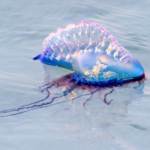
Warnings issued for Levante and Santa Bárbara beaches in La Línea de la Concepción Credit: Shutterstock/BSG_1974

Beach days are supposed to be all about warm sand, cooling swims and switching off in the sunshine. But relaxing by the sea becomes a very different experience when you are constantly scanning the water and shoreline for something that could leave you in agony.

That is the concern facing beachgoers in southern Spain after large numbers of Portuguese man o’ war have washed ashore at two popular beaches in La Línea de la Concepción. The striking blue-purple creatures may look unusual, but their long venomous tentacles can deliver an intensely painful sting, with victims describing a sudden burning sensation followed by severe pain and angry red marks on the skin.

Local authorities have issued a warning after mass arrivals were reported at Levante and Santa Bárbara beaches, urging residents and visitors not to touch the creatures, even if they appear to be dead on the sand.

Beaches under close watch

Municipal workers began removing the creatures from the shoreline after large numbers were spotted on the sand. Officials have warned beachgoers not to touch them under any circumstances, even if they appear dead, as their tentacles can remain venomous long after washing ashore.

Authorities believe recent weather conditions and sea currents have carried the jellyfish towards the coastline. They have warned that more could arrive over the coming days if conditions remain unchanged.

Although the beaches have not been permanently closed, visitors are being asked to remain vigilant and follow any instructions from lifeguards or local authorities.

Why Portuguese man o’ war are so dangerous

Unlike common jellyfish, Portuguese man o’ war can trail tentacles stretching several metres beneath the water’s surface. Their sting injects a powerful venom that causes immediate, intense pain and can leave raised red welts on the skin.

Most stings are not life-threatening, but some people can experience severe allergic reactions, breathing difficulties or other medical complications requiring urgent treatment. Children, older people and anyone with underlying health conditions are considered more vulnerable.

Experts stress that even detached tentacles or stranded specimens should never be handled.

What to do if you are stung

If you are stung, experts recommend leaving the water immediately and rinsing the affected area with seawater rather than fresh water, which can trigger more venom release. Any visible tentacles should be carefully removed using tweezers or another object, avoiding direct skin contact.

Medical advice should be sought if the pain is severe, spreads beyond the sting site, or if symptoms such as difficulty breathing, dizziness or chest pain develop. Folk remedies such as vinegar or urine are not recommended for Portuguese man o’ war stings and may make the injury worse.

With warm summer seas continuing to attract beachgoers across Spain, authorities are reminding people to pay attention to warning flags and lifeguard advice. A quick glance along the shoreline before entering the water could help prevent a painful encounter with one of the Mediterranean’s most dangerous marine visitors.

Continue Reading

%

Eight Dead, 20 Missing After Cyprus Ferry Sinks

Published

on

eight-dead,-20-missing-after-cyprus-ferry-sinks

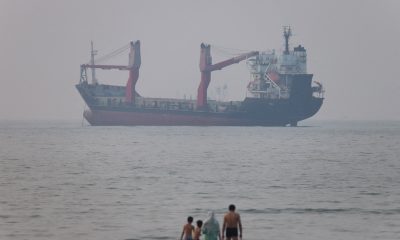
Enhanced image of capsized ferry just off Cyprus coast. Credit: Viral X image

Families were still waiting at Girne port on Monday after a high-speed ferry bound for Turkey rolled over over off northern Cyprus, killing at least eight people. Search teams and Turkish divers were combing water more than 500 metres deep for passengers still unaccounted for.

The Filo Jet, a privately run Turkish-flagged catamaran of about 40 metres, left Girne (Kyrenia) for Tasucu in Mersin on Sunday, August 30, with 259 passengers and eight crew: 267 people in all. Most on board were Turkish citizens. Saturday’s sailing had already been held back because of poor weather. Departure on Sunday came at about midday.

How the ferry went down

Trouble started about 15 minutes out, roughly four nautical miles off Girne near Diana Beach. Officials say successive waves struck the double-hulled craft. Survivors later said the boat slammed onto the sea, the bow burst open and water poured in. A distress call followed. Passengers in lifejackets clung to the upturned hull or jumped into the water.

Coastguard boats, helicopters, the passenger ship Akgunler 3 and civilian craft pulled people off the wreck. By late afternoon Filo Jet had gone down, settling on the seabed at 514 metres. None of those brought ashore were described as critically injured in later briefings. Officials put the rescued at about 237 to 242. Missing tallies still differ, with some saying 18 and others 19.

At the port, relatives sat in silence or scrolled news sources on phones for names.

Crew held as search goes on

The captain and seven crew are in custody. Northern Cyprus authorities declared three days of mourning and cancelled August 30 Victory Day events. Weather, the decision to sail and the condition of the vessel are all under inquiry. Divers from Turkey have joined night searches with helicopters, drones and extra ships.

Girne–Tasucu is one of the daily sea shuttles between northern Cyprus and the Turkish mainland.

Continue Reading

%

What Was Your Biggest Surprise When You First Came To Spain?

Published

on

what-was-your-biggest-surprise-when-you-first-came-to-spain?

What was your biggest surprise when you first came to Spain? Credit: Nigel Jarvis, Shutterstock

Moving to Spain can bring plenty of surprises. In a recent poll asking people what surprised them most when they first came to Spain, responses ranged from the weather and cost of living to Spanish traditions, the rental market and even breakfast habits. The answers show just how varied the experience of settling into Spain can be.

For some, the biggest surprise was the weather, and not necessarily in the way they had expected. Brenda Jones simply said, “The cold winters.” Janet Dutton had a similar experience after arriving in summer, explaining, “Moved in July and had to buy pyjamas, thick socks & hot water bottles by November & the house was freezing too!” Jennifer Ancill also discovered that the reputation for warmth did not always apply, answering, “Warmer outside than indoors.”

For others, their first impressions were shaped by the people around them. Peggy Case was surprised by the friendly locals, explaining “How friendly and helpful the Spanish people were.” The rental market, however, provided a very different kind of shock for Theodore J Fowler. He recalled his expectations before arriving: “The rental market can’t possibly be as bad as they say, right? Worse.”

The cost of living was another memorable difference, particularly for those who arrived years ago. Mark Cook looked back at his experience 25 years ago and recalled “How cheap it was compared to the UK.”

For Sally Bache, meanwhile, Spanish traditions made a lasting impression. She highlighted one particular occasion: “Noche de Reyes. All the shops in Madrid still open at 11pm.” Spanish traditions also featured in Seamus Ó Connor‘s response. He was struck by “How they celebrate their saints feast days.” These celebrations can be very different from customs in other countries and often form an important part of life in Spanish towns and cities.

And then there were the everyday habits that caught people off guard. Sue Burroughes was particularly surprised by “How many have a beer at breakfast.”

Overall, the poll shows that moving to Spain can challenge expectations in all sorts of ways, from surprisingly cold homes to late-night celebrations and unfamiliar daily routines. Most people said that the biggest surprises were the things they had not expected at all, proving that sometimes it is the small details of everyday Spanish life that make the strongest first impression.

Continue Reading

Trending

Copyright © 2017 Spanish Property & News