
Ceuta
Ceuta, The Month That Broke A City

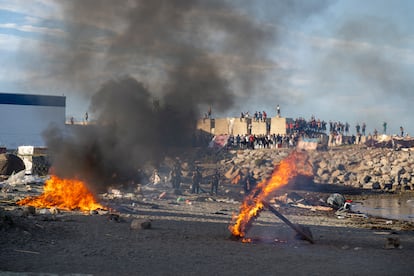
A pair of residents of Ceuta were this week refusing to leave their home, which faces Benítez beach, because they feared that some of the thousands of migrants who sleep on the sand each night might break in and refuse to leave. They know what they are talking about because it has already almost happened: a few days ago two migrants climbed up onto their terrace and they had to throw them out. On Thursday, on that same beach, a group of Ceuta residents stormed the migrants’ camp and, while the Moroccan migrants ran away, the protesters destroyed their shacks, threw some of their belongings into the sea and burned the rest in a large bonfire along with blankets, the bamboo poles used as makeshift structures and the backpacks they found.
And Leila Mohamed, a Ceuta resident from the El Príncipe neighborhood, said on Wednesday that she had seen a neighbor that morning with a knife cut on her cheek — done, she said, by a migrant she found inside her garage. That same night, after a protest that lasted into the early hours, a group of Ceuta residents roamed the city center with sticks looking for Moroccans walking the streets or sleeping in doorways.
A month after more than 80,000 people crossed Ceuta’s border from Morocco illegally, the Spanish exclave city is sitting on a powder keg ready to explode — or, likely, one that has already exploded. The tension in the streets, which surged dramatically this week, is such that it is impossible to find someone talking about anything other than the thousands of migrants wandering the streets (the national government led by Prime Minister Pedro Sánchez estimates there are 5,000 of them, but the city government says there are more than 9,000), most with little more than a plastic bag holding the items they were given and a mobile phone they desperately try to find somewhere to charge.
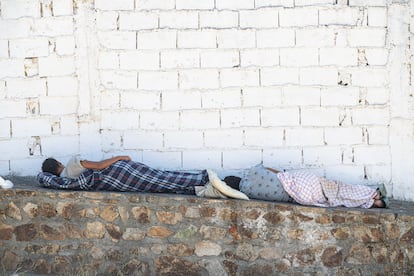
On one side, there is a mass of new arrivals with nothing or very little to lose; on the other, a population of 80,000 people fed up with watching their city decay day by day. On one side is, for example, Handala Benktib, a 20-year-old barber from Tetouan, who says his family — his father is disabled — needs money that he cannot earn in Morocco. He adds that he does not intend to return. “Only dead,” he says, then falls silent and asks the reporter: “What will happen to us?” When he is told that, because he is not a minor, the likeliest outcome is that he will be forced to cross back, he asks again: “Then why are they putting up giant tents for us?” referring to the housing centers erected in Loma Colmenar near Tarajal that now house 700 people. He discussed all this on Thursday afternoon on El Trampolín beach, which has become a vast, improvised encampment of huts made from bamboo, cardboard and blankets, tents and mattresses where each night thousands of people — mostly men — sleep by bonfires, observed with fear and outrage by neighbors who watch them from their balconies on the other side of the promenade.
On one side there are people like Handala Benktib and his near-suicidal determination to remain on Spanish territory, shared by many of his fellow travelers; on the other are those such as África González, a 44-year-old Ceuta native and healthcare technician, who says that since the migrants entered the city her children have not left the house for fear of being attacked. They have been confined — like the vast majority of Ceuta children — for a full month, not going to the park, the beach or the street, prisoners in their own rooms. A Muslim girl summed this up on Wednesday on a banner she carried at an anti-migrant protest: “I want to go out and play.”
Fear for Ceuta children is growing as the start of the school year approaches: classes begin on Tuesday, September 8. Some families have already taken steps: Nicole Sarabia, 41, has enrolled her children in Málaga, on the Spanish mainland, where she will move while her husband stays in Ceuta to work. Sarabia explained it on the verge of tears during the protest march that later would destroy the Benítez beach camp. She felt — like the great majority of Ceuta residents — that the central government has abandoned the city to its fate. That view is echoed by Ceuta’s chief, Juan Jesús Vivas, who on Friday described his city as “on the brink of collapse.”

Some migrants sleep in building entrances; others rent rooftops in the El Príncipe neighborhood for €100 or rooms for €10 or €20; yet others sleep on playground swings, on benches along the waterfront, or in out-of-the-way streets turned into seas of blankets. The entrances to the supermarkets Mercadona and Lidl are being guarded by Army personnel, armed with batons, who force the migrants — who flock there to buy food — to line up at the entrance and not enter all at once so as not to overwhelm the shelves or alarm the other customers. Muslim taxi drivers who speak Arabic ferry them around, and Moroccans pester the drivers with questions about their future as if the taxi drivers knew what will happen to them. Food shops serving migrants have so many customers they have had to put up a gate to organize an orderly line at the door.
Some groups of Moroccans wander the city until they reach a police station to sign up on a made-up list someone told them exists to take them to the mainland. Some migrants with enough money go to the Nike store to buy expensive sneakers or take selfies, looking well groomed, in front of the facade bearing the Spanish and European flags at the Ceuta Assembly building, but the vast majority wander the city with nothing, alone or in small groups, wearing the same foul-smelling clothes and dusty, sand-filled flip-flops they had when they swam across the border a month ago.
Ceuta residents, proud of their pretty city, feel pain seeing many parts of it turned into a dump. If it rains, as it did on Thursday morning, everything gets worse because the beach camps flood and the cardboard that migrants collect across the city to build shelters soaks through and becomes useless. Autumn is approaching, and Ceuta gets a lot of rain.
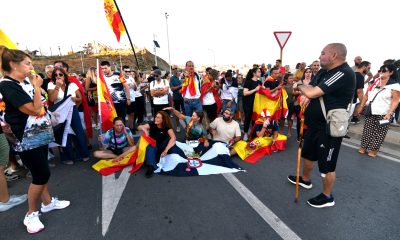
The military are keeping migrants away from the city center, forcing them to walk aimlessly through poorer, peripheral neighborhoods where they are far more visible and everywhere to be seen. Every afternoon since Wednesday there have been demonstrations in which protesters, many wrapped in Spanish flags, criticize the central government for letting the crisis fester and shout “Invaders, expulsion!” They always end up at Benítez beach, facing the migrants who watch from a distance, protected by police. The Moroccans know they are unwelcome, but they refuse to leave. Asked why he persists sleeping on the beach and eating what the Red Cross provides, Bilal Meftahi, 26, a mechanic from Tetouan whose face and gestures show the toll of 30 days outdoors, answers after long thought: “Maybe it will turn out all right.”
This past month will leave scars on Ceuta’s society, which is roughly 55% Christian and 45% Muslim. The economy relies on the salaries of civil servants — mostly Christian — and the service sector, and many fear it is one misstep away from social fracture. With unemployment at 22.2% and clear economic inequality between the two communities, Ceuta has long prided itself on peaceful coexistence between the two religions and has made that coexistence one of its defining features. The two religions mingle in unusual, even surreal ways here: the Christ of Medinaceli has its parish in the El Príncipe neighborhood, which is almost entirely Muslim, and it is not uncommon for residents to accompany the Catholic float during Easter street processions.
But all of this is beginning to crack under the strain of a migration crisis that poisons everything. A Muslim waitress at a central café serving migrants was insulted by some participants in the August 26 protest who called her a “filthy Moroccan” and told her to go back to her country. She replied angrily in Spanish that her country was Spain. The next day, with tears in her eyes and her voice choked with rage and fear, she confessed her children were also locked inside their home because she shares the same fear that something will happen to them, as the rest of Ceuta residents. The café is now on a blacklist circulating in Ceuta of businesses that serve or sell to migrants so they can be boycotted.
Abdellah Mustafa, president of the neighborhood association in the outlying district of Sidi Embarek, is blunt: “They started by attacking migrants; and from there it has moved on to attacking Ceuta’s own Muslims. If Ceuta’s Muslims respond, it’s over.” Sitting in an Arabic café in his neighborhood, he says that no one is more from Ceuta than Ceuta’s Muslim residents: “Because Morocco does not recognize us; and on the peninsula they label us Moors. So we are not from anywhere, except from here.” His mobile phone is overflowing with messages from Muslim neighbors reporting assaults, insults or harassment by members of the Christian community. Abdellah, who is a cook and on vacation, attends to everyone, then hops on his scooter to carry out the exhausting but necessary task he has taken on for the past month: to lead, organize, supervise and run — with nothing more than his mother’s help, a platoon of volunteers and an Arabic-speaking security guard sent by the city government a few days ago — an improvised center that shelters and protects 350 migrant women and about a dozen children. All of them sleep in a giant tent turned into a shelter that sometimes resembles more a madhouse. A cardboard sign on the door reads: “No more room.”
As soon as Abdellah arrives, a child runs to hug him and says: “I saw you on TikTok.” Then he intervenes in a fight between two women, answers a radio call and a TV reporter, receives two representatives from the NGO Luna Blanca — which provides the food — meets with a human rights expert, mediates again in a women’s fight that almost turned physical, tells a child to obey his mother, listens to a man who brings him a 15-year-old who crossed the border and does not know where to go and who is told there is no room for him, solves a dozen other problems on the spot and then hops back on his scooter because something urgent has come up elsewhere. He is tired, exhausted, but he does not give up. He has asked the Ceuta government and the central government to take charge of the women, but they replied that they cannot yet, and asked him to be patient.
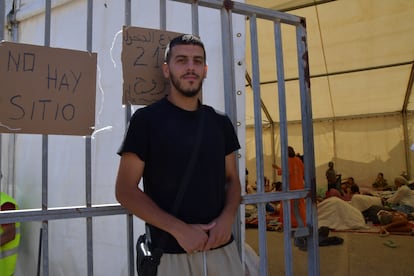
He decided to set up that camp with his own hands after he saw a woman who had entered illegally being assaulted by a group of migrants who tried to rape her. He rescued her, chased off the attackers and thought someone had to deal with the problem — and if no one else would, it would have to be him. “Values are shown in hard times,” he says. He condemns labeling migrants as invaders. “That is seeing them as enemies: they are not.” At the same time he is trying with all his might to get them to return to Morocco. “But that will only be achieved through persuasion, not violence. I have already accompanied more than 2,000 people to the border.”
The government is now accelerating efforts and expects to clear migrants from the streets within two weeks. To that end it has already agreed with the city of Ceuta on the sites where they will be housed so that, once registered, their expulsion files can be processed quickly if they are not minors or do not meet the conditions for asylum. Carlos Rontome, a sociologist who directs the UNED center in Ceuta and was vice president of the city government alongside Vivas during the previous migration crisis in 2021, offers a different timeline: “This will last months. In 2021 — and arrivals were smaller then — eight months later there were still unregistered migrants.” Rontome also fears that the social cracks created by the crisis could split Ceuta in two: “Coexistence is a very fragile construct. But there is one crucial thing: without it, Ceuta has no future.”
That vital coexistence for the two communities, built on daily interaction and centuries of history and now at risk, is well captured in a letter Rontome keeps that a Ceuta child wrote at Christmas three years ago: “Dear Melchior, I have been very good. I want a Ceuta soccer team T-shirt. I love you very much. Mohamed.”
Sign up for our weekly newsletter to get more English-language news coverage from EL PAÍS USA Edition








Ceuta
Sánchez Exculpa A Marruecos Por La Crisis De Ceuta Y Avanza Que El Rey La Visitará Por Primera Vez Con Este Gobierno


Ceuta
Ceuta Crisis Latest: Spain Pledges €165m Emergency Package As Migrant Tensions Continue To Boil Over

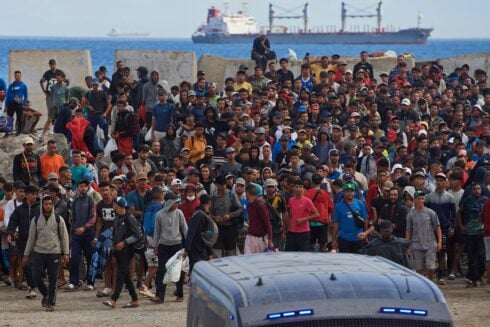
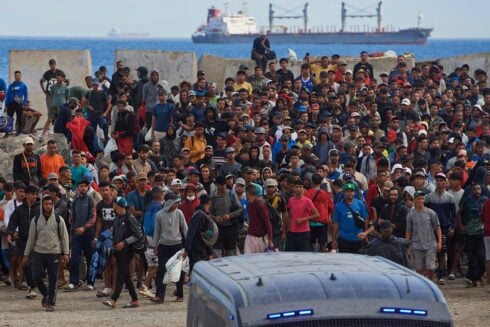 A MONTH has now passed since more than 80,000 migrants poured into Ceuta from neighbouring Morocco.

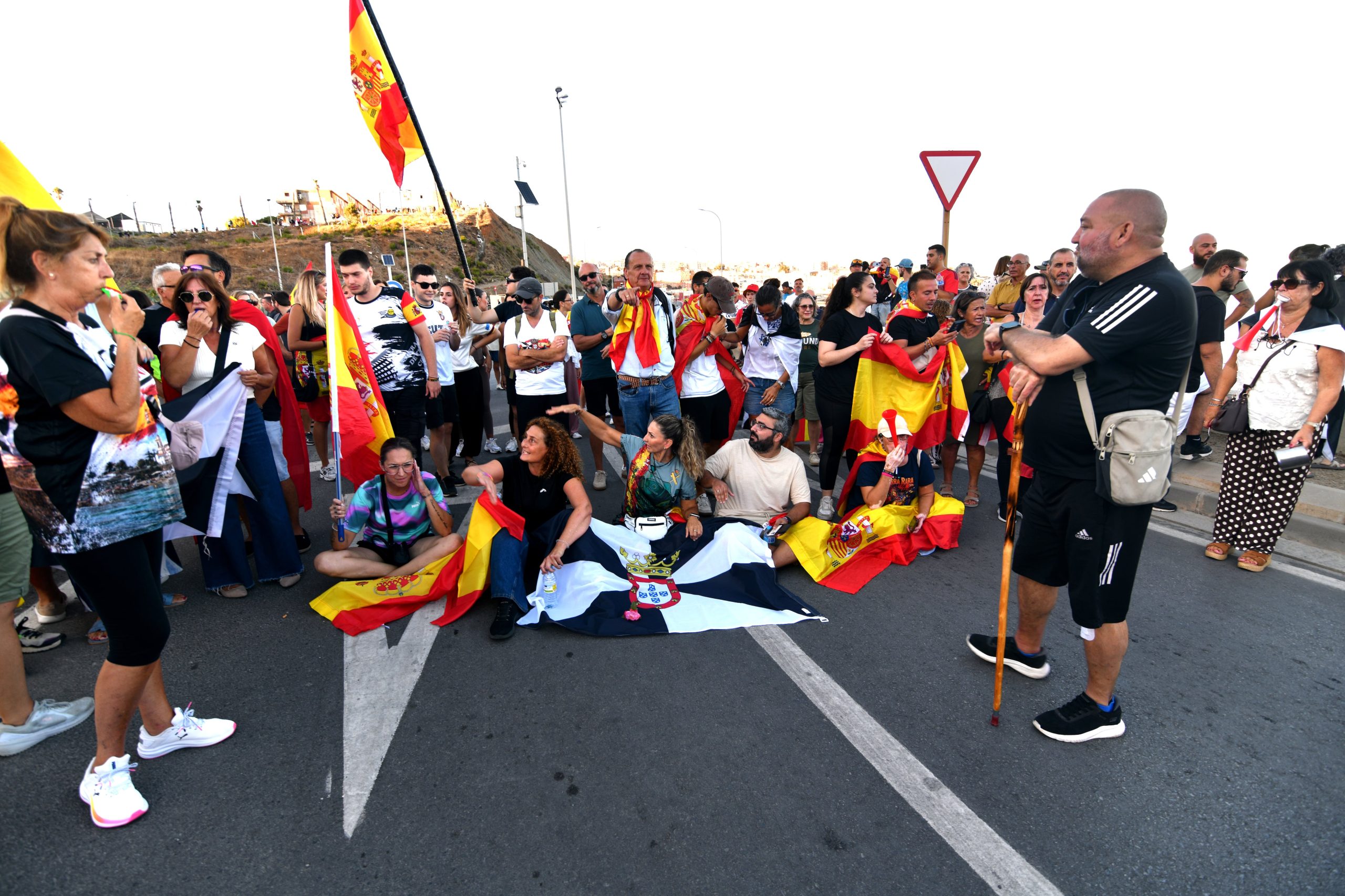
Pese a que las protestas ciudadanas que han brotado en los últimos días en Ceuta se habían suspendido este sábado por temor a que sus marchas y reclamaciones se vinculen con actos violentos o acciones de grupos ultras, unos 200 ceutíes han salido a la calle a última hora de la tarde para reclamar la expulsión de los miles de migrantes que accedieron a la ciudad en la gran entrada del pasado 30 de julio. Los manifestantes estaban citados a las 18.00 en las Murallas Reales con la intención de llegar hasta la frontera de El Tarajal e ir a Loma Colmenar, una zona de la ciudad en la que hay cientos de migrantes esperando a ser aceptados en uno de los recintos de acogida temporal habilitados por el Gobierno en un aparcamiento al aire libre. Finalmente, la policía se lo ha impedido y han terminado haciendo una sentada en la rotonda del Hospital Universitario de Ceuta, a un kilómetro aproximadamente de la frontera, durante 20 minutos, un tiempo en el que ha estado cortado el tráfico.
Uno de los cometidos de la manifestación era apoyar a los vecinos que están acusando la presión migratoria, por eso querían pasar por la zona de Juan XXIII, una zona en la que muchos migrantes se refugiaron durante los primeros días. Estos residentes vieron cómo numerosos migrantes dormían en los bajos de sus edificios y se instalaron en sus calles.
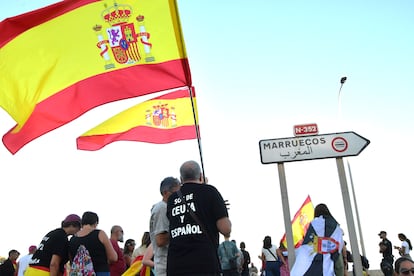
Como en días anteriores, los manifestantes han portado banderas españolas y ceutíes durante la marcha, así como camisetas de la selección española. Durante todo el recorrido han sido custodiados por agentes de Policía Nacional, concretamente de la Unidad de Intervención Policial (UIP) y en la zona en la que han hecho la sentada se les han sumado militares. Los manifestantes han repetido las proclamas de los últimos días: “Invasores, expulsión”, “Ceuta no se vende, Ceuta se defiende”, acompañadas de vivas a España, a la Policía, al Ejército español y a la Legión.
Cerca de las 20.00, se han detenido en la penúltima rotonda antes de llegar a la frontera, porque los furgones policiales no les han dejado avanzar más y han realizado una sentada. El tráfico ha estado cortado durante 20 minutos mientras los manifestantes coreaban “no hay frontera” o “no nos engañan, Ceuta es España”.
“Mañana nos tenemos que organizar mejor”, han comentado varios participantes, haciendo mención a la cancelación inicial y la convocatoria posterior. En la zona se habían desplegado cinco furgones policiales y tres militares, además de una quincena de agentes de Policía Nacional y en torno a una veintena de militares. Sobre las ocho y media, los manifestantes no han seguido el recorrido al centro de acogida de urgencia de migrantes de Loma Colmenar, sino que han regresado en dirección al centro. Varios furgones policiales cortaban el acceso al lugar. Los protestantes repasaban durante el regreso la próxima cita: este domingo quieren animar un recorrido de la Armada de la Solidaridad, un grupo de más de medio centenar de embarcaciones llegadas de Andalucía este sábado, al que se sumarán otras de la ciudad autónoma. En el recorrido de la manifestación se encontraba la periodista Susana Griso, que ha estado entrevistando a algunos de los vecinos. Mientras algunos manifestantes le preguntaban con enfado si solo va a contar lo que ella quisiera, otros le daban las gracias por acudir. “Por lo menos que se empape de lo que pasa en la ciudad”, razonaba una de ellas. “¡Di la verdad!”, le han pedido a gritos en varias ocasiones.
Los ceutíes llevan tres días saliendo a sus calles para pedir la expulsión inmediata de los miles de inmigrantes que se resisten a abandonar la ciudad desde la gran entrada de finales de julio. Su presencia por prácticamente todos los barrios de esta ciudad de 19 kilómetros y 84.000 habitantes ha puesto patas arriba sus vidas, haciéndoles sentir inseguros e impidiéndoles llevar una vida normal, ya que se han establecido en numerosos espacios públicos, como playas, aceras, parques infantiles o zonas de recreo. Una de las quejas más repetidas es que tienen que tener a sus hijos encerrados, que esta situación excepcional les ha dejado “sin verano”, y temen que la situación no mejore antes de que comience el curso escolar. “Estamos todos muy afectados, llevamos un mes con unos elementos en la calle que no es normal y no son todos pobrecitos”, se quejaba una de las participantes.
Ese miedo a ser instrumentalizados por personas de ideas radicales ha hecho que se pospongan las protestas hasta el próximo 2 de septiembre, día de la autonomía de Ceuta. Entonces volverán a salir a la calle para exigir que les devuelvan su ciudad en una gran marcha convocada por la Federación Provincial de Asociaciones de Vecinos (FPAV) y el Foro Ceuta Siglo XXI.
La suspensión de las protestas se planteó como una medida de prevención, indican fuentes en contacto con los organizadores. Sin embargo, la Policía no ha detectado “una presencia significativa” de estos grupos, aunque siguen rastreando todos los movimientos de la ciudad, añaden fuentes policiales. Unos días después de la gran avalancha se detectaron algunos sucesos relacionados con miembros de Desokupa, firma dedicada a los desalojos extrajudiciales, o el agitador ultra Vito Quiles, pero se les sacó de la ciudad autónoma, explican las fuentes consultadas. La práctica dio buen resultado, pero no se puede descartar que vuelvan a darse situaciones similares.
Las movilizaciones surgieron de forma espontánea entre los ceutíes y se han organizado a través de grupos de WhatsApp, divididos por zonas de la ciudad. Esos grupos no tienen estructura jerárquica y, aunque se había anunciado la suspensión, algunas voces animaban a seguir saliendo a la calle y los agentes de Policía estaban alertados ante la posibilidad de que las hubiera.
Durante la protesta de este viernes por la tarde, los manifestantes se emplearon a fondo en que se les percibiera como un grupo pacífico y unido, que gritaba para reclamar soluciones inmediatas para la ciudad. Los ceutíes hicieron el recorrido desde la Delegación del Gobierno de Ceuta hasta Playa Benítez, y una vez allí no pudieron acercarse a los migrantes que les observaban desde un espigón, mientras gritaban pidiendo su expulsión inmediata. “Ayer no se arrasó ningún poblado, se quemaron tres sombrillas”, aseguraba uno de los manifestantes, sobre el incendio en las tiendas de esta misma zona. “Estamos indignados”, añadía. “Tenían que ponerlos en la frontera. Que no nos digan en televisión que hacemos vandalismo, el vandalismo lo cometen ellos, que invadieron tiendas y nos invadieron a nosotros”, aportaba otra de las manifestantes.
El miércoles por la noche, la Policía impidió que cientos de ceutíes se enfrentaran a los migrantes que se han asentado en la playa de El Trampolín, donde se han vuelto a levantar decenas de tiendas de campaña después de que la ciudad limpiara el espacio, y se llegó a interrumpir el reparto de alimentos por parte de Cruz Roja por motivos de seguridad.
Durante el sábado, la ciudad ha recibido la llegada embarcaciones que han partido de diferentes puntos de Andalucía en una iniciativa bautizada La Armada de la Solidaridad. El acto, de carácter cívico, tiene como finalidad hacer llegar a los ceutíes un mensaje de apoyo y solidaridad. “Todavía siguen sufriendo, el Gobierno debería tomar medidas para expulsar (a los migrantes) lo más urgentemente posible”, reclama Pedro Rodríguez, promotor marbellí y uno de los organizadores, junto al empresario y expolítico Marcos de Quinto, el consultor Amalio de Marichalar o el físico Francisco Mier del Castillo, exdirector de la Central Nuclear de Santa María de Garoña. La idea surgió hace unas tres semanas, pero se fijó para este sábado porque había previsión de un día sin viento. “También hay personas que han cogido el ferry para mostrar su apoyo a la ciudad”, añadía Rodríguez por la mañana, cuando cruzaba el Estrecho hacia la ciudad.
Las embarcaciones que lleguen durante el día han podido amarrar en Marina de Ceuta, principal puerto deportivo de la ciudad autónoma, y por la noche tenían prevista una cena con las autoridades locales. El domingo se ha convocado otro paseo náutico junto a embarcaciones de Ceuta, todas engalanadas con banderas de España y de la ciudad. “Puede ser un acontecimiento y una imagen que podremos difundir al máximo para llamar la atención que vive y sufre Ceuta”, subraya Rodríguez.

Tenerife’s Deep Magma System Mapped For The First Time As Top Volcanologist Insists Eruption Risk ‘remains Low’

Álex Palou Agranda Su Leyenda Y Conquista Su Quinta IndyCar
Ceuta, The Month That Broke A City
Make a small donation at Miramar shopping centre and transform a child’s first day back at school

How To Get A Tourist Rental Licence In Andalusia (Spain) – Step-By-Step Guide 2025

How Kimi Antonelli saved Red Bull as Max Verstappen signs blockbuster F1 deal


-
back to school2 weeks ago
Make a small donation at Miramar shopping centre and transform a child’s first day back at school
-
 New Developments2 weeks ago
How To Get A Tourist Rental Licence In Andalusia (Spain) – Step-By-Step Guide 2025
-
 Uncategorized1 week ago
How Kimi Antonelli saved Red Bull as Max Verstappen signs blockbuster F1 deal
-

 Ceuta2 weeks ago
Hundreds Of Migrants Left In Ceuta After Mass Border Crossing Stage Protest To Demand Asylum From Spain – ‘I Don’t Want To Return!’
-
bullfighting1 week ago
Ronda’s September Feria returns with bulls back in the ring after two years away
-
 BCE2 weeks ago
Los Precios De La Energía En Europa Volvieron A Escalar Por Encima Del 10% En Julio
-

 benefits ban2 weeks ago
EXPLAINER: Which Benefits Could Brits Living In Spain Lose Access To Under Reform’s EU Welfare Ban – And Would It Include Pensions?
-
airports in Spain2 weeks ago
British families flying between UK and Spain given fresh EES warning for under-12s