
Ceuta
Las Protestas Ciudadanas Se Frenan En Ceuta Por Temor A Que Las Vinculen Con Ultras

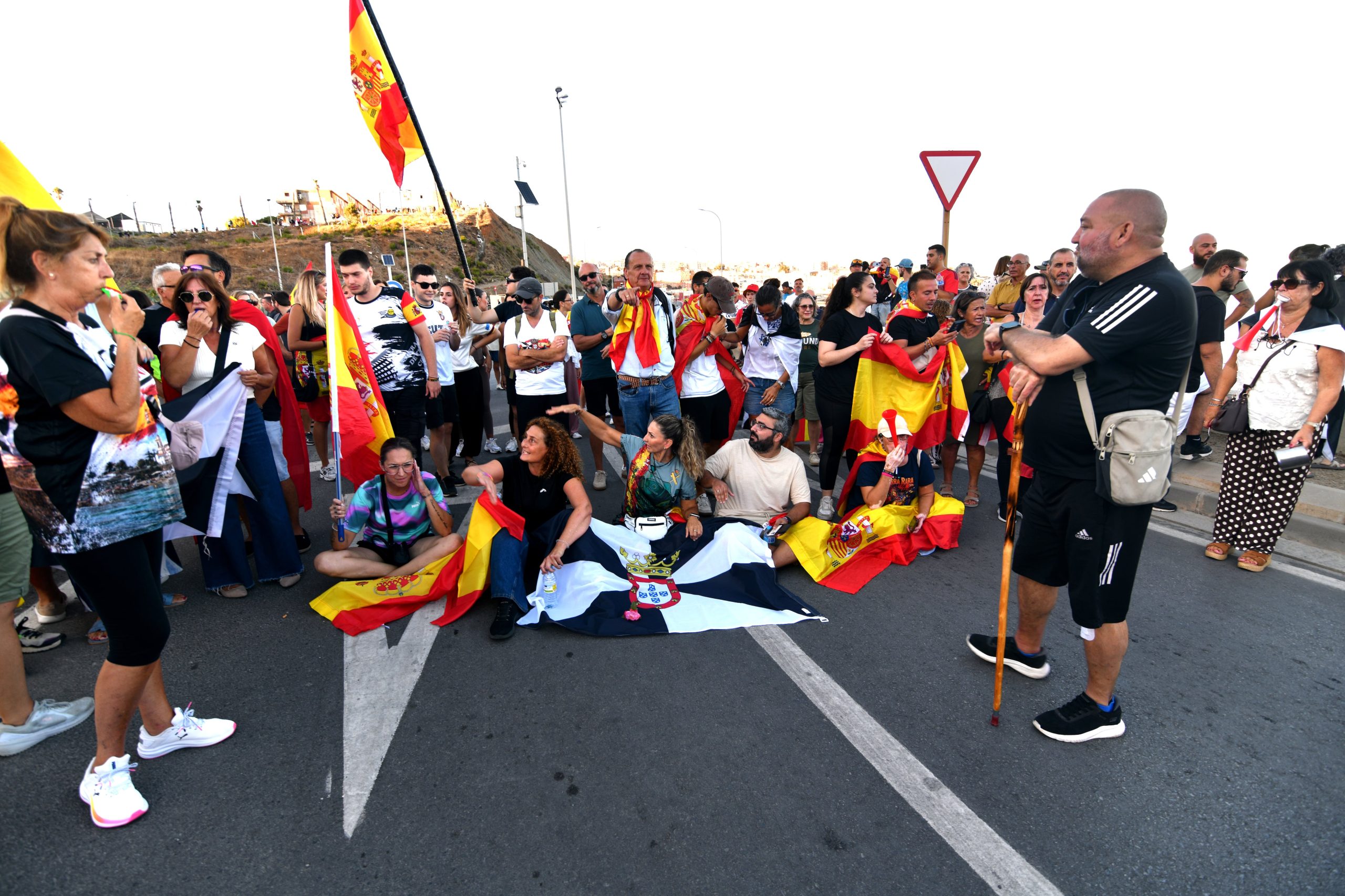
Pese a que las protestas ciudadanas que han brotado en los últimos días en Ceuta se habían suspendido este sábado por temor a que sus marchas y reclamaciones se vinculen con actos violentos o acciones de grupos ultras, unos 200 ceutíes han salido a la calle a última hora de la tarde para reclamar la expulsión de los miles de migrantes que accedieron a la ciudad en la gran entrada del pasado 30 de julio. Los manifestantes estaban citados a las 18.00 en las Murallas Reales con la intención de llegar hasta la frontera de El Tarajal e ir a Loma Colmenar, una zona de la ciudad en la que hay cientos de migrantes esperando a ser aceptados en uno de los recintos de acogida temporal habilitados por el Gobierno en un aparcamiento al aire libre. Finalmente, la policía se lo ha impedido y han terminado haciendo una sentada en la rotonda del Hospital Universitario de Ceuta, a un kilómetro aproximadamente de la frontera, durante 20 minutos, un tiempo en el que ha estado cortado el tráfico.
Uno de los cometidos de la manifestación era apoyar a los vecinos que están acusando la presión migratoria, por eso querían pasar por la zona de Juan XXIII, una zona en la que muchos migrantes se refugiaron durante los primeros días. Estos residentes vieron cómo numerosos migrantes dormían en los bajos de sus edificios y se instalaron en sus calles.
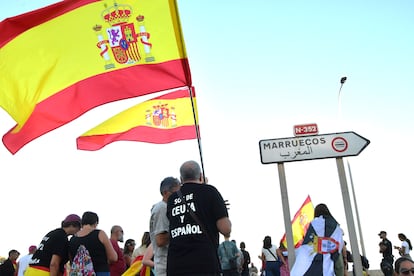
Como en días anteriores, los manifestantes han portado banderas españolas y ceutíes durante la marcha, así como camisetas de la selección española. Durante todo el recorrido han sido custodiados por agentes de Policía Nacional, concretamente de la Unidad de Intervención Policial (UIP) y en la zona en la que han hecho la sentada se les han sumado militares. Los manifestantes han repetido las proclamas de los últimos días: “Invasores, expulsión”, “Ceuta no se vende, Ceuta se defiende”, acompañadas de vivas a España, a la Policía, al Ejército español y a la Legión.
Cerca de las 20.00, se han detenido en la penúltima rotonda antes de llegar a la frontera, porque los furgones policiales no les han dejado avanzar más y han realizado una sentada. El tráfico ha estado cortado durante 20 minutos mientras los manifestantes coreaban “no hay frontera” o “no nos engañan, Ceuta es España”.
“Mañana nos tenemos que organizar mejor”, han comentado varios participantes, haciendo mención a la cancelación inicial y la convocatoria posterior. En la zona se habían desplegado cinco furgones policiales y tres militares, además de una quincena de agentes de Policía Nacional y en torno a una veintena de militares. Sobre las ocho y media, los manifestantes no han seguido el recorrido al centro de acogida de urgencia de migrantes de Loma Colmenar, sino que han regresado en dirección al centro. Varios furgones policiales cortaban el acceso al lugar. Los protestantes repasaban durante el regreso la próxima cita: este domingo quieren animar un recorrido de la Armada de la Solidaridad, un grupo de más de medio centenar de embarcaciones llegadas de Andalucía este sábado, al que se sumarán otras de la ciudad autónoma. En el recorrido de la manifestación se encontraba la periodista Susana Griso, que ha estado entrevistando a algunos de los vecinos. Mientras algunos manifestantes le preguntaban con enfado si solo va a contar lo que ella quisiera, otros le daban las gracias por acudir. “Por lo menos que se empape de lo que pasa en la ciudad”, razonaba una de ellas. “¡Di la verdad!”, le han pedido a gritos en varias ocasiones.
Los ceutíes llevan tres días saliendo a sus calles para pedir la expulsión inmediata de los miles de inmigrantes que se resisten a abandonar la ciudad desde la gran entrada de finales de julio. Su presencia por prácticamente todos los barrios de esta ciudad de 19 kilómetros y 84.000 habitantes ha puesto patas arriba sus vidas, haciéndoles sentir inseguros e impidiéndoles llevar una vida normal, ya que se han establecido en numerosos espacios públicos, como playas, aceras, parques infantiles o zonas de recreo. Una de las quejas más repetidas es que tienen que tener a sus hijos encerrados, que esta situación excepcional les ha dejado “sin verano”, y temen que la situación no mejore antes de que comience el curso escolar. “Estamos todos muy afectados, llevamos un mes con unos elementos en la calle que no es normal y no son todos pobrecitos”, se quejaba una de las participantes.
Ese miedo a ser instrumentalizados por personas de ideas radicales ha hecho que se pospongan las protestas hasta el próximo 2 de septiembre, día de la autonomía de Ceuta. Entonces volverán a salir a la calle para exigir que les devuelvan su ciudad en una gran marcha convocada por la Federación Provincial de Asociaciones de Vecinos (FPAV) y el Foro Ceuta Siglo XXI.
La suspensión de las protestas se planteó como una medida de prevención, indican fuentes en contacto con los organizadores. Sin embargo, la Policía no ha detectado “una presencia significativa” de estos grupos, aunque siguen rastreando todos los movimientos de la ciudad, añaden fuentes policiales. Unos días después de la gran avalancha se detectaron algunos sucesos relacionados con miembros de Desokupa, firma dedicada a los desalojos extrajudiciales, o el agitador ultra Vito Quiles, pero se les sacó de la ciudad autónoma, explican las fuentes consultadas. La práctica dio buen resultado, pero no se puede descartar que vuelvan a darse situaciones similares.
Las movilizaciones surgieron de forma espontánea entre los ceutíes y se han organizado a través de grupos de WhatsApp, divididos por zonas de la ciudad. Esos grupos no tienen estructura jerárquica y, aunque se había anunciado la suspensión, algunas voces animaban a seguir saliendo a la calle y los agentes de Policía estaban alertados ante la posibilidad de que las hubiera.
Durante la protesta de este viernes por la tarde, los manifestantes se emplearon a fondo en que se les percibiera como un grupo pacífico y unido, que gritaba para reclamar soluciones inmediatas para la ciudad. Los ceutíes hicieron el recorrido desde la Delegación del Gobierno de Ceuta hasta Playa Benítez, y una vez allí no pudieron acercarse a los migrantes que les observaban desde un espigón, mientras gritaban pidiendo su expulsión inmediata. “Ayer no se arrasó ningún poblado, se quemaron tres sombrillas”, aseguraba uno de los manifestantes, sobre el incendio en las tiendas de esta misma zona. “Estamos indignados”, añadía. “Tenían que ponerlos en la frontera. Que no nos digan en televisión que hacemos vandalismo, el vandalismo lo cometen ellos, que invadieron tiendas y nos invadieron a nosotros”, aportaba otra de las manifestantes.
El miércoles por la noche, la Policía impidió que cientos de ceutíes se enfrentaran a los migrantes que se han asentado en la playa de El Trampolín, donde se han vuelto a levantar decenas de tiendas de campaña después de que la ciudad limpiara el espacio, y se llegó a interrumpir el reparto de alimentos por parte de Cruz Roja por motivos de seguridad.
Durante el sábado, la ciudad ha recibido la llegada embarcaciones que han partido de diferentes puntos de Andalucía en una iniciativa bautizada La Armada de la Solidaridad. El acto, de carácter cívico, tiene como finalidad hacer llegar a los ceutíes un mensaje de apoyo y solidaridad. “Todavía siguen sufriendo, el Gobierno debería tomar medidas para expulsar (a los migrantes) lo más urgentemente posible”, reclama Pedro Rodríguez, promotor marbellí y uno de los organizadores, junto al empresario y expolítico Marcos de Quinto, el consultor Amalio de Marichalar o el físico Francisco Mier del Castillo, exdirector de la Central Nuclear de Santa María de Garoña. La idea surgió hace unas tres semanas, pero se fijó para este sábado porque había previsión de un día sin viento. “También hay personas que han cogido el ferry para mostrar su apoyo a la ciudad”, añadía Rodríguez por la mañana, cuando cruzaba el Estrecho hacia la ciudad.
Las embarcaciones que lleguen durante el día han podido amarrar en Marina de Ceuta, principal puerto deportivo de la ciudad autónoma, y por la noche tenían prevista una cena con las autoridades locales. El domingo se ha convocado otro paseo náutico junto a embarcaciones de Ceuta, todas engalanadas con banderas de España y de la ciudad. “Puede ser un acontecimiento y una imagen que podremos difundir al máximo para llamar la atención que vive y sufre Ceuta”, subraya Rodríguez.







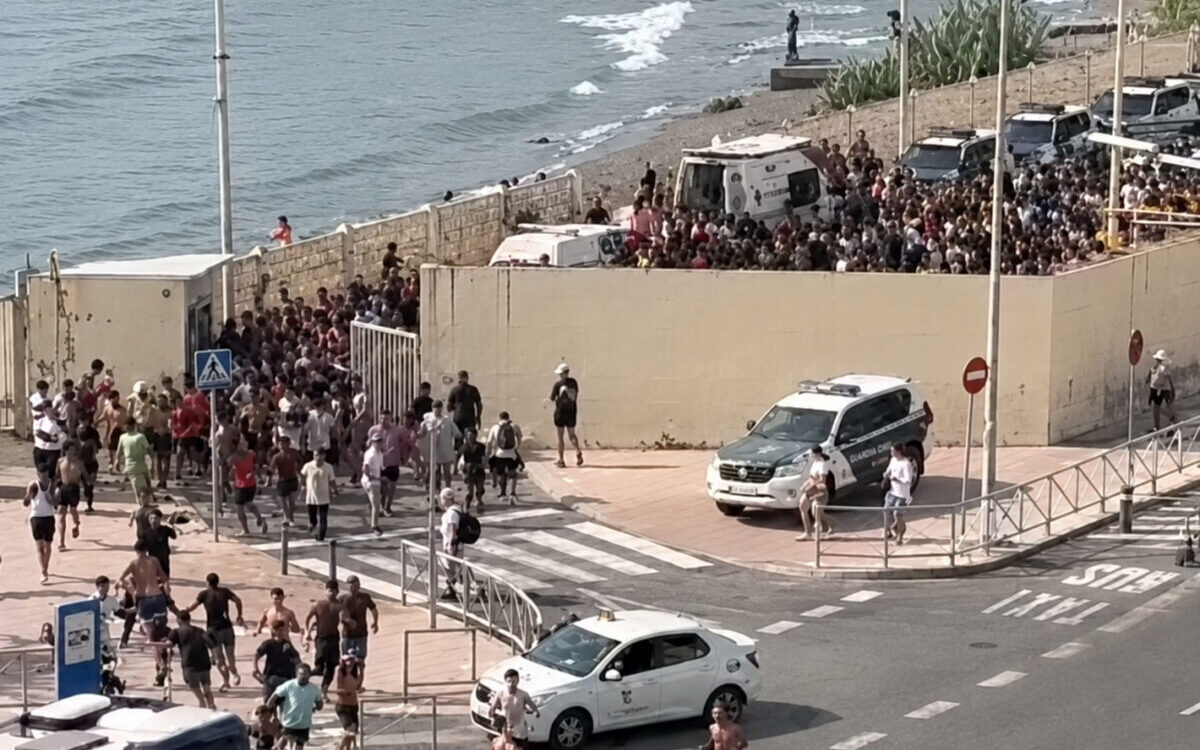
Thousands of immigrants flood Spanish gates in Ceuta in July.
Credit: Macarena Olona X
Foreign residents across Spain may notice something unusual outside their local town halls on Wednesday, September 2, when rallies in support of Ceuta are due to take place across the country.
The gatherings will put the spotlight on a small Spanish city on the North African coast that many people have never visited and some may struggle to find on a map.
Ceuta has suddenly found itself at the centre of a migration crisis, a national political battle and renewed tensions with Morocco over its future. But why is it part of Spain in the first place, why does Morocco claim it, and why does a city separated from mainland Spain matter so much to Madrid and the European Union?
Here is the story behind the headlines.
Ceuta is in Africa, but it is part of Spain
Look at a map and the confusion is understandable. Ceuta is on the northern coast of Africa, directly opposite southern mainland Spain across the Strait of Gibraltar. Its only land border is with Morocco.
Yet, politically and constitutionally it is Spanish. Ceuta is one of Spain’s two autonomous cities in North Africa, together with Melilla, further to the west. Its residents are Spanish citizens, elect representatives to Spain’s parliament, and use the euro.
It is also part of the European Union, which makes the border between Ceuta and Morocco much more than just a Spanish border. It is also an external frontier of the EU, which helps explain why events involving a relatively small city can rapidly become an issue for Madrid and Brussels.
Ceuta was Portuguese before it became Spanish
One of the most common misconceptions surrounding Ceuta is that Spain simply took the city from modern Morocco. But, the history is considerably older and more complicated than that.
Ceuta has been controlled by numerous civilisations during its long history, including Romans, Byzantines and a succession of Muslim dynasties.
The crucial turning point came in 1415, when Portugal captured Ceuta, and not from Morocco. That began more than six centuries of Portuguese and subsequently Spanish rule. It happened 77 years before the Catholic Monarchs completed the conquest of Granada in 1492.
Spain and Portugal later came under the same monarch in 1580 during the Iberian Union. When Portugal broke away from the Spanish Crown in 1640, Ceuta did not follow. The city continued under the Spanish monarchy.
The arrangement was formally recognised in the Treaty of Lisbon in 1668, when Spain recognised Portuguese independence and Portugal recognised Ceuta as belonging to the Spanish Crown.
The Autonomous City of Ceuta documents the city’s Portuguese history, including the Portuguese conquest in 1415 and the centuries that followed, Ceuta has remained under Spanish sovereignty ever since.
That chronology matters. Modern Morocco gained independence in 1956, almost three centuries after Portugal had formally recognised Spanish sovereignty over Ceuta.
So why does Morocco claim Ceuta?
Morocco does not accept the Spanish position. Rabat has long maintained claims over Ceuta and Melilla, regarding the cities as territories that should form part of Morocco.
Spain rejects that position and considers both cities integral parts of the Spanish state. This is not simply an old dispute buried in history books. The sovereignty question has returned to the headlines during the current crisis.
Those comments followed remarks by Morocco’s Justice Minister referring to what he described as the country’s “historical and geographical rights” over the two cities.
The timing has made the issue particularly sensitive following the events at the border.
For the people living in Ceuta, however, the current constitutional position is clear. They live in an autonomous Spanish city and are Spanish and EU citizens.
What happened at the border in July?
The reason Ceuta is dominating Spanish headlines now has little to do with a centuries old treaty and everything to do with what happened on July 30 and 31.
An extraordinary number of people entered Ceuta irregularly from Morocco, many attempting the dangerous journey by sea. The sudden movement of people was enormous in relation to a city with a population of around 80,000.
Border controls, accommodation, identification procedures, humanitarian assistance and local public services were placed under extraordinary pressure. Questions quickly came out over whether such an enormous movement of people could have happened spontaneously.
Just days later, Spain’s Audiencia Nacional opened preliminary proceedings to investigate whether criminal organisations had helped coordinate or encourage the mass crossings. The investigation then moved part of the focus away from the people crossing the border and towards the possibility that organised networks had played a role.
Could Spain have known it was coming?
That question has since become politically explosive. The Government has faced growing scrutiny over what Spanish intelligence knew before the mass movement towards the border.
As Euro Weekly News reported, Defence Minister Margarita Robles and Interior Minister Fernando Grande Marlaska have given differing accounts of what information existed before the crossings. Robles said intelligence concerning a possible mobilisation had been communicated before the mass crossing, while the Interior Ministry has maintained that there was no intelligence report predicting what ultimately happened.
The distinction between knowing that people might gather near the border in preparation for a mass breach of the border, and predicting the extraordinary scale of what followed, is now part of the political argument in Madrid.
The crisis did not end when the crossings stopped
The dramatic images from the border may have disappeared from television screens, but Ceuta was left dealing with the consequences. Thousands of people remained in the city, placing enormous pressure on accommodation and public services. Some ended up sleeping in makeshift camps. By August 20, police had begun moving thousands of migrants from makeshift shelters on Playa del Trampolín into temporary accommodation.
The operation involved Policía Nacional, Guardia Civil and Local Police, while extra reception sites were prepared to accommodate those remaining in Ceuta. Moving people off the beach, however, did not resolve the underlying question of what would happen to them.
Can someone who reaches Ceuta simply travel to mainland Spain?
No, and this has become another source of confusion surrounding the crisis. The Spanish Foreign Ministry has explained the rules governing irregular entry into Ceuta and Melilla, including the additional controls involved in travelling onwards towards mainland Spain and the rest of Europe.
Ceuta and Melilla have an unusual border arrangement. There is one control at the border with Morocco and another Schengen control for departures towards mainland Spain by sea or air.
That creates an extra filter before someone can travel onwards. Reaching Ceuta irregularly therefore does not automatically give someone the right to remain in Spain or move freely into mainland Spain and the rest of Europe.
Authorities must also deal individually with people who may be entitled to request international protection, while minors and other potentially vulnerable people have additional legal protections.
Ceuta then gave Madrid an ultimatum
As the number of people remaining in the city continued to put pressure on services, relations between Ceuta’s government and Madrid deteriorated. Ceuta’s president, Juan Jesús Vivas, demanded faster action from the national Government on returns, immigration procedures and additional resources.
The dispute escalated when Vivas gave Madrid 30 days to act, warning that Ceuta could take the battle to Spain’s Supreme Court and Constitutional Court. For such a small territory with limited space, the argument is not abstract. Accommodation, healthcare, policing and other public services all have finite capacity.
Madrid, meanwhile, has to operate within Spanish and international immigration law when determining what happens to each person.
There were fears it could happen again
The anxiety did not disappear after July, as social media messages subsequently called for another mass attempt to reach Spanish territory.
On August 15, Moroccan security forces stopped hundreds of people gathering near the Ceuta border as Spanish police were kept on high alert. Nearly 300 people were reportedly detained as Moroccan authorities broke up the gathering near Castillejos. The episode demonstrated how heavily the security of Ceuta’s border depends on cooperation between Spain and Morocco.
Why did Spain declare a national security situation?
By late August, Madrid had taken an extraordinary step: The Spanish Government formally declared the situation in Ceuta to be a matter of interest for national security.
The official declaration published in Spain’s BOE says the irregular arrivals on July 30 and 31 created unprecedented pressure on border control, identification, humanitarian assistance and reception capacity. It also says ordinary public services have been affected, including social services, child protection, security, transport and administration.
The declaration allows reinforced coordination between national and local authorities while they continue exercising their normal powers. Importantly, it is not the same as declaring a state of emergency. The measure does not suspend fundamental rights or give authorities the exceptional powers associated with Spain’s constitutional emergency provisions. It is currently due to stay in place until December 31, although it can be extended or ended earlier depending on how the situation develops.
Why will people be gathering outside town halls on September 2?
This is where a crisis that may have seemed distant to foreign residents on the Costas becomes much more visible.
September 2 is Ceuta Day.
The Spanish Federation of Municipalities and Provinces, FEMP, has called on town halls across Spain to hold gatherings at 8pm on September 2 as a show of solidarity with the autonomous city and its residents.
There is also a separate citizen movement organising gatherings around the country. Euro Weekly News has reported on how the Ceuta crisis is now reaching mainland Spain through rallies planned in towns and cities across the country.
The gatherings are deliberately timed to coincide with Ceuta Day.
The rallies are not simply anti immigration protests
There is an important distinction for foreign residents who encounter one of the gatherings. FEMP is presenting its events as a show of solidarity with Ceuta and the people who live there, rather than as protests against migrants.
Separate citizen movements and other groups participating around Spain may have their own messages about immigration, border security and the Government’s handling of the crisis. It would therefore be misleading to assume that everybody gathering outside a town hall on September 2 is there for precisely the same reason.
For some, it is about supporting Ceuta’s residents. For others, border security is the central issue. Others are angry about immigration policy or Madrid’s handling of the crisis.
The rallies are coming to the Costas too
The nationwide campaign means the issue will be visible in areas with large foreign populations. Fuengirola and Torremolinos are among the Costa del Sol towns that have already joined the nationwide show of support for Ceuta.
Both gatherings are scheduled for 8pm on September 2, with Fuengirola’s event in Plaza de España and Torremolinos holding its gathering outside the town hall. Similar events are planned elsewhere across Spain.
For foreign residents who normally encounter Ceuta only in headlines about migration, the September 2 gatherings will bring what has largely seemed a distant North African crisis much closer to home.
Why Ceuta matters to the rest of Spain
Ceuta has fewer residents than many mainland Spanish towns, but its strategic importance is far greater than its size suggests.
It is Spanish territory in the continent of Africa. It sits on an external frontier of the European Union and beside one of the world’s most strategically important shipping routes. It is also at the centre of Spain’s complicated relationship with Morocco over migration, security and sovereignty. That relationship can have very practical consequences. The events of the past month have demonstrated how quickly pressure on a relatively short border can become a humanitarian emergency, a security issue, a diplomatic dispute and a national political crisis.
Behind all those geopolitical questions are tens of thousands of ordinary Spanish residents trying to live normally in a city that has spent the past month under extraordinary pressure. That helps explain why events at the Moroccan border at the end of July have travelled all the way to Madrid, Brussels and now town hall squares across Spain.
For foreign residents who see those gatherings on September 2, understanding Ceuta means understanding that this is about much more than one month of migration.
It touches on Spain’s borders, its relationship with Morocco, European security and more than 600 years of history.
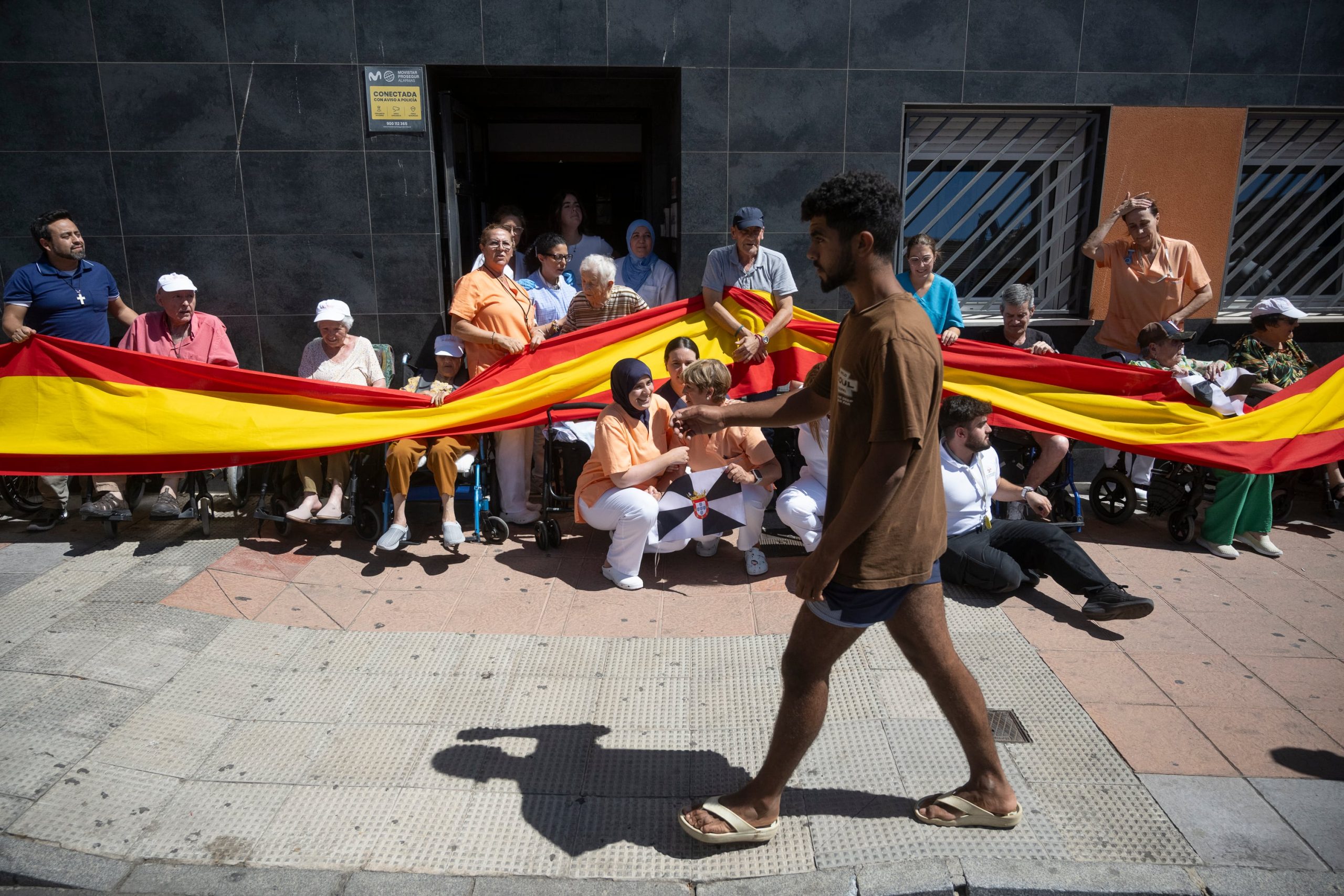
Hartazgo de los vecinos, pero sin brotes de violencia como los que vivió Ceuta la tarde y la noche del jueves. Un día después de que grupos de ciudadanos intentaran impedir el reparto de comida y agua a los migrantes acampados en la playa de El Trampolín y arrasaran y quemaran un asentamiento improvisado en un arenal cercano, en la ciudad autónoma se escucharon este viernes las mismas consignas. Tras los llamamientos a la calma y a la paz social hechos por el Gobierno central y el equipo de Juan Jesús Vivas, no se repitieron las mismas escenas, al menos hasta entrada la noche, aunque sí unos petardazos sobresaltaron una manifestación.
La tensión, en todo caso, aún no se había disipado. Por la tarde, un centenar de personas se congregó frente a la Delegación del Gobierno de Ceuta portando claveles y coreando “Ceuta unida jamás será vencida” en varias ocasiones. Entre los manifestantes, que portaban banderas de España y de Ceuta, además de camisetas del equipo de fútbol local, había personas de todas las edades, también niños. Tras pasar unos minutos en la plaza, iniciaron un recorrido por la ciudad, haciendo sonar silbatos y protegiéndose de los últimos rayos de sol con abanicos. Había un padre y un hijo que han viajado desde Valencia para apoyar a los ceutíes y un matrimonio de unos sesenta años de Granada que también ha viajado a propósito para manifestarse.
El grupo siguió recorriendo la ciudad pidiendo la expulsión de los inmigrantes que entraron en la avalancha masiva del 30 y 31 de julio. La protesta de la población ceutí, hastiada por la presencia de miles de personas que cruzaron desde Marruecos hace casi un mes, desfiló durante casi tres horas por las calles, sumando participantes conforme avanzaba. Los manifestantes reclamaban la salida de los migrantes al grito de “invasores, expulsión”.
Frente a un supermercado situado en la avenida de España, se detuvieron a animar a los militares que custodian la entrada al grito de “no estáis solos”. Continuaron coreando consignas como “Ceuta es España” para retomar el “invasores, expulsión”. Más de una quincena de agentes de las Unidades de Intervención Policial (UIP) de la Policía Nacional acompañaban la manifestación en la parte delantera. Según fuentes policiales, a la altura del supermercado ya se habían sumado alrededor de medio millar de participantes.
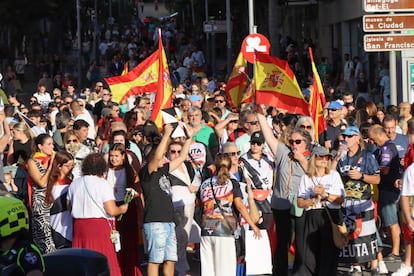
Un numeroso grupo de migrantes observaba la manifestación desde un espigón cercano a la playa en la que el día anterior se produjo la quema de una de las tiendas de los migrantes. Nueve agentes de Policía estaban dispuestos en la playa impidiendo el paso a la zona. “Ayer no se arrasó ningún poblado, se quemaron tres sombrillas. Lo que pasa es que estamos indignados”, reclama uno de los manifestantes. Los vecinos no pueden pasar de aquí y se quedan coreando y gritando “fuera de aquí” o “ilegales, fuera”.
El motivo del bloqueo era evitar que grupos de ceutíes interrumpieran la distribución de las ayudas a cargo de Cruz Roja. La ministra de Inclusión, Seguridad Social y Migraciones, Elma Saiz, hizo precisamente desde su comparecencia en el Congreso un “llamamiento” a dejar trabajar con “garantías” a los voluntarios.
La Coordinadora de Organizaciones para el Desarrollo y Amnistía Internacional mostraron el jueves precisamente su “profunda preocupación” por la “deriva violenta” y el “creciente clima de violencia y tensión en la calle” en Ceuta. Amnistía pidió que el personal de Cruz Roja desplegado en Ceuta pueda desarrollar su labor “en condiciones de seguridad” y “sin miedo”, tras comprobar que están sufriendo “amenazas” y viendo “obstaculizada su labor” de reparto de agua y comida. Según el Gobierno, el alcance de la respuesta humanitaria de emergencia activada junto a Cruz Roja Española desde el 3 de agosto comenzó con la entrega de 2.500 kits diarios en la playa de El Trampolín y otros puntos de la ciudad y que “fue ampliándose progresivamente a medida que aumentaban las necesidades detectadas”. Según los datos aportados, a fecha 27 de agosto se han distribuido 93.650 kits de alimentación, 1.396 kits de higiene femenina y 2.150 kits de higiene masculina.
Alberto Núñez Feijóo
WATCH: Protesters Hoist Spanish Flag After Storming Beach And Torching Migrant Camps In Ceuta

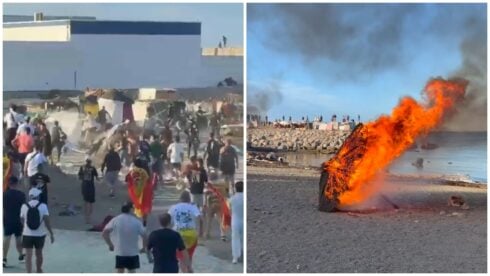
 TENSIONS boiled over in the Spanish enclave as migrants’ belongings were set on fire during the disturbance on Thursday.

Las Protestas Ciudadanas Se Frenan En Ceuta Por Temor A Que Las Vinculen Con Ultras
‘Blazing Saddles’: bizarre discovery sparks major police operation in Spain

Almuñecar’s First La Vuelta Start
Make a small donation at Miramar shopping centre and transform a child’s first day back at school

How Kimi Antonelli saved Red Bull as Max Verstappen signs blockbuster F1 deal

How To Get A Tourist Rental Licence In Andalusia (Spain) – Step-By-Step Guide 2025


-
back to school2 weeks ago
Make a small donation at Miramar shopping centre and transform a child’s first day back at school
-
 Uncategorized1 week ago
How Kimi Antonelli saved Red Bull as Max Verstappen signs blockbuster F1 deal
-
 ElPais2 weeks ago
Family Of Former Mexican Federal Police Officer Killed On Ukraine Frontline Faces Agonizing Wait For His Remains
-
 New Developments2 weeks ago
How To Get A Tourist Rental Licence In Andalusia (Spain) – Step-By-Step Guide 2025
-

 Ceuta2 weeks ago
Hundreds Of Migrants Left In Ceuta After Mass Border Crossing Stage Protest To Demand Asylum From Spain – ‘I Don’t Want To Return!’
-

 %2 weeks ago
Why Your Spanish Country House Zaps You Every Summer
-

 Uncategorized2 weeks ago
Flavio Briatore delivers verdict on Aston Martin dream team:
-
 BCE1 week ago
Los Precios De La Energía En Europa Volvieron A Escalar Por Encima Del 10% En Julio