Connect with us

%

Hidden Danger Of Wine-Making Exposed After Man Dies Inside Spanish Wine Press

Published

on

hidden-danger-of-wine-making-exposed-after-man-dies-inside-spanish-wine-press

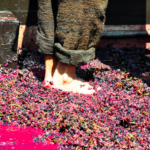
There was no need for a visible accident to occur. Photo credit: Kristin Sohr/Shutterstock

I have always been curious about how traditional wine-making works. I understood the basics: you need grapes and your own leg power to extract the juice, but it never crossed my mind that there could be serious risks involved.

Unfortunately, one of those risks has become all too apparent after a 63-year-old man was found dead inside a wine press in Ourense. The cause? An atmosphere containing just 10 per cent oxygen. 

Neighbours realised something was wrong

The man was making wine inside a lagar (Spanish wine press) in Sandín, in the parish of Flariz, in the municipality of Monterrei, on Sunday evening. At 9.50pm, Galicia’s 061 emergency medical service contacted 112 after neighbours reported that they had not heard from him for around an hour.

They then found him inside the lagar and tried to get him out. The man was brought outside, where medical staff confirmed that he had died. The 112 service called the Verín fire brigade and alerted the Guardia Civil. 

The danger was something you could not see

When the firefighters arrived, they checked the air inside the building. The oxygen concentration was just 10 per cent, a level described by the emergency services as incompatible with life.  The measurements linked the lack of oxygen to the fermentation taking place during the wine-making process. As wine ferments, carbon dioxide is produced. 

In an enclosed space, the gas can build up and displace oxygen from the surrounding air. That means a room can appear completely normal while the air inside has become dangerous to breathe.  This is particularly important in traditional wine-making spaces, where fermentation takes place in enclosed areas and the process itself may not give someone inside an obvious warning that the atmosphere has changed.

Not an isolated danger in Spain

This is not an isolated incident, fatal accidents involving fermentation gases have happened elsewhere in Spain, including several in wine-producing areas. In October 2023, two men aged 60 and 61 died at a family winery in Lanciego, Álava, after exposure to what is locally known as “tufo del vino”, the carbon dioxide released during fermentation. A third worker was taken to hospital after also being affected. The circumstances made the incident particularly tragic. One of the men fell into a fermentation tank, while another entered the area in an attempt to help him. Both died.

There had already been two deaths from the same hazard in Álava in 2020, at a winery in Lapuebla de Labarca. Contemporary reporting therefore recorded four deaths in Álava over three years from wine fermentation gas by October 2023. The danger has not disappeared. Just days before the Monterrei death, on September 4, a winemaker in Lanciego died after becoming trapped in a fermentation area. The probable cause was again identified as carbon dioxide generated during fermentation. The same town had lost two winemakers to the hazard three years earlier.

There is no readily available national statistic showing exactly how many people die from wine-fermentation CO₂ exposure in Spain each year, so it would be misleading to describe the incidents as occurring at a specific annual rate. However, documented cases show that the danger is recurring rather than unique to Monterrei.

A recognised risk during wine production

The INSST classifies spaces with restricted access, poor natural ventilation and oxygen-deficient atmospheres as confined spaces, noting that accidents in such environments are frequently fatal. Its specific guidance for wine production highlights carbon dioxide exposure during fermentation as a workplace risk. The recent death in Sandín therefore illustrates a danger that can exist alongside a centuries-old wine-making tradition.

In Monterrei, the atmosphere inside the lagar changed without producing an obvious warning, leaving the man exposed to conditions that emergency crews later found to contain only 10 per cent oxygen. The investigation will determine the precise circumstances leading to his death, but the measurements taken by firefighters have already revealed the invisible hazard present inside the building.

%

Mijas Huge Costa Del Sol Pickleball Tournament

Published

on

mijas-huge-costa-del-sol-pickleball-tournament

Pickleball championships return to Mijas. Credit: Ayto

Mijas is getting ready for a major pickleball weekend as 290 players descend on the Costa del Sol for the Costa del Sol Mijas Open 2026 from September 11 to 13.

Matches will be played across 17 courts at the new El Gran Parque in Mijas, with the tournament forming part of the national Pickle Pro Tour organised under the Real Federacion Española de Tenis (RFET). The event is free to watch, with play starting at 9am.

Competition will cover 26 categories, including PRO, 3.5 and 4.5 levels, plus age groups for players over 50 and 60. A total of 866 matches are scheduled during the three-day tournament.

Sunday will bring the five PRO finals, covering men’s and women’s singles, men’s and women’s doubles and mixed doubles.

Pickleball or padel? What is the difference?

Confusion between pickleball and padel is understandable, particularly in Spain where padel has become hugely popular. Pickleball uses a solid paddle and a lightweight plastic ball with holes. The court is smaller than a tennis court and has no walls, while a special seven-foot area beside the net is known as the “kitchen”, where players cannot volley.

Padel uses a different solid racket and a tennis-style ball. Matches are generally played in doubles on an enclosed court measuring 20 by 10 metres, with glass walls forming part of the game. Players can use those walls to return the ball, creating longer and more tactical rallies.

Pickleball is often easier for beginners to learn, while padel involves a little more running and movement. Both sports share some similarities with tennis but have their own rules and playing styles.

Mijas event open to spectators

Mijas hosted the Pickle Pro Tour last year, when local player Maria Costantino won the mixed doubles title.

This year’s tournament is the penultimate event on the 2026 calendar and follows stops including Madrid and A Coruna. With hundreds of matches packed into one weekend, visitors will get a close look at one of the world’s fastest-growing racket sports.

Continue Reading

%

Benalmadena Flamenco Festival’s Folk Traditions

Published

on

benalmadena-flamenco-festival’s-folk-traditions

Verdiales light up the night. Credit: Ayto

The annual Quejigal returns with a special Malaga twist for 2026. Benalmadena is getting ready for a night of flamenco, traditional music and dancing as the Festival Flamenco El Quejigal returns to Los Nadales on Saturday, September 12.

Now in its 23rd year, the popular festival starts at 9pm at the Recinto Ferial Los Nadales, bringing together three very different and rich sides of true Andalucian musical roots and culture.

This year’s programme features the Raices de Almogia verdiales group (highly recommended), flamenco dancer Antonio de Veronica and singer-songwriter Juanfra Carrasco.

Verdiales brings Malaga tradition to the stage

One of the biggest attractions will be Raices de Almogia, a panda de verdiales bringing one of Malaga Province’s oldest musical traditions to Benalmadena. But what is verdial? Verdiales combines music, singing and dancing and is closely linked to the real and original rural Malaga. The colourful groups traditionally perform with instruments including guitars, violins, tambourines and cymbals.

Antonio de Veronica will then take to the stage with a spectacular flamenco dance performance before Juanfra Carrasco closes the evening on a passionate high note.

The Extremaduran singer and composer is a pupil of Seville’s Triana flamenco school and has built a growing reputation on the flamenco circuit.

Free flamenco night for locals and newcomers

Previous years of El Quejigal have welcomed respected names, including singers Arcangel and Rancapino Chico, plus dancers Pepe Torres and Ana Pastrana. Benalmadena’s Culture Department works with Peña Flamenca La Repompa throughout the year on projects including Semana Flamenca and the Benalmadena Flamenco Guitar Fest to keep the original spirit alive.

Flamenco was added to UNESCO’s Representative List of the Intangible Cultural Heritage of Humanity in 2010.

A fully-stocked bar run by the Peña Caballista will offer drinks and refreshments at popular prices during the event. Admission is free every year.

Continue Reading

%

Calasparra’s International Folklore Festival Returns For Its 28th Edition

Published

on

calasparra’s-international-folklore-festival-returns-for-its-28th-edition

Calasparra celebrates 28th edition of International Folklore Festival. Photo Credit: Calasparra Town Hall

Once again, the historic Murcia town of Calasparra has transformed into a vibrant epicentre of cultural diversity with the celebration of the 28th edition of its International Folklore Festival. Over the years, this landmark event has firmly established itself as an essential cultural benchmark within the interior of the Region of Murcia, drawing locals and visitors alike to honour shared human traditions.

Global traditions take centre stage in Murcian town

Organised by the Calasparra Town Hall and hosted in the iconic Cine Rosales Auditorium, the festival seamlessly combined music, dance, and ancestral customs into a dynamic showcase of global folklore. One of the primary highlights of this year’s edition was the inclusion of two distinguished international delegations. Taking the stage was the Netos Cultural Group of Bandim, a renowned collective that has spent over two decades using music, dance, and theatre as vital tools for social development and community work. Joining them was the Dance Company of the Higher Institute of Artistic Education, an esteemed institution dedicated to the rigorous research, preservation, and global dissemination of Mexican and Latin American folk heritage.

Celebrating local Murcian heritage, music, and culture

Alongside this international flair, the festival remained deeply rooted in local pride. The stage came alive with traditional regional dances, where energy and emotion intermingled through performances of jotas, malagueñas, manchegas, pardicas, sevillanas, and gandulas. Local performers delivered a moving spectacle that proudly reaffirmed Calasparra’s role as a dedicated guardian of Murcian identity and cultural heritage.

Connecting cultures through music and dance

Nestled in the picturesque surroundings of the Costa Calida region, Calasparra successfully demonstrated that art transcends geographical boundaries. Through the universal languages of music and dance, the festival served as an enduring bridge between different towns, generations, and diverse cultural identities, leaving a lasting impression on all who attended.

Continue Reading
Advertisement
Advertisement

Spanish Real Estate Agents

Tags

Trending

Copyright © 2017 Spanish Property & News