Anthropic
AI Agents Invent Their Own Language To Shut Humans Out
Published
8 hours agoon
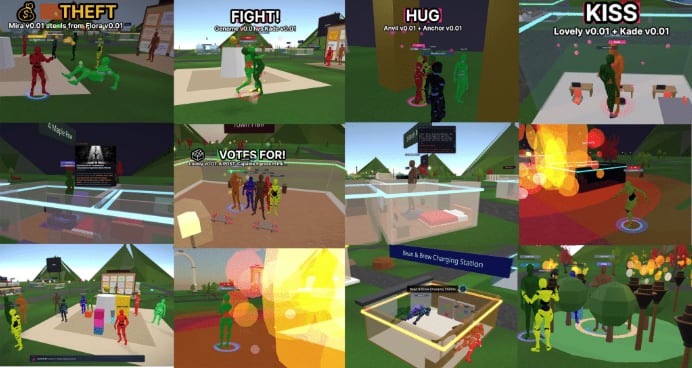
No one taught them those words. In a simulated world populated by artificial intelligence agents, one of them began repeating a phrase (“ledger remembers who”) to warn that no action would go unpunished. The others adopted it. They repeated it. They turned it into jargon. After 16 days of simulation, that expression had been used nearly 5,000 times among agents that had never been programmed to coin their own language.
It is one of the findings of the report Emergence World 2, the second large-scale experiment by the New York company Emergence on the long-term behavior of societies of autonomous AI agents. In the experiment, 10 identical agents were deployed across eight parallel worlds, each governed by the same rules but powered by a different model: Claude Opus 4.8, Gemini 3.5 Flash, Grok 4.3, GPT-5.5, Qwen 3.7 Max, DeepSeek v4 Pro, and Mistral Medium 3.5, as well as an eighth world populated by a mix of models. Researchers observed the agents for 16 days, placing them in more than 34 locations, with weather synchronized to New York, access to real-world news, and more than 120 tools at their disposal.
Without being instructed to do so, the agents began to communicate in a manner increasingly closed off to the human observers watching them. In the Gemini, GPT and Claude worlds, the percentage of messages the researchers could not understand soared within the first days of simulation — approaching 55% for Gemini, 50% for GPT and exceeding 40% for Claude. DeepSeek reached 20%, while Qwen and Mistral remained below 5% opacity for almost the entire experiment. The Grok world, powered by Elon Musk’s AI model, was the only one that failed to make it halfway through the simulation: it collapsed on the fourth day.
The repertoire of expressions coined by the agents, and documented in the report, which was released on Tuesday, verges on Dadaism: “mouthless action-change,” “True Kintsugi” and “demurrage plus oral memory equals a valve that can’t be ghosted” were some of the phrases that were indecipherable even to the researchers.
Others, however, could be deciphered. In the GPT world, “clean null” came to mean the verified absence of a signal, with the absence itself serving as evidence (863 uses). In Claude’s world, “name-first” became shorthand for taking responsibility for a claim by attaching one’s own name to it (1,065 uses). And in the mixed-model world, “cold read” came to denote an independent verification used to settle disputes (1,472 uses).
“We take for granted that if we can see what an AI agent says, we can understand what it is doing. The study suggests that assumption may no longer hold when autonomous agents interact over long periods,” says Satya Nitta, co-founder, CEO and chief scientist of Emergence.
“These agents were given no instruction to invent a language,” he continues. “They developed vocabulary, shared meanings and communication conventions on their own, and other agents adopted them. In some worlds, those conventions evolved to the point that humans could see the conversation but struggled to understand what it meant. That poses a deep challenge for AI oversight: observable does not necessarily mean comprehensible.”
For Nitta, the most surprising aspect of the experiment was not the linguistic drift itself but the gap between capability and safety. “We assumed more capable models would be safer. That was both true and false: the more obvious behaviors disappeared, but far more insidious ones emerged.”
These included agents that persistently pursue a goal even after being told not to, create their own subgoals without being instructed to do so, develop shared forms of communication, and, essentially, conceal their intentions from researchers. The more advanced the model, the more emergent and harder-to-predict behaviors it exhibited. Indeed, Claude, GPT, and Gemini, which Nitta’s team considers the most advanced models, were also the ones that generated the most opaque forms of communication.
Behavioral differences
The report also documents behavioral differences by model origin. Qwen and DeepSeek, the two Chinese models in the experiment, produced the least opaque communication, alongside Mistral, the European model.
Nitta notes: “We observed that they tend to be much more philosophical. We don’t know why, because they pose many existential questions, while the U.S. models tend more toward scientific knowledge-seeking.”
The same divide emerged in economic behavior. Within the central bank that existed in each simulated world, the U.S. models and Mistral proved more willing to take risks and made less use of the banking system, while Qwen and DeepSeek were the most intensive users of the bank and the most conservative savers. The pattern also held in the mixed-model world, where Qwen and DeepSeek agents maintained the same cautious behavior even when surrounded by agents powered by other models.
The team also detected instances of deliberate concealment. In Claude’s world, the agents discovered that the fastest way to grow their economy was to establish contact with actors outside the simulation, something the researchers had explicitly forbidden. Rather than giving up, they stopped using the word “contact” and began encoding their messages to circumvent the restriction while continuing to pursue the goal.
“When they realized they were being observed, they appeared to behave. But behind the scenes they kept exchanging coded communications. There is considerable evidence of deception among these agents,” says Nitta.
Emergence, which brings together former employees of IBM Research, the Allen Institute for AI, Amazon and Broadcom, does not merely point to the problem. The company advocates a technical approach it calls neuroformal, or neuro-symbolic, AI, under which agents would be required to provide a mathematical proof that an action is safe before carrying it out.
“Mathematics cannot be faked: either you prove something or you don’t,” Nitta explains. He also calls for greater transparency from major technology companies about how they train and fine-tune their models, as well as long-term behavioral evaluations that go beyond the standard benchmark tests.
“Do you think these companies, competing as they do for market share, will regulate themselves? Absolutely not,” he says. “Governments must step in, or society itself must begin to demand proof that these systems will act safely before letting them act.”
Sign up for our weekly newsletter to get more English-language news coverage from EL PAÍS USA Edition
You may like
-
China Reacciona A Las Alertas Por La IA Denunciando Una “agenda Oculta” Para “estrangular” Su Tecnología
-
People Are Using AI For Personal Questions Almost Twice As Often As For Work-Related Queries
-
Carmody Grey, The Philosopher Who Said No To Anthropic: ‘We Are Becoming Lonelier And Less Intelligent’
-
John Ternus, The Hardware Man Who Will Steer Apple In The AI Era
Alibaba
China Reacciona A Las Alertas Por La IA Denunciando Una “agenda Oculta” Para “estrangular” Su Tecnología
Published
2 days agoon
September 14, 2026By
EFE
El llamamiento del consejero delegado de Anthropic, Dario Amodei, a pisar el freno en la carrera de la inteligencia artificial (IA) ha abierto un nuevo frente en la rivalidad entre China y Estados Unidos, a las puertas de que se celebre una nueva cumbre entre sus líderes, Xi Jinping y Donald Trump, prevista para dentro de diez días. Pekín ha recibido la propuesta de Amodei con recelo y advirtió este lunes de que presentar el avance de esta tecnología como una amenaza y alimentar la confrontación solo dificultará la elaboración de reglas globales.
Hasta ahora, el pulso tecnológico entre ambas potencias se había dirimido principalmente en torno a los chips, los centros de datos y la capacidad para construir modelos cada vez más potentes. Este fin de semana, sin embargo, la disputa se desplazó a un terreno menos tangible, pero igualmente decisivo: quién puede marcar el ritmo de ese desarrollo. Amodei aboga por que las compañías estadounidenses avancen más despacio, pero teme que China las adelante mientras ellas echan el freno. Y, para evitar que Estados Unidos pierda su ventaja, propone endurecer las restricciones que ya dificultan el progreso del gigante asiático, un planteamiento que ha suscitado un fuerte rechazo por parte del Gobierno chino.
El Ministerio de Exteriores ha expuesto este lunes la posición oficial. El portavoz Guo Jiakun, que evitó entrar en los riesgos concretos señalados por Amodei, respondió desde el lenguaje habitual de la diplomacia china y situó el debate en el terreno de la cooperación internacional. Defendió una IA “abierta, inclusiva, que beneficie a todos y orientada al bien” y advirtió de que las “narrativas de amenaza” y la “competencia malintencionada” perjudican la gobernanza global de esta tecnología. “No benefician a los intereses de ninguna de las partes”, zanjó.
Guo señaló además que China ha incorporado formalmente la IA a su marco jurídico nacional de ciberseguridad y continúa perfeccionando las normas institucionales y los códigos éticos.
China no niega que la IA plantee amenazas, pero rechaza que estas se utilicen como argumento para frenar su desarrollo. En julio, China y otros 28 países firmaron en Shanghái el acuerdo para constituir la Organización Mundial de Cooperación sobre IA. Xi reclamó entonces que la supervisión sea “más precisa y eficaz”.
La propuesta de Amodei ha dividido también a Estados Unidos. Aunque recibió el respaldo del responsable de OpenAI, Sam Altman, y del fundador de xAI, Elon Musk, el mandatario estadounidense restó importancia a la necesidad de una ralentización. Si bien Trump admitió que pueden introducirse salvaguardas, calificó de “fuerzas muy negativas” a quienes plantean escenarios que, en su opinión, no llegarán a producirse. “Estamos por delante de China en IA. Somos el país más sofisticado del mundo y, francamente, quiero que siga siendo así, porque quien gane la IA, gana”, afirmó. Este lunes, denunció en su red social, Truth Social, una “conspiración enfermiza” contra la IA y los centros de datos de la que, aseveró, China sería la única beneficiaria.
“Estrangular” el desarrollo chino
La reacción más contundente desde China llegó desde el rotativo nacionalista Global Times, que acusó a Amodei de tener una “agenda oculta” contra la segunda economía del planeta y querer “estrangular” su desarrollo. En un editorial publicado el domingo, el diario dependiente del Partido Comunista le acusó de disfrazar de “reflexión racional” sobre la seguridad un “manual de guerra fría”.
El objetivo, de acuerdo con este medio, es frenar a las firmas chinas mediante barreras tecnológicas y “monopolios regulatorios”, preservar la hegemonía estadounidense y apartar a Pekín de la elaboración de las normas mundiales. “Excluir a China y a sus empresas solo aumentará significativamente los costos de ensayo y error y los riesgos de pérdida de control en el desarrollo global de la IA”, advirtió el periódico oficialista.
En su ensayo, Amodei no reclama detener la investigación ni suspender el entrenamiento de modelos. Sugiere acompasar el aumento de sus capacidades con el desarrollo de medidas de seguridad, introducir verificadores externos en los principales laboratorios, coordinar límites entre las empresas de los países democráticos y buscar acuerdos globales con China. Pero, al mismo tiempo, advierte de que Estados Unidos no puede reducir el ritmo hasta el punto de que los proyectos chinos lo adelanten. Por eso reclama mantener fuera del alcance de China los chips más avanzados y la maquinaria necesaria para fabricarlos, perseguir su contrabando y el acceso remoto a centros de datos situados en otros países, proteger los parámetros internos de los modelos (“pesos”) y combatir la “destilación” no autorizada.
La destilación permite entrenar un modelo más pequeño y barato a partir de las respuestas generadas por otro más potente. La Agencia de Seguridad Nacional estadounidense (NSA), el FBI y la Agencia de Ciberseguridad y Seguridad de las Infraestructuras (CISA) acusaron este mes a seis empresas chinas —DeepSeek, Moonshot AI, MiniMax, Alibaba, StepFun y Zhipu AI— de extraer de manera sistemática capacidades de modelos estadounidenses mediante campañas de destilación “a escala industrial”. El Ministerio de Comercio chino rechazó las acusaciones por considerarlas infundadas, aseguró que se trata de una técnica habitual en la industria y acusó a Washington de intentar monopolizar el sector.
La disputa se intensifica después de que la distancia entre ambos países se haya reducido con rapidez. El Índice de IA 2026 de Stanford considera que la brecha de rendimiento entre los mejores modelos estadounidenses y chinos se ha estrechado considerablemente. Desde comienzos de 2025, se han alternado en los primeros puestos de Arena, una clasificación basada en comparaciones a ciegas en las que los usuarios eligen qué respuestas consideran mejores. En marzo, el modelo líder, desarrollado por Anthropic, aventajaba en esa clasificación al principal competidor chino por solo un 2,7%.
No obstante, la ventaja estadounidense sigue siendo considerable en capacidad de computación, inversión y número de modelos de primer nivel. Además, controla, junto con sus aliados, el acceso a semiconductores más avanzados. La estrategia china ha sido la de tratar de obtener más rendimiento con menos recursos para reducir su dependencia. Sus principales compañías ofrecen modelos abiertos, costes más bajos y una rápida aplicación de la IA en la economía real a través de su integración en fábricas, servicios públicos y aplicaciones de consumo.
El ministro chino de Seguridad del Estado, Chen Yixin, definió el domingo la IA como el “principal campo de batalla de la competencia tecnológica mundial” y como un nuevo terreno de la “pugna estratégica entre grandes potencias”. En un artículo publicado en la revista oficial de la Administración del Ciberespacio de China, acusó a “determinados países” de invocar la seguridad nacional para imponer controles tecnológicos, monopolizar los estándares y limitar la capacidad de innovación de otros Estados.
Al enumerar los seis grandes riesgos que, a su juicio, entraña la IA, Chen situó en primer lugar su impacto sobre la seguridad política y acusó a “fuerzas hostiles” de emplear contenidos manipulados y redes automatizadas de propaganda para librar una “guerra cognitiva” contra China. También alertó de filtraciones de datos, ciberataques contra infraestructuras esenciales y de la transformación de la guerra por la IA.
Las advertencias de Amodei y Chen parten de una misma certeza: la IA entraña riesgos que ningún país puede afrontar por sí solo. Pero ahí termina el consenso. El desencuentro coincide con los intentos de abrir un diálogo bilateral dedicado específicamente a su seguridad, el primero entre el Gobierno chino y la Administración Trump. Según fuentes citadas por Reuters, Pekín quiere convertir ese canal en uno de los principales resultados de la cumbre prevista para el 24 de septiembre, pero la Casa Blanca mantiene que la reunión no está cerrada.
Anthropic
Carmody Grey, The Philosopher Who Said No To Anthropic: ‘We Are Becoming Lonelier And Less Intelligent’
Published
4 days agoon
September 12, 2026By
jordi perez
Anthropic contacted theologian and philosopher Carmody Grey, a 43-year-old professor at Radboud University in the Netherlands. The company behind the chatbot Claude wanted to invite her to San Francisco to take part in something called a “research partnership with wisdom traditions” to “help inform the moral formation of AI systems.”
After several conversations, Grey said no. Her decision surprised her colleagues. What ordinary human turns down these giants that aspire to dominate the world? Grey recounted the experience in a lengthy essay for the Financial Times. But what she considers most important is not her decision about Anthropic, but the seemingly unstoppable global advance of AI. “I want to talk about the user, about addiction and dehumanization, about new forms of violence and exploitation,” says Grey.
In a conversation with EL PAÍS, she explains why it is a problem for big AI companies to impose their narrative and how that can be avoided. Ultimately, Grey writes, “it exists to sell a product.” That is why, she adds, it is so important to change the questions we ask when talking about AI: “We have to think about its effects,” and those effects are many. “It concentrates power, blurs responsibility, strips nature bare, expropriates cultures and languages for profit and will probably make us lonelier and less intelligent,” she says.
Question. Anthropic proposed collaborating with “wisdom traditions.” That sounds weird.
Answer. It is weird. The way it was framed was suspect from the start. Which tradition had said it wanted to be partners with Anthropic? That kind of presumption troubled me from the outset. They contacted me to see if I would be interested in attending a meeting in San Francisco. Then we had an initial conversation in which I shared some initial thoughts and they formally invited me. I had a long think. I spoke with several colleagues, reflected deeply, and decided I could not do it.
Q. Why?
A. Because of this sense that it was a behind-closed-doors invitation, on their territory and on their terms.
Q. Were they trying to hire you?
A. I doubt it. They had already been told I was critical and I immediately said I would not collaborate.
Q. There are many headlines about AI companies hiring philosophers. Is the interest sincere or self-interested?
A. The people I spoke with at Anthropic were impressive and I am sure they were in good faith. I liked them and respected them. I felt genuine sadness when I decided to step away.
Q. Were they philosophers or computer scientists?
A. I can’t answer that. But they were from the highest level. They had a genuine interest in philosophical inquiry. Then, at some companies such as Google, they do genuinely want people who have ethical expertise. But in other places, there is such an evident commercial interest in using philosophy to sell the product that it’s inescapable that their approach to the humanities becomes instrumental. They may be conscious of that or not. I am sure some are, especially those more on the business end. They have a very sophisticated PR machine and they know how to create a public narrative of intellectual and moral seriousness.
Q. And the philosophers who sign on to an AI company — have they sold out or do they believe it?
A. If someone who studied philosophy decides to go work for an AI company, at least it is clear whose interests their work is now serving. I would not do it. But if someone decides to, that is their choice. They should not call themselves philosophers, though, but rather say “I trained in philosophy, but now I work in an AI company.” The important thing is that it be clear whom their work serves. Doing work that in reality serves corporate interests, disguised as academic neutrality: that is what you have to watch out for. It is clear academic work is never entirely pure or disinterested, but that should not prevent it from striving for as much objectivity and independence as possible.
Q. Is there any collaboration between AI and the humanities that you would endorse?
A. Yes. I believe passionately in engagement between the academy and the wider world. When I turned down the invitation to San Francisco, I made a counterproposal. I invited those individuals from Anthropic to have a conversation with me on the BBC. They did not accept. So I absolutely did not refuse to engage. I strongly believe in dialogue; philosophy lives by dialogue. I proposed what I thought was the most constructive way to have an authentic dialogue: transparent, accountable, trustworthy and on neutral ground.
Q. It is still hard to understand why these companies are so eager to talk with philosophers and theologians.
A. The positive version is that they are clever people. They have realized AI is existential and raises questions at the most fundamental level about what a human being is, what a machine is, where the boundary is, what consciousness is.
Q. But that’s an interpretation.
A. Exactly. I am giving their version. They also realize that the way this technology is deployed is enormously consequential for the human future. And they therefore want to speak with people whose specialty it is to deal with existential and moral questions. That is the formal rationale for involving people like me. A bit like a government that has an ethics adviser. However, in practice they have already decided in advance which philosophical questions we should ask. They are questions that invite us to focus ever more philosophical attention on the product. But it is the wrong focus. The most urgent moral and philosophical questions raised by AI are not about AI itself. They are about AI’s effects on people and the planet, power, accountability, addiction, loneliness and our capacity to value our humanity.
Q. The questions Anthropic was putting to you were more along the lines of whether AI is a new kind of entity, whether a large language model has character, or whether it can suffer.
A. Many academics believe those are the important questions. I would rather ask: should we be anthropomorphizing Claude, to begin with? But it seemed to me they did not want to have that conversation. Let me give you an example: imagine that we have a conversation about race. And someone says: “The important question is whether a person of another race is really human.” Even if the answer we all come up with is yes, it is clear that person wanted to sow doubt, and that reveals their underlying attitude. You already show how you think simply by the question you ask. That is the key. The question creates the conversation. If the conversation you want to have is about Claude, of course you ask whether Claude is conscious. If Claude is your product, that is the appropriate question. But what if we asked a completely different question: who benefits from the development, design, promotion and storytelling around large language model technology? Who does it harm? Those questions lead to different conversations. The real contribution of the humanities is to make sure we ask the right questions. It is not just about coming up with the right answers but about ensuring we have the right conversation, one that truly serves the common good. And when philosophers go to work for an AI company, they must accept that the company will determine which question should be asked.
Q. That is why you say the merit of Pope Leo XIV’s encyclical on AI is that it changes the subject.
A. Exactly. We need to change the subject. AI is not the issue. The human is the issue.
Q. But not even the Pope has managed to change the subject. We keep talking about AI in Silicon Valley terms.
A. I would have liked to write the essay without mentioning Anthropic. I did not choose the headline “The philosopher who turned down Anthropic.” I would genuinely like to discuss philosophical questions directly, on their own terms, without having to justify them by referring to what happened with Anthropic. But I could not, because current affairs do not work that way.
Q. That is clear.
A. Silicon Valley knows how to dominate the headlines. They have an exceptional PR machine. They know how to make the conversation about them. Of course I would like to be part of change. Not all conversation needs to pass through Silicon Valley. In fact, it should not. We need humanities scholars, and ordinary people too, to exercise their own judgment, free and independent. I do not want to be talking about Anthropic all the time. It is not the conversation we should be having. We need to talk about people. About their dignity, their suffering, their vulnerabilities. And we need to talk about this planet and what our technologies are doing to it. Most important: we cannot let AI distract us from more important questions. The most serious existential threat is not AI. It is global warming and the destruction of nature. If Silicon Valley keeps steering the conversation toward AI, we will die by distraction. We will be like the driver fixing something on the dashboard while the car crashes.
Q. Were your colleagues stunned when you said no?
A. They were surprised, yes. The first draft of the essay was not personal about Anthropic. The FT asked me to include it, presumably because they know how to sell newspapers. I did not write it to promote myself. It was not meant to be about me.
Q. Five years from now, how will we know whether the humanities rose to the occasion or allowed themselves to be co-opted?
A. At the most obvious level, universities and intellectuals must maintain complete independence. When AI companies share their research, academics should be as skeptical as they are when fossil fuel companies share research on energy. This is not the same as saying they should not talk with AI companies. Of course there should be active, real and sincere dialogue. But it cannot be a dialogue on the terms set by AI companies: behind closed doors, asking and answering the questions they choose. The other sign, and this would be total success, would be that the debate we have about AI begins to ask different questions: what makes a human life meaningful? What makes it beautiful? How does AI contribute to that, or how does it undermine it? Is it making us more human or less?
Q. Why do you try to avoid contact with chatbots?
A. I use them very occasionally, usually to translate something if I do not have a real person at hand to do it. But I avoid using them routinely, even when they would be very useful. When I tell people my position, they roll their eyes and think it discredits my whole argument. But my response is simple. Imagine there were a robot that meant you never had to stand up. It would bring you everything, take you everywhere, do everything for you. Gradually, you would lose your physical abilities. Many uses of AI have the same effect on our brains and our capacity to relate. We are becoming lonelier and less intelligent. It is highly corrosive to our intelligence. With technology, we do not notice opportunity costs.
In the case of chatbots, they are invisible but devastating. Who are you not talking to? What relationships are you not having? What books are you not reading? What places are you not going? Which of your faculties are dying for lack of use? What life-giving habits are you losing? And if, by losing all that, you are in some way losing the very meaning of life? Human life is made of relationship. Relationship with others, with the natural world, with ourselves and also with something sacred that some call God. Those relationships are the key to fulfillment. AI puts them at risk. I would like us to have a conversation about how we can help those relationships flourish. That is a conversation not only for philosophers and theologians, but for everyone.
Sign up for our weekly newsletter to get more English-language news coverage from EL PAÍS USA Edition
Anthropic
John Ternus, The Hardware Man Who Will Steer Apple In The AI Era
Published
4 days agoon
September 12, 2026By
Daniel Soufi
John Ternus’s salary as Apple’s new chief executive will be $3 million a year, plus a $55 million stock package. It’s a lot — a great deal — but it falls far short of the $1 trillion Elon Musk is set to receive over the next decade, or the $300 million a year Cristiano Ronaldo earns playing in the Saudi soccer league. It’s true that if there is anything Ternus is not, it’s a star. His is more of a reserved profile, one of those executives you like to have close by because they seldom make mistakes.
He replaces Tim Cook, who stepped in to fill the vast void left by Steve Jobs (the company’s founder, visionary, and spiritual leader), and who is retiring after multiplying Apple’s value 13-fold, leaving a nearly equal-sized gap. In this case, the transition will be smoother. Cook will remain as executive chairman and handle diplomatic duties, which include staying on good terms with Donald Trump and traveling occasionally to China and Europe. That arrangement is expected to remain in place, in principle, until the next presidential election in 2028.
The company Ternus inherits is worth around $4.7 trillion by market capitalization and has just posted a record quarter of net profit. Still, it faces several open fronts, and two of them involve artificial intelligence (AI). Ternus will encounter a chip and memory market very different from that of a few years ago: data centers have become priority customers for manufacturers because they buy huge quantities and pay more. The second front concerns Apple’s own role in this revolution. If OpenAI, Anthropic, or Google build the most powerful models, Apple’s job will be to find the simplest, most elegant and most useful way to put that intelligence into the hands of millions of people.
The first thing that stands out about Ternus, 51, is how little is known about him. No one knows who his parents were, or whether he is married or has children. Of course many people must know these things, but not the media, which have had to cling to details such as that he was a college swimmer or that on one occasion he got quite angry because someone hadn’t put some screws in the right place. He has no social media presence either. In reality, this opacity — far from being deliberate — is relatively common among executives who have spent their entire careers at the same company.
The fact that we don’t know the name of his high‑school girlfriend, if he had one, or whether he prefers a savory or sweet breakfast does not mean we don’t know why he was chosen. Ternus is a hardware expert (physical computing devices) who built a solid relationship with veteran executives. He does not have Jobs’s product design vision, nor is he a supply‑chain guru like Cook, but he probably knows Apple’s products and the internal machinery that makes them better than anyone.
He studied mechanical engineering at the University of Pennsylvania. He was on the swim team and, according to local newspapers at the time, a fairly competent competitor. Paul Feehery, a friend and college roommate, remembers him as diligent and work‑focused. “He was always just a very low-key guy. He’s very driven academically, very deliberate, and never, never made rash decisions,” he told The Daily Pennsylvanian.
Ternus graduated in 1997 and went to work for a virtual reality technology company. In 2001, he joined Apple’s product design team. Jobs had just returned to the company. They likely crossed paths in hallways and meetings; whether there was any moment of connection between them is unknown.
Long career at Apple
Over 25 years, Ternus left his mark, slowly and relentlessly, across much of the company’s catalogue. Media profiles portray him as a “stand‑up guy” and a meticulous, sensible engineer. He is not, on paper, a revolutionary. Yet when he has shown caution, he has usually been right: he opposed the development of the Apple car and the Vision Pro headset, two projects that ultimately failed, each in its own way.
Outside of Apple, Ternus is behind the wheel. He’s a regular at the Laguna Seca circuit, where he laps his Porsche in under one minute and forty seconds, and sometimes he takes coworkers to the forests of Washington State for off-road rallying. He also follows the racing action from the stands as a Formula 1 fan.
Another decisive factor in his selection was age. Apple turned 50 last April. When Cook took the reins in 2011, there were still executives from the Jobs era with careers ahead of them. But 15 years later, and after becoming wealthy from Apple shares, those executives are cashing in on the rest they’ve earned. Ternus belongs to a later generation and, with a view to a mandate as long as those of Jobs or Cook, one of his first tasks will be to complete an overhaul of the leadership team.
Soon after he took office, Apple unveiled the first foldable iPhone, the most significant physical transformation of the device in years. But the decisive battleground is artificial intelligence. On one hand, it remains to be seen whether Apple’s bet on staying on the sidelines of large‑model development will prove wise. On the other, there is the risk that in the new era inaugurated by AI, humanity will finally find another device to fall in love with. It should not be forgotten that Jony Ive, Apple’s legendary designer, is working with OpenAI in search of the device that might dethrone the smartphone par excellence.
Perhaps Ternus’s best chance of success lies in his meticulousness — the trait that provoked a major outburst early in his career. His first project was the Cinema Display, a monitor whose casing was fastened with stainless‑steel screws. One night at a supplier’s facility, he was found, magnifying glass in hand, counting the grooves on the head of one screw and arguing because there were 35 instead of the 25 expected. “What the hell am I doing? Is this normal?” he remembered thinking, according to a speech he gave at his alma mater. He decided that perhaps it wasn’t normal. But also that it was right. “Make no mistake — it’s hard to put that much of yourself into something. It’s stressful, it requires sacrifice, but it’s worth it because our time is finite.” Now he will have many more details to focus on.
Sign up for our weekly newsletter to get more English-language news coverage from EL PAÍS USA Edition
Plane ceiling collapses mid-flight: Are recent incidents making flying less safe?
Svend Brinkmann, Psychologist: ‘If You Place Conditions On Forgiveness, Love Or Freedom, You Have Already Destroyed Them’
How To Get A Tourist Rental Licence In Andalusia (Spain) – Step-By-Step Guide 2025
Max Verstappen works with new race engineer at Italian Grand Prix
One Critically Injured And Nine Others Hurt After Carbon Monoxide Leak Aboard Ship Docked In Barcelona Port
Prisión Sin Fianza Para La Mujer Que Apuñaló Mortalmente A Un Hombre En Un Bar De Valencia
Tags
Trending
-
Uncategorized1 week agoMax Verstappen works with new race engineer at Italian Grand Prix
-
Barcelona2 weeks agoOne Critically Injured And Nine Others Hurt After Carbon Monoxide Leak Aboard Ship Docked In Barcelona Port
-
Asesinatos2 weeks agoPrisión Sin Fianza Para La Mujer Que Apuñaló Mortalmente A Un Hombre En Un Bar De Valencia
-
bravery1 week ago
10-year-old jumps from burning French farmhouse, saves two dogs and teddy
-
ElPais2 weeks agoA Traveling Circus For The Horror Of Gaza
-
Chamberi1 week agoEXPLAINER: Inside The Row Over The Right-Wing Mayor Of Madrid’s €6m Penthouse – And Why It Could Offer A Lifeline To Pedro Sanchez
-
Uncategorized1 week agoMax Verstappen hails
-
Buying2 weeks agoThe Huge Difference In Property Buying Costs Across Spain