
aviation safety
Has your holiday ever been ruined by a stranger? Spain logs more than 1,000 unruly passenger cases

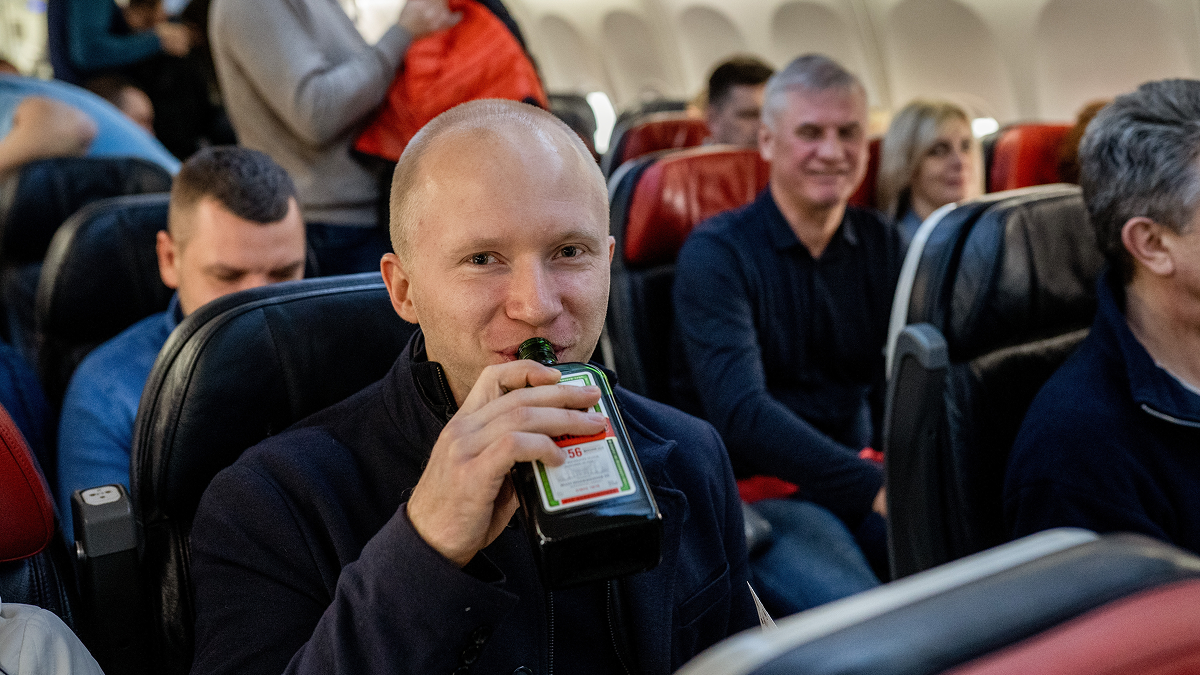
Reports of unruly airline passengers in Spain have climbed by more than a third since 2016. Credit: shulers / Shutterstock
You’ve boarded on time, stored your bags and have started picturing the blissful week ahead. Then a stranger a few rows back decides they’re going to mess about and refuse to follow the crew’s instructions and before you know it, the aircraft is turning back towards the stand. Spain now logs more than 1,000 of these cases every year.
It rarely takes more than a raised voice or a refusal to sit down. Cabin crew give a warning, the passenger ignores it, and within minutes the captain has turned the aircraft back towards the gate with everyone else on board now caught up in someone else’s bad day.
Spain recorded 1,081 reports of disruptive passengers in 2025, according to aviation figures reported by Cadena SER. That’s up from 798 in 2016, a rise of 35.5 per cent, and the annual total has stayed above 1,000 every year since 2022, with alcohol and aggressive behaviour remaining the most common triggers.
How one refusal to follow instructions grounds an entire flight
Once a passenger refuses to comply, the crew’s options quickly narrow. If the captain judges the behaviour a safety risk, the aircraft returns to its parking position rather than continuing towards the runway. Police officers are then called to meet the flight and remove the passenger, a process that takes a good amount of time even on a quiet day, as happened when a Vueling flight was diverted to Lanzarote over six disruptive passengers earlier this year.
The passenger’s checked baggage cannot simply stay on board once they are gone either. Ground staff have to identify and physically unload it before the flight can be cleared to leave, since security rules do not allow an aircraft to depart with luggage belonging to someone no longer on it. This can add another significant extra delay to an already behind schedule flight.
A new load sheet and a lost slot can delay everyone else’s evening
Removing one passenger and their bags changes the aircraft’s weight and balance, so the crew must produce an entirely new load sheet before departure can be authorised. None of this happens quickly, and every extra minute on the ground pushes the flight closer to losing its allocated departure slot.
Losing that slot means prolonging the wait even further. It can put a flight into a queue behind dozens of others waiting for the same runway or airspace, turning a delay caused by one single person’s unruly behaviour into a kerfuffle absolutely no one wants to be a part of when on their way to their holiday destination or heading back home after a long break.
The disruption can still be running the next morning
For passengers with a connecting flight, an hour or two delay can be enough to miss it entirely. Airlines then have to rebook them onto later services, which is rarely simple once flights are full at the height of the summer season.
If the delay runs late enough, the knock-on effect is an unplanned night away from home, with passengers potentially finding themselves needing an airport hotel and finishing their journey a day later than planned, because of a stranger they never even spoke to.
Ryanair wants a two-drink limit before passengers even board
Much of this behaviour starts before takeoff, at the airport bar rather than in the cabin. Ryanair’s chief executive, Michael O’Leary, has said the airline now diverts a flight almost every day because of bad behaviour onboard, compared with roughly once a week a decade ago, and has pointed to passengers drinking without any limit at the airport, particularly during delays. A recent flight from Warsaw to Alicante needed a police escort waiting on the tarmac earlier this month after a “conflictive” passenger unsettled the cabin, one of dozens of similar call-outs at Spanish airports this year.
Ryanair, with the backing of other airlines, has repeatedly asked EU airports to limit passengers to two alcoholic drinks before boarding, checked against the boarding pass in the same way liquid restrictions already are, and to stop serving alcohol outside normal licensing hours on early departures. TUI has gone a step further on some of its long-haul flights, cutting complimentary onboard drinks from three to one per meal from November, though it has described that change as a catering update rather than a direct response to disruptive behaviour.
Why the passenger who caused it all may be the only one who pays
Spain’s aviation regulator, the Agencia Estatal de Seguridad Aérea (AESA), can fine a disruptive passenger between €60 and €45,000 depending on the severity of the incident, and the agency has itself acknowledged a marked rise in reports in recent years. Little of that money reaches the other passengers whose evening was wrecked though.
Compensation for the delay itself is not guaranteed. Courts have generally treated a violent or disruptive passenger as an “extraordinary circumstance” beyond an airline’s control, which lets the airline avoid paying compensation to everyone else on board. That protection disappears only if the airline could have prevented the situation, for example by boarding someone already visibly drunk or aggressive, or continuing to serve alcohol to a passenger who was clearly intoxicated.
For most passengers caught up in someone else’s incident, the outcome is extremely frustrating, with a longer day ahead, perhaps a missed connection, and no one to send the bill to.










Plane ceiling collapses mid-flight: Are recent incidents making flying less safe?

How To Get A Tourist Rental Licence In Andalusia (Spain) – Step-By-Step Guide 2025

Maduro Ally Alex Saab Pleads Guilty In US Money-Laundering Case

Max Verstappen works with new race engineer at Italian Grand Prix

One Critically Injured And Nine Others Hurt After Carbon Monoxide Leak Aboard Ship Docked In Barcelona Port

Prisión Sin Fianza Para La Mujer Que Apuñaló Mortalmente A Un Hombre En Un Bar De Valencia


-
 Uncategorized1 week ago
Max Verstappen works with new race engineer at Italian Grand Prix
-
 Barcelona1 week ago
One Critically Injured And Nine Others Hurt After Carbon Monoxide Leak Aboard Ship Docked In Barcelona Port
-
 Asesinatos2 weeks ago
Prisión Sin Fianza Para La Mujer Que Apuñaló Mortalmente A Un Hombre En Un Bar De Valencia
-
bravery1 week ago
10-year-old jumps from burning French farmhouse, saves two dogs and teddy
-

 ElPais2 weeks ago
A Traveling Circus For The Horror Of Gaza
-

 Chamberi1 week ago
EXPLAINER: Inside The Row Over The Right-Wing Mayor Of Madrid’s €6m Penthouse – And Why It Could Offer A Lifeline To Pedro Sanchez
-

 Buying2 weeks ago
The Huge Difference In Property Buying Costs Across Spain
-

 New Developments1 week ago
Luxury Villas For Sale, Estepona – ProjectL1