
Latest
Too Many Holiday-Homes Is Not Spain’s Coastal Housing Problem

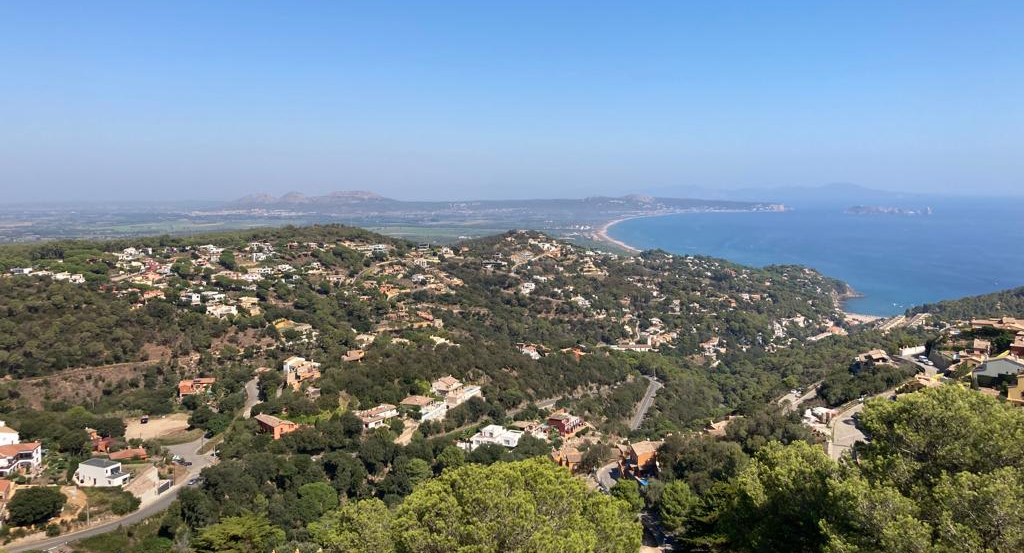
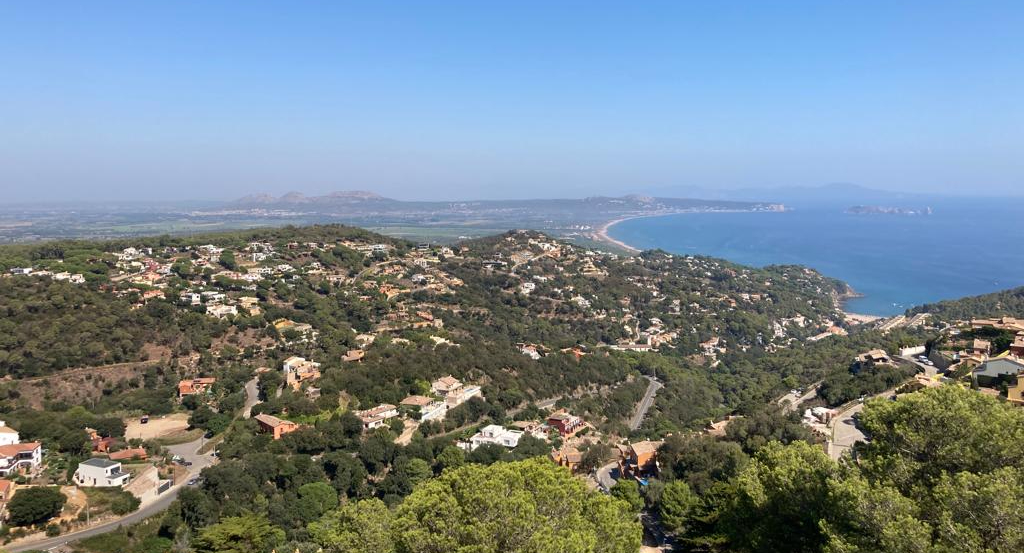
Spain’s coastal housing problem is not too many holiday homes, but too little housing supply. Restricting second homes and tourist accommodation won’t fix that — making it easier and cheaper to build might.
Appraisal-company Tinsa has done some research into the question of housing supply, demand and prices on the Spanish coast in its new Housing on the Coast 2026 report. The numbers are interesting. The interpretation deserves a closer look.
Coastal house prices rose 13.5% year-on-year in the first quarter of 2026, whilst new-build permits increased 21.7% last year. Demand remains strong, though there are signs of it losing momentum in some areas.
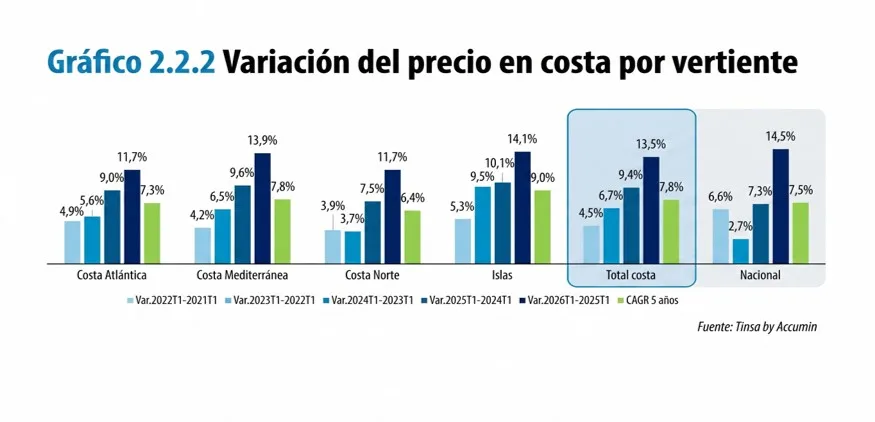
Much of the report is framed around another finding: homes on the coast are increasingly unaffordable for people on local incomes, with the theoretical cost of buying reaching 40% of average disposable household income. From there it is a short step to the familiar narrative about second homes, holiday lets and tourist demand squeezing locals out of the market.
But there is another way of reading the same numbers.
A second-home market is supposed to attract second-home buyers
Large stretches of the Spanish coast are primarily holiday, retirement and second-home markets. Comparing local salaries with the price of villas and apartments bought by wealthier households from Madrid, northern Europe or elsewhere tells us something interesting about those markets, but it does not necessarily identify Spain’s main housing problem.
The more serious affordability problem is where households need homes close to employment and services, particularly in and around major cities and other high-demand economic centres.
And here the evidence increasingly points back to supply.
The Bank of Spain describes the rigidity of Spanish housing supply as structural, citing problems developing build-ready land and the complexity of planning and land-management procedures. It says these constraints prolong construction times and identifies supply inelasticity as the main cause of housing affordability problems.
The OECD similarly identifies limited buildable land, lengthy and uncertain planning procedures, rising construction and labour costs, and regulatory uncertainty as barriers to new supply, particularly for lower-margin affordable and rental housing.
Builders follow the money
That helps explain another revealing feature of the coastal market. Although construction is increasing, much of it is concentrated on holiday homes, where developers can earn better margins. The report itself notes that new construction remains constrained by land availability, building costs, labour shortages and regulatory uncertainty, while developers favour more profitable holiday housing.
That should hardly come as a surprise. When housing is expensive, slow and risky to produce, developers have an obvious incentive to build for buyers with the deepest pockets.
Nor is restricting tourist and holiday accommodation necessarily turning those properties into ordinary homes. Despite a significant increase in regulation, the report acknowledges that this has not so far produced either more housing for permanent residents or lower prices.
The bigger story suggested by these numbers is therefore not that Spain has too many holiday homes. It is that housing supply struggles to respond to demand. The coastal luxury market is one very visible consequence of that problem, rather than necessarily its cause.








El Celta sigue sin encontrar el camino de la victoria en este arranque de temporada. Tras no lograrlo en LaLiga, tampoco pudo estrenarse con buen pie este miércoles en la fase de liga de la Liga Europa, donde cayó derrotado en el último suspiro ante el Omonia Nicosia chipriota.
OMOOmonia

1
Fabiano Ribeiro de Freitas, Senou Coulibaly, Jure Balkovec, Jean-Kévin Duverne, Lubomír Satka, Jaden Montnor (Florin Tanase, min. 93), Mateo Maric, Panagiotis Andreou, Ewandro (Mihlali Mayambela, min. 92), Muamer Tankovic (Luuk Brouwers, min. 62) y Loïs Diony (Andronikos Kakoullis, min. 74)
CELCelta

Ionut Radu, Carl Starfelt, Marcos Alonso, Javi Rodríguez, Miguel Román, Sergio Carreira, Álvaro Núñez (Borja Iglesias, min. 77), Couhaib Driouech (Williot Swedberg, min. 55), Hugo Burcio (Aleix Febas, min. 71), Pablo Durán (Hugo Álvarez, min. 71) y Ferran Jutglà (Hugo González, min. 55)
Goles 1-0 min. 87: Jure Balkovec
Arbitro Balazs Berke
Tarjetas amarillas Williot Swedberg (min. 67)
La visita a Chipre se presentaba como una buena oportunidad para que el conjunto vigués dejara atrás las dudas mostradas durante este primer mes de competición. Sin embargo, pese a la teórica inferioridad de su rival, el equipo gallego comprobó que en Europa cualquier bajón de rendimiento se paga caro. El Omonia acabó imponiéndose con un gol cerca del minuto 90, justo cuando los de Claudio Giráldez más presionaban en busca del triunfo.
El Celta volvió a mostrar dificultades en ataque. Aunque mejoró tras el descanso, evidenció una vez más la falta de fluidez ofensiva que sí exhibió la pasada campaña. El equipo encadenó su cuarto encuentro sin marcar en siete partidos y continúa con un pobre balance de solo tres goles en lo que va de temporada.
El mal momento futbolístico se hizo notar en el encuentro. El equipo fue creciendo durante la primera mitad, pero volvió a mostrarse inofensivo en ataque y apenas puso en aprietos al guardameta Fabiano. Más exigido estuvo Radu, uno de los jugadores más destacados del Celta en este inicio de curso, que realizó dos intervenciones de mérito, especialmente una ante Ewandro nada más comenzar el encuentro.
Tras el paso por vestuarios, el conjunto gallego elevó su nivel y fue imponiendo poco a poco su mayor calidad frente a un Omonia menos agresivo. Sin embargo, su dominio se tradujo principalmente en posesión, sin generar un número significativo de ocasiones claras, aunque sí logró inquietar con más frecuencia a los locales en el tramo final.
Miguel Román obligó a Fabiano a intervenir con una buena parada y Marcos Alonso estuvo cerca de adelantar a los visitantes, pero su remate de cabeza fue despejado por la defensa cuando parecía destinado al 0-1. Cuando todo apuntaba a un reparto de puntos, apareció Balkovec en el minuto 88 con un potente zurdazo desde una posición escorada que sorprendió a Radu y condenó de nuevo al conjunto vigués a la frustración.
Clasificación
| Clasificación | PT | PJ | PG | PE | PP |
|---|---|---|---|---|---|
| 4
|
3 | 1 | 1 | 0 | 0 |
| 5
|
3 | 1 | 1 | 0 | 0 |
| 6
|
3 | 1 | 1 | 0 | 0 |
| 7
|
1 | 1 | 0 | 1 | 0 |
| 8
|
1 | 1 | 0 | 1 | 0 |




| Clasificación | PT | PJ | PG | PE | PP |
|---|---|---|---|---|---|
| 30
|
0 | 0 | 0 | 0 | 0 |
| 31
|
0 | 1 | 0 | 0 | 1 |
| 32
|
0 | 1 | 0 | 0 | 1 |
| 33
|
0 | 1 | 0 | 0 | 1 |
| 34
|
0 | 1 | 0 | 0 | 1 |




Audiencia Nacional
El Gobierno Muestra Su “perplejidad” Por El Freno De La Audiencia Nacional Al Campamento Para Inmigrantes Del Puerto De Ceuta

Donald Trump
The Federal Reserve Defies Trump With A Unanimous Rate Hike Six Weeks Before The Midterms


Jet2 expands Spain flights with more UK seats on Almería and other key routes

El Celta Cae En Chipre Y Traslada Su Mal Inicio De Temporada A La Liga Europa
El Gobierno Muestra Su “perplejidad” Por El Freno De La Audiencia Nacional Al Campamento Para Inmigrantes Del Puerto De Ceuta

Max Verstappen works with new race engineer at Italian Grand Prix

One Critically Injured And Nine Others Hurt After Carbon Monoxide Leak Aboard Ship Docked In Barcelona Port

EXPLAINER: Inside The Row Over The Right-Wing Mayor Of Madrid’s €6m Penthouse – And Why It Could Offer A Lifeline To Pedro Sanchez


-
 Uncategorized2 weeks ago
Max Verstappen works with new race engineer at Italian Grand Prix
-
 Barcelona2 weeks ago
One Critically Injured And Nine Others Hurt After Carbon Monoxide Leak Aboard Ship Docked In Barcelona Port
-
 Chamberi1 week ago
EXPLAINER: Inside The Row Over The Right-Wing Mayor Of Madrid’s €6m Penthouse – And Why It Could Offer A Lifeline To Pedro Sanchez
-
bravery1 week ago
10-year-old jumps from burning French farmhouse, saves two dogs and teddy
-

 ElPais2 weeks ago
A Traveling Circus For The Horror Of Gaza
-
Central European Time2 weeks ago
Spain’s 2026 plan to end clock changes has failed, and the next change is already locked in
-

 Uncategorized1 week ago
Max Verstappen hails
-

 New Developments2 weeks ago
Luxury Villas For Sale, Estepona – ProjectL1