Connect with us

%

Is Your Supermarket Kefir Really Kefir? Spanish Study Raises A Surprising Question

Published

on

is-your-supermarket-kefir-really-kefir?-spanish-study-raises-a-surprising-question

The researchers found considerable differences depending on the type of product. Photo credit:Tetyana_Pidkaluyk / Shutterstock.com

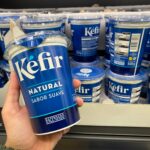
Kefir has gone from something most people had barely heard of to a regular fixture in Spanish supermarket fridges. It is sold as a healthy fermented drink, often bought by people looking for an easy way to add beneficial bacteria and other microorganisms to their diet. But there is a rather awkward problem hiding behind the label.   A study by researchers at Spain’s Universitat Rovira i Virgili has found that you cannot reliably tell from the packaging whether the kefir you are buying contains yeast, one of the microorganisms traditionally found in kefir fermentation.

Researchers examined 170 kefir products sold in Spain and initially found that just 36 mentioned yeast on their labels.  After one manufacturer corrected an apparent labelling error affecting two products, that figure rose to 38. So, in a supermarket aisle packed with bottles proudly calling themselves kefir, the name alone may not tell you very much about what is actually inside.

What makes kefir kefir?

The distinction is important because traditional kefir is rather more complicated than ordinary yoghurt. Kefir is produced through fermentation involving a community of microorganisms. These include lactic-acid bacteria, acetic-acid bacteria and yeasts, which work together during the fermentation process. That mixture is part of what gives traditional kefir its particular characteristics.

The researchers compared Spanish supermarket products with the international Codex Alimentarius definition of kefir, which recognises the combination of bacteria and yeasts involved in its production. The problem is that European food labelling rules do not require manufacturers to list every microorganism present in a fermented product. That leaves shoppers with a surprisingly simple problem: the front of the bottle may say kefir, but the label may not tell them whether yeast is actually part of the fermentation.

Researchers checked 170 supermarket products

The study was carried out in August 2025 and looked at 170 products from 46 brands sold through national and regional supermarket chains covering around 60 per cent of the Spanish market. The researchers recorded information including the type of milk or other base used, whether the kefir was drinkable or spoonable, its price, whether it was organic and what manufacturers said about its microorganisms. Only 36 products, or 21.2 per cent, explicitly mentioned yeast.

The researchers later issued a correction after Danone informed them that two Activia kefir products did contain yeast, despite it not appearing on their packaging because of an error during the production of the labels. That brings the number to 38 products, or 22.35 per cent. The finding does not mean that the other 132 products were fake kefir or contained no yeast. The study was primarily an examination of product information and labelling, rather than a laboratory test proving the microbial composition of every bottle, that distinction is crucial.

Some kefir products were more transparent

The researchers found considerable differences depending on the type of product.Among cow’s milk kefirs, yeast was declared on 29.9 per cent of labels. None of the goat’s milk, sheep’s milk, mixed goat-and-sheep, plant-based or water kefirs in the sample declared yeast. Drinkable products were also more likely to mention it than spoonable kefirs. Yeast appeared on the labels of 35.7 per cent of drinkable products, compared with 13.1 per cent of spoonable versions. There were differences according to where the products were made, too. 

Yeast was declared by 14.7 per cent of nationally produced products, compared with 53.3 per cent of products whose origin was not Spanish. The figures produced another unexpected result when researchers looked at price. Among the cheapest products, 36.8 per cent declared yeast. That fell to 28.1 per cent in the middle price group and just one of the 56 products in the highest-price group. Organic kefir was even more striking. None of the 63 organic products examined declared yeast, compared with 35.5 per cent of conventional products.

What should Spanish shoppers make of it?

The study does not mean people should stop buying kefir, nor does it show that most supermarket kefir is somehow fraudulent. What it does show is that consumers cannot use the label alone to establish the microbial composition of many products sold as kefir. For people buying it specifically because they want traditionally fermented kefir, that lack of information is significant. The researchers argue that clearer labelling would give consumers a better understanding of what they are buying.

They also point to the lack of specific microbiological requirements for kefir under current European rules, compared with the international Codex standard. Kefir may have become a familiar sight in Spanish supermarket fridges, but the research suggests that the name on the bottle does not necessarily give shoppers the full story. And when the whole reason for buying a fermented food is what is happening inside it, that seems like a fairly important detail to leave off the label.

%

EuroMillions: Spain Creates Another Millionaire

Published

on

euromillions:-spain-creates-another-millionaire

Another winning lottery shop. Credit: Manuel Milan – Shutterstock

Spain has another EuroMillions millionaire after Friday night’s draw, but the country’s latest lucky ticket did not take the biggest prize on offer.

A single ticket in the UK matched all five numbers and both Lucky Stars to scoop the €130 million jackpot. The Spanish result was different, with a new millionaire created through El Millón extra random number. The winning numbers drawn were 11 – 12 – 15 – 38 – 49 and lucky stars 10 and 12.

€1 million prize lands in Cadiz

The winning El Millón code was sold at receptor 22,755 in San Enrique de Guadiaro, Cadiz, giving one Spanish ticket holder a €1 million windfall.

Spain also produced one winner in the third EuroMillions category, matching all five main numbers but missing both stars. That ticket was confirmed at lottery shop No. 8 in San Sebastian, Guipuzcoa, and collected €31,693.31. Friday’s draw attracted more than €83.1 million in total sales across the participating countries, according to Loterías y Apuestas del Estado.

Spain’s biggest EuroMillions win

Spain has a long record of big EuroMillions prizes. The country’s biggest-ever win came in October 2017, when a ticket confirmed in Las Palmas de Gran Canaria landed €190 million. That prize remains Spain’s record EuroMillions payout, with the ticket sold at lottery shop No. 54 in the El Mirador shopping centre. The previous Spanish record was €137.3 million, won in Parla, Madrid, in 2014.

Spain has also produced hundreds of other major EuroMillions winners since the game began in 2004.

Which country wins most EuroMillions jackpots?

Historical EuroMillions statistics put the UK ahead for total jackpot-winning tickets, with 137, followed by France with 133 and Spain with 124. Those figures cover the game’s history and can change as new jackpots are won.

Spain’s position is particularly notable given that the UK and France have larger populations, while EuroMillions tickets are sold across nine participating countries. Friday’s jackpot has now been won, so Tuesday’s EuroMillions draw will offer a guaranteed €17 million to whoever matches five numbers and two Lucky Stars.

Continue Reading

%

Noah’s Ark Is 100% Confirmed As Huge Discovery Is Made, Scientists Say

Published

on

noah’s-ark-is-100%-confirmed-as-huge-discovery-is-made,-scientists-say

Formation contains the buried remains of Noah’s Ark and has described the latest evidence as confirmation that the formation is man-made. Photo credit: MehmetO/Shutterstock

For thousands of years, the story of Noah’s Ark has been one of those tales that refuses to disappear. Whether you see it as religious history, legend or one of the world’s great archaeological mysteries, there is one question that has never gone away: where is the ship? Now researchers investigating a strange boat-shaped formation in eastern TĂŒrkiye say they have found something beneath the ground that could change the search completely.

New scans have detected what appear to be straight lines, right-angle intersections and sizeable spaces beneath the formation, while drilling has recovered layers of organic material and encountered an exceptionally hard underground layer that reportedly broke the drill bit. The team behind the investigation has even claimed that the latest work has “100 percent confirmed” that the formation is man-made, but there is an important catch: nobody has actually uncovered Noah’s Ark, yet.

What has been found beneath the site?

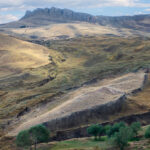
The investigation is taking place at the Durupınar Formation, around 20 miles south of Mount Ararat. The site has attracted Ark hunters for decades because its outline looks remarkably similar to a ship when viewed from above.

It was first identified in aerial photographs in 1959 and measures around 157 metres long. Researchers have repeatedly debated whether the unusual shape is the remains of a vessel or simply the result of natural geological processes. This year, however, researchers have taken the investigation much further.

Radar reveals mysterious structures

An international team led by archaeologist Professor Cenker Atila of Sivas Cumhuriyet University has been carrying out geological and archaeological work using ground-penetrating radar, electrical resistivity tomography, LiDAR and core drilling. The project has official approval from Turkish authorities.

The radar surveys have produced some of the most intriguing results so far. Researchers say they have identified features that appear to form possible corridors, chambers and tunnels beneath the surface. One group of anomalies appears to extend for roughly 151 feet, with an average height of more than 14 feet.

Underground features raise new questions

Other areas detected by the radar reportedly measure around 26, 39 and 23 feet in height. There is also a particularly intriguing section where researchers say the underground features appear to divide into three layers. That has led the team to draw comparisons with the biblical description of the Ark as having three decks.

But radar cannot simply show archaeologists a photograph of a room buried underground. The equipment detects changes in materials and boundaries beneath the surface, meaning the features still have to be physically investigated before anyone can establish what produced them.

Then the drilling began

That is where the latest phase becomes particularly interesting. Researchers have taken core samples from inside and outside the boat-shaped formation, reaching depths of up to around 18 metres. According to the research team, the cores have produced layers containing large amounts of organic material. They are now being sent for laboratory testing to determine exactly what the material is and how old it might be.

At one point, the drilling reportedly stopped after the equipment struck an extremely hard layer around four to five metres beneath the surface. The drill bit broke when it hit the material. Andrew Jones, founder of Noah’s Ark Scans and vice president of the research project, said petrified or highly mineralised wood are among the possibilities being considered.

That is still only a possibility. The material has not been confirmed as wood, let alone wood from a ship. Independent laboratory testing, including dating, will be needed before researchers can establish what they have actually recovered. The team has also reported encountering several cavities during drilling, including one that filled with mud and water.

A robot could go inside

The next step could be even more dramatic. Researchers are preparing a small exploration robot called Gopher, designed to enter narrow spaces through the boreholes and capture video footage while collecting samples. The idea is to investigate the underground spaces identified by the radar without immediately cutting open large sections of the formation. If the cavities really do contain man-made structures, the footage could provide the first direct visual evidence of what lies beneath the mysterious mound.

Researchers have also collected around 1,000 soil samples from 150 locations and found pottery outside the formation dating from the Chalcolithic period through to the Iron Age. That shows people were using or visiting the area over a very long period, although the pottery does not prove any connection with Noah or the Ark.

Is Noah’s Ark really there?

This is where the extraordinary claims need to be separated from what has actually been established. Jones has said he believes the Durupınar Formation contains the buried remains of Noah’s Ark and has described the latest evidence as confirmation that the formation is man-made.

However, at the moment there is currently no peer-reviewed scientific study proving that the underground structures were constructed by humans, and no wooden vessel has been uncovered for them to be confirmed a peer review study would be necessary.

The mystery is far from settled

National Geographic has previously reported that many archaeologists consider the Durupınar formation a natural geological feature and that modern searches for the Ark remain highly controversial. The biblical reference itself says the Ark came to rest on the “mountains of Ararat”,over 4.300 years ago which does not necessarily identify the modern Mount Ararat or the Durupınar site. Even the project’s own Turkish website says its work is investigating the geological and geophysical evidence rather than authenticating the historical or religious claim.

So, after centuries of searching, there is still no confirmed Ark sitting beneath the Turkish mountains. What researchers do have is a very unusual formation, increasingly detailed images of what lies beneath it, physical samples now heading for laboratory analysis and a plan to send a robot into the unexplored spaces. And that means the next stage of the investigation may finally produce something much more useful than another photograph of a rock that looks like a ship: evidence that can actually be tested.

Continue Reading

%

Torre Del Mar ONCE Seller Hands Out €1.235 Million In Lottery Prizes

Published

on

torre-del-mar-once-seller-hands-out-e1.235-million-in-lottery-prizes

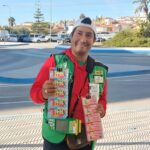
Juan Carlos Zalazar, regular ONCE ticket seller. Credit: OV FB

Juan Carlos Zalazar sold a lottery ticket that won €1.235 million in local lottery prizes along his usual Torre del Mar route, including one €500,000 jackpot and 21 prizes of €35,000.

Torre del Mar ONCE seller delivers €1.235 million

Zalazar sold 22 winning coupons during his Thursday, September 24 route around Torre del Mar. The winning number was 35972, with series 044 taking the top €500,000 prize.

Zalazar has worked as an ONCE seller since 2022 and does not have a fixed sales point. His winning tickets went to customers he knows from his daily rounds, spreading the money among several familiar faces in the Axarquia town. Born in Bolivia, Zalazar has lived in Spain for 20 years.

Lottery windfall arrives on wedding anniversary

An extra twist came on the same day as Zalazar’s 15th wedding anniversary. His wife is from Torre del Mar, and he joked that the payout had given them a reason to extend their celebrations.

“I’m very happy to have been able to give so much luck to my customers, who are there every day,” he said.

Some winners needed convincing before celebrating. Zalazar said one customer was doubtful because the previous day’s winning number had also ended in two. Friday brought no day off for the lucky seller. He was back on his route as usual.

How much does the ONCE CupĂłn Diario pay?

The Cupón Diario is drawn from Monday to Thursday. The main prize is €500,000 for matching all five numbers and the series, while 49 coupons matching the five numbers win €35,000.

Thursday’s coupon was dedicated to sport and the UN Sustainable Development Goals, carrying the message ‘Sport for sustainable development’.

The Torre del Mar payout comes less than two weeks after another ONCE windfall in the Axarquia area. On September 13, seller Francisco Lucia sold a Sueldazo in Torrox Costa worth €2,000 a month for ten years, or €240,000 in total.

ONCE uses income from its lottery products to fund programmes and services for people who are blind or have severe visual disabilities. The organisation also provides employment opportunities for thousands of people with disabilities, with its network of more than 21,400 sellers playing a central role in distributing its lottery products across Spain.

Continue Reading

Trending

Copyright © 2017 Spanish Property & News