Connect with us

%

Torre Del Mar ONCE Seller Hands Out €1.235 Million In Lottery Prizes

Published

on

torre-del-mar-once-seller-hands-out-e1.235-million-in-lottery-prizes

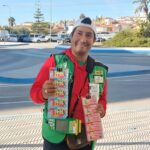
Juan Carlos Zalazar, regular ONCE ticket seller. Credit: OV FB

Juan Carlos Zalazar sold a lottery ticket that won €1.235 million in local lottery prizes along his usual Torre del Mar route, including one €500,000 jackpot and 21 prizes of €35,000.

Torre del Mar ONCE seller delivers €1.235 million

Zalazar sold 22 winning coupons during his Thursday, September 24 route around Torre del Mar. The winning number was 35972, with series 044 taking the top €500,000 prize.

Zalazar has worked as an ONCE seller since 2022 and does not have a fixed sales point. His winning tickets went to customers he knows from his daily rounds, spreading the money among several familiar faces in the Axarquia town. Born in Bolivia, Zalazar has lived in Spain for 20 years.

Lottery windfall arrives on wedding anniversary

An extra twist came on the same day as Zalazar’s 15th wedding anniversary. His wife is from Torre del Mar, and he joked that the payout had given them a reason to extend their celebrations.

“I’m very happy to have been able to give so much luck to my customers, who are there every day,” he said.

Some winners needed convincing before celebrating. Zalazar said one customer was doubtful because the previous day’s winning number had also ended in two. Friday brought no day off for the lucky seller. He was back on his route as usual.

How much does the ONCE Cupón Diario pay?

The Cupón Diario is drawn from Monday to Thursday. The main prize is €500,000 for matching all five numbers and the series, while 49 coupons matching the five numbers win €35,000.

Thursday’s coupon was dedicated to sport and the UN Sustainable Development Goals, carrying the message ‘Sport for sustainable development’.

The Torre del Mar payout comes less than two weeks after another ONCE windfall in the Axarquia area. On September 13, seller Francisco Lucia sold a Sueldazo in Torrox Costa worth €2,000 a month for ten years, or €240,000 in total.

ONCE uses income from its lottery products to fund programmes and services for people who are blind or have severe visual disabilities. The organisation also provides employment opportunities for thousands of people with disabilities, with its network of more than 21,400 sellers playing a central role in distributing its lottery products across Spain.

%

Is Your Supermarket Kefir Really Kefir? Spanish Study Raises A Surprising Question

Published

on

is-your-supermarket-kefir-really-kefir?-spanish-study-raises-a-surprising-question

The researchers found considerable differences depending on the type of product. Photo credit:Tetyana_Pidkaluyk / Shutterstock.com

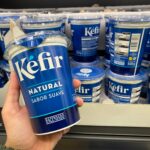
Kefir has gone from something most people had barely heard of to a regular fixture in Spanish supermarket fridges. It is sold as a healthy fermented drink, often bought by people looking for an easy way to add beneficial bacteria and other microorganisms to their diet. But there is a rather awkward problem hiding behind the label.   A study by researchers at Spain’s Universitat Rovira i Virgili has found that you cannot reliably tell from the packaging whether the kefir you are buying contains yeast, one of the microorganisms traditionally found in kefir fermentation.

Researchers examined 170 kefir products sold in Spain and initially found that just 36 mentioned yeast on their labels.  After one manufacturer corrected an apparent labelling error affecting two products, that figure rose to 38. So, in a supermarket aisle packed with bottles proudly calling themselves kefir, the name alone may not tell you very much about what is actually inside.

What makes kefir kefir?

The distinction is important because traditional kefir is rather more complicated than ordinary yoghurt. Kefir is produced through fermentation involving a community of microorganisms. These include lactic-acid bacteria, acetic-acid bacteria and yeasts, which work together during the fermentation process. That mixture is part of what gives traditional kefir its particular characteristics.

The researchers compared Spanish supermarket products with the international Codex Alimentarius definition of kefir, which recognises the combination of bacteria and yeasts involved in its production. The problem is that European food labelling rules do not require manufacturers to list every microorganism present in a fermented product. That leaves shoppers with a surprisingly simple problem: the front of the bottle may say kefir, but the label may not tell them whether yeast is actually part of the fermentation.

Researchers checked 170 supermarket products

The study was carried out in August 2025 and looked at 170 products from 46 brands sold through national and regional supermarket chains covering around 60 per cent of the Spanish market. The researchers recorded information including the type of milk or other base used, whether the kefir was drinkable or spoonable, its price, whether it was organic and what manufacturers said about its microorganisms. Only 36 products, or 21.2 per cent, explicitly mentioned yeast.

The researchers later issued a correction after Danone informed them that two Activia kefir products did contain yeast, despite it not appearing on their packaging because of an error during the production of the labels. That brings the number to 38 products, or 22.35 per cent. The finding does not mean that the other 132 products were fake kefir or contained no yeast. The study was primarily an examination of product information and labelling, rather than a laboratory test proving the microbial composition of every bottle, that distinction is crucial.

Some kefir products were more transparent

The researchers found considerable differences depending on the type of product.Among cow’s milk kefirs, yeast was declared on 29.9 per cent of labels. None of the goat’s milk, sheep’s milk, mixed goat-and-sheep, plant-based or water kefirs in the sample declared yeast. Drinkable products were also more likely to mention it than spoonable kefirs. Yeast appeared on the labels of 35.7 per cent of drinkable products, compared with 13.1 per cent of spoonable versions. There were differences according to where the products were made, too. 

Yeast was declared by 14.7 per cent of nationally produced products, compared with 53.3 per cent of products whose origin was not Spanish. The figures produced another unexpected result when researchers looked at price. Among the cheapest products, 36.8 per cent declared yeast. That fell to 28.1 per cent in the middle price group and just one of the 56 products in the highest-price group. Organic kefir was even more striking. None of the 63 organic products examined declared yeast, compared with 35.5 per cent of conventional products.

What should Spanish shoppers make of it?

The study does not mean people should stop buying kefir, nor does it show that most supermarket kefir is somehow fraudulent. What it does show is that consumers cannot use the label alone to establish the microbial composition of many products sold as kefir. For people buying it specifically because they want traditionally fermented kefir, that lack of information is significant. The researchers argue that clearer labelling would give consumers a better understanding of what they are buying.

They also point to the lack of specific microbiological requirements for kefir under current European rules, compared with the international Codex standard. Kefir may have become a familiar sight in Spanish supermarket fridges, but the research suggests that the name on the bottle does not necessarily give shoppers the full story. And when the whole reason for buying a fermented food is what is happening inside it, that seems like a fairly important detail to leave off the label.

Continue Reading

%

Feijóo Targets Spain’s Rising Prices With 0% Food VAT And Lower Energy Tax

Published

on

feijoo-targets-spain’s-rising-prices-with-0%-food-vat-and-lower-energy-tax

If your weekly supermarket shop seems to be eating an ever-bigger chunk of your pay packet, a proposal from Spain’s opposition could make an immediate difference to what you pay at the till, at least if it becomes law. The PP wants basic food to have zero VAT, energy VAT cut from 21% to 10% and income tax bands adjusted for inflation. 

The party is also proposing bigger tax deductions for families with children. None of these changes has been approved. They are proposals that the PP says it will take to Congress and the Senate for a vote. 

Zero VAT on the supermarket basics

Alberto Núñez Feijóo announced the package on Thursday, September 24, during a visit to a dairy company in Alovera, Guadalajara. Under the proposal, VAT on basic foods would fall from the current 4% rate to 0%. The list includes milk, cheese, oil, eggs, fruit, vegetables, meat, fish and preserves. 

For shoppers, the idea is straightforward: remove the tax from those products and reduce the amount paid at the checkout. Whether the full saving would reach consumers would depend on how businesses pass the tax reduction through to prices, so the proposal should not be read as a guaranteed reduction in every supermarket bill. The PP is presenting the measure as part of a package aimed at easing pressure on household finances as prices continue to rise.

What deflating IRPF actually means

The other proposal that could affect working households is deflating the IRPF, which means adjusting income-tax bands in line with inflation. The issue is that wages can rise simply because prices have gone up. If tax brackets remain unchanged, part of that nominal increase can push someone into a higher tax band even though their purchasing power has not actually improved. The PP wants the income-tax system adjusted to take inflation into account. The party is also proposing to double certain deductions for children, retroactively from August until the end of the year. 

Under its figures, the deduction for a first child would rise from €2,400 to €4,800, while the amount for a second child would increase from €2,700 to €5,400. The proposed figures rise further for third and subsequent children.  For a family with two children, the PP calculates that the measure would mean an additional €400 in savings by the end of the year. It also wants the deduction for a child under three to rise from €2,800 to €5,600.  Those are the PP’s calculations, rather than guaranteed savings.

Energy tax would also be cut

Energy is another major part of the proposal. Feijóo wants VAT on energy reduced from 21% to 10%, covering the cost pressures affecting electricity, gas and fuels.  The proposal comes after the government’s previous tax reductions on fuel and electricity ended on July 1, with those measures replaced by direct discounts on petrol that have since been reduced. 

Energy prices have remained a concern going into the autumn. Recent reporting has also pointed to renewed pressure from higher gas and energy costs, with the government looking at ways to contain the impact on households and businesses. 

Farmers, autónomos and businesses

The PP package is not limited to household taxes. Feijóo is also proposing lower costs for farmers through changes affecting fertiliser and fuel expenses, alongside measures intended to reduce production costs.

The party wants progress on the European measure to remove VAT obligations for autónomos with annual turnover below €85,000 and is calling for fewer bureaucratic requirements for businesses.  The PP says unnecessary administrative procedures add costs which can ultimately feed into prices.

What happens next?

The proposals now face the political process rather than automatically becoming changes to Spanish tax law. The PP says it will take the package to both Congress and the Senate for debate and voting. The Senate has a PP majority, while approval in Congress would depend on the parliamentary numbers there.  For households, that means there is nothing to change on a supermarket bill or tax return just yet.

If the measures eventually pass, however, the potential changes would reach several everyday expenses at once: the food shop, energy bills and income tax, with additional relief proposed for families with children. For anyone already watching every euro at the checkout, that is the part worth keeping an eye on.

Continue Reading

%

British Drug Dealer Swaps Cocaine For Pokémon Cards In Bizarre Barter Deal

Published

on

british-drug-dealer-swaps-cocaine-for-pokemon-cards-in-bizarre-barter-deal

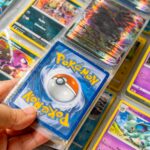
Children have been swapping Pokémon cards for decades. Photo credit:Kittyfly / Shutterstock.com

There was a time when money was not the only way to buy something or settle a debt. Before bank cards, online transfers and the joy of discovering that your direct debit has mysteriously gone up again, people traded what they had for what they needed. A few vegetables could become a loaf of bread. Milk could be swapped for eggs. A piece of cloth might be exchanged for food.

It was simple: if both sides thought the deal was fair, the trade was done. Fast-forward a few hundred years and apparently we have come full circle. Only now, instead of milk for vegetables, someone is accepting Pikachu and Charizard.

Pokémon cards become an unlikely currency

A 26-year-old British drug dealer has been jailed after some of his customers apparently settled their debts with Pokémon trading cards. Jack Young-Larter, from London Road in Maidstone, Kent, was sentenced to three years and four months at Maidstone Crown Court on Thursday, September 17, after pleading guilty to supplying cocaine and cannabis and possessing criminal property.

Kent Police discovered that his customers had paid him in several ways, including cash and bank transfers. Messages found on his phones also showed Pokémon cards being used as payment. Officers found a collection of rare cards at his home which they described as having a high monetary value. Around £2,000 in cash was also seized. Neither the money nor the cards will be returned to him. Both were subject to a Deprivation Order because of their connection to his criminal activity.

Why are Pokémon cards worth so much?

For anyone who remembers Pokémon cards as something children swapped in the playground, using them to pay a drug dealer might sound like a particularly strange choice of currency. But some Pokémon cards really can be worth serious money. Not every card is valuable. Prices depend on factors including rarity, condition, the particular set or edition and demand from collectors.

The Pokémon Company says the secondary-market value of its cards is determined by demand within the Pokémon community. Its sets contain different levels of rarity, with some cards considerably harder to find than others. That scarcity matters. A card produced in huge numbers is unlikely to command a fortune, while a rare card in excellent condition can attract collectors prepared to pay substantially more.

Childhood favourites become collector gold

Older cards can be particularly desirable when they have survived in good condition. Popular Pokémon such as Charizard and Pikachu have enormous collector followings, while unusual artwork, limited releases and particular printing characteristics can make individual cards even more sought after. Then there is nostalgia.

Pokémon has been around for decades, so some of the children who once spent their pocket money on booster packs are now adults with money of their own to spend on the cards they grew up with. What once looked like a children’s hobby has developed into a serious collector’s market, giving some cards a value far beyond their original price.

From playground swaps to drug debts

There is something rather fitting about the way the cards were apparently being used, handing over one card in exchange for another. The whole system depends on both sides deciding that the trade is fair. Young-Larter’s customers simply appear to have taken that idea somewhere considerably less innocent. Instead of swapping a duplicate card for one missing from their collection, they could use cards to settle a debt.

It is an oddly modern version of an ancient idea. Bartering existed long before wallets, bank accounts and contactless payments. People exchanged goods directly because they needed something another person had. The difference is that a sack of potatoes has fairly obvious uses. A Pokémon card only has financial value if somebody else is willing to pay for it. In the collector market, apparently, that is more than enough.

Police uncover drug operation

The Pokémon cards were only part of what officers discovered when Kent Police searched Young-Larter’s home on May 1. They found nearly 110 grams of cannabis, more than 25 grams of cocaine, scales, empty deal bags and two mobile phones. Police examined the phones and found messages relating to the marketing and supply of cocaine and cannabis. He was sentenced to three years and four months in prison, while the cash and Pokémon cards were confiscated under the Deprivation Order.

The cards may have started life as something children collected and swapped at school. Now, over twenty years later, some have become valuable enough to trade for serious amounts of money. Young-Larter’s customers apparently recognised that value too, once, it was trading food for different items. Now, apparently, it can be Pokémon cards for cocaine. Somewhere along the way, the barter system took a very strange turn.

Continue Reading

Trending

Copyright © 2017 Spanish Property & News