
ElPais
‘Nude Before Traffic’: Cyclists Riding Without Clothes To Demand Safe Infrastructure



America
ICE Wasted Millions Of Dollars On Its Expansion Of Detention Centers, According To A Government Report


Millions of dollars earmarked to expand U.S. immigration detention capacity ended up in warehouses that will now be sold, in tents that never housed a detainee, and in food purchased for empty facilities. These are the findings of a report by the Government Accountability Office (GAO), which documents how the rapid expansion of U.S. Immigration and Customs Enforcement (ICE) has left behind abandoned projects, sunk costs, and new financial commitments.
The report, released Thursday, notes that the agency undertook six major initiatives without a comprehensive strategic plan to determine where it needed to expand its capacity, how much it would cost to maintain it, and which facilities would actually be necessary. The lack of planning led to course corrections, stalled projects, and wasted resources just as ICE prepares to manage tens of billions of additional dollars.
The expansion accelerated during Donald Trump’s second term. The number of people in ICE custody rose from about 39,000 detainees in January 2025 to approximately 67,000 on July 30, 2026. At the same time, Congress approved $45 billion to increase the agency’s detention capacity as part of the legislation known as the One Big Beautiful Bill Act.

One of the clearest examples of the spending questioned by the GAO involves the warehouses that ICE acquired to convert into detention centers. The agency spent approximately $1.07 billion to purchase 11 facilities but later decided to put seven of them up for sale. None of the warehouses ever housed detainees.
The operation also resulted in nearly $20 million in unrecoverable expenses related to services, security, utilities, and other costs associated with the properties. The other four warehouses have not yet begun to house migrants either. At two of them, located in Arizona and Maryland, renovation plans were put on hold due to legal challenges, while the investment needed to bring them up to standard was estimated at hundreds of millions of dollars.
Meanwhile, in Guantánamo, ICE spent $2.85 million on tents with a capacity for about 5,000 people, but never used them to house detainees because the facilities did not meet federal standards. By June, the average number of migrants detained there was just 16 people per day.
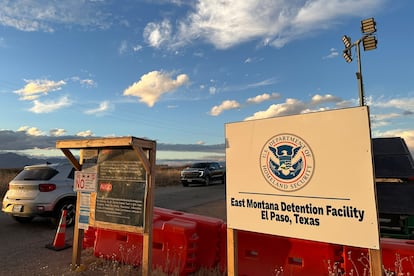
Another instance occurred at Camp East Montana in El Paso, Texas. The government purchased $7.1 million worth of food that it ultimately did not need for the facility. In addition, it spent another $11.5 million on services over a two-week period while the center remained empty.
In Florida, the federal government allocated up to $608 million to reimburse the state for the costs of operating the facility known as Alligator Alcatraz. According to the report, the cost per detainee reached $249 per day, compared to the $92 that ICE normally pays—a difference of 171 percent. The facility closed in June.
ICE also used facilities operated by the Federal Bureau of Prisons. The agreement covers eight centers and requires the immigration agency to cover the full cost of maintaining them, including expenses related to overtime and temporary staff. The average cost amounts to $182 per day per detainee.
While some of these projects were abandoned or put on hold, ICE continued to purchase existing facilities. In July, the agency acquired two private detention centers in California for $1.47 billion, and in August, it purchased two more in Kansas and Minnesota for $734 million. The GAO noted that ICE had not assessed how much it would cost to maintain those facilities in the long term.
The federal agency believes that the absence of an overall strategy has contributed to the agency moving forward with, halting, and modifying projects without sufficient planning. Heather MacLeod, the GAO’s director for Homeland Security and Justice, summed up the problem by noting that the lack of planning had led to “stops and starts” that ultimately resulted in waste.
The Department of Homeland Security, for its part, has defended the pace at which ICE is expanding its capacity and has noted that the new funding approved by Congress allows the agency to move forward with its operations.
Acapulco
Acapulco Shuts Down Amid Fear Of Hurricane Polo: ‘Three Days Not Knowing What’s Going To Happen’

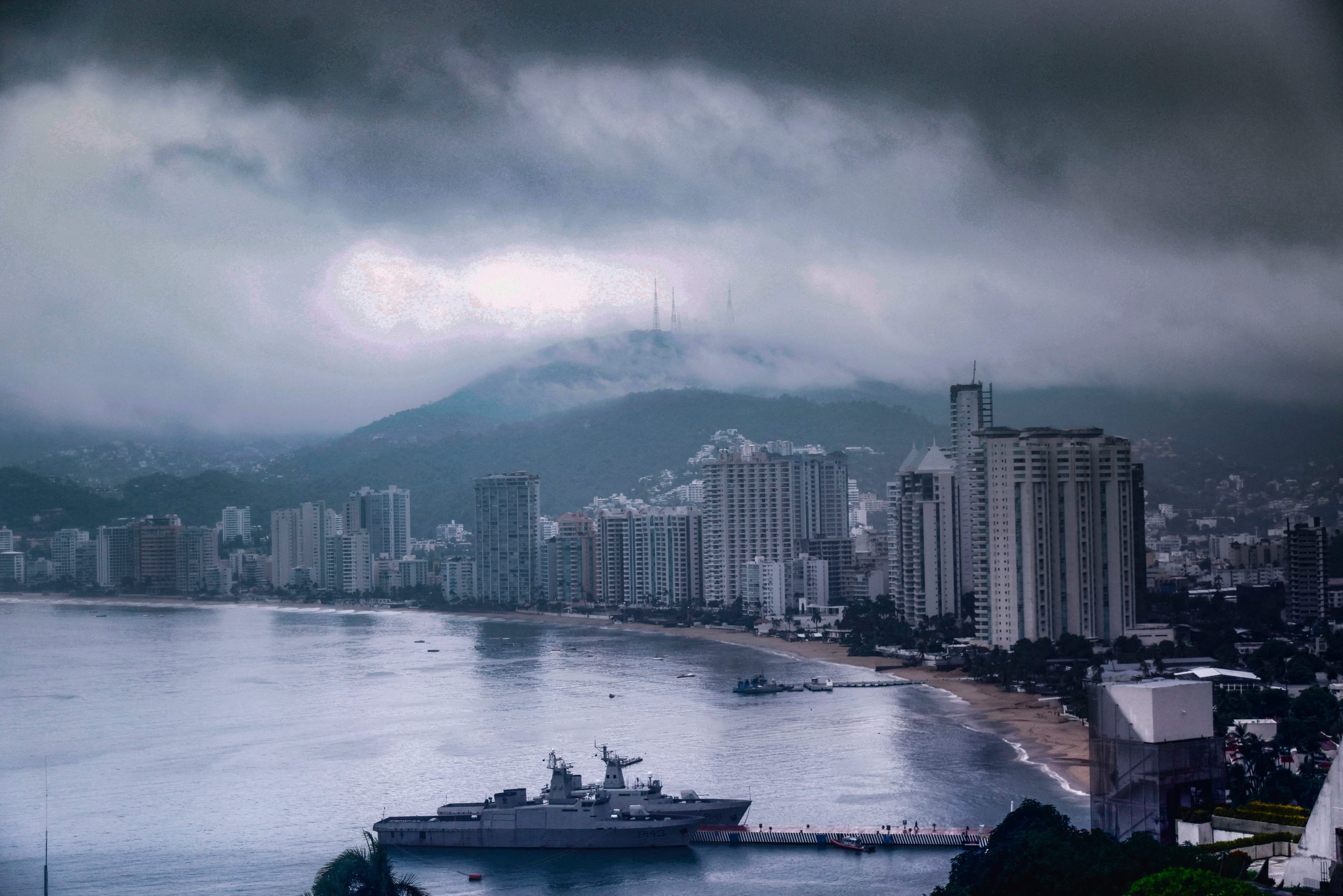
A large white cloud envelops the beach, the boardwalk, the palapas and the nightlife bars that earned Acapulco the nickname The Pearl of the Pacific. Deserted streets and closed shops along the famed Costera Miguel Alemán give the impression that something is about to happen. The white cloud brings rain, high surf and a wave of uncertainty that have inundated the city.
These are the effects of Hurricane Polo, which has been stalled since Tuesday off the coast of Guerrero after reaching Category 5, the highest level, in record time and later weakening to Category 4. Experts say the cyclone will not make landfall, but the locals — who still remember the effects of Hurricane Otis in 2023 — have thrown themselves into preparations “for whatever comes,” says Carolina Esquivel, a 43-year-old merchant with a business downtown.
Far from the luxury hotels and the sunbeds, Esquivel’s cellphone repair shop shutters at 1.30 pm, six hours earlier than usual. She fears both looting and the rising waters from the flood that formed in front of her workplace. “People haven’t come out in three days. Three days not knowing what’s going to happen,” she explains. “Everyone is sitting at home in fear,” she says. “We’ve been preparing for days — stocking beans, rice, eggs, whatever we can in case,” adds her neighbor from the flower shop. “Who’s going to come by now? There are no sales, but you still have to open,” she explains. Torn between the need to work and their fear, they agreed to open at least a few hours a day before taking shelter. Only major stores, banks and supermarkets remain open.
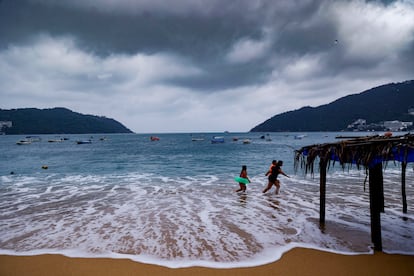
The Mexican government has also focused on prevention. Classes remain suspended for 500,000 students in the state of Guerrero, municipal administrative work has been halted, and more than 600 shelters have been set up that no one has used so far. The port remains closed to navigation. In addition, nearly 14,000 members of the Armed Forces across the country are on standby in the preventive phase of civil protection plans. In Acapulco, troops are on the streets and in shopping plazas, supervising and warning the population about the danger of Polo. “We have the necessary equipment to respond to an emergency,” the Navy said in a video shared on social media. So far, the local media reports no casualties from Polo, which has caused standing water, floods and some trees to fall.
Operations extend beyond the tourist area to the Costa Grande, Costa Chica, the mountain region and the sierra. In the capital, Chilpancingo, “it rains and then stops, it rains and then stops,” says Carlos Ruiz, a 43-year-old sunglasses vendor. In the last two days he has seen “many military personnel” passing through his city en route to the beaches or smaller towns “to make sure everything is okay,” he says, “but for now everything is normal.” That’s where “things are complicated,” he believes. “There” is the port. The hourlong drive that separates a partly cloudy, humid Chilpancingo from Acapulco, where the rain does not stop, reflects the change Ruiz describes.

Considered by the United States National Hurricane Center an “extremely dangerous” phenomenon, Polo on Wednesday began slowly moving away from Guerrero. But the depth, pressure and other technical terms mean little to Roberto Martínez, 27, who is trying to attract customers to an empty restaurant. “I just hope it calms down so we can get back to work as soon as possible,” he says. Here, money comes with tourism, and hurricanes scare away the few visitors who come in the low season.
Sign up for our weekly newsletter to get more English-language news coverage from EL PAÍS USA Edition

Alejandra Neira Se Proclama Campeona Del Mundo Júnior De Ciclismo En Ruta
Protected species trafficking operation uncovered in Spain involving hundreds of reptiles
Manchester City found guilty on 114 of 115 charges that could send them down


-
Latest2 weeks ago
The Vocabulary You Need To Understand The Spanish Citizenship Process
-

 Argentina2 weeks ago
The Falklands: The Open Wound That Unites Argentines
-

 Alex Saab1 week ago
Maduro Ally Alex Saab Pleads Guilty In US Money-Laundering Case
-

 New Developments1 week ago
How To Get A Tourist Rental Licence In Andalusia (Spain) – Step-By-Step Guide 2025
-
easyJet2 weeks ago
146 slide off easyJet flight after powerbank fire at Milan airport
-

 Uncategorized2 weeks ago
‘Lewis will never trust Charles again’ – F1 journalist issues shocking Ferrari statement – GPFans.com
-

 %2 weeks ago
Benahavis Wildfire Stabilised: 300 Hectares Burnt
-

 %2 weeks ago
€111 Million EuroMillions Jackpot Won