ElPais
‘Nude Before Traffic’: Cyclists Riding Without Clothes To Demand Safe Infrastructure
Published
1 day agoon
A distinctly picturesque scene took place last summer in Westminster, London. As on every second Saturday in June, horses, carriages and soldiers escorted King Charles III and Queen Camilla in a ceremonial procession that passed through Wellington Arch. Waiting among the crowd were the day’s other protagonists: a group of nude cyclists who several hours later took over from the royal procession, riding down the flag-lined avenue on their bikes. The event was inspired by protests that began more than 20 years ago in Zaragoza, Spain.
The London edition of the World Naked Bike Ride — the international protest movement that organizes naked cycling events in more than 200 cities — is one of the largest in Europe, and this year it brought together 1,000 people. “Besides promoting a healthy lifestyle, it may be the most fun experience you can have on two wheels,” the organizers say. The number of demonstrators in the English city is, however, tiny compared with the world’s largest, in Portland, Oregon, where some editions have reached 10,000 participants and it is one of the city’s best-known events.
In Spain, naked-bike protests are currently little more than a murmur, despite the fact that the movement began there in the 2000s as a joke among friends. “We used to cycle and sometimes fool around by pedaling naked, just spontaneously. People were surprised; it was a lot of fun,” recalls David Arribas, 45. The joke turned serious when Arribas and Zaragoza-based cycling organizations realized that the new Traffic and Transportation Plan for the city that authorities were preparing did not include the measures they had been demanding for years.
The fictitious group Coordinadora de Colectivos Ciclonudistas de Aragón secretly called the world’s first naked-bike march in June 2001 under the slogan “nude before traffic.” Around 40 people took part, and it was an overwhelming success. In 2003 Arribas noticed a naked-bike ride was being organized in Vancouver, Canada. A Zaragoza–Vancouver alliance was then forged that the following year promoted simultaneous events in different countries. Thus the World Naked Bike Ride was born, and Zaragoza appeared on newscasts around the world.
It was — and is — not only about demanding safe cycling infrastructure. Many people also take part to “enjoy the liberation of undressing in public,” Arribas says. “It is a case of what the philosopher Judith Butler calls political resistance and empowerment based on vulnerability. It has helped change how participants’ bodies are perceived,” he notes.
At this year’s call in Madrid only about 30 people showed up, and Zaragoza’s naked-bike ride stopped being held in 2015. Organizers say that is partly because of the exposure that smartphones bring, and partly because of progress made to integrate the bicycle into public spaces. But there is a contrast that is hard to ignore. In cities that are models of sustainable mobility these rides continue to draw thousands. In others, like Madrid, where the bicycle still occupies a precarious position, the movement seems to have lost its pedals.
Sign up for our weekly newsletter to get more English-language news coverage from EL PAÍS USA Edition
You may like
ayahuasca
A Drug-Free Mexico Is Not Possible, But One That Causes Less Harm Is
Published
22 hours agoon
September 26, 2026
Drugs have always been around. They were here in the 80’s when cocaine arrived in Mexico City and hooked my father’s generation. They were also here in my grandfather’s alcoholism, and in my aunt’s addiction to [anxiety medication] Tafil.
They were there among friends who took psychedelics and went out dancing to electronic music and among those who demonized illegal substances and got so drunk they lost consciousness.
They were here in the ’90s with the “Vive sin drogas” (Live without drugs) campaign, and in 2006 when former Mexican president Felipe Calderón sent the Army into the streets of Michoacán and declared war on the cartels.
They were here when we started seeing people hanging from bridges and, through tragic events, we came to know places like Ayotzinapa, Creel, and San Fernando.
They’ve been associated with every political party. With every drug lord. With the lawyers who use them and the psychiatrists who heal with them.
They were here even before us. There are more than a hundred species of animals that get high for pleasure.
The prohibition that governs over us today is an anomaly that began in the 20th century and reached its peak in 1971, when the United States—and, by extension, the world—declared drugs “public enemy number one.” Psychoactive plants and substances—those that alter the central nervous system and modify perceptions, moods, or behaviors—are closely linked to the history of humanity. They have evolved from being sacred and used in rituals (mushrooms, peyote, ayahuasca) to becoming cornerstones of medicine (opium and cocaine) and an economic engine from which empires have been built (tobacco, coffee, alcohol).
More than half a century of the war on drugs has neither eliminated them nor reduced their use. Quite the opposite.
In the beginning of this war, the global market was dominated by a handful of psychoactive substances. Today, the early warning systems of the United Nations Office on Drugs and Crime (UNODC) have identified nearly 1,400 new ones, many of which are cheaper, more potent, and easier to produce and traffic. According to UNODC, 331 million people use some type of illegal substance—34% more than a decade ago. It also acknowledges that 89% of users do not develop problematic use.
Even so, prohibition has created its own addictions to war and the prison industry. Drug trafficking is the world’s most lucrative illegal business. The legal machinery used to combat it generates billions each year. This strategy has also served as an instrument of social and geopolitical control, allowing states to justify the militarization of territories, surveillance, and the criminalization of marginalized populations.
For more than a decade, I reported on how drug trafficking and prohibitionist policies affect the Americas—from the United States to Chile—and saw the same stories repeating themselves: deaths and massacres in the name of narcotics; drug traffickers involved in politics and police officers collaborating with organized crime; users hooked on crack or opioids with no way to quit; criminalized users, missing persons; peasants exploited by criminal groups and persecuted by the state; women imprisoned for shielding their husbands; and youths in search of money and identity who find a sense of purpose in criminal groups.
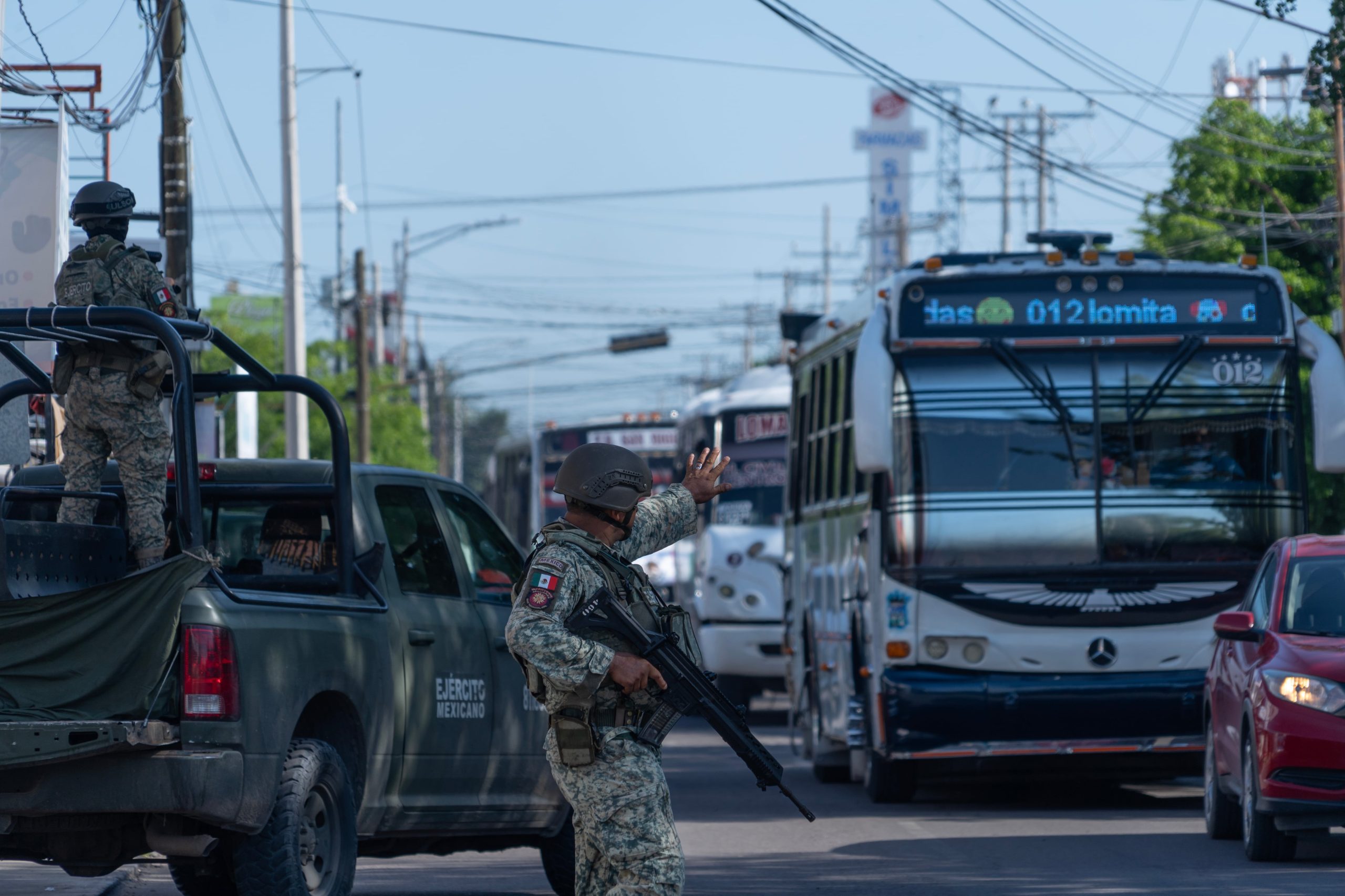
This year marks the 20th anniversary of a war in Mexico that, according to the government’s own data, has left more than half a million dead and over 135,000 people missing. This strategy did not eliminate organized crime. Rather, it fragmented it into dozens of smaller, more violent cells, leading to territorial disputes, protection rackets, and forced displacement. Perhaps there is no more powerful image to represent the failure of the war than that of thousands of “searching mothers” storming the World Cup in search of justice.
What is the point of repeating the same policies over and over again when their failure is no longer a matter of opinion?
My generation grew up with “Just Say No,” a campaign that popularized prohibition during the Ronald Reagan administration and was adopted by governments around the world. It falsely promised a drug-free generation and a decline in crime while legitimizing laws that promoted harsher penalties and the incarceration of Black and Latino communities. The many versions of “Say No to Drugs” shaped the way we understand drugs.
We grew up believing the official narrative without questioning how it institutionalizes violence and racism while a few profit at the expense of the most vulnerable. Governments around the world have justified the war on drugs as if there were no other alternative for dealing with psychoactive substances.
But since the 1980s, harm reduction alternatives have existed—a set of public health policies and practices that seek to minimize the negative consequences of substance use. Instead of judging or punishing, this model accepts the reality that drug use exists in society and seeks to prioritize people’s health, safety, and dignity.
In Mexico, civil society organizations have saved lives in supervised consumption rooms along the border and have succeeded in making involuntary detention illegal throughout the country. They succeeded in having the absolute prohibition of cannabis recognized as unconstitutional and in establishing a regulatory framework for its medical use. Activists, lawyers, academics, researchers, health care workers, and public policy experts have championed amnesty laws and are studying phenomena such as militarization and drug use. They work with victims and historically marginalized communities to seek justice and redress the harm caused by prohibition. It is thanks to this movement that Mexico City now has a harm-reduction approach through the Institute for Mental Health and Addiction Care (IASAMA), and drug-related issues are beginning to be viewed from other perspectives in public discourse.
We are all tired of the terror inflicted by criminal groups and being unable to trust the authorities. Regardless of age, gender, or political party, we all want a Mexico with less harm.
Under this premise, Menos Daño emerged—a platform comprising 10 civil society organizations (open to adding more). This platform advocates for a drug policy centered on social justice, risk and harm reduction, and human rights. The goal is not to replace the false utopia they sold us with another one. Harm reduction involves accepting that substances have always been here and that, among other things, we need policies that educate and prevent the problematic drug use that causes so much damage to the family unit. It’s not just about saying “no.”
Menos Daño proposes concrete, evidence-based political and social changes, such as making naloxone—to reverse overdoses from fentanyl and other opioids— a declassified drug, expanding tolerance zones and clarifying cannabis legislation, recognizing indigenous communities’ uses of ancestral plants and the rights of people who use drugs, as well as enacting an Amnesty Law in Mexico City, training more police officers, and reducing the number of military personnel on the streets.
The work of México Unido contra la Delincuencia, Instituto RIA, Elementa DDHH, Disentir, Cea Justicia Social, Verter, Prevencasa, Programa Compañeros, Xquenda Artes, and the Asociación del Programa de Política de Drogas seeks a historic shift in the way drug policies in Mexico are formulated.
In our country, the last 20 years have been marked by trauma and tragedy: shootings, murders, and disappearances. Amid this daily mourning, we have the opportunity to take control of history. A drug-free Mexico is not possible, but one with less harm is.
Sign up for our weekly newsletter to get more English-language news coverage from EL PAÍS USA Edition
Argentina
The 140 Minutes Of Horror In The Murder Of A Mexican Musician And His Family
Published
22 hours agoon
September 26, 2026By
Pablo Ferri
On the way back home, Jonathan Meléndez began to feel nervous. He called home and nobody answered. Uneasy, he called the security booth at the housing complex where he lived, and asked them to buzz the apartment through the intercom to see if anyone picked up. On his phone he opened the app that gave access to his Alexa, a smart-home device that allowed him to view the camera feed, speak through his phone and have his voice play on the device’s speaker… But there was nothing. It was after 7 pm. The friend riding with Meléndez in the car says he became concerned by then. Something happened in the following minutes, something Jonathan saw on the Alexa footage, or perhaps someone finally answered the phone, because at 7.20 pm he called the building security supervisor and asked him to call the police: “He told me his business partner was armed.”
The partner in question, Diego Sebastián, had arrived at the family home at 5.23 pm. The unit is a two-story penthouse in a residential complex building in Atizapán, north of Mexico City. The guards at the gate knew the partner because he had visited Meléndez and his family on several occasions. Even so, the guard on duty wrote down his personal information and called the apartment to alert the owners about the presence of the visitor. The guard says that “the resident, named Ana Paula” allowed Sebastián to enter. However, Ana Paula González, Meléndez’s wife and four months pregnant, was not there. She arrived 19 minutes later with her two children, ages three and five. Only Aleyda Romero, the 21-year-old woman who helped them with household work and took care of the kids, was home at the time. The visitor went in.
The next 140 minutes contain one of the greatest horrors Mexico has suffered in recent times: the massacre of the Meléndez González family and their employee. The only survivor was the eldest son, aged five.
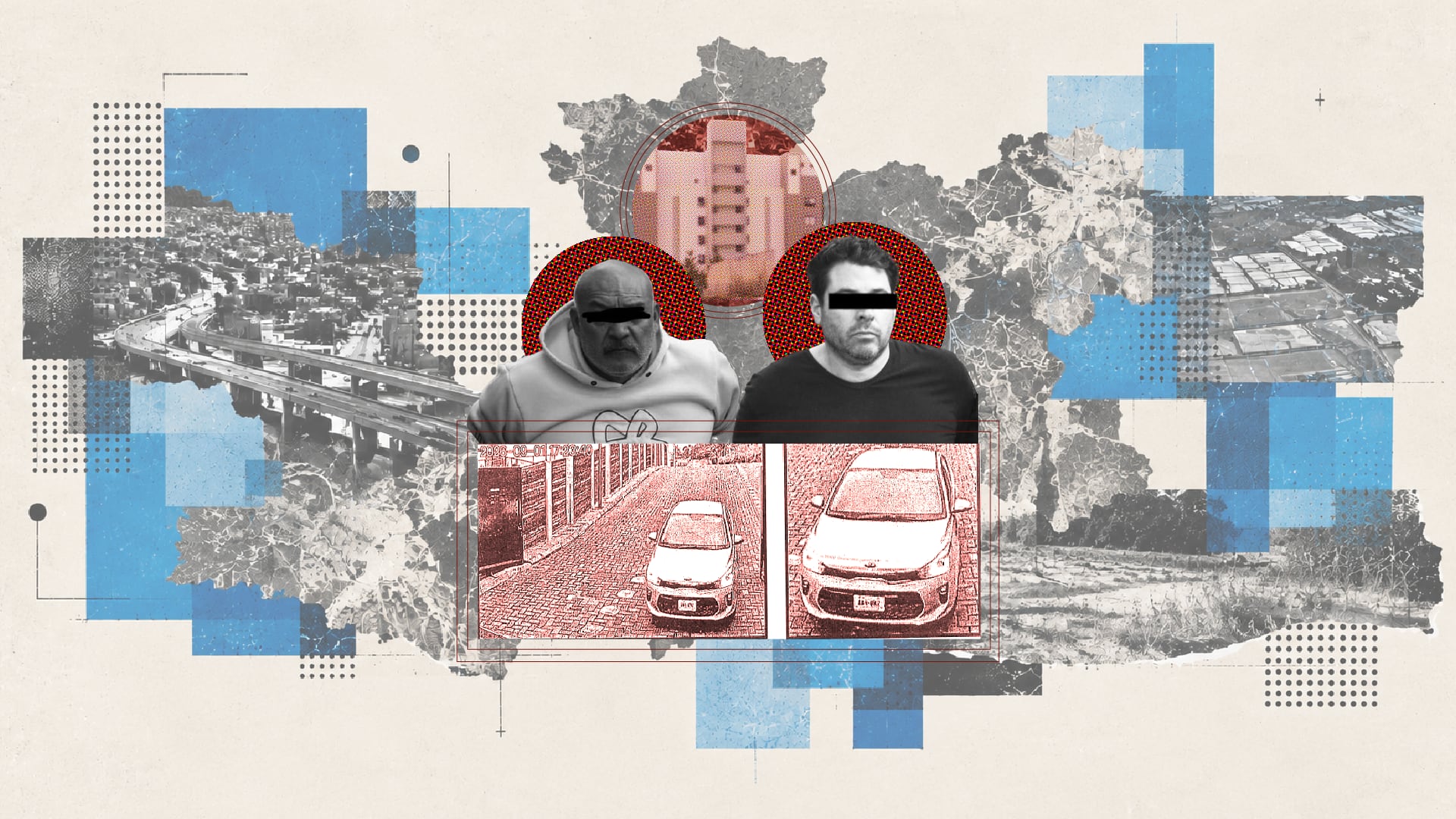
At some point that afternoon on September 1, the business partner, Diego Sebastián N, now arrested and facing charges, shot Ana Paula in the head, killed their three-year-old daughter, shot the nanny, later killed Meléndez himself, and finally shot one of the dogs. It is unclear exactly how it happened, in what order, or why both women and the child were targeted—all questions that have fuelled the family’s torment. From statements by witnesses, relatives and acquaintances that are part of the investigation and that EL PAÍS reviewed, it emerges that it all began with an attempted robbery by Diego Sebastián against Meléndez—an attempt to get hold of his cryptocurrency wallet.
One other detail: the attack began after 6.25 pm. At that time, Aleyda Romero went down to walk two of the family’s small dogs. The walk lasted 38 minutes. At 7.03 pm the 21-year-old, who worked there Tuesday through Friday, returned to the house with the animals. There is no record in the judicial file that Aleyda was aware anything was wrong. She did not say anything to the guard at the gate, nor did she call her father or mother by phone, judging by the statements they later gave to authorities. The young woman returned with the dogs, took the building elevator, went up four floors, arrived at the brown door, opened it and went in…
A case of “disturbance of the peace”
It was a routine alert, something apparently minor—a case of “disturbance of the peace” in a gated community. The Atizapán police officer heard the call over the radio and headed there. He was nearby; he only had to cross the La Venta–Lechería highway and he would arrive. At that time, 8.20 pm, it would not take him more than 15 minutes. When he arrived, the security supervisor let him in. Both went up to the apartment in question, the penthouse in building four. The officer knocked on the brown door several times, but no one answered. There was not a sound, not even the dogs barking—a fact the supervisor would later recall when he testified to the prosecutor’s office. “It was known that inside that penthouse there were dogs, and they were noisy,” he would say.
But no noise came from the apartment because everyone inside was dead. Everyone except a five-year-old boy who ignored the knocks—a child who at that moment was sitting among the bodies of his sister, his nanny, his father, his mother and one of the dogs. He ignored the calls, or maybe he did not hear them: two days later his grandmother told an officer of the Prosecutor’s Office that the boy was still in shock and that the only thing he said was that it had been “Sebas the bad guy.” If two days later the child was in shock, it is reasonable to think he was in shock that afternoon as well. That is why he did not open the door—or out of fear that it might be “Sebas the bad guy”—and the officer, unaware of his presence, thought it best to leave.
The officer did not have much additional information about what had happened in the apartment, according to the report he would file hours later with the Prosecutor’s Office, a document that forms part of the case file. The person who might have had some idea was the building’s security supervisor, who, at least one hour and ten minutes earlier, at 7.20 pm, had received a call from one of the future victims—an alarmed Jonathan Meléndez—asking him to call the municipal police because his business partner was inside his house carrying weapons. At 7.20 pm Meléndez, a popular musician on the national indie scene and keyboardist for the band Camilo Séptimo, was on his way home with his friend after playing a game of padel. But the supervisor did not tell the police officer, or if he did, the officer took no notice.
It is strange to think of those two and all the things they supposedly did not say to one another. Because by then Diego Sebastián had already left. At the security booth, the guard, who answered to the supervisor, had seen him leave. In fact, Diego Sebastián had threatened the woman with his gun, pushing her to raise the exit barrier. “Come on, you bitch, open the barrier, I have to go!” she says the alleged killer shouted. Moreover, according to statements EL PAÍS reviewed, the friend from the padel game was beside her at that moment. The alleged killer, who knew him, also shouted at him: “You, fucking little dark guy, if you even think about saying you saw me, I’ll kill you like your fucking friends!” according to the file EL PAÍS accessed. It is odd that the guard did not tell her supervisor any of this, and that the supervisor, who an hour earlier had received Meléndez’s call asking him to call the police, did not tell the police officer anything.
The friend
That September 1, “we were out in the street most of the day,” says the padel friend. He went to the penthouse in the morning, left with Meléndez for breakfast, they came back, attended a meeting in the Polanco neighborhood in the capital. “At all times I noticed Jonathan was unsettled, like he was distracted,” he adds. They had known each other for four years, and they spent a lot of time together. They had met at a Camilo Séptimo concert. Jonathan (Honas to his friends) had asked him to work closely with him. The friend began to help with a few songs. Later he met his wife and his children… Many times, he said in his statement, he would stay overnight to keep working.
The two ate together that day at the house. In the afternoon they set off for a game of padel. If Honas felt any particular worry about his business dealings with Diego Sebastián, he did not say so. Or at least the friend did not tell authorities. A relative would later say that for a month Meléndez had been having problems with Diego Sebastián, an Argentine by birth and naturalized Mexican. “Diego Sebastián asked him for a loan of 300,000 pesos, but he refused to lend it. It was from that time that the problems with this person began,” the relative says. The relative adds that the two had met six months earlier and that they had a business project together. Diego Sebastián rented luxury homes, Honas did the advertising and in return got discounts on some rentals.
The relative also says Meléndez told his partner about an investment in cryptocurrencies he had made years earlier, though he did not provide further details. It is not known how much Diego Sebastián knew about cryptocurrencies, whether he knew where Honas stored his account keys, or how much money was involved. The relative testified that Honas’s initial investment had been three million pesos, according to what he was told, but that he did not know how much it was worth now. He also said the victim kept his keys on a black USB flash drive. He added that when he and other relatives entered the house after the murders to take the victims’ identification to the Prosecutor’s Office, the USB drive was nowhere to be found.
While they were playing padel, the friend received a message from Meléndez’s wife. It was 5.54 pm. She said Diego Sebastián was at the house and had been waiting for some time, and that she was texting the friend because her husband was not seeing his messages. The friend told Honas and he immediately called his partner. He said he was playing padel, but Diego Sebastián told him he was waiting. It is unlikely Meléndez felt extreme alarm over that exchange. Otherwise he would have returned to the house immediately. Or perhaps he did feel it but kept it to himself so as not to seem paranoid. Or maybe the exertion on the court released a torrent of endorphins that kept worry at bay for a while. In any case, the match lasted another hour and the two friends did not leave until 7 pm.
But on the way back all the good feelings vanished quickly. At 7.28 pm they pulled into the housing premises, drove to the building’s parking lot and Meléndez dashed for the elevator. The friend followed—he wanted to go up with him; after all, Honas already knew in some way that his partner was armed, as he had told the supervisor about it. But Meléndez stopped him. “He told me, ‘wait for me down here; if I don’t answer, ask for help,’” the friend explains. “When I messaged him and he didn’t respond, I decided to ask for help at the security booth,” he adds. According to the guard, the friend arrived at the booth around 7.38 pm. The guard called the supervisor and the property manager. While they were doing that, Diego Sebastián’s vehicle arrived at the booth and he stuck his torso out the window, shouting, holding a pistol in his hands.
The battering ram
The police officer saw Honas’s friend in the parking lot after 8.30 pm when he came down from the Meléndez apartment after his unsuccessful knocks at the door. Seventy minutes had passed since the first call to the police, 62 since his friend had gone up to the penthouse, 52 since he had gone to the security booth, 50 since Diego Sebastián had fled in a gray Kia, and just over ten since the first policeman had arrived. The friend told him, word for word, what had happened. The officer then decided they should go back up. He knocked on the door again, but nothing. The friend insisted: they were a family with two small children and several dogs—three at least—so it was impossible that no noise was coming from inside.
The officer agreed it was strange. But he did not have tools to open the door, so he called for backup. At 9.15 pm a second officer arrived equipped with a metal battering ram. Within seconds they forced the lock and entered. The officers asked the friend to wait outside. Then they saw the horror. First they found a dog—a golden retriever—dead on the floor of the bathroom by the entrance. It had a gunshot wound to the head and its muzzle had been tied with gray industrial tape. The officers moved on. There was a living room with some musical instruments and beyond that the dining room and kitchen. On the other side of the kitchen there was a laundry area and next to it a service room. The officers entered and saw a woman on the bed, face down, hands tied behind her back, a gunshot wound to the head and her mouth taped. It was Aleyda Romero.
The officers continued and went upstairs. As they climbed the stairs they saw red stains on the floor and steps. Forensics later confirmed nine meters of footsteps—specifically, barefoot tracks coming from the dining room and kitchen. On the wall by the staircase, 87 centimeters above the floor, officers saw a hand-shaped bloodstain—or part of a palm. Forensics later certified it measured ten by seven centimeters. Upstairs there was a sitting room and three bedrooms. The officers did not find any trace of the other dogs, or they omitted mentioning them in their reports. In the master bedroom, up on the right, they found Honas Meléndez’s body on a brown sofa. Like Aleyda, his mouth was taped, his hands tied behind his back and his feet bound.
Finally, the officers went to the bathroom. In the shower they found the bodies of Ana Paula and her daughter, the mother barefoot, seated and leaning against the wall. The killer had bound her neck with tape, as well as her right arm and her feet, which had also been secured with a white cable tie. The little girl was kneeling on top of her mother, lying across her lap, wearing her princess shirt. Both had a gunshot wound to the head. When they left there, the officers entered the opposite room and saw a boy slightly older than the little girl they had found in the bathroom. “At first glance,” one of the officers later wrote in the report he filed with the Prosecutor’s Office, “he showed no visible injury.”
The car’s plates
Ten hours after that, the authorities found the car in which Diego Sebastián had fled with his driver, Gerardo N. Investigators already knew then that the plates on the vehicle belonged to another car. Someone had stolen them from a car on August 29 in the Benito Juárez borough of Mexico City, very near, incidentally, to where Diego Sebastián lived in the Del Valle neighborhood. That fact made two things clear. One, that Diego Sebastián had decided to kill the Meléndez family—or at least Honas—days earlier. And two, that the driver, Gerardo N, owner of the Kia, knew that the visit to the Meléndez family was anything but friendly.
The car was found at the intersection of Bosque de los Cipreses and Avenida Bosques del Estado de México, in the municipality of Tecámac, on the other side of the metropolitan area of the capital, shortly before 8 am on September 2. Gerardo N lived near there, as an investigator confirmed when he asked neighbors. “He’s an Uber or Didi driver,” they told him. Diego Sebastián was captured soon after in a forested area known as La Marquesa. After separating from Gerardo N, he had gone to fetch a white BMW X1, apparently belonging to his sister. With that car he headed into the woods. That is where his flight ended.
Sign up for our weekly newsletter to get more English-language news coverage from EL PAÍS USA Edition
Donald Trump
In Washington DC, A Spanish-Language Theater Offers A Refuge From ICE
Published
22 hours agoon
September 26, 2026
The iconic GALA Hispanic Theater in Washington, D.C., a pioneer in presenting Spanish-language plays in the U.S. capital, hasn’t been immune to the impact of Donald Trump’s aggressive immigration policies. Faced with the intensification of raids by Immigration and Customs Enforcement (ICE) across D.C., this center for Hispanic culture has become a refuge for the Latino community on more than one occasion.
“When things were really bad in this area, there was a time when we couldn’t leave the theater after the 10 p.m. rehearsal. We had to stay put until 5 a.m., with two actors who were crying the whole time,” Gustavo Ott sighs. Born in Venezuela, he’s the artistic director at the theater, which is now celebrating its 50th anniversary. The young Latinos studying acting under his supervision suffered persecution by ICE agents, who followed them home to arrest their parents.
The neighborhood where the theater is located, Columbia Heights, was one of the first where residents confronted agents, blowing whistles to alert locals about their presence and putting chalk on the wheels of unmarked ICE vehicles. And the anguish and resilience of the community will be brought to the stage at GALA this season. In June of 2027, the theater will present Botiquín de mariachis de Columbia Heights (with the English title Columbia Heights Mariachi Bar), by Mexican playwright Jaime Chabaud. It’s a portrait of resilience, hope and quiet resistance, reflecting the current reality. “We’ve lived through major crises here,” Ott points out.
Role reversal
The theater troupe’s support for the Latino community dates back to its origins. GALA — an acronym for Grupo de Artistas Latinoamericanos (“Group of Latin American Artists”) — was founded in 1976, in order to promote Hispanic culture in a country where the Spanish language wasn’t widely spoken and the traditions were different. The gamble taken by the founding couple, Hugo and Rebecca Medrano — a theater director born in Argentina and an American dancer — was innovative. Putting on Spanish-language plays in Washington, D.C. and in the mid-1970s, at that, by no means guaranteed success.
Being the only theater in town that offered plays in Spanish attracted the Latino audience, a growing community in the city. And, for everyone else, the couple decided to use subtitles. At the time, this was an unusual role reversal and it has continued to this day.
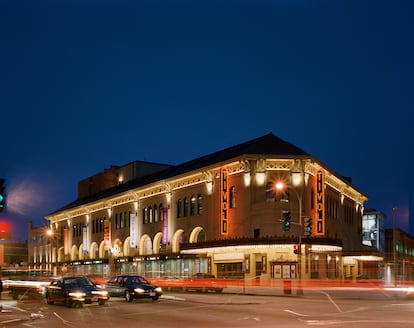
Upon entering the theater – located in a century-old building in the Columbia Heights neighborhood – the three screens surrounding the stage immediately catch your eye: one on each side, with another one above it. And then, the cascade of English-language phrases begins. This is a nod to the experience of segments of the Latino community, who are accustomed to having to read the dialogue when their lack of knowledge of the most widely-spoken language in the country prevents them from following a story.
“It’s magnificent. I speak some Spanish, but the person accompanying me doesn’t. So, they can read the subtitles. It’s a way to promote Hispanic culture and it’s part of the Washington community,” says Rochelle Granat, an American woman seated in the theater’s bar.
The beginnings were modest. Hugo – an actor, who emigrated to Spain after the 1966 military coup in Argentina – didn’t want to stay in the European country, which was emerging from Francisco Franco’s dictatorship. And so, he decided to try his luck in the United States. Unwilling to give up his acting career, he and his wife decided to found a theater to serve the Latino community and offer them what wasn’t available at the time: culture in their own language.

“It was a great opportunity for the Latino community to have access to theater. The fact that it’s in Spanish is what I like most,” says Álvaro García, a Colombian man who has been attending GALA’s plays for three decades. On Thursday, September 17, he and his American wife attended the performance. His Colombian friend and the man’s partner (also regular theatergoers) joined them.
Hugo and Rebecca started their venture in a garage in the Adams Morgan neighborhood. They later moved to a warehouse and a convent school, until the opportunity arose to set up shop in the Columbia Heights building. The property is steeped in history: it served as a grand musical theater in the 1920s, before becoming a movie theater.
The building was one of the few to survive in a predominantly African American neighborhood where, in 1968, following the assasination of Martin Luther King Jr., numerous riots took place. The locals, who had grown up going to the theater, marked it, in order to prevent it from being burned down.
The area became conflict-ridden and the theater was eventually abandoned. It stood empty for many years, until it re-emerged as a survivor from a previous era.
Lorca, with subtitles
The neighborhood has changed, and so has the audience. There are increasingly more spectators who don’t speak Spanish and have to read the subtitles, including younger generations of Latinos.
“Nowadays, we’re very surprised. Because, for example, we performed The House of Bernarda Alba (1936) in January and February of this year. And [the theater] was full of people who didn’t speak the language. It’s [by Federico García] Lorca and they came to read [the subtitles],” Ott notes.
He explains that one of the reasons for the theater’s success is the quality of the translations. “We believe that the translation has to be of a high, literary standard. It can’t simply be an AI thing,” he says. “It’s not just about communicating with the audience. The audience has to feel pleasure because they’re reading something worthwhile. Our translations are very literary,” he emphasizes. Last year, the subtitles were written in verse for the translation of Lope de Vega’s Fuenteovejuna (1619).
One of the keys to survival is adaptation. Hence, the GALA Hispanic Theater is now looking to attract new generations of Latinos who don’t speak Spanish, while also expanding its audience by focusing on bilingualism during performances.
Approximately 30% of GALA’s audience doesn’t speak Spanish. Accordingly, the theater has begun introducing English through musicals.
Garbo, the unsung Spanish hero
To make their performances accessible to non-Spanish speakers, the production company has chosen to stage Garbo: The Actor Who Saved the World, a play running until September 27. Garbo is the code name of Juan Pujol, a Spanish spy who became a key figure in the success of the D-Day landings that helped bring an end to World War II.
Ott wrote the script. He explains that Garbo “is a hero whose story resonates with the traditional American community that doesn’t speak Spanish, because they recognize elements of World War II and they’re familiar with what happened in Normandy.”
Pujol, without any prior training, became a double agent who invented an imaginary network of spies to deceive the Germans into believing that the Allies would launch their attack at Pas-de-Calais, not Normandy. As a result, the Nazi army concentrated its resources in the wrong place. For the British, his name was Garbo; for the Germans, he was Arabel. His cover was so successful that he received military decorations from both sides of the conflict: he was awarded the Iron Cross by the Nazis and was made a Member of the Order of the British Empire.
Preparations for the 2027-2028 theatrical season have already begun. The selection of plays to be performed is based on GALA’s “seasonal themes.” And, this time around, they’re looking ahead to the 2028 presidential elections. “‘Confrontation,’ for example, might be one of the words we use. We’ll also keep in mind that our community is constantly being persecuted, even around the theater. So, ‘persecution’ will be another one,” Ott affirms.
Sign up for our weekly newsletter to get more English-language news coverage from EL PAÍS USA Edition
Lewis Hamilton calls for Ferrari investigation after Azerbaijan Grand Prix flop
New Asbestos Certificate Required To Sell Or Rent Property In Catalonia
Market Snapshot: German Market In Q2 2026
Tags
Trending
-
Latest2 weeks ago
The Vocabulary You Need To Understand The Spanish Citizenship Process
-

Argentina2 weeks agoThe Falklands: The Open Wound That Unites Argentines
-
Alex Saab2 weeks agoMaduro Ally Alex Saab Pleads Guilty In US Money-Laundering Case
-

New Developments2 weeks agoHow To Get A Tourist Rental Licence In Andalusia (Spain) – Step-By-Step Guide 2025
-

Uncategorized2 weeks ago‘Lewis will never trust Charles again’ – F1 journalist issues shocking Ferrari statement – GPFans.com
-

%2 weeks agoBenahavis Wildfire Stabilised: 300 Hectares Burnt
-
Arganzuela1 week agoDetenido Un Hombre Por La Muerte De Una Mujer De 47 Años En El Distrito De Arganzuela De Madrid
-
Best airlines1 week ago
Spanish airline Vueling named Europe’s best low-cost carrier for 2026