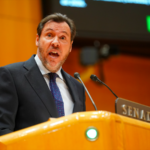
Puente told reporters: “This is not an interrogation and only I will talk.” Photo credit: Gil Corzo/Shutterstock
Spain’s railways are facing serious questions after the deadly collision at Urda, nine months after the Adamuz disaster killed 46 people. The latest tragedy has brought renewed attention to warnings about railway safety, demands from Adamuz victims for trains to be stopped until the network’s reliability could be guaranteed, and a controversial television appearance by Transport Minister Óscar Puente just days before the new crash.
The disaster has also reopened debate about government financing for railway projects overseas while passengers at home face questions about the safety and reliability of their own network. The causes of the Urda collision has not yet been established, but the Spanish people want answers.
Victims had already warned about railway safety
In July, the Association of Victims of the Adamuz Derailment formally asked the Transport Ministry, rail infrastructure manager Adif and the Spanish Railway Safety Agency (AESF) to suspend rail traffic until the system’s safety and reliability could be guaranteed. The request followed a warning from the Railway Accident Investigation Commission (CIAF) that existing arrangements did not include a system specifically designed to detect rail breaks. The victims wanted traffic halted until the necessary technical measures and safety assurances were in place.
The request was made months before the Urda collision. It does not, however, establish that it was the same issue that caused both disasters. The investigation into Adamuz also raised questions about how railway defects were assessed. In September, Adif defended its maintenance procedures, saying the irregularity detected at the site in October 2025 remained within safety tolerance and did not require intervention.
That was Adif’s assessment of the specific defect, not a blanket certification that every part of Spain’s rail network was risk-free. The evidence shows that safety concerns had been raised before the Urda Collision, but the cause of the latest collision must first be be established by investigators.
Puente’s joke about Renfe sparks anger
The timing of Puente’s television appearance could not have been more poorly timed and has added to the anger of current and past rail victims. On October 21, the minister appeared on Cara al Show, presented by Marc Giró on laSexta channel. In a promotional sketch of Spain’s rail services, a lift stopped working and an announcement said the delay was caused by a technical fault. Puente replied: “Good grief. As if we didn’t have enough problems with Renfe already.” The sketch ended with the participants dancing, and Puente shared the clip on social media with the caption: “If I survive this…”
Even though the joke was made before the Urda collision, the Adamuz crash had already happened. Forty-six people had died in January, and survivors and families were still dealing with the consequences. Mario Samper, president of the Association of Victims of the Adamuz Derailment and himself a survivor, condemned the sketch. He said it was unacceptable for the minister to joke about Renfe’s problems while 46 people had died and families had been devastated. The association called for Puente to leave office, describing his behaviour as insensitive.
Comments that incriminate
His earlier comments about the state of Spain’s railways have also resurfaced. Speaking in Congress in September 2024, Puente declared that “Spain’s railways are living the best moment in their history”,pointing to record passenger numbers and improvements in services. He acknowledged that the network still had shortcomings, but maintained that the overall service had never been better. Following the latest disaster, those words have taken on a different significance for critics questioning the state of the country’s rail infrastructure.
To add to the outrage the minister’s handling of questions after the Urda collision has added to the controversy. During a press conference on October 28, Puente told reporters: “This is not an interrogation and only I will talk.” His response added to the frustration surrounding the government’s handling of the disaster, with journalists seeking answers about the collision and railway safety and Puentes trying to silence reporters. Critics argue that his remarks and his response to questioning have done little to reassure victims and passengers who want clear answers.
More than €750 million for Moroccan trains
The government’s railway financing abroad has also become part of the debate about priorities and public money. In February 2025, Spain announced financing of more than €750 million for Morocco to buy 40 intercity trains from Spanish manufacturer CAF. The agreement was made through the Fund for the Internationalisation of Companies (FIEM), with financing backed by a sovereign guarantee from Morocco. There were also earlier loans for rail projects in Morocco and Uzbekistan. In 2019, up to €190 million for Casablanca tram projects and €57.5 million for Uzbekistan trains and equipment were approved as repayable loans. These were intended to support overseas contracts for companies operating in or from Spain, rather than grants handed over without repayment.
And even though these are loans, not grants, the spending still raises questions about the government’s priorities. The government has chosen to use public financing to help Spanish businesses secure railway contracts abroad. After two major rail disasters, passengers and taxpayers can reasonably ask how that sits alongside the investment, maintenance and safety measures needed at home. The Moroccan train contract also has an economic purpose, supporting work for CAF’s Spanish factories. It would therefore be misleading to describe the entire sum as money simply given away or to assume it could automatically be transferred to domestic rail maintenance. The question is whether the government is doing enough on both fronts.
Questions the government must answer
Urda’s cause remains under investigation, and of course no conclusion should be drawn before the evidence is established. But the sequence of events raises serious questions that go beyond one collision or one television appearance. Victims of Adamuz had already asked for railway traffic to be suspended until safety could be guaranteed they also had asked for the findings of the cause of the crash to be made public, something that the government has refused to do. Investigators had highlighted a gap in rail-break detection, while Adif maintained that the defect identified at the Adamuz site had remained within accepted safety limits. Now another catastrophic collision has occurred, and investigators must determine exactly why.
The government will need to answer questions about safety warnings, maintenance decisions, oversight and the measures taken after Adamuz. For passengers, the immediate priority is to establish what happened at Urda, publish the findings and act on any safety deficiencies investigators identify. For families still grieving, and for the millions who depend on Spain’s railways, assurances alone will not be enough they want the current government gone and someone to be held accountable for these tragic and preventable deaths.
A Bilbao bar owner could have been forgiven for expecting a nasty surprise after discovering someone had broken into the premises. Finding the alleged burglar fast asleep inside, with a half-empty bottle of orujo beside him, was probably not what he had in mind.
The bizarre incident happened in the early hours of Friday at the Río-Oja bar in Bilbao’s Casco Viejo. The suspected thief reportedly forced his way inside, helped himself to three beers and opened a bottle of orujo, because, why not? But unfortunately for him, his attempted robbery took an unexpected turn.
An attempted robbery turns into a drinking session
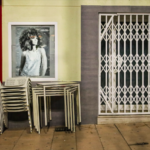
According to Antena 3 Noticias, the man forced open the bar’s metal shutter to gain entry. The alarm system was switched off because it was undergoing maintenance, allowing him to enter without triggering it.
Rather than making a quick getaway with valuables, he reportedly treated the premises as his own private drinking spot. He consumed a fair amount of alcohol including half a bottle of Orujo, a traditional Spanish grape pomace brandy with considerably more kick than your average cerveza.
Neighbours call the police
Noise coming from the premises alerted nearby residents, who contacted the police after suspecting someone had broken in. When officers arrived, they discovered the alleged burglar having forty winks inside the establishment. Beside him sat his Achilles heel: the bottle of orujo, with around half its contents remaining. His night ended in police custody rather than with the stolen goods he may have originally been hoping to find.
The bar had already been targeted
The incident might sound like a comedy of errors, but the Río-Oja has a much more serious problem. The bar had reportedly been targeted for the third time in 2026. During a previous break-in in August, thieves forced the shutter and escaped with €300. Two other nearby establishments were also reportedly targeted that Friday night, adding to concerns among local traders about security in Bilbao’s Casco Viejo.
Repeated robberies leave businesses facing repair bills, damaged entrances and stolen cash or equipment. Even when intruders fail to take anything, owners still have to deal with the damage and the cost of making their premises secure again.
Repeated break-ins leave bar owners worried
Local hospitality businesses have expressed concern about the number of robberies and are calling for greater security in the historic centre. For the Río-Oja’s owner, another break-in means yet more repairs and the worry of being targeted again.
The latest intruder may not have managed to steal anything, but he certainly left the bar with a story that will be difficult to forget. Most customers are eventually asked to leave when a bar closes. This one needed the police to show him the door.
Sample each tapa and decide the winner. Credit: Ayto
Food lovers will have ten days to sample their way around Rincón de la Victoria when the town’s Ruta de la Tapa returns from Friday, November 13, to Sunday, November 22.
In its sixth year, the event brings together 31 bars and restaurants across La Cala del Moral, Rincon de la Victoria, Torre de Benagalbon and Benagalbon.
Each venue will prepare a tapa specially for the occasion, with every dish priced at €4 including a drink. Customers can choose a draught beer, soft drink or water. Participating premises will display a special sign.
Discover cuisine from Rincon
Organised by Rincon de la Victoria Council’s Tourism Department, the route encourages people to discover local bars and restaurants in the area.
A digital guide linked to Google Maps will help visitors find the venues and plan their route. According to the organisers, the guide has recorded 383,018 visits across the six editions.
Customers can also enter a draw for a share of the €1,000 prize fund. Visitors can collect a ‘tapaporte’ from any participating restaurant or the Municipal Tourist Office. To qualify, they must obtain stamps from four different establishments in at least two of the four local areas, vote for their favourite restaurant and submit the completed passport by November 22.
Which bar has the best tapas?
Five winners will each receive a voucher booklet worth €200. Each booklet contains four €50 vouchers, which must be used at four different participating restaurants by February 28, 2027. Completed passports can be deposited at participating venues or the Tourist Office.
€2,700 will go to the restaurants judged best. A public vote will also decide the public favourite. Full details, including the participating restaurants, their tapas and the competition rules, are available at turismoenrincon.es/ruta-de-la-tapa.
With 31 stops and a set price for food and drink, the route gives residents and visitors a chance to try local specialities without committing to a full meal.
Two women have been seriously injured after being struck by a car at a pedestrian crossing in Torrox Costa, with the driver reportedly telling police she failed to notice a red traffic light.
The accident happened shortly before 5pm on Friday, November 6, on Avenida de Andalucia, directly opposite the bus station in the coastal town. The area has previously seen a serious road accident in Torrox Costa, involving a motorcyclist and a cyclist.
The victims, aged 62 and 64, were crossing the road at a traffic-light-controlled pedestrian crossing when they were hit by the car.
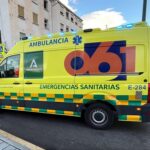
Both women suffered serious injuries and were given emergency treatment at the scene before being taken by ambulance to the Hospital Comarcal de la Axarquia in Velez-Malaga. A subsequent report on the two women’s hospitalisation on November 7 confirmed they were still in hospital.
Driver says she did not see red light
The car was being driven by an 80-year-old Belgian woman who lives in Velez-Malaga. During the initial police enquiries, the driver reportedly explained that she had been distracted and had not realised the traffic light was red when she approached the crossing.
Two ambulances, Guardia Civil traffic officers and Torrox Local Police attended the scene. Emergency teams treated the injured pedestrians before arranging their transfer to hospital.
The accident took place in a busy part of Torrox Costa, close to the bus station. No other details have yet been released about the women’s medical condition or whether any formal action has been taken against the driver.












 Uncategorized4 weeks ago