
News
Hundreds evacuated as huge fire erupts on Spain high-speed train route

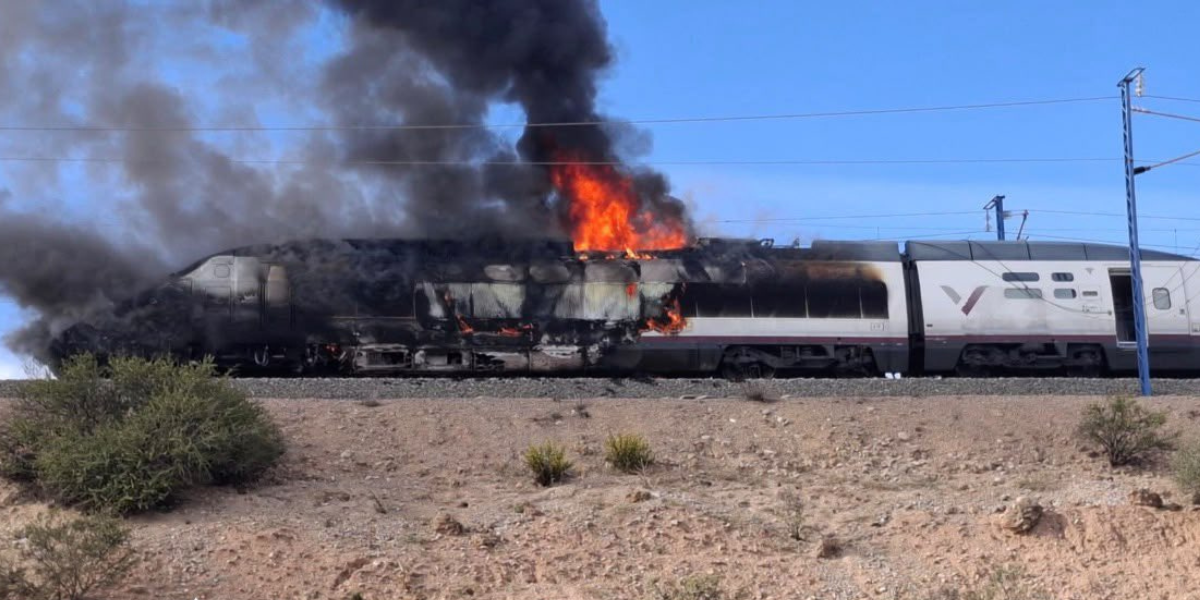
Hundreds of passengers were evacuated from a high-speed AVE train after a fire broke out in northeastern Spain, bringing rail traffic on a key section of the Madrid-Barcelona route to a standstill.
The incident unfolded on Monday, October 12, when a train travelling from Madrid towards Figueres, in Girona, caught fire near Ricla, in Zaragoza province. The blaze forced the suspension of high-speed services between Calatayud and Zaragoza, disrupting journeys along one of Spain’s busiest rail corridors.
With passengers removed from the train and emergency crews called to tackle the flames, travellers faced uncertainty over when they would be able to continue their journeys.
Fire breaks out on Madrid-bound route
The train was carrying 283 passengers when the fire was detected in its rear section at around 4.05pm, according to initial reports.
Emergency services rushed to the scene, with firefighters from Zaragoza Provincial Council working to extinguish the blaze. Passengers were evacuated as a precaution while the emergency response unfolded.
The fire affected the rear locomotive and an adjoining section of the train. Railway authorities also cut power to the overhead electrical cables to allow emergency teams to work safely.
Two people reportedly required medical attention. They included a woman who experienced dizziness and a passenger with reduced mobility. No serious injuries were reported in the initial accounts.
High-speed services brought to a halt
The incident caused major disruption to trains using the affected section of track, with services suspended in both directions while emergency crews and railway teams dealt with the situation.
The timing compounded the difficulties for travellers. Monday was Spain’s National Day, October 12, which coincided with the return period following the long weekend associated with the Pilar festivities.
Passengers travelling between Madrid, Zaragoza and Barcelona faced delays and uncertainty, while the impact extended to other high-speed operators using the same railway infrastructure.
Renfe initially said it could not give a reliable estimate for when services would return to normal.
Passengers offered ticket changes
Renfe announced that affected passengers could change or cancel their tickets without paying additional charges.
Alternative transport arrangements were also being considered to help passengers continue their journeys around the disrupted section.
Travellers were advised to check directly with their train operator for updated departure times, alternative connections and replacement transport arrangements before travelling to the station.
When will trains resume?
The full extent of the disruption depended on the emergency response and the railway infrastructure team’s assessment of the affected section.
Although the incident triggered a suspension of services, subsequent updates indicated that a partial resumption was being considered or implemented. Delays could therefore continue even as trains began moving again.
Passengers planning to travel through Zaragoza should check the latest operator announcements before setting off, as the situation may change throughout the day.




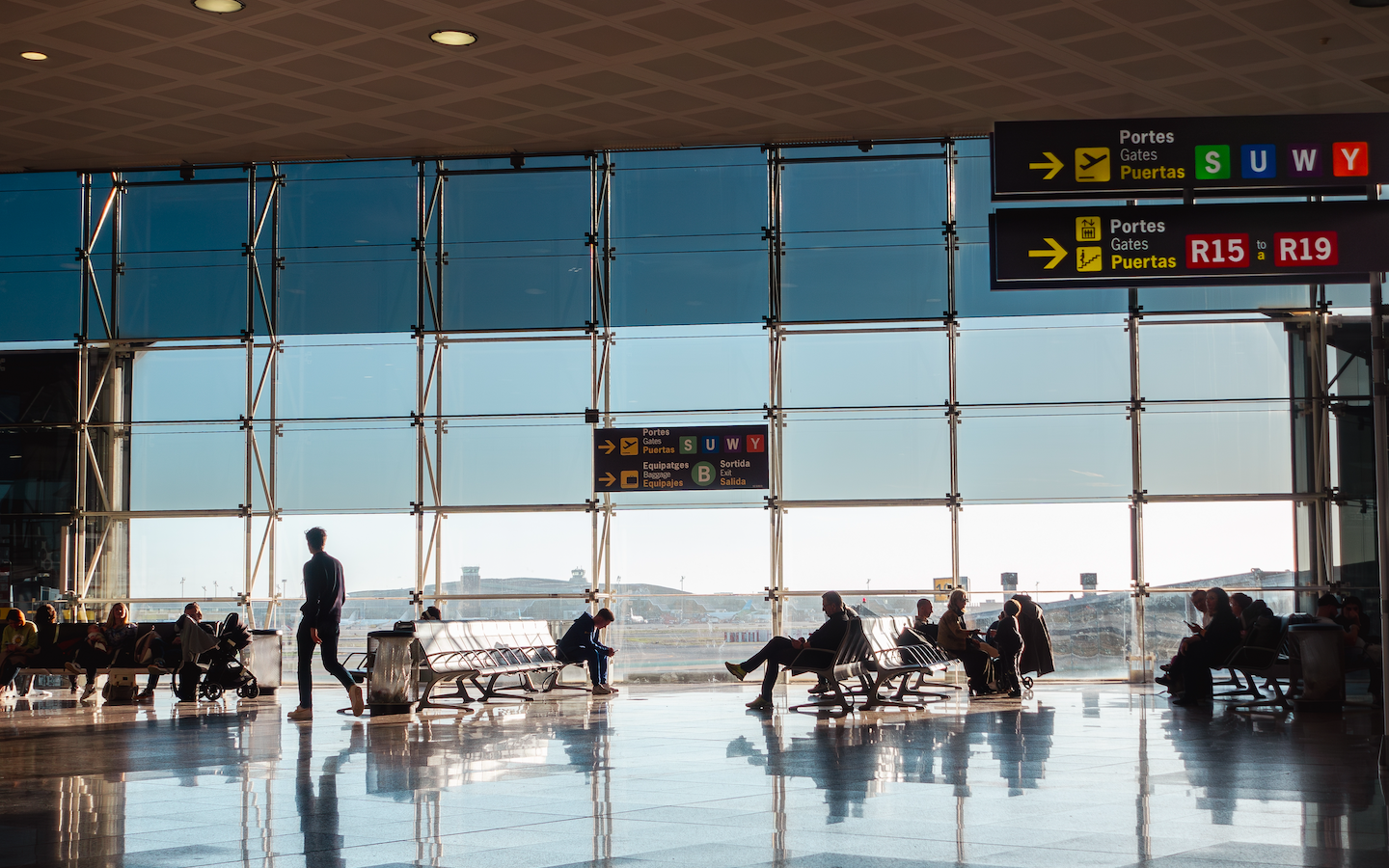
The result puts two major Spanish gateways among the leading airports. Photo credit: Giulio Benzin/Shutterstock
If you have ever rushed through an airport hoping to clear security, find your gate and grab a coffee before boarding, you will know how much the airport itself can shape a trip. Now, two of Spain’s busiest airports have been recognised in a new international ranking, with Barcelona-El Prat taking the top spot among the world’s largest airports and Madrid-Barajas also securing a place in the top ten.
The results come from the 2026 World Consumer Airport Index, published by the Consumer Choice Center. Rather than looking only at passenger satisfaction or flight punctuality, the index considers several practical factors that can make travelling easier or more frustrating.
Barcelona airport takes first place
Barcelona-El Prat Josep Tarradellas Airport has been ranked the best large airport in the world, ahead of major international hubs in Europe, the United States, Asia and the Middle East. Rome Fiumicino Airport takes second place, followed by Los Angeles International Airport in third. Bangkok Suvarnabhumi Airport ranks fourth, while Paris Charles de Gaulle comes fifth. Saudi Arabia’s King Abdulaziz International Airport in Jeddah is sixth, followed by London Heathrow in seventh place.
Madrid-Barajas comes eighth, with Tokyo Haneda in ninth and Dubai International Airport completing the top ten. For passengers travelling through Barcelona, one of the standout findings concerns security. The report highlights an average waiting time of just three minutes, putting the airport among those that perform well on this measure. For travellers who have experienced long queues before a flight, although the ranking does not guarantee that every passenger will get through security in three minutes. Waiting times can still vary depending on the day, time and volume of passengers.
What makes an airport the best?
The index assesses airports using factors that affect the journey before passengers even board their flights. These include connections to public transport, how easily passengers can move between terminals and gates, the range of airlines available, average flight delays and whether an airport hotel is available. Airports also receive additional points if security waiting times are below three minutes and if they operate without a night-time curfew.
The ranking divides airports into two groups according to passenger numbers. Those handling more than 47.2 million passengers a year are assessed separately from smaller airports, allowing the report to compare facilities operating at different scales. Barcelona’s first-place finish applies to the large-airport category, rather than every airport worldwide regardless of size.
Spain’s second airport success
Madrid-Barajas is the other Spanish airport to feature in the top ten, taking eighth place in the large-airport ranking. The result puts two major Spanish gateways among the leading airports in their category, with Barcelona ahead of established hubs including Heathrow, Charles de Gaulle and Dubai.
Spain’s airports handled a record 384.8 million passengers in 2025, an increase of 3.4 per cent compared with 2024. That growing volume makes the passenger experience at major airports particularly relevant for people living in Spain, as well as the millions of visitors who pass through each year.
Which smaller airport came first?
Barcelona was not the only European airport to claim the leading position. Düsseldorf Airport in Germany topped the separate ranking for airports handling fewer than 47.2 million passengers annually. Zurich came second, followed by Copenhagen in third. Helsinki and Milan Malpensa also featured among the top five smaller airports.
The findings underline that the best-performing airport depends partly on the category being assessed, rather than passenger numbers alone. It is also worth noting that this is not the same as the Skytrax World Airport Awards, which use a different assessment based on passenger surveys. Those awards can produce a different winner, so Barcelona’s position here should be understood specifically within the Consumer Choice Center’s index.
For anyone flying from Spain, the ranking offers a welcome recognition for Barcelona and Madrid. But the real test for passengers will still be the experience on the day: getting to the terminal, clearing security, reaching the gate and making the flight on time.
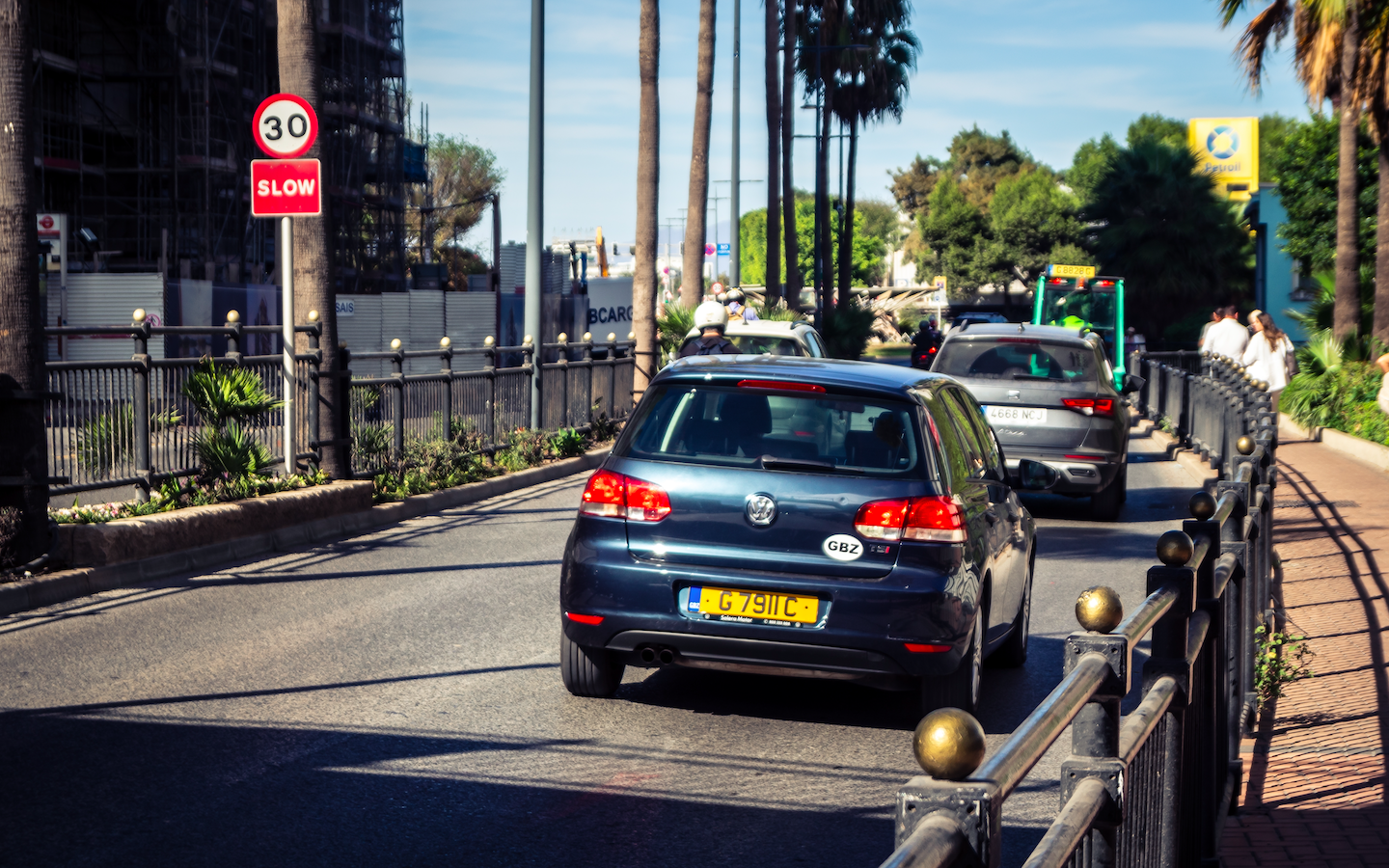
The new system is expected to come into force in 2027. Photo credit: Jose HERNANDEZ Camera 51/Shutterstock
Drivers heading to Western Beach in Gibraltar could soon have to pay to park, with vehicles carrying Gibraltar number plates set to be exempt from the planned charges. The new system is expected to come into force in 2027, meaning motorists arriving in cars registered outside the Rock could face an additional cost when visiting the beach.
The government has not yet confirmed how much parking will cost or when the charges will begin. The plan was revealed by Transport Minister John Cortes in Parliament, following a question from opposition MP Giovanni Origo about parking arrangements at Western Beach.
Foreign-registered cars to pay for parking
Under the proposed scheme, parking at Western Beach will operate on a pay-and-display basis, with vehicles registered in Gibraltar exempt from payment. That means the distinction will be based on the vehicle’s registration plate rather than simply where its driver lives. A resident driving a car registered outside Gibraltar could therefore be affected, while a Gibraltar-registered vehicle would qualify for the exemption.
The government has yet to publish the full details of the scheme, including the tariff, operating hours and the number of parking spaces that will be covered. For motorists who regularly cross the border from Spain to spend time at Western Beach, the change could make an otherwise straightforward visit more expensive. However, until the charges are confirmed, drivers cannot yet calculate what the new arrangements will mean for their regular trips.
Why is Gibraltar introducing the charges?
The proposal comes amid concerns about parking availability around Western Beach, where demand for spaces can create difficulties for people visiting the area. Western Beach lies on Gibraltar’s western coast, close to the frontier with Spain. Its location makes it accessible to people travelling from both sides of the border, putting pressure on the limited parking available nearby. The planned charges would introduce a different arrangement for motorists depending on whether their vehicles are registered in Gibraltar or elsewhere.
The government has not yet provided a detailed explanation of how the money raised will be used or whether the scheme is intended primarily to manage demand, generate revenue or achieve both aims. Those details will be important for drivers trying to understand the reasoning behind the new rules, particularly if the charges apply to visitors who already contribute to the local economy when they come to Gibraltar.
Questions remain over the new parking rules
Although the government has indicated that the system is planned for 2027, several practical questions remain unanswered. The first is the price. Without a published tariff, it is not yet clear whether motorists will face a small fee for a short visit or a more substantial charge for spending several hours at the beach.
The government has also yet to clarify whether there will be different rates for different lengths of stay, how payment will be made or whether any additional exemptions will apply. For drivers using Western Beach regularly, the availability of alternative parking will also be a consideration. If nearby spaces are already in short supply, motorists may have limited options if they wish to avoid the new charges.
What the new rules mean for cross-border drivers
The announcement also raises questions for people who own vehicles registered in Spain or elsewhere but live or work in Gibraltar. Under the arrangement described so far, it is the registration of the vehicle, rather than the nationality or residence of the driver, that determines whether payment is required. Until the government publishes the full rules, motorists should not assume that any exemptions beyond those for Gibraltar-registered vehicles will be available.
For now, the change remains a plan for 2027 rather than a charge drivers must pay immediately. The next step will be for the Gibraltar Government to confirm the implementation date and publish the practical details, including prices and payment arrangements. For anyone who regularly uses Western Beach, those details will determine how much the new parking system affects their visits.
Costa Blanca North
Residents reassured that Marina Baja water supply secured after major transformer fire
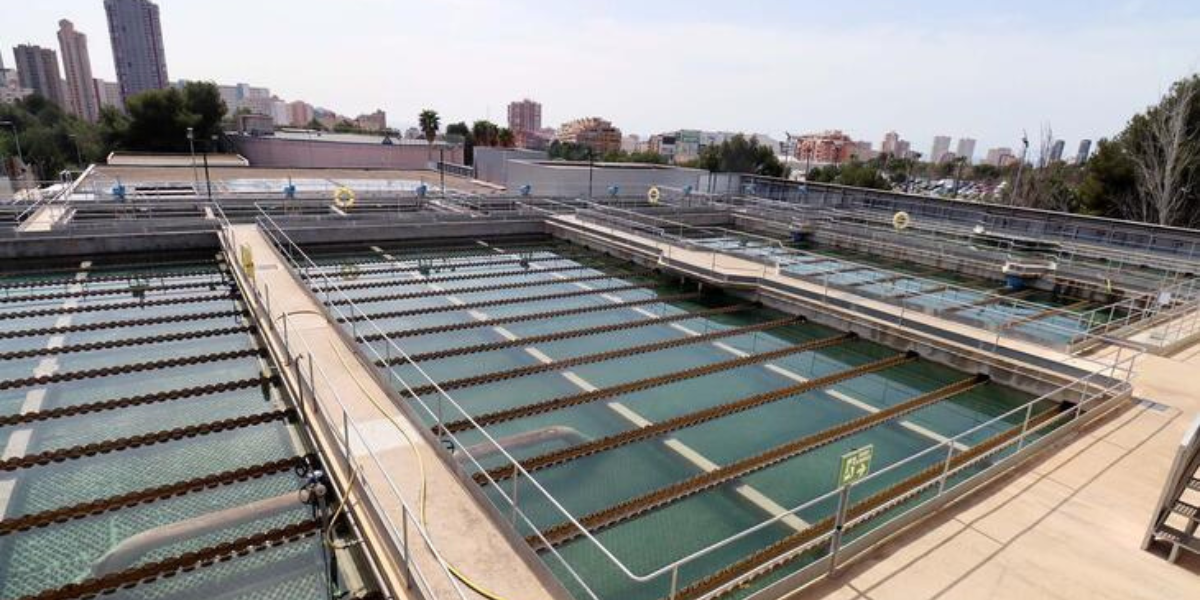
Residents across Spain’s Costa Blanca have been reassured that their drinking water supply is guaranteed after a major fire damaged critical electrical infrastructure serving the Marina Baja, with engineers now working on replacement options.
The incident occurred at around 1.45am on Monday, October 12, at the Algar electrical substation, where a 10-megawatt transformer caught fire. The blaze also damaged nearby installations, leaving authorities assessing the full extent of the material damage and its potential consequences for the region.
The Marina Baixa Water Consortium has confirmed that supplies remain guaranteed despite the incident, offering reassurance to municipalities and residents who depend on the system for their drinking water.
Five-day shutdown considered for replacement
The consortium is exploring several ways to replace the damaged transformer as quickly as possible, with the fastest option involving the installation of an equivalent unit already held in reserve.
However, replacing the equipment will not be straightforward. Engineers must carry out specialist connection work and replace damaged cables and other affected components before the replacement can be brought into operation.
The consortium estimates that this option would require a minimum shutdown period of five days.
The transformer is a substantial piece of equipment, meaning the replacement process requires specialist work rather than a simple swap.
Officials are working to minimise the time needed to restore the damaged infrastructure while maintaining reassurance over the region’s water supply.
Longer repair option also underway
A second option involves repairing or replacing the existing transformer, although this route is expected to take considerably longer.
The consortium estimates that resolving the situation through this alternative would require at least two months. Work on this option is already progressing in parallel, allowing the organisation to pursue different solutions while assessing the best way forward.
The damage is considered significant, and its wider implications for the Marina Baja are still being evaluated.
Residents receive reassurance
Despite the scale of the incident, no personal injuries have been reported.
The consortium has stressed that drinking water supplies to the municipalities connected to the system remain guaranteed, seeking to prevent unnecessary concern among residents following the overnight fire.
The immediate priority is to determine the most effective way to replace the damaged equipment and restore the electrical infrastructure as quickly as possible.
Further work will depend on the technical requirements of the replacement and the extent of the damage identified during inspections.
One Spanish airport has beaten the world’s biggest hubs to take first place
Gibraltar to introduce a parking fee that depends on your number plate
Hundreds evacuated as huge fire erupts on Spain high-speed train route


-

 Uncategorized2 weeks ago
F1 Bahrain Grand Prix will be live and FREE on TV this weekend
-
Latest1 week ago
Spain’s Government Dealt Huge Blow As MPs Reject Housing Crisis Laws
-
Latest2 weeks ago
Why You Can’t Donate Blood In Spain If You Don’t Speak Spanish
-

 Housing access / crisis / affordability1 week ago
Radical Housing Decrees Defeated As Snap Election Talk Grows
-

 Foreign demand2 weeks ago
Market Snapshot: German Market In Q2 2026
-

 Uncategorized2 weeks ago
Lewis Hamilton F1 wish could come true as stunning plans for new track revealed
-
British tourists arrested in Magaluf1 week ago
British tourists arrested after taxi driver left bloodied in Magaluf
-
Blackout preparedness2 weeks ago
Brussels takes action against Spain over failure to update blackout plan