Connect with us

%

Hip Replacement In Marbella: A Muscle-Sparing Approach

Published

on

hip-replacement-in-marbella:-a-muscle-sparing-approach

Specialist hip surgery with Dr Joris van der Lugt at Compass Clinic. Credit: Compass Clinic

Hip pain can affect your mobility, independence and quality of life. If you have advanced hip arthritis, a total hip replacement can relieve pain and help you return to a more active lifestyle. The right treatment depends on your symptoms, your general health and how much the condition affects your everyday life.

Dr Joris van der Lugt is an orthopaedic surgeon specialising in hip and knee replacement. Based in Marbella and Estepona, he has specialised in the muscle-sparing anterior approach to hip replacement since 2008.

What is a total hip replacement?

A total hip replacement replaces the damaged parts of the hip joint with artificial components. The damaged femoral head is replaced with an artificial ball and stem, while the worn socket is replaced with an artificial cup.

Dr van der Lugt uses the Direct Anterior Approach (DAA), a minimally invasive technique that reaches the hip from the front. Instead of cutting through the major muscles, the surgeon works between them. This helps preserve muscle tissue and may support an earlier recovery. As with any operation, results and recovery times vary from person to person.

How long does a hip replacement last?

Modern hip replacements are designed to last for many years. Many last 25 years or longer, depending on the implant, activity level, body weight and individual circumstances. Some last considerably longer.

Regular follow-up and a healthy, active lifestyle can help you look after your new hip. Your surgeon can explain what to expect based on your age, health and planned activities.

What are the symptoms of hip arthritis?

Common signs of a worn hip joint include:

  • Pain in the groin, hip, buttock or thigh.
  • Stiffness, especially after resting or in the morning.
  • Difficulty walking, climbing stairs or putting on shoes and socks.
  • Reduced hip movement and flexibility.
  • Pain that affects sleep or everyday activities.

If these symptoms persist or gradually get worse, an orthopaedic assessment can help identify the cause and determine the most suitable treatment.

When should you see an orthopaedic surgeon?

Consider seeing an orthopaedic surgeon if hip pain continues, limits your daily activities, affects your sleep or no longer improves enough with non-surgical treatment.

An assessment usually includes a discussion of your symptoms, a physical examination and X-rays when appropriate. Surgery is considered in light of your symptoms, imaging results and overall health, not simply your age or X-ray findings.

Are there non-surgical treatment options?

Yes. Depending on the severity of the arthritis, treatment may include physiotherapy, suitable low-impact exercise, weight management and pain-relieving medication.

In selected cases, injections may also be considered. These treatments can help manage symptoms and may delay the need for surgery, but they cannot reverse advanced joint damage. Dr van der Lugt also offers non-surgical treatments for selected joint conditions. The most suitable option depends on your diagnosis and individual circumstances.

When can you walk again, and how long will you stay in hospital?

One possible advantage of the anterior approach is that patients may be able to start moving early. If their medical condition allows, they can generally begin standing and walking with assistance on the day of surgery.

After surgery, your clinical team will assess your progress and explain the next steps for safe mobilisation and recovery. The arrangements for hospital care and initial physiotherapy will depend on your individual treatment plan.

Crutches are normally used during the first weeks of recovery. Support is gradually reduced as strength, balance and confidence improve, following advice from the care team.

How many weeks of physiotherapy are needed?

Physiotherapy starts shortly after surgery and is an important part of recovery. At first, the focus is on walking safely, improving mobility and rebuilding strength.

Many patients follow a structured rehabilitation programme for around four to six weeks, although the duration depends on individual progress and treatment needs. Continuing the recommended exercises at home is also important.

Why choose Compass Clinic Marbella?

Compass Clinic offers an integrated approach to orthopaedic care, combining specialist surgery with personalised support and rehabilitation.

Key features of the service include:

  • An experienced surgeon: Dr Joris van der Lugt has specialised in the anterior approach since 2008 and has performed more than 3,000 procedures using this approach.
  • A muscle-sparing technique: The direct anterior approach aims to preserve the muscles around the hip.
  • A coordinated treatment plan: The services included, as well as arrangements for hospital care and rehabilitation, will be confirmed as part of your individual treatment plan.
  • Personalised support: Patients receive guidance throughout treatment and recovery.
  • Support for international patients: Patients can plan their treatment alongside a recovery stay in the Marbella area. Accommodation options are available through the clinic’s medical tourism programme.

When can you fly home?

For international patients, travel plans are an important part of preparing for surgery. After an uncomplicated recovery, a return flight around one week after surgery may be possible, but only after the surgeon has assessed you and confirmed that it is safe.

The timing must be decided individually because flying after major surgery carries a risk of blood clots. Your care team will advise you on flight safety, medication, mobility and any precautions you may need.

Personal care in four languages

Dr Joris van der Lugt speaks Dutch, English, Spanish and German. This helps international patients discuss their concerns, understand their treatment options and feel at ease throughout their care.

If hip pain is limiting your life, a consultation can help you understand the cause of your symptoms and explore whether a total hip replacement may be right for you.

Compass Clinic provides specialist orthopaedic care, personalised treatment and recovery support on the Costa del Sol.

%

Another Day Of Commuter Train Chaos

Published

on

another-day-of-commuter-train-chaos

Cercanias commuter train broken down again on the Fuengirola line.

Repeated breakdowns raise questions over investment (or a lack of), reliability and whether a change of government could make a difference. Costa del Sol citizens are at the end of their tether.

Passengers travelling between Malaga and Fuengirola faced another day of disruption and waiting on Thursday, November 5, after a technical fault on a Cercanías (commuter) train caused widespread delays, cancellations and overcrowding.

The latest problems affected the C1 line, with passengers reporting waits of up to an hour at Plaza Mayor. Some trains were running late, while passengers reported smoke and an unusual smell around the wheels of a train at La Colina in Torremolinos. Some services were cancelled and others required passengers to change trains.

According to Málaga Hoy’s report on the latest Cercanías disruption, the problems also affected the C2 service between Malaga and Alora.

A difficult week for Malaga commuters

Thursday’s disruption followed three consecutive days of problems reported across the network, with delays, cancelled services and compulsory changes of train.

On Sunday, November 1, around 20 passengers were left stranded after a technical failure stopped the last train travelling towards Fuengirola. Renfe eventually arranged taxis to take them home. EWN previously reported the late-night breakdown which left Malaga passengers stranded.

The following night, a man died after being struck by a train near Torreblanca, forcing the suspension of services between Benalmadena and Fuengirola. This was a separate and tragic incident, rather than a mechanical failure. Even more operational problems followed on Tuesday and Wednesday, before Thursday’s technical fault brought another round of passenger complaints.

Spanish newspaper El Español counted 37 service disruption notices on Thursday alone, covering delays, cancellations, partial interruptions and a compulsory passenger transfer. Renfe attributed the latest C1 problems to a technical fault affecting one train, while the C2 experienced separate difficulties.

Why the Fuengirola railway is significant

The 32-kilometre C1 connects Malaga city with the airport, Torremolinos, Benalmadena and Fuengirola. It is an essential transport link for residents commuting to work, tourists travelling between resorts and airport passengers avoiding increasingly congested roads.

Renfe’s 2025 passenger figures show that Malaga’s two Cercanías lines carried 15.54 million passengers last year, with the bulk of demand concentrated on the C1. At some points, passenger numbers reach 150 per cent of available seating capacity.

Renfe plans to invest €66.7 million in seven new high-capacity trains for the Fuengirola route, expected to enter service from 2028. A further €40 million is earmarked for a new maintenance workshop.

Meanwhile, Adif has been working on a project to add 2.8 kilometres of double track between Malaga Airport and Campamento Benitez, helping to address infrastructure limitations that restrict how frequently trains can run.

Could we do with a change?

Responsibility for Spain’s state railway network ultimately falls on the national government through the Transport Ministry, Adif and Renfe. A change of administration in Madrid could therefore bring different investment priorities, management decisions and expectations for service improvements.

However, replacing the government would not automatically solve the railway’s problems. The infrastructure limitations, maintenance requirements and growing passenger numbers would still need to be addressed. For thousands of people who depend on the C1 every day, the promised new trains and infrastructure improvements offer some hope, but they will not arrive overnight.

Whether under the present administration or a future government, the question remains the same: how can a railway serving one of Spain’s busiest coastal areas provide a service passengers can actually rely on?

Continue Reading

%

‘An Insult To Italian Culture’: Chef Fired After Refusing To Put Pineapple On Pizza

Published

on

‘an-insult-to-italian-culture’:-chef-fired-after-refusing-to-put-pineapple-on-pizza

Management said the topping was not the only problem. Photo credit: Emma’sPics/Shutterstock

There are some things Italians take very seriously: their coffee, their pasta, their nonna, their olive oil and, apparently, the right of a pizza to remain pineapple-free. One Italian chef was so opposed to the tropical topping that he refused to make it for customers, even after his boss asked him repeatedly.

Davide Tamburella, who worked at La Costa Restaurant and Bar in Brisbane, Australia, considered putting pineapple on pizza an insult to his Italian culture. His refusal to prepare ham and pineapple pizzas for a private function became one of several issues raised by management before he was dismissed in May. The dispute has since reached Australia’s Fair Work Commission, turning one of the world’s most divisive pizza toppings into an employment case. 

A pizza topping that crossed a line

This was not Tamburella’s first disagreement with his employer over pineapple. According to the commission’s findings, it was the third time in four years that he had refused to put the fruit on pizzas. On an earlier occasion, he had reportedly asked his boss to look into how important it was to Italians not to put pineapple on pizza. When the request came up again, he maintained that instructions from management did not have to be followed if they offended his culture.

His employer, Elliot Ingram, had a rather different concern: customers had ordered the pizzas, and the restaurant was expected to serve them. The function was reportedly worth more than AU$15,000, making the disagreement considerably more expensive than a heated debate over dinner. La Costa was in Queensland, Australia’s pineapple-growing heartland, where the fruit is big business. The state produces Australia’s commercially grown pineapples, so the chef had found himself defending Italian culinary tradition in the middle of pineapple country. 

The dispute was about more than pizza

Management said the topping was not the only problem. The complaints raised before Tamburella’s dismissal also included his use of inappropriate language, his communication style and what was described as growing frustration in the workplace. He had also injured his right hand after striking a metal handrail at work in April, fracturing bones in two places. Tamburella argued that the injury had played a part in his dismissal, alongside the dispute over the pizzas.

He was dismissed on May 20, around a fortnight after a meeting with management. The restaurant’s managing director later said there was more to the dispute than pineapple on pizza. That is worth remembering before imagining an entire restaurant throwing its hands up because one chef refused to reach for a tin of pineapple. 

Chef loses challenge over dismissal

Tamburella took his case to Australia’s Fair Work Commission, arguing that his dismissal was unfair. The commission rejected his application in a decision released on November 3. However, it did not rule that the restaurant was right to dismiss him over the pineapple dispute. His application had been lodged outside the legal time limit, and Commissioner Jennifer Hunt found there were no exceptional circumstances to justify accepting it late. The commission therefore did not determine the substantive fairness of the dismissal. 

The consequences extended beyond the kitchen. Tamburella had been pursuing an employer-sponsored permanent residency visa, a process he had reportedly spent more than three years working towards. After his dismissal, the restaurant ended its sponsorship, leaving him needing to find another employer if he wanted to pursue that route.

La Costa itself closed in July after its lease expired, with the owner citing high operating costs. Tamburella has since found work as head chef at another Brisbane Italian restaurant. In a final twist, pineapple is not on that restaurant’s menu. The chef may have lost his job and his first legal challenge, but at least his new kitchen appears to share his position on the great pineapple debate. Whether that is culinary principle or simply a very specific recruitment requirement is another question

Continue Reading

%

Five Years Of Complaints Ignored? 110 Dogs Found Beaten, Starved And Neglected In Spain

Published

on

five-years-of-complaints-ignored?-110-dogs-found-beaten,-starved-and-neglected-in-spain

Reports of the dogs situations had been made for five years. Photo credit: Policía Local Buñol/Facebook

A neighbour’s complaint has uncovered 110 dogs living in appalling conditions at a property in Buñol, Valencia. The animals were found without water, exposed to high temperatures and showing signs of severe malnutrition. Some were restrained with short chains, while overcrowding left others with barely enough room to move.

An animal welfare organisation says 26 dogs were found dead at the property. Asociación Defensa Animal Torrent (ADAT) also claims complaints about the animals had been made over five years with nothing being done about it by authorities, raising questions about how long the situation had continued, how effective the animal welfare laws are in Spain and whether earlier intervention could have prevented further suffering. Police have removed the surviving dogs and opened an investigation into the property owner on suspicion of animal abuse.

A neighbour’s alert led to the rescue

The operation began after a resident contacted Buñol Local Police about the dogs. Officers investigated and brought in the Guardia Civil’s SEPRONA unit from Requena, which deals with offences involving animal welfare and the environment. At the property, officers found 110 dogs exposed to direct sunlight and high temperatures, with no access to water or food. Some were tied up with short chains. Others were crowded into confined spaces such as barrels and tiny rusty cages leaving them little to no room to move.

Police also found signs of severe malnutrition and suspected physical abuse. The dogs were seized and taken to Ribamontes, an animal reception centre working with Buñol Town Hall. They are receiving veterinary attention, and their health will need to be assessed individually. The owner is being investigated on suspicion of animal abuse. The case has been put before the judicial authorities. No conviction has been reported as of yet, and the investigation will have to establish responsibility for the conditions in which the animals were kept.

Starving Podenco dogs kept in tiny rusty cages.
Most of the dogs rescued in Buñol are reportedly podencos. Photo credit: Policía Local de Buñol/Facebook

Animal group reports 26 dogs found dead

ADAT says the 110 surviving dogs were not the only animals at the property. The organisation reports that 26 dogs were found dead, bringing the total number involved to 136. The group has also described finding remains in barrels covered with concrete, as well as skeletons. Those details have been attributed to ADAT and have not been independently confirmed in the police account. The causes of the reported deaths have not been made public.

ADAT says complaints about the property had been made over five years. Police have confirmed that the operation followed an alert from a resident, but have not explained whether earlier complaints were received or what action may have followed. If reports were made over several years, investigators will need to establish when they were submitted, who received them and whether the property was inspected before the latest intervention and if not, why was nothing done about it?

The association’s account also raises questions about the number of animals that may have passed through the property during that period and how many unnecessary deaths may have been prevented if only the authorities had investigated the situation sooner.
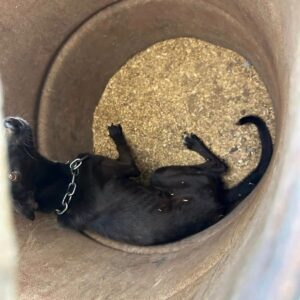
A young podenco pup being kept inside a plastic barrel
Live dogs and remains had also been found in barrels covered with concrete. Photo credit: Policía local de Buñol/Facebook

Spain’s animal welfare law leaves hunting dogs outside its protection

The entire situation has also drawn attention to a major gap and ineffectiveness of Spain’s animal welfare legislation: dogs used for hunting are excluded from the national Animal Welfare Law, despite being just as vulnerable to neglect and cruelty as other dogs. Under Law 7/2023, which came into force in September 2023, hunting dogs, dogs kept in rehalas (packs used for hunting) and other animals used for hunting are excluded from the law’s scope. They are instead covered by other European, national and regional regulations.

Animal welfare organisations have criticised this exclusion, arguing that a dog’s need for proper care does not change according to whether it is kept as a pet or used for work. Hunting dogs still need adequate food, clean water, veterinary treatment, suitable accommodation and protection from mistreatment. Including them in the national legislation would establish consistent minimum welfare standards for all dogs. It would also provide a stronger framework for monitoring their conditions, identifying neglect and holding owners accountable when animals are deprived of basic care.

Most of the dogs rescued in Buñol are reportedly podencos, a breed widely used for hunting in Spain, A solid and functional animal welfare law would not discriminate a dog’s purpose or worth and should not determine whether it receives protection from hunger, thirst, neglect or abuse.
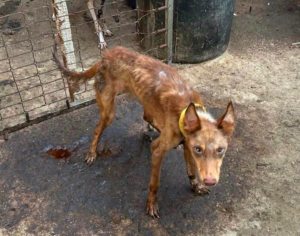
A malnourished Podenco dog tied to a chain
Some were held on short chains. Photo credit: Policía Local Buñol/Facebook

Rescued dogs need care and suitable homes

The surviving animals are now at Ribamontes, where they are receiving veterinary attention. Most are dogs are podencos, according to reports about the rescue indicating that they potentially have been used for hunting. Their health will need to be assessed, particularly if they have been left malnourished or have other medical problems. The centre has received judicial authorisation to place dogs in foster homes or arrange adoptions. Animals can leave the reception centre as suitable placements are found. Anyone taking one in will need to be prepared for possible ongoing veterinary care and time to settle into a new home.

People interested in fostering or adopting can contact Ribamontes on 625 05 74 25 for information about the process and the dogs available. Finding homes for 110 animals will take time. Each dog will need to be matched with a household able to meet its needs. Prospective adopters should ask about the animal’s condition and care requirements before making a commitment.

Authorities will examine the conditions in which the dogs were kept and the evidence gathered during the operation. ADAT’s claims about the 26 deaths and earlier complaints also remain to be clarified. The rescue has removed 110 dogs from the property, but the investigation has more to establish: how the animals came to be kept in those conditions, why were the reports ignored by authorities for five whole years, what happened to the dogs reported dead and whether the full force of the law will fall upon the man who did this.

Continue Reading

Trending

Copyright © 2017 Spanish Property & News