
News from Spain
Spain police warn parents over WhatsApp scam that uses their children’s real accounts


Spanish police warn parents about a WhatsApp scam using compromised family accounts.
Credit : Nopparat Khokthong, Shutterstock
A WhatsApp message from your son or daughter requesting money might not be real, even if it is from their regular number. Spain’s National Police have alerted families about a highly convincing scam in which criminals masquerade as children to trick parents into wiring hundreds of euros.
The new scam is a version of the well-known hijo en apuros or child in trouble scam that has been circulating in Spain for years. This time, scammers are using a blocked bank account and unpaid laptop to trick parents into sending money.
The trick is especially devious since the fake message can seem to be from the child’s real WhatsApp account. It’s not from a new number.
According to the Policia Nacional, criminals are taking advantage of parents’ natural tendency to help their children, especially when the need seems urgent and a friend asks for help.
How the WhatsApp scam works
The scam starts with a WhatsApp message from a son or daughter, who tells you that they have bought a laptop online and would like to pay by cash on delivery.
The computer is supposedly there. But they have a problem. They are unable to pay the seller because their bank account is temporarily closed. The sender asks their parent to cover the payment. They will then transfer the money back to them tomorrow after access to the bank account has been restored.
The message may sound like a familial favor, especially if it is received in the midst of a WhatsApp conversation with a familiar contact.
However, the person asking for money is not necessarily the child at all.
Police are warning that crooks can take over someone’s WhatsApp and use it to impersonate them when communicating with family members.
Unlike scams involving messages from unknown numbers, this version can be more persuasive because the request appears to come from an account the recipient already recognises.
The amount can also be substantial. A laptop can easily cost €400 or €500, and even more than that. A parent who responds to the ad without first checking out might end up losing hundreds of euros.
Criminals are relying on a basic response. When a child is in trouble, most parents will want to solve the problem as soon as possible. And because the supposed problem is temporary, with repayment promised the next day, the request may not immediately raise suspicions.
Spain’s National Police explain how to spot the warning signs
The Policia Nacional is asking people to be wary of sending money, even if it is someone they are close to. The most important precaution is to verify the story through another means of communication.
If you receive a WhatsApp message from your son or daughter asking for a surprise payment, you should always reach out to them before doing anything else.
If they are at home, call them and ask them if they sent the message. Call their usual number and ask if the message was actually sent.
This simple step can expose a fraud, especially since the person who owns the account might not even be aware that someone else has their WhatsApp account.
Another warning sign is a request to transfer money to an unfamiliar bank account. Even if the explanation sounds reasonable, police warn people to check out before donating.
A frozen bank account, a need to buy something, and the promise of a refund tomorrow may all seem plausible at first, but they can be part of shrewd scheme.
The fact that you receive a message from someone you know on WhatsApp is not in itself evidence that it is the person you know who is sending it.
What to do if you receive a suspicious WhatsApp message
First thing is to avoid any transfer until the request has been independently verified.
If the letter turns out to be a fraud, it’s also important to alert your other family members and friends.
The police warning suggests that criminals who access a victim’s WhatsApp account may make several contacts with people the victim is connected with, in the hope that one of them will agree to transfer funds.
Alerting family members quickly could therefore prevent others from falling for the same deception.
If you’ve already transferred funds, contact your bank immediately and report the fraud to them. Ask them if you can reverse the transaction or get your money back. Also, contact the police.
People in Spain can also get help with cybersecurity through the National Cybersecurity Institute, INCIBE, which offers a free 017 helpline.
Police are reminding the public that it is wise to have a conversation with the person asking for money in a WhatsApp message before sending them money. A quick phone call could be enough to prevent a costly mistake.




animal abuse
Five years of complaints ignored? 110 dogs found beaten, starved and neglected in Spain
Reports of the dogs situations had been made for five years. Photo credit: Policía Local Buñol/Facebook
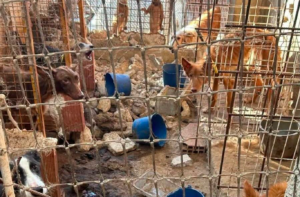
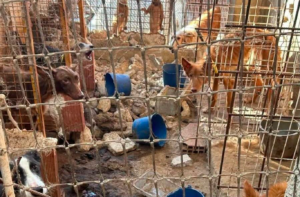
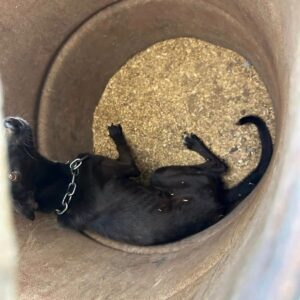
A neighbour’s complaint has uncovered 110 dogs living in appalling conditions at a property in Buñol, Valencia. The animals were found without water, exposed to high temperatures and showing signs of severe malnutrition. Some were restrained with short chains, while overcrowding left others with barely enough room to move.
An animal welfare organisation says 26 dogs were found dead at the property. Asociación Defensa Animal Torrent (ADAT) also claims complaints about the animals had been made over five years with nothing being done about it by authorities, raising questions about how long the situation had continued, how effective the animal welfare laws are in Spain and whether earlier intervention could have prevented further suffering. Police have removed the surviving dogs and opened an investigation into the property owner on suspicion of animal abuse.
A neighbour’s alert led to the rescue
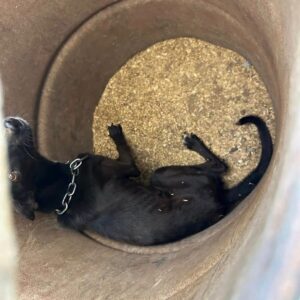
The operation began after a resident contacted Buñol Local Police about the dogs. Officers investigated and brought in the Guardia Civil’s SEPRONA unit from Requena, which deals with offences involving animal welfare and the environment. At the property, officers found 110 dogs exposed to direct sunlight and high temperatures, with no access to water or food. Some were tied up with short chains. Others were crowded into confined spaces such as barrels and tiny rusty cages leaving them little to no room to move.
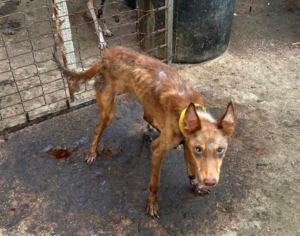
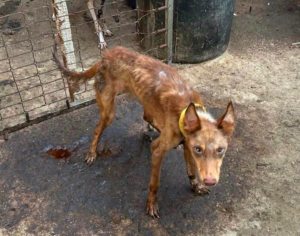
Police also found signs of severe malnutrition and suspected physical abuse. The dogs were seized and taken to Ribamontes, an animal reception centre working with Buñol Town Hall. They are receiving veterinary attention, and their health will need to be assessed individually. The owner is being investigated on suspicion of animal abuse. The case has been put before the judicial authorities. No conviction has been reported as of yet, and the investigation will have to establish responsibility for the conditions in which the animals were kept.
Animal group reports 26 dogs found dead
ADAT says the 110 surviving dogs were not the only animals at the property. The organisation reports that 26 dogs were found dead, bringing the total number involved to 136. The group has also described finding remains in barrels covered with concrete, as well as skeletons. Those details have been attributed to ADAT and have not been independently confirmed in the police account. The causes of the reported deaths have not been made public.
ADAT says complaints about the property had been made over five years. Police have confirmed that the operation followed an alert from a resident, but have not explained whether earlier complaints were received or what action may have followed. If reports were made over several years, investigators will need to establish when they were submitted, who received them and whether the property was inspected before the latest intervention and if not, why was nothing done about it?
The association’s account also raises questions about the number of animals that may have passed through the property during that period and how many unnecessary deaths may have been prevented if only the authorities had investigated the situation sooner.
Spain’s animal welfare law leaves hunting dogs outside its protection
The entire situation has also drawn attention to a major gap and ineffectiveness of Spain’s animal welfare legislation: dogs used for hunting are excluded from the national Animal Welfare Law, despite being just as vulnerable to neglect and cruelty as other dogs. Under Law 7/2023, which came into force in September 2023, hunting dogs, dogs kept in rehalas (packs used for hunting) and other animals used for hunting are excluded from the law’s scope. They are instead covered by other European, national and regional regulations.
Animal welfare organisations have criticised this exclusion, arguing that a dog’s need for proper care does not change according to whether it is kept as a pet or used for work. Hunting dogs still need adequate food, clean water, veterinary treatment, suitable accommodation and protection from mistreatment. Including them in the national legislation would establish consistent minimum welfare standards for all dogs. It would also provide a stronger framework for monitoring their conditions, identifying neglect and holding owners accountable when animals are deprived of basic care.
Most of the dogs rescued in Buñol are reportedly podencos, a breed widely used for hunting in Spain, A solid and functional animal welfare law would not discriminate a dog’s purpose or worth and should not determine whether it receives protection from hunger, thirst, neglect or abuse.
Rescued dogs need care and suitable homes
The surviving animals are now at Ribamontes, where they are receiving veterinary attention. Most are dogs are podencos, according to reports about the rescue indicating that they potentially have been used for hunting. Their health will need to be assessed, particularly if they have been left malnourished or have other medical problems. The centre has received judicial authorisation to place dogs in foster homes or arrange adoptions. Animals can leave the reception centre as suitable placements are found. Anyone taking one in will need to be prepared for possible ongoing veterinary care and time to settle into a new home.
People interested in fostering or adopting can contact Ribamontes on 625 05 74 25 for information about the process and the dogs available. Finding homes for 110 animals will take time. Each dog will need to be matched with a household able to meet its needs. Prospective adopters should ask about the animal’s condition and care requirements before making a commitment.
Authorities will examine the conditions in which the dogs were kept and the evidence gathered during the operation. ADAT’s claims about the 26 deaths and earlier complaints also remain to be clarified. The rescue has removed 110 dogs from the property, but the investigation has more to establish: how the animals came to be kept in those conditions, why were the reports ignored by authorities for five whole years, what happened to the dogs reported dead and whether the full force of the law will fall upon the man who did this.


Reports of the dogs situations had been made for five years. Photo credit: Policía Local Buñol/Facebook
A neighbour’s complaint has uncovered 110 dogs living in appalling conditions at a property in Buñol, Valencia. The animals were found without water, exposed to high temperatures and showing signs of severe malnutrition. Some were restrained with short chains, while overcrowding left others with barely enough room to move.
An animal welfare organisation says 26 dogs were found dead at the property. Asociación Defensa Animal Torrent (ADAT) also claims complaints about the animals had been made over five years with nothing being done about it by authorities, raising questions about how long the situation had continued, how effective the animal welfare laws are in Spain and whether earlier intervention could have prevented further suffering. Police have removed the surviving dogs and opened an investigation into the property owner on suspicion of animal abuse.
A neighbour’s alert led to the rescue
The operation began after a resident contacted Buñol Local Police about the dogs. Officers investigated and brought in the Guardia Civil’s SEPRONA unit from Requena, which deals with offences involving animal welfare and the environment. At the property, officers found 110 dogs exposed to direct sunlight and high temperatures, with no access to water or food. Some were tied up with short chains. Others were crowded into confined spaces such as barrels and tiny rusty cages leaving them little to no room to move.
Police also found signs of severe malnutrition and suspected physical abuse. The dogs were seized and taken to Ribamontes, an animal reception centre working with Buñol Town Hall. They are receiving veterinary attention, and their health will need to be assessed individually. The owner is being investigated on suspicion of animal abuse. The case has been put before the judicial authorities. No conviction has been reported as of yet, and the investigation will have to establish responsibility for the conditions in which the animals were kept.
Animal group reports 26 dogs found dead
ADAT says the 110 surviving dogs were not the only animals at the property. The organisation reports that 26 dogs were found dead, bringing the total number involved to 136. The group has also described finding remains in barrels covered with concrete, as well as skeletons. Those details have been attributed to ADAT and have not been independently confirmed in the police account. The causes of the reported deaths have not been made public.
ADAT says complaints about the property had been made over five years. Police have confirmed that the operation followed an alert from a resident, but have not explained whether earlier complaints were received or what action may have followed. If reports were made over several years, investigators will need to establish when they were submitted, who received them and whether the property was inspected before the latest intervention and if not, why was nothing done about it?
The association’s account also raises questions about the number of animals that may have passed through the property during that period and how many unnecessary deaths may have been prevented if only the authorities had investigated the situation sooner.
Spain’s animal welfare law leaves hunting dogs outside its protection
The entire situation has also drawn attention to a major gap and ineffectiveness of Spain’s animal welfare legislation: dogs used for hunting are excluded from the national Animal Welfare Law, despite being just as vulnerable to neglect and cruelty as other dogs. Under Law 7/2023, which came into force in September 2023, hunting dogs, dogs kept in rehalas (packs used for hunting) and other animals used for hunting are excluded from the law’s scope. They are instead covered by other European, national and regional regulations.
Animal welfare organisations have criticised this exclusion, arguing that a dog’s need for proper care does not change according to whether it is kept as a pet or used for work. Hunting dogs still need adequate food, clean water, veterinary treatment, suitable accommodation and protection from mistreatment. Including them in the national legislation would establish consistent minimum welfare standards for all dogs. It would also provide a stronger framework for monitoring their conditions, identifying neglect and holding owners accountable when animals are deprived of basic care.
Most of the dogs rescued in Buñol are reportedly podencos, a breed widely used for hunting in Spain, A solid and functional animal welfare law would not discriminate a dog’s purpose or worth and should not determine whether it receives protection from hunger, thirst, neglect or abuse.
Rescued dogs need care and suitable homes
The surviving animals are now at Ribamontes, where they are receiving veterinary attention. Most are dogs are podencos, according to reports about the rescue indicating that they potentially have been used for hunting. Their health will need to be assessed, particularly if they have been left malnourished or have other medical problems. The centre has received judicial authorisation to place dogs in foster homes or arrange adoptions. Animals can leave the reception centre as suitable placements are found. Anyone taking one in will need to be prepared for possible ongoing veterinary care and time to settle into a new home.
People interested in fostering or adopting can contact Ribamontes on 625 05 74 25 for information about the process and the dogs available. Finding homes for 110 animals will take time. Each dog will need to be matched with a household able to meet its needs. Prospective adopters should ask about the animal’s condition and care requirements before making a commitment.
Authorities will examine the conditions in which the dogs were kept and the evidence gathered during the operation. ADAT’s claims about the 26 deaths and earlier complaints also remain to be clarified. The rescue has removed 110 dogs from the property, but the investigation has more to establish: how the animals came to be kept in those conditions, why were the reports ignored by authorities for five whole years, what happened to the dogs reported dead and whether the full force of the law will fall upon the man who did this.
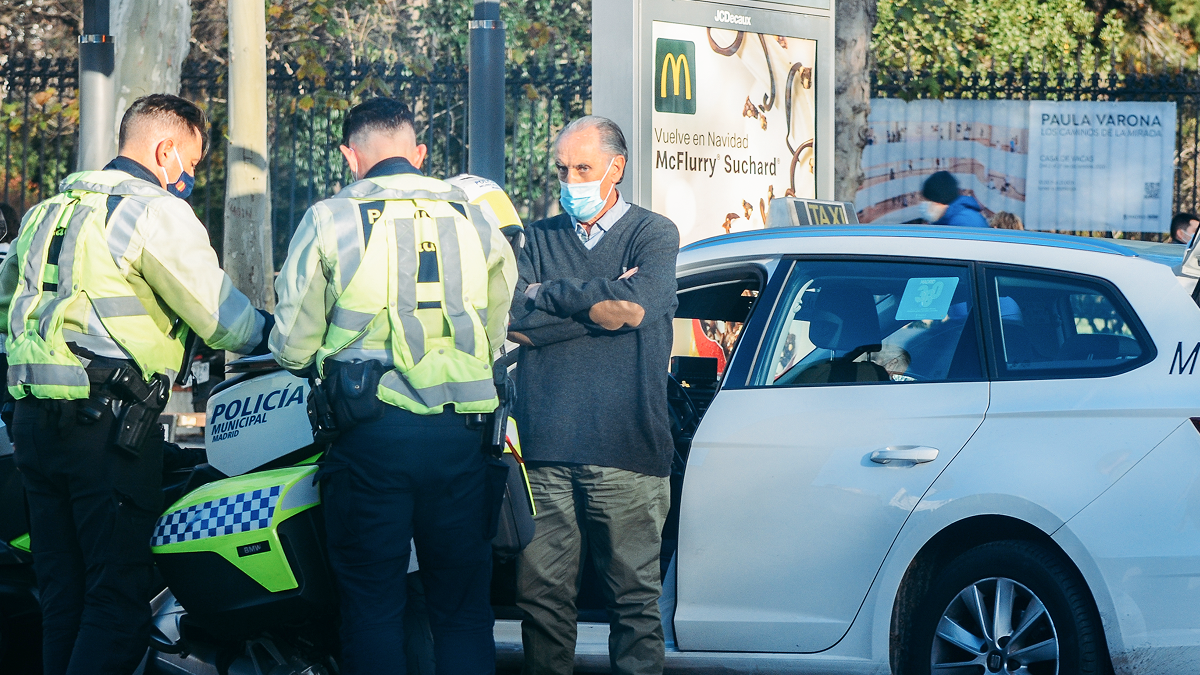
Passengers in Spain, and not taxi drivers, pay the fine if they don’t wear a seatbelt. Credit: Alexandre Rotenberg / Shutterstock
Passengers who don’t wear a seatbelt in the back of a taxi in Spain can be fined €200 on the spot, and it’s the passenger who pays, not the driver.
The rules have changed for taxi drivers too this autumn, and the fine drops to €100 if it’s paid quickly, so it’s worth knowing where you stand before your next ride.
The Guardia Civil stopped a taxi on the A-6
The latest passenger caught out is author Arturo Pérez-Reverte, who was riding in the back of a taxi on the A-6 on Monday November 2 when the Guardia Civil stopped it and found he wasn’t wearing his seatbelt.
The novelist is best known abroad for his Captain Alatriste series, and he also wrote The Club Dumas and The Queen of the South. Before turning to fiction he spent 21 years as a war correspondent for Spanish state television, RTVE, and he’s been a member of the Royal Spanish Academy, the body that guards the Spanish language, since 2003.
He was handed a €200 fine for a serious offence and paid €100 on the spot. He then posted on X that the officers had every right to fine him, adding that he’d wished them a good shift.
That €100 isn’t a special deal, though. It’s the standard 50 per cent reduction for paying promptly, and it’s open to anyone who gets the same fine.
Back-seat passengers pay the fine themselves
Seatbelts have been compulsory in the back seats of cars in Spain since 1992. The traffic authority says an unbelted rear passenger at 80km/h would be thrown forward with the same force as a 1,200kg ball hitting at 10km/h.
The €200 fine belongs to the person who isn’t belted, so in a taxi that’s you, as the passenger, and not the driver. Penalty points come off the driver’s licence only, so a passenger loses the money but no points.
Children are different though. If a child isn’t belted, their parents or guardians answer for the fine as they cannot pay it themselves, and the driver still doesn’t pay the fine. In towns, children under 135cm (4ft 5in) can still ride in the back of a taxi without a child seat.
Taxi drivers lost their own exemption on October 1
Until last month, taxi drivers in towns could drive without a belt. Since Thursday October 1, that exemption has gone for taxis, delivery vehicles and driving school cars, and drivers must wear a belt at all times. A driver who skips it now faces the same €200 fine, plus four points off their licence. Only ambulance staff treating a patient in the back on an emergency call can still travel unbelted.
So any older guide that still lists urban taxi drivers as exempt is now out of date.
Paying within 20 days halves the fine
You have 20 calendar days from receiving the notification to pay half price, so €100 for a €200 fine. Challenge it with an allegation and you lose the discount, with the full amount due if it’s rejected. Pérez-Reverte paid at the roadside, but the DGT’s own guidance only explains paying through its app or by phone, so it’s worth asking the officers what your options are.
So next time you climb into a taxi in Spain, buckle up in the back before the driver pulls away, and if a fine does come, you’ve got 20 days to pay it at half price.

Another Day Of Commuter Train Chaos
‘An insult to Italian culture’: Chef fired after refusing to put pineapple on pizza

‘An Insult To Italian Culture’: Chef Fired After Refusing To Put Pineapple On Pizza


-
DGT3 weeks ago
Viral video in Spain sparks fury over drivers who ‘have no idea how to drive’
-

 Arabia Saudí4 weeks ago
Un Ataque De Los Hutíes Contra El Aeropuerto De Riad Causa Al Menos 12 Muertos Y Más De 300 Heridos
-

 America4 weeks ago
Un Tirador Mata A Ocho Personas En Una Vivienda En Pensilvania
-
Costa Blanca North4 weeks ago
Jávea opens historic lighthouse to the public with a new whale-watching viewpoint
-
Automated supermarket3 weeks ago
Spain’s 24-hour shop with no tills expands to Barcelona Airport
-

 %4 weeks ago
Concrete Balcony Slabs Collapse Onto Marbella Street
-

 America4 weeks ago
Trump Llega A Un Acuerdo Con Putin Para Que Rusia Libere Miles De Barriles De Diésel En Los Mercados Mundiales
-

 Uncategorized4 weeks ago
Williams F1 driver caught up in four-car pit lane pileup