
David Bowie
Mary Austin, Freddie Mercury’s Former Fiancée Who Has Spent Years Safeguarding His Legacy: ‘Our Love Was Much More Powerful Than I Ever Realized’

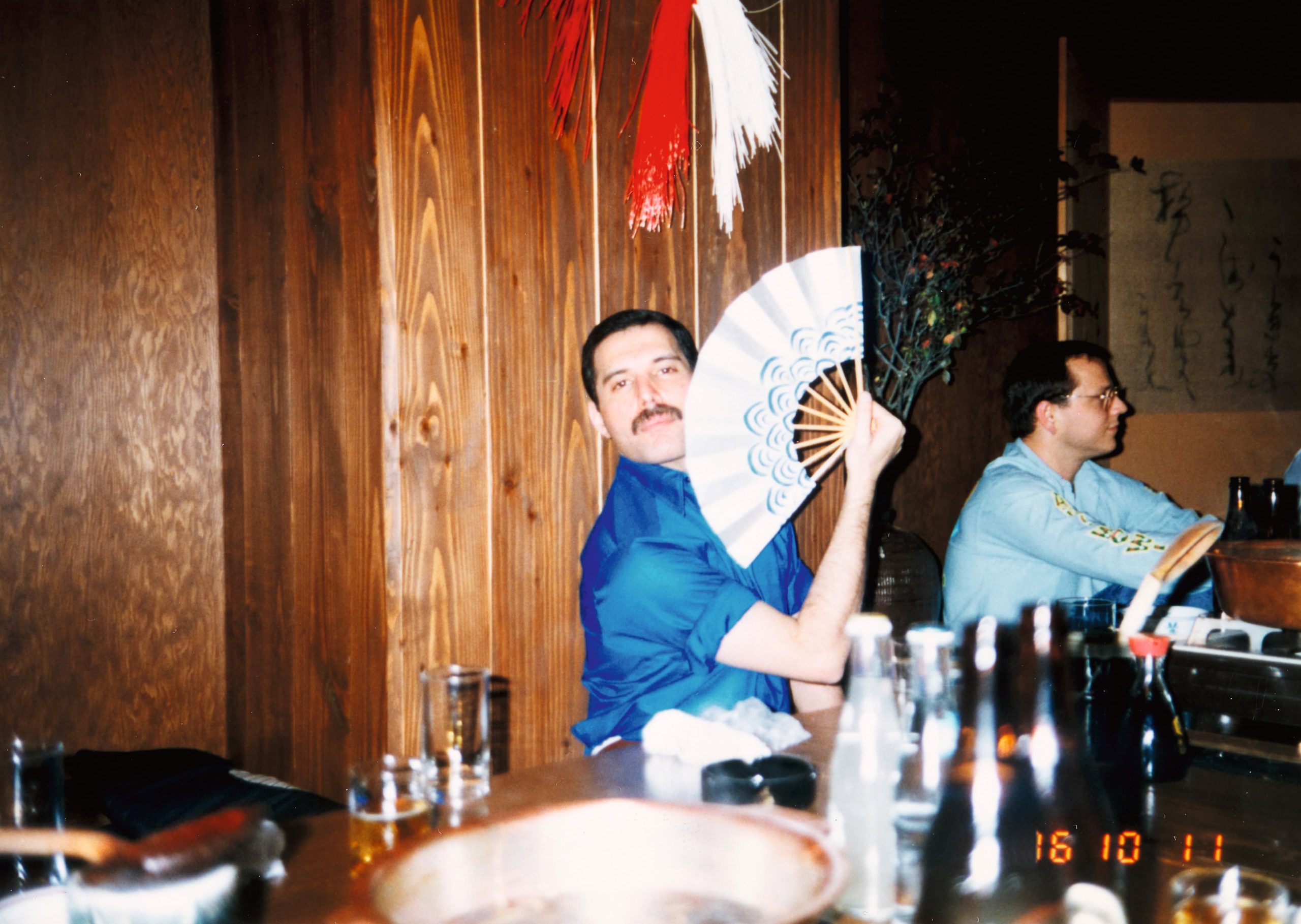
The background in the video call with Mary Austin, Freddie Mercury’s first partner, reveals little more than a white wall and an office chair. She is speaking, however, from Garden Lodge, the legendary west London home she inherited from the singer and which for many years resembled a museum: Japanese art collections, a garden that felt like a sanctuary, and the Yamaha grand piano on which the Queen frontman composed some of the most iconic songs of the 20th century.
Austin has kind eyes and is introverted by nature. Since the release of the movie Bohemian Rhapsody in 2018, her face has become more familiar to the public, but she has given few interviews and made even fewer public appearances. She has devoted her life to preserving the memory of the “love of my life,” as she still calls Mercury, who left her his house and possessions after he died from AIDS in November 1991.
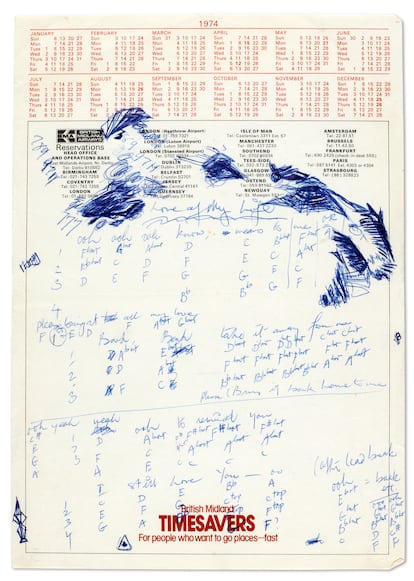
She says that, at 75, she is in the “autumn years” of her life, with no major plans beyond “selling the house” where she has lived for more than three decades. She recently published A Life in Lyrics: The Official Creative Legacy of Freddie Mercury. The volume brings together original handwritten lyrics from some of the artist’s most celebrated songs, along with photographs and notes he left behind at his former home. Austin describes it as a tribute to Mercury’s legacy “as a lyricist and as a human being.” Had he lived, the artist would now be 80 years old.
In 2022, Austin’s younger son, Jamie, suggested opening the storage compartment built into Freddie Mercury’s piano bench. Most of the material, however, had been discovered shortly beforehand, when Austin came across cassette tapes, folders stuffed with loose pages and handwritten lyrics to some of Queen’s biggest hits, including Bohemian Rhapsody, Killer Queen and Don’t Stop Me Now, in a trunk stored in the attic. The two discoveries were made only months apart.
“I remember packing the trunk that contained the lyrics in 1985, when Freddie moved into Garden Lodge,” Austin says, narrowing her eyes as she recalls the moment. “When it was unpacked, it was taken up to the attic. And there it stayed. Seeing those papers again felt strange. It was a flurry of 21 years’ worth of memories and emotions encapsulated in a short space of time.”
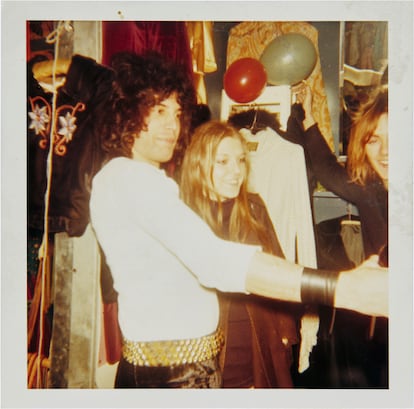
Freddie Bulsara, the name by which she still refers to him today (Bulsara being his birth surname), met Austin in the early months of 1970 at a house in Barnes, in southwest London. Over the following months, they crossed paths casually at the fashion boutique where she worked as a sales assistant, the same place where he first asked her out. From then on, they were inseparable.
They lived together for almost eight years, during which Austin covered most of the household expenses. First they shared a tiny studio flat on Holland Road in west London, before moving into a larger apartment with their two cats and a piano that occupied a third of the living room.
When asked if she ever felt overwhelmed by how much space Freddie took up in the house, Austin replies: “Never.”
According to Austin, the sight was fascinating rather than intrusive: “It was strange to open the door and see this piano that seemed to come towards you and to see Freddie’s back. Whatever he was wearing, whatever color he wore would stand out against the dense black of the instrument.”
During the singer’s long practice sessions, Austin liked to give him space while keeping some for herself. She would retreat to the bedroom to read, listening from afar to the melodies her partner was composing.
A copy of The Lord of the Rings that Austin owned eventually found its way into Mercury’s hands. While she lost interest as the story grew darker, she believes Tolkien’s fantasy world awakened something in him and may have inspired My Fairy King.
Asked what Mercury discovered or came to appreciate through her, Austin pauses for a moment. “Hopefully, himself,” she replies.
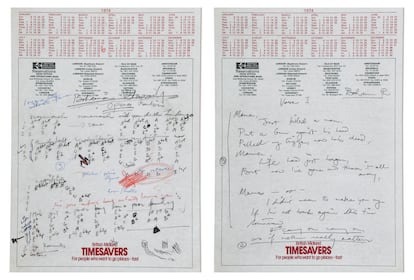
During their relationship, which lasted from 1970 to 1977, Mercury wrote some of Queen’s defining songs, including Killer Queen (1974), Bohemian Rhapsody (1975), which Austin remembers him crafting “with solemn concentration,” Somebody to Love (1976) and We Are the Champions (1977).
Throughout those years, Austin worked as his personal assistant. She recalls days that could stretch to 10 hours, spent coordinating tours and appointments, typing up song lyrics, looking after his cats, preparing his luggage and medical kit, and arranging special seating for concerts. In her book, she describes herself as Mercury’s right-hand woman, confidante and first line of support.
They complemented each other despite their differences: Mercury was sociable, charismatic and born for the spotlight, while Austin always shunned public attention. But she also saw a much more reserved side to him.
“The creative aspect of his character, who I describe as Freddie Bulsara, was very introverted, also when he composed. But at the same time he was wildly extroverted and I could also smile at the extravaganza,” she tells EL PAÍS.
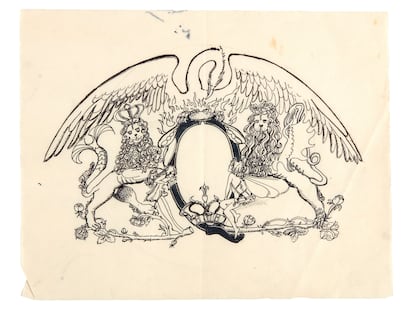
In A Life in Lyrics, Austin offers glimpses of their private life together. At times, she writes, Mercury became so absorbed at the piano that she assumed he had left the house. He would lose himself sketching early designs for Queen’s emblem, and before concerts he needed a few moments entirely alone. On one occasion, she recalls finding him standing motionless at the foot of a staircase, as still as a statue.
Over time, however, the relationship began to cool. Austin remembers an exchange in a pub when someone asked Mercury whether he had ever written a song for the woman who later became his fiancée. He replied simply that Lily of the Valley was probably the closest example, offering no further explanation. Looking back, Austin sees particular significance in the song’s line, “But the lily of the valley doesn’t know.” Today, she regards it as strangely prophetic.
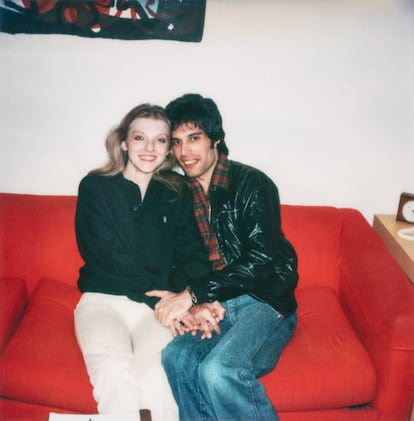
In early 1977, Freddie told Mary that he was bisexual (though Austin argues in the book that he was in fact gay), bringing their romantic relationship to an end. Despite the breakup, they continued living together until Mercury bought her a nearby apartment. For a time, Austin considered moving on professionally as well. Remaining so closely involved in the life of her former fiancé was taking an emotional toll. She interviewed for a job at CBS and was offered the position, proof that she could imagine a future beyond one of rock’s biggest stars.
Not long afterwards, however, she heard a Queen song while sitting in a cinema and found herself wondering whether a day would ever come when she stopped worrying about Mercury. The answer, she says, was no. She turned down the CBS job and remained by his side for another 14 years.
“My journey is that of love itself, in a way, because normally you break up with somebody, you find someone else, and life takes you in a different direction,” she tells EL PAÍS. “Life hasn’t taken me in that direction. I realize he left me with a legacy. But that didn’t mean to say that I would be sitting here with you today. And yet I am here, which probably says to me that the love was much more powerful than I had ever realized.”
Many fans have long assumed that Love of My Life (1975) was written about Austin. In her book, however, she is not so sure. She suggests that the song may have been directed more at Mercury himself, though she sees a clear connection between its closing sentiment and something he once told her during an ordinary conversation in the living room of their apartment: “When I grow old, I will be there at your side to remind you how I still love you.”
From the very beginning, Austin kept a low profile. While Mercury moved among stars such as David Bowie and Michael Jackson, she never felt drawn to that world.
“I wasn’t close to those people,” she says. “My role was sculpted by how much involvement I wanted. I didn’t want to be that involved within the music business. My role was specifically with Freddie and taking care of him.”
Even now, she remains uncomfortable with the spotlight.
“It just doesn’t suit my character,” she says. “I really don’t enjoy it at all. I realize now I’m 75 that I can afford to do this [the book] because I can disappear again and let Freddie have yet another part of his journey because he deserves it.”
Why does she still insist on disappearing? “It’s like asking me to eat something I don’t want to eat,” she replies. “I don’t really find myself that interesting.”
But surely she finds her own inner life interesting? “I find it fascinating, but I keep it to myself.”
Austin attributes the decades she spent caring for Mercury to the role she occupied within her own family. “If you know anything about the eldest daughter, she is always the one that’s responsible. Hence my personality.”
But there was never just one Freddie Mercury to look after. Over the years, she watched him transform repeatedly: from the bohemian, theatrical figure of the 1970s with his long hair, to the muscular performer in a black leather jacket and moustache, and finally to the more reflective, restrained and introspective man of his last years.
But Austin did not spend those years caring for just one version of Mercury. Over the years, she watched him transform repeatedly: from the bohemian, theatrical figure of the 1970s with his long hair, to the muscular performer in a black leather jacket and moustache, and finally to the more reflective, restrained and introspective man of his last years.
He was a meticulous lyricist. He jotted down song lyrics on any scrap of paper by hand: from napkins to stationery from the airline British Midland. Many were collected in ring binders and in the now-famous red notebook that Austin kept for more than three decades. Those manuscripts were eventually exhibited and auctioned by Sotheby’s in London in 2023. The Yamaha piano on which he composed many of his songs sold for £1.74 million ($2.2 million), with part of the proceeds donated to charity.
After Mercury’s death in 1991, Austin moved into the memory-filled world of Garden Lodge. “The memories are very layered: finding the house, him living there, him having parties… Some not as happy as others, but nevertheless they’re all collective memories.”
Beginning in 2024, she worked with a ghostwriter on what would become A Life in Lyrics, meeting twice a week for four-hour sessions. “They were intense sessions. After that work, I had lots of random dreams that seemed to merge together,” she says.
Asked whether she still has any letters Mercury wrote to her, she thinks instead of something else he used to send: “He used to send cards from the United States and always, just at the end, write, ‘I miss you.’” A simple message that Austin always found “quite poignant,” a gesture that made her “feel loved.”
Since her youth, she has been passionate about fashion and reading. She picks up whatever book catches her eye. She has just finished a four-novel crime series, enjoys Jane Austen and Charles Dickens, and feels a particular affinity with Agatha Christie.
“I don’t know what next week or next month will bring, but I accept that I don’t know how much time I have left. I would very much like it to be about the love of my life… and how extraordinary he was,” she concludes.
Sign up for our weekly newsletter to get more English-language news coverage from EL PAÍS USA Edition





David Bowie
Jon Savage, Music Critic: ‘Being A Straight Man Seemed Boring To Me, Hence My Interest In Punk’

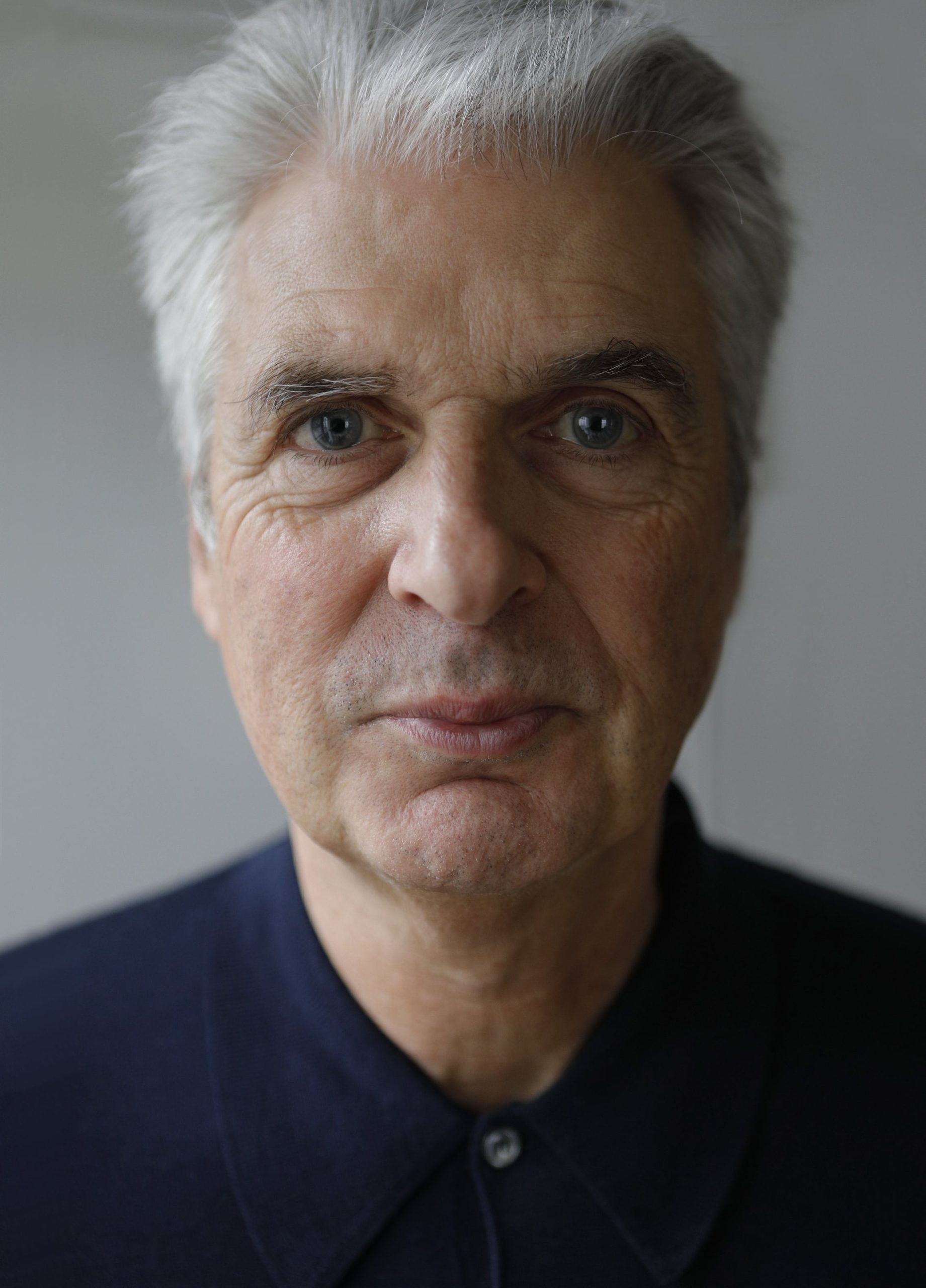
Jon Savage is an absolute musical icon. This 73-year-old journalist, critic and writer is a key figure in the history of British (and global) punk, as demonstrated by his book, England’s Dreaming: Sex Pistols and Punk Rock (1991), which delved into the pioneers of the genre.
The London-born Savage is also gay. And, in his latest and most impressive book — The Secret Public: How LGBTQ Resistance Shaped Popular Culture (1955-1979), published in 2024 — he brings together his deep knowledge of music, his own identity, LGBTQ+ experiences and the struggle for equal rights.
“This book has been on my mind for decades,” the author tells EL PAÍS in a video conference, “but when you get older, you want to get things done.”
Although he identified as gay at the age of 20, it took him some time to come out. “When I was young, being gay was marginal. And, you know, it still is for a lot of people. Gay people were treated like shit — that’s something that scars you,” explains Savage, who admits that it took him a long time to overcome all that negativity.
Growing up, Savage liked Del Shannon’s melodramatic pop. The Beatles’ long hair also made an impression on him. He was captivated by The Rolling Stones’ aesthetic. And he was fascinated by The Kinks, particularly Dave Davies and his androgynous style. “I was very attuned to that kind of gender divergence. Partly because I thought being a normal heterosexual man just looked really boring.”
Q. How did being gay fit into the music press of the late-1970s?
A. I was always clear that I wasn’t going to pretend to be straight, but I also didn’t live as a gay person. Keep in mind that it’s been about 50 years. A good friend in the industry, Jane Suck, was a lesbian. We were quite close, [but] we never talked about our sexuality. It wasn’t easy back then. But I think if you regard writing as the expression of a person, then of course, your sexuality is going to be involved with it. I mean, how can it not be? And so, it made me take a different path from all of my contemporaries [on the punk scene]. I always wanted to go deeper. I was always interested in the marginal.
Q. In your book, you write about a queer subtext in music. How did the LGBTQ+ audience decipher it?
A. In the 1950s, it was difficult to establish this. [But] in the first chapter, which is about [Andy] Warhol — where I mention [the covers of] his records — I discuss [how, in the 1960s, he tried] to establish a kind of queer aesthetic of pop culture, the earliest that we’ve really been able to find out about. Before that, we can talk about Elvis and his imitators, a bit of doo-wop, as well as some Black music.
I connected the dots by talking to my friends: Robert liked soul and girl bands; James, early Motown. My friend Michael Peter Burton, who’s now dead, ran a gay bar called The Deuce that had a jukebox. One day, I asked him what was playing on it: it was all Motown [Records] and Dusty Springfield. Motown was, obviously, very good for dancing — it was the precursor to disco, with melodramatic lyrics. That went down very well with gay people, who liked a bit of melodrama, heightened emotion.
Springfield, of course, was the leading lesbian pop singer of the day. And, more important than that, she was a truly wonderful, wonderful artist.
Q. You start things off by looking for hidden connections in the song Tutti Frutti, before arriving at the homoeroticism of the Village People…
A. You have to be careful about this, because Victor Willis’ wife sues anybody who hints that the Village People were gay. They were conceived by a gay businessman, Jacques Morali and it shows. Felipe Rose, the one who dressed as a [Native American], walks into a gay bar and starts dancing in front of a cowboy. And the first LP has a cover that’s set in the entrance of a gay bar. There are no women and all the men who appear are stereotyped as gay: they’re clones. They became a gay caricature.
The more successful they became, the more they disavowed those references. When In the Navy [from their fourth album, Go West in 1979] was released — following YMCA [from their third album, Cruisin’, in 1978] and Macho Man [from their second album, which also came out in 1978] — they’ve almost completely disavowed any kind of gay content. Even though they’d built a following among gay audiences, they were now appealing to the mass market, to the mainstream.
Sylvester did make a statement about diversity: he was completely out and fabulous. He was the first openly gay singer to have a big hit: You Make Me Feel (Mighty Real) is a wonderful and important song in its own right, because it’s all about being gay. It’s about people being real, as opposed to having to hide in the closet.
Q. And what are your thoughts on David Bowie?
A. Bowie became an overwhelming cultural force that facilitated the expression of LGBTQ+ diversity and visibility, but he was never an activist like Tom Robinson was. Even though he may have had some activist effect, Bowie was mischievous and calculating: he realized that he could make an impact and wanted to foster cultural change. He played a benefit for the Gay Liberation Front, but then, when he came out as gay — with that famous 1972 line, “I’m gay and always have been” — he didn’t say that he was a member. He never officially aligned himself with it. Personally, Bowie had a great impact on me, particularly the song Queen Bitch (1971). It was a Velvet Underground tribute and I’m a huge Velvet Underground fan.
Q. Your book is about music, but also about history, about rights and about struggle.
A. I’m not interested in talking about music in terms of personal experience. So many people who write about music do that and it’s really tedious. You can talk about music in more gossipy terms. A book about the Rolling Stones practically writes itself, thanks to all the scandals surrounding them.
In The Secret Public, I don’t just tell a story: I describe a time and place through music and specific bands. That’s why it seemed crucial to include the entire political, social and legal context in the U.K. and the U.S. It’s more or less the same thing I did when I wrote the book about Joy Division [This Searing Light, The Sun and Everything Else: Joy Division, The Oral History, published in 2019]. All that context enriches the book.
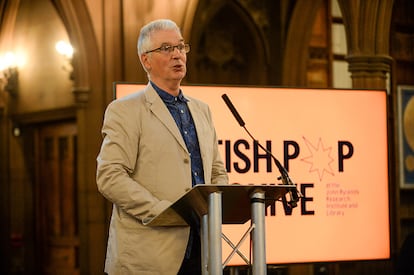
Q. At one point, you explain how white boys felt intimidated by the “insidious and unconventional sexuality of disco music.” Is something similar happening now with feminism and LGBTQ+ rights?
A. Yes. Any gain made by LGBTQ+ people provokes a backlash. It’s always been that way. We’ve seen enormous gains during the last 20 years, and now, we’ve got a fierce reaction. To be honest, it’s really pathetic. LGBTQ+ people are a reality. Deal with it. All the backlash seems unpleasant to me; it reveals a lot of insecurity. And it’s dangerous.
Nobody takes into account the overwhelming privilege that a lot of white people have. Obviously, if you’re poor, you have less. But generally speaking, a white man always enjoys more privilege than a woman, a person of color, or an LGBTQ+ person.
It’s foolish to think that expanding rights can harm anyone. That kind of backlash is being fueled by dictatorial regimes, like Putin’s Russia, or Trump’s USA. All Americans have internalized homophobia, a certain fear of homosexuality. If someone is so worried about seeing two men or two women kissing, they shouldn’t look. If they’re afraid that seeing a gay or lesbian couple will turn their children gay, they shouldn’t worry, because they will see many more heterosexual couples doing it and they can become straight again. Those arguments are complete nonsense.
Q. What would be your current LGBTQ+ musical reference?
A. I have to qualify this by saying that I’m no longer, you know, on the ground. But the kind of music I listen to is electronic music. I really enjoy what [the German record label] Kompakt releases and I love Pet Shop Boys.
When I was 16, I was a rock fan. I moved on to the Velvet Underground and also to hippie groups. And I think that I’ve come to appreciate disco much more, because, back in the day, you weren’t supposed to like disco if you were a punk rocker.
In 1977, I was writing about punk every week. And, at one point, it all seemed a bit repetitive to me. But then, I listened to two albums that blew me away: I Remember Yesterday (1977) — a masterpiece by Donna Summers and one of the greatest albums of the 20th century — and Magic Fly (1977) by [the French band] Space. That’s how I started writing about the beginnings of disco.
The problem was that a lot of the disco you heard, particularly in 1978, had already become very formulaic. And it was the electronic disco that was becoming interesting. Patrick Cowley was a genius: he has a megamix of I Feel Love [by Donna Summers] that’s incredible.
Q. You also write about the invisibility of lesbians. Do you think that has changed?
A. Young women — and women in general — are much more at the forefront of the music scene than they were, say, 50 years ago. But there’s also a backlash against this. In the book’s title, I refer to the entire community, because lesbians, gay men, trans people, bisexuals, queer people, all of them appear in the book.
One of my greatest sorrows today is how trans people are being attacked, especially in the U.S., but also in the U.K. It reminds me of what they did to gay people [during the AIDS crisis]. It’s disgusting and there’s no excuse for it.
Q. The book ends in 1979, dancing with Sylvester, “with no thought of what is to come.” It was the prelude to the AIDS epidemic and the conservative backlash against sexual liberation. Why did you stop there?
A. I didn’t want to write about AIDS, because it was a horrible and dark time. When you write a book, you have to focus on the subject. I decided to end the book with Sylvester and the National March on Washington for Lesbian and Gay Rights. The story could continue into the 1980s, which was a very rich decade: you had Culture Club, Bronski Beat, Soft Cell, the Pet Shop Boys… but that’s for another book.
If the ending leaves you wanting a bit more, maybe it’s a beautiful ending.

Sign up for our weekly newsletter to get more English-language news coverage from EL PAÍS USA Edition
Barcelona airport halts departures as baby’s medical emergency forces plane to land
Spain’s €17bn electricity grid overhaul aims to unblock housing, factories and major investment
Calpe welcomes acclaimed Italian pianist for special autumn music festival recital


-
DGT3 weeks ago
Viral video in Spain sparks fury over drivers who ‘have no idea how to drive’
-
Automated supermarket4 weeks ago
Spain’s 24-hour shop with no tills expands to Barcelona Airport
-
News4 weeks ago
Hundreds evacuated as huge fire erupts on Spain high-speed train route
-
Keeping cats and dogs outside3 weeks ago
Spain’s pet owners face fines of up to €200,000 for animal welfare offences
-
Council tax (IBI)3 weeks ago
Barcelona plans 150% property tax increase on tourist flats ahead of 2028 ban
-
Age Concern Marbella - San Pedro2 weeks ago
Halloween lunch sells out as 51 join Marbella get-together
-
airports3 weeks ago
Travelling between Spain and Italy? The extra border checks could soon end
-
Axarquia4 weeks ago
Torrox Oktoberfest gets a 1,500sqm beer tent for four-day festival