
News from Spain
Years of neglect leave Spain facing a €60 billion road repair backlog

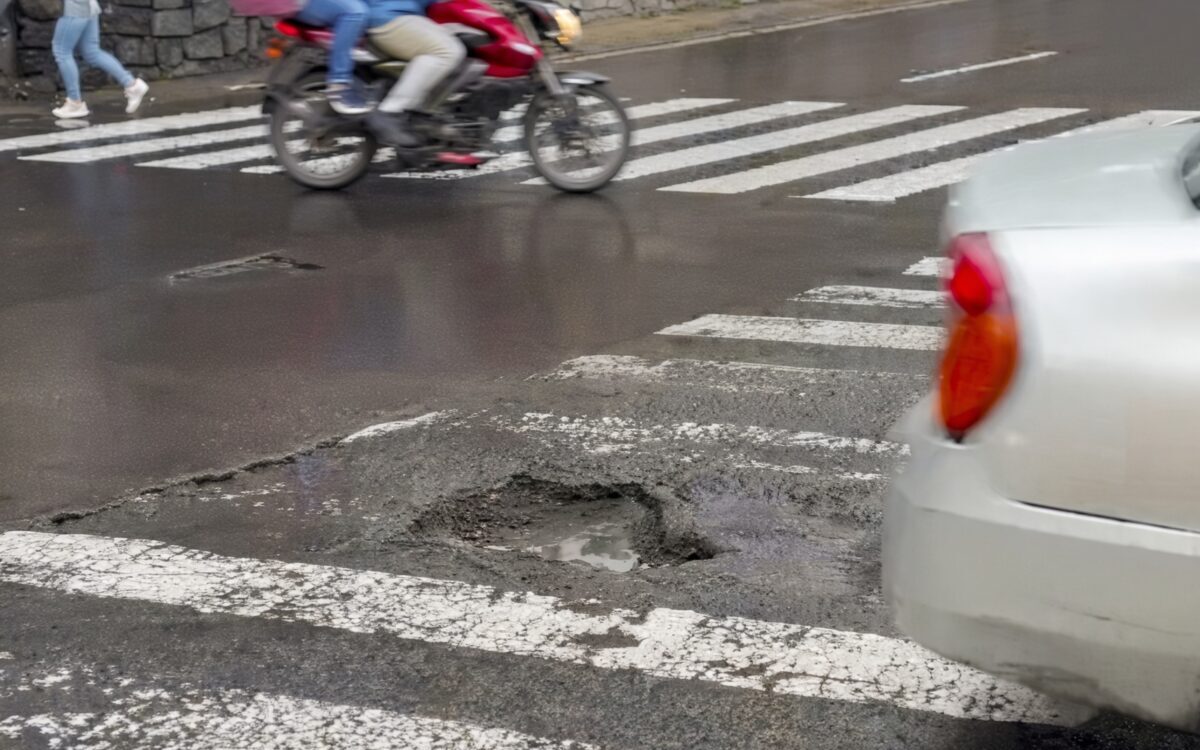
Nearly €60 billion in road maintenance investment is needed over the next decade, while a separate audit finds more than half the inspected network suffering serious deterioration.
Spain is facing a huge bill to bring its ageing road network back up to the required standard, with years of insufficient investment leaving authorities under pressure to find billions of euros for repairs and maintenance.
The construction and infrastructure employers’ association SEOPAN estimates that €58.37 billion will be needed over the next ten years to address the country’s road maintenance requirements. The figure is not simply a bill for existing potholes: it covers the wider investment needed to restore and maintain roads to acceptable technical standards.
According to SEOPAN’s latest infrastructure assessment, €43.7 billion would be needed to bring road maintenance up to the required technical standards, with a further €14.67 billion allocated to restoring the networks to an acceptable starting condition.
The figures raise questions about how successive administrations have allowed maintenance requirements to build up and how the investment will be funded over the coming years with taxpayers cash.
More than half of Spain’s roads show serious deterioration
The scale of the problem is also reflected in the latest assessment by the Spanish Road Association (AEC). Its 2025 audit found that 52 per cent of the road network it inspected had serious or very serious deterioration. Around 33,966 kilometres were judged to need urgent reconstruction, with another 20,407 kilometres requiring attention within four years. In total, the organisation identified 54,373 kilometres needing intervention over that period.
Who is responsible for Spain’s road repair backlog?
AEC assessment of the existing road network
Central government roads
€4.72bn (31.6%)
Regional and country roads
€8.77bn (68.4%)
Total estimated repair backlog: €13.49 billion
Source: Asociación Española de la Carretera (AEC), 2025
AEC calculated the existing maintenance deficit at €13.49 billion. This figure covers the estimated cost of addressing deterioration already identified across the networks examined, rather than the broader ten-year investment requirement calculated by SEOPAN.
The AEC assessment also found that the condition of roads had worsened by around eight per cent a year over the three years covered by its comparison. Rising material, energy and labour costs contributed to the increased repair bill, but the association also attributed part of the deterioration to the condition of the infrastructure itself.
What does this mean for drivers?
- Potholes and damaged surfaces: More than 33,900 kilometres of roads require urgent reconstruction.
- Road safety: Deteriorated surfaces, worn road markings, damaged barriers and inadequate drainage can increase risks for drivers.
- Higher motoring costs: Poor road surfaces can increase fuel consumption by up to 12 per cent, according to reported estimates.
- Vehicle repairs: Potholes and uneven surfaces can damage tyres, wheels and suspension components.
- Longer journeys: Roadworks, emergency repairs and temporary restrictions can disrupt everyday travel.
Who is responsible for maintaining Spain’s roads?
One complication is that responsibility for the country’s roads is divided between several levels of government. The central government, through the Ministry of Transport, looks after the State Road Network, including major routes and national motorways. Autonomous communities manage their own regional networks, while provincial councils are responsible for many provincial roads. Town halls look after in-town streets and local roads.
That means there is no single authority responsible for the entire network, and the condition of a road depends on which administration owns and manages it. For drivers, this can make it difficult to know where responsibility lies and who to complain to when a stretch of road deteriorates with potholes and cracks. It also means that addressing the national maintenance problem requires investment and planning across several administrations.
How will the road maintenance bill be paid?
Finding the money is likely to be one of the biggest challenges. SEOPAN argues that traditional public investment and contracting arrangements need to change if the country is to tackle the scale of the maintenance work required. It is calling for greater use of public-private partnerships and concession arrangements, as well as changes to public procurement rules.
The association has also argued in favour of road-user charging as a way of generating funding for maintenance without increasing general taxation. That proposal is not the same as an announced nationwide charging scheme, however, and no such system should be assumed to be in place as a result of the latest figures.
The debate is particularly important because Spain relies heavily on its road network for everyday travel, tourism and the movement of goods. Poorly maintained routes can affect commuters, delivery services, businesses and visitors, while repair work itself can cause disruption when major stretches need attention.
This latest assessment puts the focus on the underlying funding problem. The challenge is no longer just repairing individual damaged roads after complaints or accidents. It is finding a long-term way to prevent years of deferred maintenance from creating an even larger bill for the administrations responsible. And ultimately, the public who depend on those roads.


air traffic control
Barcelona airport halts departures as baby’s medical emergency forces plane to land

The aircraft was directed to park very close to the runway exit. Photo credit: Santi Rodriguez/Shutterstock
A flight to your holiday destination is unlikely to go exactly to plan if you end up making an unscheduled stop in another country. But for one family travelling with a baby, the diversion to Barcelona was not an inconvenience or a change of travel plans. It was an urgent race to get their child medical attention.
The aircraft was flying from Casablanca in Morocco to Istanbul in Turkey when the crew reported that an infant, just a few months old, needed urgent medical assistance. The flight was diverted to Barcelona-El Prat on Sunday, November 8, so the baby could be taken off the plane and transferred for treatment.
A medical emergency thousands of feet above the ground
There was no option to continue towards Istanbul and wait until the aircraft reached its scheduled destination. The crew requested an emergency diversion to Barcelona after reporting that the baby had medical problems requiring immediate attention.
The child’s condition has not been disclosed, and there is no information about whether the baby became unwell during the flight or had an existing medical problem. What is clear is that the crew considered the situation urgent enough to change course and request priority landing at another airport.
Barcelona airport gives the aircraft priority
Air traffic controllers coordinated a direct approach to runway 24L, allowing the aircraft to land as quickly as possible. The runway is closest to the sea and is normally used for take-offs, rather than arrivals. The airport also had to consider the amount of fuel still on board and the aircraft’s weight before the landing. Once the arrangements were made, the flight was given priority, with other movements adjusted to leave the runway clear.
The emergency landing briefly disrupted normal operations at Barcelona-El Prat. Take-offs were stopped temporarily, while other aircraft waiting to land were held until the diverted flight had safely touched down. The reports do not specify how many flights were affected or how long the interruption lasted, but the pause allowed the aircraft carrying the baby to land without competing with other movements.
Ambulance ready to take baby from the plane
Getting the aircraft onto the ground was only part of the operation. The next priority was making sure medical staff could reach the baby without having to wait for the plane to taxi across the airport. After landing, the aircraft was directed to park very close to the runway exit.
This allowed emergency personnel to get to the plane quickly and carry out the evacuation, with the baby taken away by ambulance for medical attention. The positioning was arranged specifically to speed up access for the medical teams. Rather than following the usual route to a stand or terminal, the aircraft stopped in a location that allowed the infant to be transferred as soon as possible.
Controllers send message of support
Spain’s air traffic controllers confirmed the incident in a post on X, explaining that the crew had requested an urgent diversion because of the baby’s medical problems. They also thanked the flight crew, medical staff and airport operations personnel who helped coordinate the response. Their message ended with a wish for the baby to recover soon and well. It was a brief acknowledgement of the people involved in an operation where every minute mattered to the child waiting for medical care.
La tripulación del vuelo Casablanca Estambul solicita desviarse de urgencia al aeropuerto de Barcelona 🛬 Hay un bebé de apenas meses a bordo con problemas médicos que requieren atención urgente 👶🚨
Coordinamos aproximación directa a la pista 24L, la más cercana al mar y usada para despegues 🛫 Para ello, nos aseguramos de que podrán tomar y, una vez hecho, paramos despegues y hacemos esperar momentáneamente a los aterrizajes.
Una vez en tierra, se les facilita estacionamiento muy cercano a la salida de pista 🚑 Ahí, los servicios médicos pueden llegar se inmediato y realizar la evacuación. Reanudamos operativa.
Esperamos que el pequeño se recupere pronto y bien ❤️🩹
Gracias a todos los implicados en el operativo; personal sanitario, tripulación, operaciones…#emergencia #atc #aviacion #airtrafficcontrol
— 😉Controladores Aéreos 🇪🇸 (@controladores) November 8, 2026
There has been no further public information about the baby’s condition, the treatment received or which hospital the ambulance took the infant to. The airline has also not released details about arrangements for passengers continuing to Istanbul. The aircraft’s diversion brought the journey to an unexpected halt in Barcelona, but the reports have not confirmed whether the flight later continued to Istanbul or what happened to the passengers. The baby’s condition also remains unknown.
Electricity grid
Spain’s €17bn electricity grid overhaul aims to unblock housing, factories and major investment
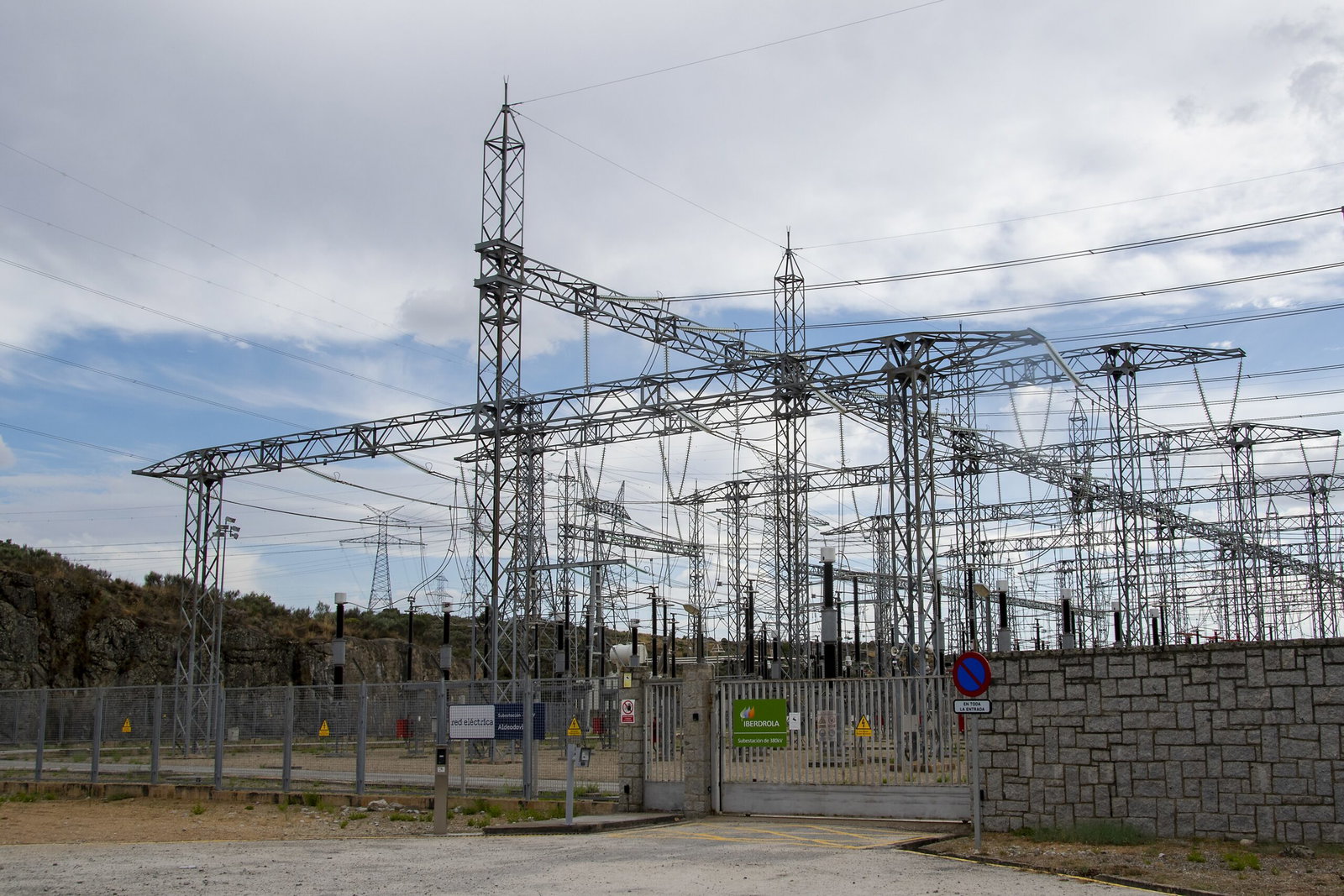
The proposal includes 19 new electricity substation sites. Photo credit: DFLC – Multmedia Designer/Shutterstock
The shortage of electricity connections has become another obstacle for Spain’s housing market, with new developments, factories and major investment projects competing for space on an already overstretched network. Now the Government is increasing the capacity it plans to make available to the autonomous communities, adding almost 20 gigawatts to its original proposal in a move that could unlock projects worth billions of euros.
The revised plan will make 47.3 gigawatts of additional connection capacity available for new demand by 2030, compared with the original 27.7 GW proposal presented in September 2025. The increase follows demands from regional governments, which have warned that insufficient access to the electricity network is holding back housing construction, industrial expansion and economic development.
Madrid, Aragón and Andalucía receive the biggest allocations
The investment required to deliver the expansion has also risen to more than €17 billion, €3.4 billion above the initial proposal. The number of connection points is set to increase by 52 per cent to 300, giving major electricity users more opportunities to connect to the national transmission network.
The distribution gives Madrid the largest additional allocation, with 6.5 GW, followed by Aragón with 6 GW and Andalucía with 5 GW. Castilla-La Mancha will receive 4.1 GW, while the Comunitat Valenciana has been allocated 3.8 GW. The increases reflect the different projects each region wants to attract. Madrid has pressed for more capacity to supply new housing developments in the north and south of the region, as well as planned data centres.
Andalucía, meanwhile, has asked the ministry to address what it considers a shortfall in its electricity network. La Rioja and the Balearic Islands will not receive additional demand connection capacity under the revised allocation, although their networks will still benefit from improvements to electricity transmission.
New homes, factories and green hydrogen projects
Access to electricity has become a major consideration for developers planning new housing, particularly in areas where existing networks cannot accommodate additional demand. Without an available connection, projects can struggle to progress even when land and planning permissions are in place. The revised plan identifies housing as a priority in Madrid, Andalucía, Catalonia, the Canary Islands, the Balearic Islands, Murcia, the Comunitat Valenciana and Castilla y León. More capacity is also earmarked for industrial development in the Basque Country, Cataluña, Galicia, Extremadura, Navarra, Murcia and the Comunitat Valenciana.
Data centres are included in the plans for Aragón and Madrid, while the availability of electricity for green hydrogen production is a priority in Andalucía, Castilla y León, Murcia, Cantabria, the Basque Country and Galicia. Rail electrification and cleaner port operations also feature in the proposals for several regions.
Andalucía provides an example of how the additional capacity could be used. Its allocation includes 5 GW for new electricity demand, with the regional proposal prioritising industry, including hydrogen production. According to the ministry, 70 per cent of the demand covered by its revised proposal relates to industrial projects, with the remainder covering housing, port decarbonisation and railway electrification.
A €17 billion investment with a long way to go
The infrastructure needed to support that expansion is substantial. In Andalucía alone, the proposal includes 19 new electricity substation sites, 1,283 kilometres of new power lines and improvements to another 651 kilometres of existing lines. The region is also expected to receive more than 8 GW of additional access capacity for renewable generation, alongside 1 GW for energy storage. Across Spain, the revised programme includes 193 electricity substations, 6,706 kilometres of new transmission lines and the upgrading of 8,164 kilometres of existing network.
The number of connection positions available to serve new demand through distribution networks will rise to 300, while positions for direct industrial consumption on the transmission network will reach 162. The plan follows an examination of 2,566 objections submitted by regional governments, businesses and other interested parties. The changes have increased the proposed investment from €13.6 billion to more than €17 billion, making it the largest electricity network planning programme in Spain’s history, according to the ministry.
When will the new electricity capacity become available?
However, announcing additional capacity does not mean every proposed home, factory or data centre will automatically receive an electricity connection. Red Eléctrica must still deliver the infrastructure, and developers must secure the necessary access permissions. Some projects have already experienced delays lasting up to 20 years, a problem the Government has previously criticised the network operator over.
The regional governments have also questioned the speed of the latest consultation process, with several councillors expressing concerns about the rushed meetings used to finalise the allocations. The ministry now wants to complete the remaining parliamentary step before taking the plan to the Council of Ministers.
Environment Minister Sara Aagesen is due to present the revised proposals to the Congressional Permanent Deputation on November 12. This will allow the Government to proceed with approval before the November 29 general election, after which it will enter caretaker status. For communities waiting for new homes, industrial investment and employment opportunities, the additional capacity could remove one of the obstacles holding projects back. But the real test will be whether the promised investment translates into functioning infrastructure and connections on the ground, rather than another round of plans waiting to be delivered.
2026 wildfires
Fingers crossed for rain in Extremadura as Valverde del Fresno wildfire keeps Spain on high alert
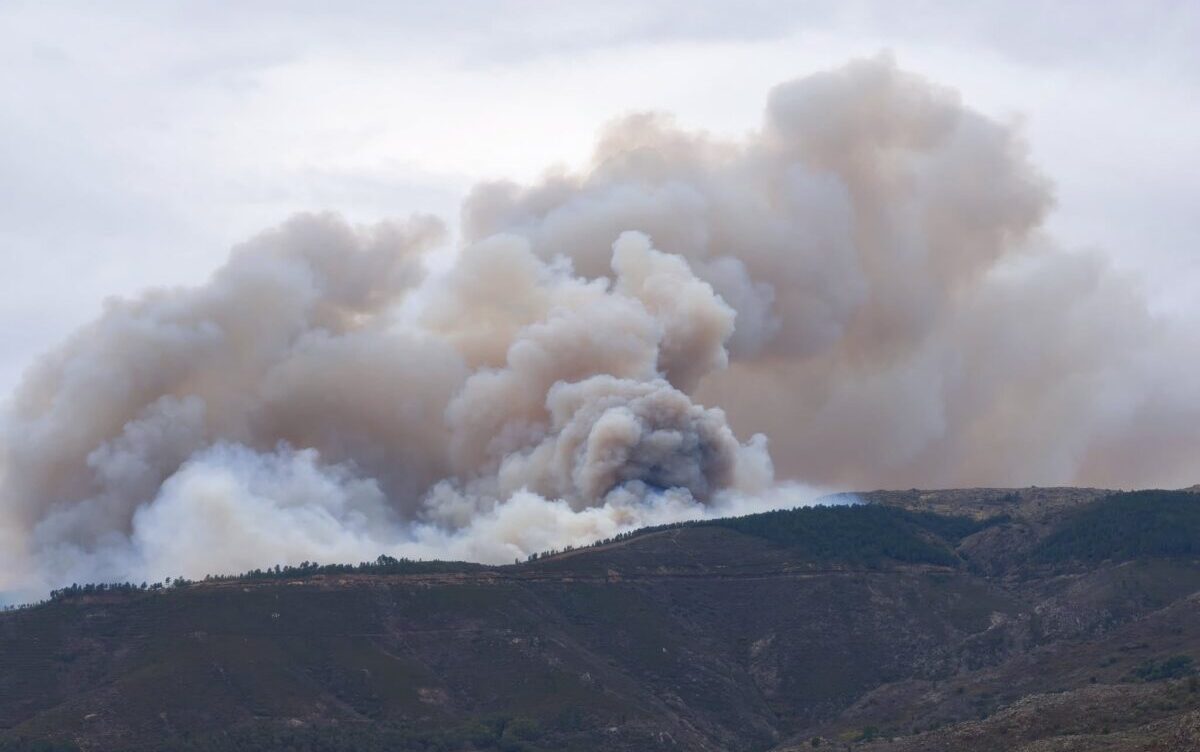
Many parts of Spain have eased bonfire and burning rules for the cooler months, yet the country is far from clear of danger. A forest fire declared this morning in Valverde del Fresno, in northern Caceres, has already forced a Level 1 alert and drawn in 134 firefighters, aircraft and machinery from Extremadura, national teams, Castilla y Leon and Portugal.
Blaze grows near the border
Smoke has been visible for hours over the village and surrounding hills in the Sierra de Gata. Officials from Extremadura’s INFOEX plan raised the danger level at 1.40pm because the flames could reach roads. Local authorities earlier described the fire as out of control and closed the road towards Navasfrias, leaving the neighbouring Salamanca town on watch in case wind pushed the fire across the provincial line.
#IFValverdedelFresno https://t.co/17M6Iy89jC
— extremadura_ (@ExtremaduraON) November 8, 2026
Ground crews, helicopters and planes continue working the perimeter. Resources include more than 20 terrestrial forest-firefighter units, helitransported teams, heavy machinery and several aircraft, according to local reports. No large-scale evacuations have been ordered so far, but access to some tracks and estates remains restricted.
Incendio forestal en Valdeobispo (Cáceres)
#IFValdeobispo https://t.co/CdEw29CX2e
— PacoCastañares (@PacoCastanares) November 8, 2026
Restrictions ease while risk stays high
Several regions have already lifted or relaxed the strict summer bans on agricultural burns and barbecues. Andalucia moved to lower-risk rules in mid-October, Galicia restarted permit processes from early November, and Madrid now allows controlled burns with a responsible declaration. Castilla y Leon, however, extended its medium-danger period until 9 November.
These changes do not mean the threat has disappeared, at all. Spain still faces high fire risk in the west and northwest, where recent rain has encouraged fresh growth of grass and scrub. Once that new vegetation dries, it adds to the fuel load rather than reducing it. Experts have warned for months that wetter springs and autumns followed by dry, windy spells create exactly the conditions that turn small starts into fast-moving blazes, as seen in earlier fires across Extremadura.
Atlantic front offers hope – and new concerns
People in the area are watching the sky for signs of Storm Bruna, and literally praying for rain. The system, named by Portugal’s meteorological service, is expected to reach the Portuguese coast within hours and then track east across Extremadura. AEMET has already issued orange warnings for parts of northern Caceres, with heavy and persistent rain possible overnight and into Monday.
Rain would help firefighters, yet the same front brings strong winds that can spread flames before the heaviest downpours arrive. Previous fires in this same corner of Extremadura, including the large 2026 Las Hurdes blaze that crossed into Salamanca, showed how quickly wind can change the picture.
Wildlife at risk in the hills
Sierra de Gata and the surrounding valleys are known for their wildlife. Red deer and wild boar are common, and free-ranging horses are also present in the wider northern Caceres mountains. Black vultures, golden eagles and other protected species use the same wooded slopes and ridges now under smoke. Any fire that runs through this habitat damages both the animals and the mosaic of pine, oak and scrub that supports them.
Fire crews expect to stay on the ground through the night. Whether the Atlantic rain arrives in time, and whether it arrives with manageable wind, will decide how much of the Sierra de Gata burns before the week is out.
Barcelona airport halts departures as baby’s medical emergency forces plane to land
Spain’s €17bn electricity grid overhaul aims to unblock housing, factories and major investment
Calpe welcomes acclaimed Italian pianist for special autumn music festival recital


-
DGT3 weeks ago
Viral video in Spain sparks fury over drivers who ‘have no idea how to drive’
-
Automated supermarket4 weeks ago
Spain’s 24-hour shop with no tills expands to Barcelona Airport
-
News4 weeks ago
Hundreds evacuated as huge fire erupts on Spain high-speed train route
-
Keeping cats and dogs outside3 weeks ago
Spain’s pet owners face fines of up to €200,000 for animal welfare offences
-
Council tax (IBI)3 weeks ago
Barcelona plans 150% property tax increase on tourist flats ahead of 2028 ban
-
Age Concern Marbella - San Pedro2 weeks ago
Halloween lunch sells out as 51 join Marbella get-together
-
airports3 weeks ago
Travelling between Spain and Italy? The extra border checks could soon end
-
Axarquia4 weeks ago
Torrox Oktoberfest gets a 1,500sqm beer tent for four-day festival