Connect with us

%

Torremolinos Goes Colourful With 8 Giant Murals

Published

on

torremolinos-goes-colourful-with-8-giant-murals

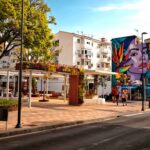
New murals popping up in Torremolinos. Credit: Ayto

Residents in El Calvario and San Miguel will help choose the designs as the town invests almost €200,000 in public art.

Eight giant murals are about to transform residential streets in Torremolinos, as the town continues its efforts to revitalise two of its traditional neighbourhoods.

The project will bring large-scale urban artwork to the outside walls of apartment buildings in El Calvario and San Miguel, creating a colourful open-air gallery away from the busy tourist areas. The contracts have now been awarded, with the work expected to take six months. Residents could start seeing the finished murals in 2027.

The artworks will cover eight building façades across four residential properties, in an area bordered by Calle Río Trueba, Calle Periodista Juan Villar and Calle Joaquín Blake. Planned locations include Calle Periodista Juan Villar, Plaza Río Aguasvivas, Calle Juan Quesada Rosado, Calle Río Isuela and Calle Joaquín Blake.

Residents invited to choose mural themes

One of the most interesting aspects of the plan is the involvement of local people. Neighbourhood communities were consulted last year, with residents invited to contribute ideas and help choose the subjects of the paintings. The artistic work has been awarded to Jofre Oliveras for over €118,000. The artist has previously completed outdoor projects in Aberdeen, Amman, Barcelona and Madrid.

Building repairs and preparation work have been awarded to Benalmadena-based company Avalon Proyectos for €75,000. The combined contracts total approximately €193,000, with funding coming from a Junta de Andalucia grant of almost €250,000 through its Munitur programme, which supports improvements to public spaces with tourism and cultural value.

Part of a wider neighbourhood transformation

The murals follow other improvements in El Calvario, including the refurbishment of Plaza Vicente Aleixandre, the restoration of the old market and the opening of the Isabel Manoja community centre. The town has also been given access to a former regional government children’s care centre, with plans to develop new facilities there.

The latest investment continues Torremolinos’ efforts to improve everyday neighbourhood spaces, rather than concentrating solely on its beaches and tourist attractions. For foreign residents, the project also offers an opportunity to get involved in local life and help shape the communities they call home.

%

Live Music At Salon Varietes Theatre

Published

on

live-music-at-salon-varietes-theatre

Fuengirola’s English-speaking theatre is preparing a double dose of entertainment with two very different November evenings, with soul classics and festive songs set to bring audiences together.

Salon Varietes Theatre will host Midnight Hour: The Sound of The Commitments on Friday, November 20, followed by A Sprinkle of Christmas with the Paradyme Duo on Sunday, November 22.

Soul classics back by popular demand

Midnight Hour brings a wonderful 10-piece live band to the Fuengirola stage, performing songs made famous by the 1991 film The Commitments. Fans can sing along to all time favourites including “Chain of Fools”, “Try a Little Tenderness”, “Take Me to the River” and “Mr Pitiful”. The performance begins at 7.30pm on Friday, November 20, 2026.

A festive debut from Paradyme Duo

Two days later, the theatre welcomes the popular Paradyme Duo for their first appearance on its stage. A Sprinkle of Christmas and more! bringing piano, vocals, humour and Christmas spirit, with original songs and seasonal covers.

The international duo has previously supported the theatre through fundraising, and their debut performance is scheduled for 7pm on Sunday, November 22, 2026.

Tickets, access and booking advice

Salon Varietes Theatre has been part of Fuengirola’s cultural scene since 1985 as one of Spain’s only English-language theatre. Its programme regularly features volunteer performers, live music, comedy and full-scale productions.

Tickets for both performances should be purchased directly through Salon Varietes Theatre, avoiding other ticket sources to avoid scams. Wheelchair-accessible tickets are available only from the box office and all children must have their own seat and be accompanied by an adult. Box office hours are 11am to 2.30 pm, Monday to Friday, and the theatre also opens one hour before each performance. Anyone experiencing difficulty paying online is advised to wait half an hour for seats to become available again before trying once more.

With a soul-filled tribute night and a funny festive musical debut just days apart, the theatre is offering two wonderful choices for local residents and visitors. For anyone keen to ease into the festive season with live entertainment, head to the theatre for two nights of unmissable music.

Continue Reading

%

Struggling With Spain’s Food Prices? This Supermarket Chain Was Built To Help Families Save

Published

on

struggling-with-spain’s-food-prices?-this-supermarket-chain-was-built-to-help-families-save

Its stores include specialist counters for butchery, fish and delicatessen products. Photo credits: Marco Gallo/Shutterstock

With food bills continuing to put pressure on household budgets, finding a supermarket where the weekly shop costs a little less can make a real difference. One Spanish chain has built its business around that very idea, and its origins go back to the financial crisis that left thousands of families struggling after the collapse of the property boom. Cash Fresh was launched in Sevilla in 2013, when Spain was still dealing with the fallout from the property crash.

Rather than trying to compete with upmarket supermarkets, the chain focused on keeping prices down and giving families a more affordable way to fill their shopping baskets. More than a decade later, it has grown into a recognised name in Andalucía and Extremadura, with more than 100 stores and a place among the cheapest supermarket chains in Spain.

A supermarket shaped by the crisis

The timing of its launch reflected the pressure on household budgets. Spain was still dealing with the consequences of the property bubble bursting and the financial crisis that followed. Unemployment had soared, many families had less money to spend and shoppers were paying closer attention to the cost of everyday essentials. Cash Fresh was developed by Grupo MAS, an Andalucian food retailer, with a model built around affordable everyday shopping.

It combines a conventional supermarket with elements of the cash-and-carry format, offering groceries alongside fresh food departments. Its stores include specialist counters for butchery, fish, delicatessen products, fruit and vegetables, and bakery goods. The idea is to offer customers fresh produce and help from staff while keeping prices competitive, rather than relying on a discount-warehouse format alone. 

How cheap is it?

The latest supermarket comparison from the consumer organisation OCU, published in September 2026, gives Cash Fresh a price index of 107. The cheapest chain in the study, Supermercados Dani, is the benchmark at 100. Cash Fresh’s basket therefore costs around 7 per cent more than the cheapest chain’s. That still places it among the lower-priced supermarket chains in the country, although it is not Spain’s cheapest.

OCU’s study compared 101,520 prices from 690 supermarkets and online stores, using a basket of 244 food, household and personal-care products. The organisation estimates that choosing the cheapest rather than the most expensive supermarket can save shoppers an average of €1,310 a year. The potential saving varies depending on where people live and which stores are available locally. 

A business built around the weekly shop

Cash Fresh’s expansion shows that the demand for value has lasted well beyond the crisis years in which it began. Its appeal is straightforward: shoppers can buy everyday groceries and fresh food in one place while keeping an eye on the bill.

More than a decade after opening its first store in Sevilla, the chain remains built around the same promise that helped it find its place in the market: making the weekly shop more affordable. That focus has helped it establish itself across two regions of southern Spain.

Continue Reading

%

Spain Hit By Yet Another Train Derailment As Madrid Railway Line Is Shut

Published

on

spain-hit-by-yet-another-train-derailment-as-madrid-railway-line-is-shut

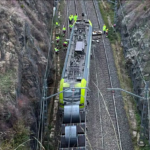
Renfe arranged replacement buses between El Escorial and Robledo de Chavela. Photo credit: @revol_es on X

It seems Spain still hasn’t had its fair share of train accidents, with another derailment adding to an already alarming year for the country’s railway network. Just when passengers might have hoped the worst was behind them, a freight locomotive has come off the tracks in Madrid, leaving its driver injured and forcing travellers between Madrid and Ávila to abandon their normal train journeys.

The latest incident happened in the early hours of Sunday, November 15, near Zarzalejo, between Robledo de Chavela and Zarzalejo.  Although no passengers were aboard the freight train, the derailment has caused disruption to regional rail services, with replacement buses being put in place. It comes just weeks after the deadly accident in Urda, Toledo, and January’s disaster in Adamuz, Córdoba, which together claimed 115 lives. The latest derailment was not a passenger train accident, and there is currently no evidence linking its cause to either of those tragedies. 

Landslide suspected after heavy rain

The train belonged to freight operator Captrain and was travelling along the conventional Madrid-Hendaya railway line when the locomotive left the tracks at around 3:39am. Initial information points to a movement of earth following heavy rainfall in recent days.

A section of the embankment may have collapsed as the train passed, although investigators are still assessing the condition of the railway and the circumstances surrounding the derailment. The train consisted of 17 wagons carrying electrical coils. According to reports, only the locomotive was affected. The driver, a 33-year-old man and the only person aboard, suffered back pain and was taken by emergency services to Puerta de Hierro Hospital in Majadahonda. His injuries were described as minor and his condition was not considered serious. 

Passengers forced onto replacement buses

The derailment led to the suspension of rail traffic between Robledo de Chavela and Zarzalejo, affecting Media Distancia services connecting Madrid and Ávila, as well as services using the affected section of the line. Renfe arranged replacement buses between El Escorial and Robledo de Chavela, with an intermediate stop in Zarzalejo, to help passengers complete their journeys.

By 03:00pm, the derailed locomotive had been put back on the tracks, but trains were still unable to pass through the affected section. Adif technicians continued inspecting the infrastructure to establish whether the track had suffered damage. No confirmed time for the resumption of normal services had been announced, leaving passengers advised to check for updates before travelling. 

Another blow for Spain’s railway network

The derailment comes at a particularly difficult time for Spain’s railways, with the fatal accidents at Adamuz and Urda prompting renewed demands from railway workers for improved safety measures. A nationwide Renfe workers’ strike is scheduled for 17 November, with unions calling for greater guarantees over railway safety following the recent tragedies.

The Madrid incident had far less serious consequences, but the interruption has added another problem for passengers already facing uncertainty across parts of the country’s rail network. For those travelling between Madrid and Ávila, their main concern now is getting to their destination while the affected stretch remains closed

Continue Reading

Trending

Copyright © 2017 Spanish Property & News