Connect with us

%

Sánchez Apologised On Live TV. One Question About His Rise To Power Went Unanswered

Published

on

sanchez-apologised-on-live-tv.-one-question-about-his-rise-to-power-went-unanswered

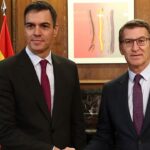
Spanish voters heard Pedro Sánchez apologise over corruption and to families who lost loved ones in two train crashes. But when opposition leader Alberto Núñez Feijóo asked who had financed the campaign that put Sánchez in charge of Spain’s Socialist Party, the prime minister gave no direct answer. Behind the question was an allegation involving Madrid saunas run by the father of Sánchez’s wife, Begoña Gómez. Sánchez denied receiving any donation linked to prostitution.

Spain’s election campaign now enters its most intense stretch. Thursday’s debate was the only time Sánchez and Feijóo, who leads the conservative Partido Popular, faced each other alone on television before the 29 November vote. The leaders of Vox and Frente Amplio are expected to join them for a wider debate as the parties make their final pitch to voters.

Also see our guide to what Spain’s general election result could mean for expats.

Why Feijóo brought the Gómez family’s saunas into the debate

Sabiniano Gómez, Begoña’s father, ran saunas in Madrid that catered to gay men. They included Sauna Azul, where municipal police documented prostitution, according to records reported by Telemadrid. Another, Sauna Adán, operated on Calle San Bernardo. Newtral reported that a Madrid court described the sauna business as lawful in a 2024 ruling.

Feijóo suggested that money from the businesses may have helped fund Sánchez’s campaign to lead the PSOE, as Spain’s Socialist Party is known. He was referring to an internal vote among party members that put Sánchez in charge of the party he would later lead into government.

Sánchez denied rigging that vote and denied receiving any donation linked to prostitution. Feijóo offered no evidence during the exchange that money from the saunas had reached the campaign. The broader question of who financed it went unanswered.

Sánchez’s housing slip hands Feijóo an opening

Sánchez made a telling slip in the opening exchange. He urged Feijóo to keep Spain’s Housing Law if the PP leader came to power, warning that repealing it would make the housing crisis worse. The law allows rent caps in designated areas. Sánchez also defended a separate housing decree that allows eligible tenats to request up to two more years in their homes.

It was an awkward appeal from a prime minister asking voters for another term. With ten days to go before polling day, Sánchez was already asking his opponent to preserve one of his policies if he took office. Feijóo brought the remark up again later, using it to suggest that Sánchez was already contemplating defeat.

Sánchez apologises over corruption and two rail crashes

Sánchez apologised over corruption cases and said he had trusted people he should not have trusted. He said the PSOE had expelled those involved and cooperated with the courts, then challenged Feijóo over the PP’s own record on corruption.

In a separate exchange, Feijóo pressed Sánchez to apologise to the families of those killed in the Adamuz and Urda rail crashes. Sánchez did, saying the pain would stay with him. The collision near Urda cut one of the main rail links between Madrid and the Costa del Sol in late October.

Puigdemont calls Sánchez “amoral” hours before the debate

Before Sánchez walked into the studio, former Catalan president Carles Puigdemont had called him “amoral” and accused him of boundless ambition. In an interview with El Mundo, Puigdemont claimed his separatist party, Junts, had exploited that ambition in negotiations over an amnesty for people involved in the Catalan independence push. He also said he had never spoken directly to Sánchez.

The attack carried weight because Junts helped Sánchez secure another term in 2023, when the Socialists needed its votes in parliament. Now a former ally was questioning his motives just as Feijóo was pressing him to explain how he had financed his rise within his own party. Sánchez ended the night asking Spaniards for their vote. The funding question was still open.

%

Spain’s Traffic Authority Buys New Drones

Published

on

spain’s-traffic-authority-buys-new-drones

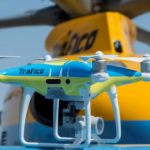
New drones taking over from helicopters. Credit: DGT

Drivers across Spain could soon face a new set of eyes in the sky after the Dirección General de Tráfico (DGT) signed an emergency €1.3 million contract for more capable drones. Officials hope the purchase will plug gaps left by the grounding of the entire Pegasus (blue and yellow) helicopter fleet.

All 11 helicopters belonging to the Aerial Means Unit now sit in storage at the Cuatro Vientos base in Madrid. Eliance, the firm contracted to operate and maintain the aircraft used for road surveillance and issuing fines, has entered insolvency proceedings (concurso de acreedores). It can no longer guarantee the safety of the helicopters, so the DGT ordered them moved to the capital and placed in preservation.

Euro Weekly News previously reported how the crisis began to bite when helicopters stopped flying from bases including Malaga, Seville and Santiago de Compostela. Spain’s €51m Pegasus helicopters grounded: Questions raised over traffic fines

Why drones are the stop-gap solution

Earlier this month the DGT began relying more heavily on its existing drones to keep some form of aerial monitoring going. Those units have drawn heavy criticism from unions, which described them as little more than “toys”. In eight years they recorded barely 500 flying hours. Some Thyra models had to be withdrawn after becoming uncontrollable and causing accidents near roads.

Fernando García Castro at the Ministry of the Interior, said the new drones will still have serious limits. They can only reach 120 metres altitude, top out at 80 km/h and stay aloft for about 40 minutes. That means they can spot illegal turns or drivers jumping stop signs, but they cannot measure or fine speeding offences. He added that the new machines are unlikely to be ready before next year at the earliest.

Union wants the helicopters flying again

The union representing the helicopter pilots, CCOO, has called for an emergency contract covering fuel, spare parts and engineering work so the helicopters parked at Cuatro Vientos can return to service. Pilots warn that leaving the aircraft stored for long periods risks mechanical problems that could make them harder to bring back into operation.

Workers from the Aerial Means Unit and traffic control centres staged a protest this week, arguing that staff shortages combined with the Eliance collapse are putting road safety at risk.

What drivers should expect on the roads

Fixed and mobile speed cameras, average-speed sections and unmarked patrol vehicles continue operating as normal. Aerial enforcement of pure speeding offences is currently limited, though drones can still catch other dangerous manoeuvres. Recent reports have also covered hooded saboteurs destroying Seville speed cameras and tighter pedestrian crossing rules enforced by the DGT. Drivers can check official guidance on the DGT website.

Continue Reading

%

Missing Woman Found Alive In Stream

Published

on

missing-woman-found-alive-in-stream

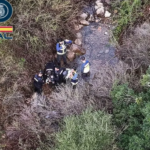
The woman was found in a difficult-to-reach stream bed near Alcolea Credit: PoliciaNacional

After five days without news of a missing loved one, every passing hour can bring fresh anxiety and uncertainty. But for one family in southern Spain, a desperate search finally ended with the news they had been hoping for.

A woman who vanished from her home in Córdoba province was discovered alive on Thursday, November 19, after spending several days outdoors in an isolated area.

The woman was found in a difficult-to-reach stream bed near Alcolea, where emergency services launched a rescue operation to bring her to safety.

Despite surviving several days exposed to the elements, she was suffering from symptoms of hypothermia and required hospital treatment.

Her discovery brought an end to five days of searching by Spain’s National Police, who had been working to locate her since her family reported her disappearance.

Woman vanished from her home without warning

According to Spain’s National Police, the woman left her home in the Alcolea area on the morning of Saturday, November 14, without informing any members of her family.

When she failed to return, relatives began making their own enquiries in an attempt to establish her whereabouts.

However, their efforts were unsuccessful.

Growing increasingly concerned, a family member visited a police station to report her missing.

Officers activated the established missing-person procedure and began searching Alcolea and its surrounding countryside.

Police also circulated the woman’s photograph and physical description in the hope that members of the public might recognise her or provide information about where she had been seen.

As the search continued, there was still no confirmed information about her whereabouts.

Police make breakthrough after five days

The breakthrough finally came at approximately 11am on Thursday, November 19.

During their search, National Police officers spotted a woman in a stream bed in the Encinares de Alcolea area, on the outskirts of Córdoba.

The location was particularly challenging because the terrain was difficult to access.

Firefighters were called in to assist officers with the rescue, helping emergency teams reach the woman and bring her out of the isolated area.

The discovery marked a significant turning point in a search that had lasted five days.

However, the ordeal had taken a physical toll.

After spending several days exposed to outdoor conditions, the woman was showing symptoms of hypothermia.

She was subsequently transferred to Reina Sofía Hospital in Córdoba for medical attention.

Her family was informed that she had been found alive.

Police thank public for helping missing-person searches

Following the rescue, Spain’s National Police thanked members of the public and the media for their cooperation in helping locate missing people.

Officers highlighted the importance of sharing reliable information when someone disappears, explaining that public awareness can play a valuable role in search operations.

The police also used the incident to remind families of an important point that is sometimes misunderstood. There is no requirement to wait 24 hours before reporting someone missing in Spain.

Anyone concerned about a disappearance can contact the National Police immediately by calling 091, which operates 24 hours a day, every day of the year.

Questions remain over woman’s disappearance

Although the woman was successfully located, the circumstances surrounding her disappearance have not been publicly explained.

Authorities have not disclosed her age, why she left home or how she came to be in the remote stream bed.

There has also been no further confirmed information about her recovery following admission to hospital.

What is known is that a five-day search ended with the woman found alive, thanks to the efforts of police officers and firefighters working together in challenging terrain.

For her family, the discovery brought an end to days of uncertainty, while the case served as a reminder of the importance of reporting disappearances promptly.

Continue Reading

%

Woman Hospitalised After Butane Cylinder Explosion

Published

on

woman-hospitalised-after-butane-cylinder-explosion

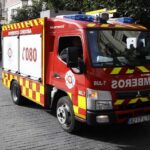
Firefighters in Cordoba attend gas bottle explosion. Credit: 112

A 61-year-old woman was taken to hospital after a butane gas cylinder exploded inside a flat in Cordoba capital on November 19. Emergency crews from Bomberos de Cordoba responded quickly to Calle Julio Pellicer in the Ciudad Jardin neighbourhood, where the incident caused light injuries to two adults and material damage to the property and the flat next door.

What happened in the Cordoba flat

112 Andalusia received the alert around 10.40pm after firefighters reported the explosion of a “bombona de butano” gas bottle. Sources from Bomberos de Cordoba confirmed the blast resulted from a gas leak. Medics from the 061 service attended the scene, checked the family present in the home, and found two minors unharmed. One man suffered a cut from flying window glass. The 61-year-old woman sustained a contusion and a burn and was evacuated to Hospital Reina Sofia.

Firefighters ruled out structural damage, though windows and joinery were broken and an adjoining room was affected. Neighbours reported a loud shock but no further injuries. Local reporting from Diario Cordoba and Cordopolis confirmed the sequence and the light nature of the injuries.

Injuries, damage and emergency response

Local and National Police also attended. Official reports described the injuries as light, thankfully. The woman remains under observation at Reina Sofia while crews cordoned off the area and ventilated the property. No further details on the exact cause of the leak have been released, and the investigation continues under standard protocols for domestic gas incidents in Andalusia.

Practical butane cylinder safety tips for homes in Spain

Incidents like this remind many residents, using bottled gas for cooking or heating, that small leaks can escalate quickly. Earlier advice published by Euro Weekly News from a building surveyor who has examined Spanish gas explosion claims stressed the power of even a partial discharge from a standard cylinder (see the full Be Gas Safety Aware! guide).

Flexible orange pipes must be pushed fully over the ribbed fittings after warming the end in hot water and then secured with a jubilee clip; the date stamp on the hose shows when it must be replaced. Joints should be tested with soapy water for bubbles, and every room or void containing an appliance needs an unobstructed external vent. Additional winter guidance on gas heater safety is also worth reviewing.

Spanish law under Real Decreto 919/2006 requires cylinders to stand upright in ventilated spaces, well away from heat sources, electrical points and drains. Basements and enclosed stairwells are prohibited because butane is heavier than air and can pool. Up to two cylinders may be carried in a private car, but only upright and properly restrained; underground parking is forbidden while they are onboard (full rules are explained in Euro Weekly News’ transportation of gas cylinders guide). Delivery by a registered supplier such as Repsol or Cepsa is usually safer and cheaper than collecting from a petrol station.

Continue Reading

Trending

Copyright © 2017 Spanish Property & News