Connect with us

%

What Will The General Election Result Mean For Expats?

Published

on

what-will-the-general-election-result-mean-for-expats?

First big televised debate between Sánchez and Feijóo. Credit: Spanish TV

Don’t panic about election rhetoric. British and other foreign residents should understand how Spain’s proposed immigration changes could affect their individual residency rights.

Promises about deportations and tougher residency conditions do not automatically apply to everyone already living legally in Spain. It depends on each person’s legal status. Here’s a party by party breakdown of what policies are pledged:

Also see our coverage of the televised debate between Pedro Sánchez and Alberto Núñez Feijóo, including the campaign funding question Sánchez left unanswered

PP: integration conditions for temporary residents

Alberto Núñez Feijóo’s Partido Popular (PP) wants points-based visas, annual worker quotas and a legal ban on mass regularisations. It also wants the arraigo route, which can give qualifying undocumented residents legal status, to become “exceptional”, meaning not for everyone.

One proposal directly concerns existing residents. Anyone renewing temporary residency under the general immigration regime might have to sign a “compromiso de integración”, a promise to integrate. Applicants would need to learn Spanish, understand the Constitution and EU values, and prove compliance at renewal. The current level of Spanish is set at A2 for Spanish nationality (very low).

Expulsion is also proposed as the rule for foreign nationals convicted of sexual offences, violent crimes or repeated offending. They are proposals, not current rules. EWN previously covered Feijóo’s proposed letter of commitment for newcomers.

Vox: deportation and ‘remigration’

Santiago Abascal’s Vox proposes a tougher approach. Its programme says “Ni uno más” (not one more) and calls for an end to mass regularisations and the abolition of arraigo.

It proposes repatriating people living in Spain illegally and “remigración” to facilitate the return of foreigners who “no contribuyan o vivan de subsidios públicos” (do not contribute or live on public benefits). Deportation is also proposed for foreign nationals convicted of serious crimes, repeat minor offences, or those considered to be imposing customs or cultures incompatible with Spanish values.

Vox does not apply the concept remigration to legally resident citizens in Spain or distinguish contributory pensions, private income and means-tested benefits. It would be wrong and pure propaganda to claim all foreign pensioners would be deported under Vox’s plans.

PSOE: ‘orderly, legal and safe’ migration

Pedro Sánchez’s PSOE describes its policy as “una migración ordenada, legal y segura” (orderly, legal and safe migration). Its programme proposes simpler procedures, recruitment from overseas, faster recognition of foreign qualifications and wider legal routes for work and international protection.

It promises a 2026 to 2030 Integration and Citizenship Plan, initially funded with €500 million, and calls integration a two-way commitment involving “rights and obligations for everyone”. Permanent regularisation is not a manifesto pledge; the government’s 2026 extraordinary scheme is separate.

Frente Amplio and Podemos: easier routes to legal status

Sumar is part of the Frente Amplio alliance, which proposes a “procedimiento estable, permanente y reglado de regularización administrativa” (a stable, permanent and regulated regularisation process). It also wants faster immigration-office appointments and fewer administrative barriers.

Podemos proposes repealing the current Immigration Law and replacing it with a framework centred on human rights, equal treatment and inclusion. It wants stronger guarantees for residence, work and access to public services, as well as the closure of immigration detention centres. The focus is people without legal status, not withdrawing established residents’ status.

What legally resident expats need to know

One distinction is often missing from election debate: British citizens protected by the Brexit Withdrawal Agreement are not in the same position as those who moved to Spain after the transition period.

Residency issue Withdrawal Agreement residents British arrivals from 2021
Legal basis UK-EU treaty protections Spanish immigration law
New visa rules Not subject to ordinary new visa conditions Future applications can be affected
Temporary renewals Protected status is not an ordinary temporary visa Must meet renewal conditions
Integration tests Not automatically added through ordinary immigration rules Could be introduced by legislation
Criminal offences Removal possible under treaty safeguards Spanish removal rules apply
Cancelled simply for being British? No No

British citizens and qualifying family members lawfully resident in Spain by December 31, 2020, acquired Withdrawal Agreement status automatically if they met the conditions. Spain’s declaratory system means the Article 50 TIE is evidence of that status, not the source of the right. They can continue living, working and studying in Spain, subject to treaty safeguards.

People arriving from January 1, 2021, generally fall under Spain’s rules for non-EU nationals. Their temporary permits and renewals are unlikely to be affected by legislative changes. Neither group can have residency cancelled arbitrarily; treaty-protected residents are still subject to specific public-policy and security exceptions.

Don’t panic about election rhetoric – but check which rules apply to you. A manifesto is a political commitment, not legislation; any change must pass through the legal process and (very importantly) respect EU law and international agreements. Official guidance is available from the Spanish Government, the European Commission and GOV.UK’s Spain residency guide.

And, take with a pinch of salt what Dave down the pub says.

%

Spain’s Traffic Authority Buys New Drones

Published

on

spain’s-traffic-authority-buys-new-drones

New drones taking over from helicopters. Credit: DGT

Drivers across Spain could soon face a new set of eyes in the sky after the Dirección General de Tráfico (DGT) signed an emergency €1.3 million contract for more capable drones. Officials hope the purchase will plug gaps left by the grounding of the entire Pegasus (blue and yellow) helicopter fleet.

All 11 helicopters belonging to the Aerial Means Unit now sit in storage at the Cuatro Vientos base in Madrid. Eliance, the firm contracted to operate and maintain the aircraft used for road surveillance and issuing fines, has entered insolvency proceedings (concurso de acreedores). It can no longer guarantee the safety of the helicopters, so the DGT ordered them moved to the capital and placed in preservation.

Euro Weekly News previously reported how the crisis began to bite when helicopters stopped flying from bases including Malaga, Seville and Santiago de Compostela. Spain’s €51m Pegasus helicopters grounded: Questions raised over traffic fines

Why drones are the stop-gap solution

Earlier this month the DGT began relying more heavily on its existing drones to keep some form of aerial monitoring going. Those units have drawn heavy criticism from unions, which described them as little more than “toys”. In eight years they recorded barely 500 flying hours. Some Thyra models had to be withdrawn after becoming uncontrollable and causing accidents near roads.

Fernando García Castro at the Ministry of the Interior, said the new drones will still have serious limits. They can only reach 120 metres altitude, top out at 80 km/h and stay aloft for about 40 minutes. That means they can spot illegal turns or drivers jumping stop signs, but they cannot measure or fine speeding offences. He added that the new machines are unlikely to be ready before next year at the earliest.

Union wants the helicopters flying again

The union representing the helicopter pilots, CCOO, has called for an emergency contract covering fuel, spare parts and engineering work so the helicopters parked at Cuatro Vientos can return to service. Pilots warn that leaving the aircraft stored for long periods risks mechanical problems that could make them harder to bring back into operation.

Workers from the Aerial Means Unit and traffic control centres staged a protest this week, arguing that staff shortages combined with the Eliance collapse are putting road safety at risk.

What drivers should expect on the roads

Fixed and mobile speed cameras, average-speed sections and unmarked patrol vehicles continue operating as normal. Aerial enforcement of pure speeding offences is currently limited, though drones can still catch other dangerous manoeuvres. Recent reports have also covered hooded saboteurs destroying Seville speed cameras and tighter pedestrian crossing rules enforced by the DGT. Drivers can check official guidance on the DGT website.

Continue Reading

%

Missing Woman Found Alive In Stream

Published

on

missing-woman-found-alive-in-stream

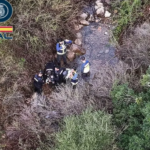
The woman was found in a difficult-to-reach stream bed near Alcolea Credit: PoliciaNacional

After five days without news of a missing loved one, every passing hour can bring fresh anxiety and uncertainty. But for one family in southern Spain, a desperate search finally ended with the news they had been hoping for.

A woman who vanished from her home in Córdoba province was discovered alive on Thursday, November 19, after spending several days outdoors in an isolated area.

The woman was found in a difficult-to-reach stream bed near Alcolea, where emergency services launched a rescue operation to bring her to safety.

Despite surviving several days exposed to the elements, she was suffering from symptoms of hypothermia and required hospital treatment.

Her discovery brought an end to five days of searching by Spain’s National Police, who had been working to locate her since her family reported her disappearance.

Woman vanished from her home without warning

According to Spain’s National Police, the woman left her home in the Alcolea area on the morning of Saturday, November 14, without informing any members of her family.

When she failed to return, relatives began making their own enquiries in an attempt to establish her whereabouts.

However, their efforts were unsuccessful.

Growing increasingly concerned, a family member visited a police station to report her missing.

Officers activated the established missing-person procedure and began searching Alcolea and its surrounding countryside.

Police also circulated the woman’s photograph and physical description in the hope that members of the public might recognise her or provide information about where she had been seen.

As the search continued, there was still no confirmed information about her whereabouts.

Police make breakthrough after five days

The breakthrough finally came at approximately 11am on Thursday, November 19.

During their search, National Police officers spotted a woman in a stream bed in the Encinares de Alcolea area, on the outskirts of Córdoba.

The location was particularly challenging because the terrain was difficult to access.

Firefighters were called in to assist officers with the rescue, helping emergency teams reach the woman and bring her out of the isolated area.

The discovery marked a significant turning point in a search that had lasted five days.

However, the ordeal had taken a physical toll.

After spending several days exposed to outdoor conditions, the woman was showing symptoms of hypothermia.

She was subsequently transferred to Reina Sofía Hospital in Córdoba for medical attention.

Her family was informed that she had been found alive.

Police thank public for helping missing-person searches

Following the rescue, Spain’s National Police thanked members of the public and the media for their cooperation in helping locate missing people.

Officers highlighted the importance of sharing reliable information when someone disappears, explaining that public awareness can play a valuable role in search operations.

The police also used the incident to remind families of an important point that is sometimes misunderstood. There is no requirement to wait 24 hours before reporting someone missing in Spain.

Anyone concerned about a disappearance can contact the National Police immediately by calling 091, which operates 24 hours a day, every day of the year.

Questions remain over woman’s disappearance

Although the woman was successfully located, the circumstances surrounding her disappearance have not been publicly explained.

Authorities have not disclosed her age, why she left home or how she came to be in the remote stream bed.

There has also been no further confirmed information about her recovery following admission to hospital.

What is known is that a five-day search ended with the woman found alive, thanks to the efforts of police officers and firefighters working together in challenging terrain.

For her family, the discovery brought an end to days of uncertainty, while the case served as a reminder of the importance of reporting disappearances promptly.

Continue Reading

%

Woman Hospitalised After Butane Cylinder Explosion

Published

on

woman-hospitalised-after-butane-cylinder-explosion

Firefighters in Cordoba attend gas bottle explosion. Credit: 112

A 61-year-old woman was taken to hospital after a butane gas cylinder exploded inside a flat in Cordoba capital on November 19. Emergency crews from Bomberos de Cordoba responded quickly to Calle Julio Pellicer in the Ciudad Jardin neighbourhood, where the incident caused light injuries to two adults and material damage to the property and the flat next door.

What happened in the Cordoba flat

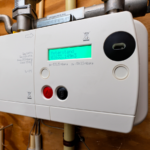
112 Andalusia received the alert around 10.40pm after firefighters reported the explosion of a “bombona de butano” gas bottle. Sources from Bomberos de Cordoba confirmed the blast resulted from a gas leak. Medics from the 061 service attended the scene, checked the family present in the home, and found two minors unharmed. One man suffered a cut from flying window glass. The 61-year-old woman sustained a contusion and a burn and was evacuated to Hospital Reina Sofia.

Firefighters ruled out structural damage, though windows and joinery were broken and an adjoining room was affected. Neighbours reported a loud shock but no further injuries. Local reporting from Diario Cordoba and Cordopolis confirmed the sequence and the light nature of the injuries.

Injuries, damage and emergency response

Local and National Police also attended. Official reports described the injuries as light, thankfully. The woman remains under observation at Reina Sofia while crews cordoned off the area and ventilated the property. No further details on the exact cause of the leak have been released, and the investigation continues under standard protocols for domestic gas incidents in Andalusia.

Practical butane cylinder safety tips for homes in Spain

Incidents like this remind many residents, using bottled gas for cooking or heating, that small leaks can escalate quickly. Earlier advice published by Euro Weekly News from a building surveyor who has examined Spanish gas explosion claims stressed the power of even a partial discharge from a standard cylinder (see the full Be Gas Safety Aware! guide).

Flexible orange pipes must be pushed fully over the ribbed fittings after warming the end in hot water and then secured with a jubilee clip; the date stamp on the hose shows when it must be replaced. Joints should be tested with soapy water for bubbles, and every room or void containing an appliance needs an unobstructed external vent. Additional winter guidance on gas heater safety is also worth reviewing.

Spanish law under Real Decreto 919/2006 requires cylinders to stand upright in ventilated spaces, well away from heat sources, electrical points and drains. Basements and enclosed stairwells are prohibited because butane is heavier than air and can pool. Up to two cylinders may be carried in a private car, but only upright and properly restrained; underground parking is forbidden while they are onboard (full rules are explained in Euro Weekly News’ transportation of gas cylinders guide). Delivery by a registered supplier such as Repsol or Cepsa is usually safer and cheaper than collecting from a petrol station.

Continue Reading

Trending

Copyright © 2017 Spanish Property & News