Connect with us

%

De La Mar Helps Raise €100s For Abandoned Dogs

Published

on

de-la-mar-helps-raise-e100s-for-abandoned-dogs

De La Mar customers are helping ADANA, dog shelter, fund veterinary bills, buy food and find homes for rescued animals

A popular restaurant in Estepona’s marina is helping a local animal rescue charity raise hundreds of euros while encouraging diners to give abandoned dogs a second chance.

De La Mar, run by Pim Keersmacker and his team at the port, has been praised by ADANA Estepona for its ongoing support, with staff promoting the charity and its dogs to customers every day. Read more about the restaurant in our previous feature on De La Mar in Estepona’s marina.

According to ADANA, the restaurant is selling its 2027 calendars, raffle tickets and charity merchandise, while also spreading the word about puppies and dogs waiting to be adopted.

The charity said very few people leave the restaurant without hearing about the animals looking for homes, with some also choosing to donate towards the organisation’s veterinary bills and food costs.

When the team at De La Mar heard ADANA was organising a raffle, they immediately asked for books of tickets and have already raised several hundred euros. In a heartfelt message of thanks shared on social media, ADANA said: “We really do appreciate your support. You’re doing a great job. Thank you.”

ADANA’s 2027 calendars are now on sale

The restaurant is also helping promote the charity’s latest fundraising initiative, with ADANA’s 2027 calendars now available. The organisation says they are selling quickly and is encouraging supporters to get their copies before stocks run out.

ADANA, which was established in 1990, rescues abandoned and neglected dogs in the Estepona area, providing shelter, veterinary care and help finding permanent homes. The charity has previously organised community fundraising events to support its rescued dogs.

The charity operates its rescue centre at Parque Los Pedregales and depends heavily on donations, fundraising and community support to cover its running costs. People interested in helping can find out more about supporting ADANA and its animal rescue work.

De La Mar’s involvement is a reminder that local businesses can make a real difference to animal welfare, not only by raising money but also by introducing potential adopters to dogs desperately needing a family. Anyone considering giving a rescued dog a home can view dogs currently available for adoption through ADANA.

For ADANA, every calendar sold, raffle ticket bought and donation received helps keep its rescue work going.

%

Could Homes In Spain Soon Regulate Their Own Temperatures Without Heating Or Air Conditioning?

Published

on

could-homes-in-spain-soon-regulate-their-own-temperatures-without-heating-or-air-conditioning?

The design also uses carefully positioned windows, insulation and automated ventilation panels. Photo credit: Volker Vornehm/Shutterstock

Keeping a home comfortable in Spain can be an expensive balancing act. Summer temperatures can turn bedrooms into ovens, while winter brings freezing nights that make poorly insulated houses difficult to heat. With energy bills adding to household costs, a building designed to maintain a comfortable temperature without relying on conventional heating or air conditioning raises an interesting question: could homes be built to stay comfortable naturally, whatever the season?

A new residential development in Lyon has put that idea into practice, using the building itself to regulate indoor temperatures rather than depending on radiators and air-conditioning units. Its design aims to keep homes between 20°C and 26°C throughout the year, with the structure doing much of the work.

How can a building regulate its own temperature?

The concept is based on thermal inertia, using substantial building materials to absorb heat and release it gradually. Thick walls help slow the movement of heat between indoors and outdoors. In summer, they can delay the arrival of outside heat; in winter, they help retain warmth rather than allowing it to escape quickly.

The design also uses carefully positioned windows, insulation and automated ventilation panels. Sensors monitor indoor conditions and the weather outside, adjusting ventilation when fresh air is needed. Sunlight can contribute warmth during colder months, while shading and controlled airflow help limit overheating in summer.

Could it work in Spain?

A building designed to cope with the weather in Lyon would not necessarily perform in the same way in Sevilla, Madrid or Málaga. Spain’s climate varies enormously, and a home needs to be designed around the conditions it actually faces. In coastal areas, keeping direct sunlight out and making use of cooler night air can be crucial during summer. Inland, the problem is more complicated. Madrid can experience temperatures above 40°C in summer, followed by freezing winter nights.

Walls that store heat can help during cold spells, but without adequate shading and ventilation they can also retain unwanted warmth when temperatures soar. That is why insulation alone is not enough. Window placement, external shutters, roof protection and the ability to ventilate a property safely at night all influence how comfortable it will be.

Would it mean lower energy bills?

The developer estimates that the building could reduce energy consumption for heating and cooling by 73 per cent compared with a conventional new development. That is a projected saving rather than a figure established through years of independent monitoring. Nor is the building entirely without conventional heating: auxiliary radiators are installed for exceptional circumstances, including extreme weather and periods when apartments have been left empty. 

The idea is not that Spanish households could immediately get rid of their air conditioning or radiators. It is that better-designed homes could need to use them far less. Better insulation, external shading, airtight construction and night-time ventilation can all help reduce the strain on cooling and heating systems, whether in a new build or an existing property.

The cost of making these improvements is another consideration. Thick walls, high-performance glazing and carefully designed ventilation are easier to incorporate during construction than to retrofit into an older home. But with summer heat becoming increasingly difficult to manage and winter heating still expensive, building homes that work with the local climate rather than constantly fighting it could make a real difference to household energy use.

Continue Reading

%

Knights Of Malta Mystery As 400-Year-Old Wine Bottles Are Unearthed Beneath French Castle

Published

on

knights-of-malta-mystery-as-400-year-old-wine-bottles-are-unearthed-beneath-french-castle

Digging approximately 50 centimetres down revealed the bottles. Photo credit:Omaly Darcia/Shutterstock

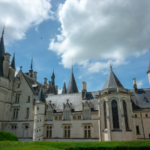
A kitchen renovation has turned into an unexpected historical discovery at a French castle, where workers uncovered 12 wine bottles buried beneath the floor for several centuries. One has survived completely full, despite spending an estimated 300 to 400 years underground, and is now being prepared for auction. The discovery was made at Château de la Noé-Sèche, in Le Fœil, Brittany, on November 12, while owners Hélène and Michel de Grave were renovating an old storeroom to create a new kitchen.

After removing the floor tiles, they found loose earth beneath the surface. Digging approximately 50 centimetres down revealed the bottles, which had been hidden beneath the building for generations. The find included seven empty bottles, four containing some remaining wine and one that was still completely full and sealed. For the owners, what began as a building project suddenly became a link to the castle’s distant past. The property has a particularly interesting history, having served as a commandery of the Knights of Malta for approximately 200 years.

Could the wine date back to the Knights of Malta?

The bottles have been examined by auctioneer Karl Benz, based in Plérin, who identified traditional hand-blown glassmaking techniques that helped establish their likely age. The shape and construction of the glass, including the bases, suggest they date from the late 17th or early 18th century. This places them at approximately 300 to 400 years old, although the precise date has not been scientifically established.

According to the Côtes-d’Armor tourism authority, Château de la Noë-Sèche became a commandery of the Knights of Malta in 1605. The castle’s connection to the Knights has raised the possibility that the bottles were buried during their occupation. They may have been hidden for safekeeping or to preserve their contents, but nobody knows exactly why they ended up beneath the floor. The surviving bottle is particularly intriguing because its contents have remained inside despite centuries underground. However, there has been no confirmed scientific analysis of the wine, so its original variety, condition and drinkability remain unknown.

One bottle will go under the hammer

The owners have decided to keep 11 of the bottles at the property, where they can be preserved and displayed as part of the castle’s history. The remaining full bottle will be offered for sale through Benz, who has been tasked with organising the auction. Its potential value has not yet been established, and no auction date or estimate has been announced. Much will depend on the assessment of its age, provenance and the condition of its contents.

The discovery also offers a glimpse into the history of the building itself. Château de la Noé-Sèche was once associated with the Knights of Malta, a Catholic religious and military order that maintained commanderies across Europe. These properties served as centres of administration and managed land and resources belonging to the order.

Whether the bottles were hidden by members of the order or by later occupants remains unanswered. Their location beneath the former kitchen suggests they were deliberately concealed rather than simply abandoned, although there is no evidence establishing who buried them or for what reason. For now, the owners have an unusual addition to their renovation project: 11 centuries-old bottles to preserve and one potentially valuable piece of history heading to auction. The contents of that final bottle may have remained untouched for hundreds of years, but whether the wine has survived in drinkable condition is another question entirely.

Continue Reading

%

Christmas Comes Early To Madrid As 500 Drones Launch Record-Breaking Festive Celebrations

Published

on

christmas-comes-early-to-madrid-as-500-drones-launch-record-breaking-festive-celebrations

This year’s display covers more than 250 locations across all 21 districts. Photo credit: Ayuntamiento de Madrid on X

Madrid’s Christmas celebrations have begun with a special moment for five children from Ceuta, who were invited to switch on the capital’s festive lights in front of thousands of spectators. The ceremony at Plaza de Cibeles on Saturday, November 21, combined the children’s participation with a, first-time, spectacular display involving 500 drones, fireworks and more than 14 million lights across the city. The children, three boys and two girls, joined Madrid mayor José Luis Martínez-Almeida for the official switch-on, making them the centre of an event designed to celebrate Christmas while highlighting the connection between the capital and Ceuta.

Their involvement was particularly significant given the challenges faced by the North African autonomous city in recent months. Madrid’s invitation was intended as a gesture of solidarity, giving the five youngsters the opportunity to take part in one of the capital’s biggest annual celebrations. The ceremony began at 07:00pm in Cibeles, with comedian and television presenter Carlos Latre hosting proceedings. Singer Pastora Soler also performed, adding a musical element to the evening before the Christmas lights illuminated the city.

A Christmas display across all 21 districts

The drone show was one of the evening’s biggest attractions. Five hundred synchronised aircraft took to the sky, creating more than a dozen illuminated Christmas figures, including bells, candles, a Christmas tree, shepherds and the Three Wise Men. A cat appearing inside a present was among the more playful images.

The display formed part of a production titled Del cielo a Madrid (From the Sky to Madrid), which combined aerial choreography, music and fireworks. The event also featured a performance by Macarena Pitto, a world junior champion in inline artistic skating, who performed around a large illuminated sphere representing the Christmas star.

✨ 500 drones han dibujado sobre el cielo de Madrid la constelación del Cazo, la o
Osa y sus siete estrellas, dando forma al primer gran mensaje de una noche muy especial.

Este año la Navidad ha llegado, literalmente, #DelCieloAMadrid.

⭐ #MadridEnciendeLaNavidad https://t.co/tptvGUuxwb

— Ayuntamiento Madrid (@MADRID) November 21, 2026

Festive music and lights

Young performers from the Crescendo programme, supported by the Friends of the Royal Theatre Foundation, also took part. The Chamber Group of the Metropolitan Orchestra of Madrid and the Talía Choir performed during the ceremony, while Flamenco-Pop star, Pastora Soler, entertained the crowd with a selection of  christmas songs. The festivities concluded with the lighting of the capital’s Christmas decorations, which this year cover more than 250 locations across Madrid’s 21 districts.

More than 14 million LED bulbs have been installed, alongside 131 illuminated cherry trees, 14 large Christmas trees and 7,458 strings of lights stretching a combined 164 kilometres. Among the additions are a giant Christmas tree measuring almost 37 metres in Puerta del Sol and a 12-metre-high walk-through snowman in Plaza de España. Three illuminated figures of the Three Wise Men have also been installed in Plaza de Colón.

Madrid’s Christmas season begins earlier than ever

This year’s switch-on took place on November 21, making it the earliest start to Madrid’s Christmas lighting season on record. The previous record was November 22, set in 2025. The decorations will remain in place until January 6, 2027, giving residents and visitors several weeks to explore the illuminated streets and squares.

The lights will generally operate from 06:00pm until midnight from Sunday to Thursday, extending to 1am on Fridays and Saturdays. On Christmas Eve and January 5, they will remain switched on until 3am, while New Year’s Eve will see the longest display, running until 6am. The decision to bring the celebrations forward means Madrid has entered the festive season while November is still underway.

Continue Reading

Trending

Copyright © 2017 Spanish Property & News